

Russia Expels UK Diplomat Accused of Being Spy, Britain Rejects Claim

A car of the British ambassador drives out of the embassy in Moscow, Russia [File: Evgenia Novozhenina/Reuters]
TT

Russia Expels UK Diplomat Accused of Being Spy, Britain Rejects Claim

A car of the British ambassador drives out of the embassy in Moscow, Russia [File: Evgenia Novozhenina/Reuters]

Russia said Thursday it was expelling a British diplomat, calling him an undercover spy in the latest espionage accusation between Moscow and London.

The Kremlin has long singled out Britain as one of the most hostile Western states -- with relations virtually frozen even before Moscow's full-scale offensive on Ukraine.

The two countries have expelled each others' embassy staff several times in recent years, AFP said.

Moscow-London ties have been plagued by spy allegations for decades and were already at their lowest point before Russia's 2022 Ukraine attack.

Since then, Britain became one of Kyiv's strongest backers.

Russia's FSB security service named the man it was expelling as Gareth Samuel Davies -- listed on Moscow's official database of accredited diplomats as the embassy's second secretary.

Russia's foreign ministry summoned the UK's charge d'affaires, saying it issued a "strong protest" and that it had received information that "one of the embassy's diplomatic staff belongs to the UK's intelligence service."

"The individual's accreditation is being revoked. He is required to leave the Russian Federation within two weeks," the ministry said.
Expulsions by one side have typically been followed up by a tit-for-tat response from the other.

Russia warned Britain not to "escalate the situation", pledging to deliver a "firm symmetrical response," should London retaliate.

Britain's Foreign Office later rejected as "malicious and baseless" Russian accusations.

"This is not the first time the Kremlin has made malicious and baseless accusations against our staff ... We are carefully considering our options in response," it said in a statement after Moscow announced it was expelling the diplomat.

- Frozen ties -

UK Prime Minister Keir Starmer has hosted Ukraine's Volodymyr Zelensky for talks on how to end the war with Russia several times and is one of the Kremlin's most vocal critics.

This month, Britain and France signed a declaration of intent that sets out deploying troops on Ukrainian territory after a ceasefire.
Russia rejected the post-war plan, saying such troops would be considered "legitimate military targets."

Moscow also recently blasted London for being involved in the planning of a US operation to seize a Russian-flagged tanker in the North Atlantic.

Espionage accusations between the two countries date back far further than the Ukraine offensive.

In 2006, Russian defector Alexander Litvinenko was killed in London, poisoned by polonium in what British investigators said was a hit by the Russian secret service.

And in 2018, the UK said Russian double agent Sergei Skripal was poisoned with a Novichok nerve agent in the British cathedral city of Salisbury.

One member of the public was killed after handling the delivery device, a discarded perfume bottle, triggering the largest Western expulsion of Russian diplomats, alleged to be spies, in decades.

The communication line between Downing Street and the Kremlin has been closed since Russia's offensive.

The last UK leader known to have spoken with Russian President Vladimir Putin was Boris Johnson in February 2022, days before Moscow launched its offensive, when he told the Kremlin chief that sending troops to Ukraine "would be a tragic miscalculation."



Kremlin Says US Has Not Responded to Its Nuclear Arms Control Offer

Russian President Vladimir Putin delivers his traditional televised New Year's Address to the people of Russia, in Moscow, Russia, 31 December 2025.  EPA/MIKHAIL METZEL/SPUTNIK/KREMLIN POOL
Russian President Vladimir Putin delivers his traditional televised New Year's Address to the people of Russia, in Moscow, Russia, 31 December 2025. EPA/MIKHAIL METZEL/SPUTNIK/KREMLIN POOL
TT

Kremlin Says US Has Not Responded to Its Nuclear Arms Control Offer

Russian President Vladimir Putin delivers his traditional televised New Year's Address to the people of Russia, in Moscow, Russia, 31 December 2025.  EPA/MIKHAIL METZEL/SPUTNIK/KREMLIN POOL
Russian President Vladimir Putin delivers his traditional televised New Year's Address to the people of Russia, in Moscow, Russia, 31 December 2025. EPA/MIKHAIL METZEL/SPUTNIK/KREMLIN POOL

The Kremlin said on Thursday that the United States had not responded to President Vladimir Putin's proposal to informally extend for ‌a year ‌the ‌provisions of ⁠the last ‌remaining nuclear arms pact between Moscow and Washington, the New START treaty, which is ⁠due to expire ‌in three weeks.

Kremlin spokesman ‍Dmitry ‍Peskov was responding ‍to a question about comments made by US President Donald Trump, who has said that he ⁠instead wants a more ambitious nuclear arms control treaty which includes China - something Beijing has so far shown no interest in.


German Air Traffic Control Advises Avoiding Iranian Airspace until Feb 10

Reuters file photo of an IranAir plane
TT

German Air Traffic Control Advises Avoiding Iranian Airspace until Feb 10

Reuters file photo of an IranAir plane

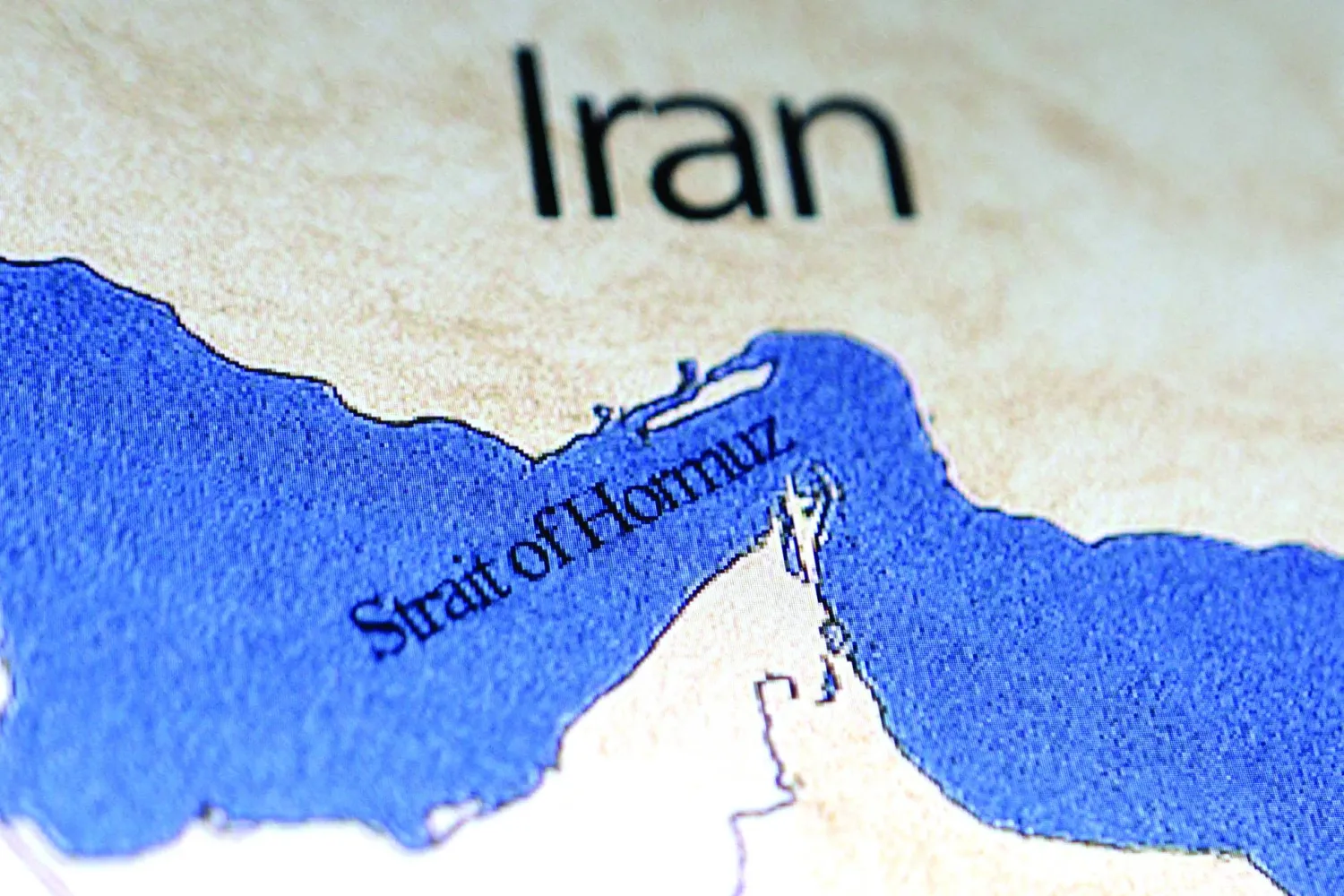
Germany's air traffic control authority said Thursday it was recommending planes avoid Iranian airspace after the United States has in recent days warned of a possible military intervention in Iran.

A spokesman for Germany's Flight Safety Office told AFP in a statement it had issued a recommendation "that Iranian airspace not be overflown... until February 10," adding that the advice had been issued "on the instruction of the transport ministry".


Türkiye Calls for Dialogue to Resolve Iran Unrest

Turkish Foreign Minister Hakan Fidan speaks during an interview with Reuters at the 23rd edition of the annual Doha Forum, in Doha, Qatar, December 6, 2025. REUTERS/Ibraheem Abu Mustafa
TT

Türkiye Calls for Dialogue to Resolve Iran Unrest

Turkish Foreign Minister Hakan Fidan speaks during an interview with Reuters at the 23rd edition of the annual Doha Forum, in Doha, Qatar, December 6, 2025. REUTERS/Ibraheem Abu Mustafa

Türkiye's top diplomat on Thursday called for dialogue to the crisis in Iran, rocked by mass protests which rights group say have left thousands dead and which prompted US warnings to Tehran.

"We absolutely want problems to be resolved through dialogue," Foreign Minister Hakan Fidan told journalists in Istanbul.

"Hopefully, the United States and Iran will resolve this issue among themselves -- whether through mediators, other actors, or direct dialogue. We are closely following these developments."
