
A senior Israeli official has acknowledged that disagreements with Syria remain “very deep,” dismissing what the United States has described as a positive atmosphere surrounding negotiations. “The reality is quite different,” the official said.
The remarks indicate that Israel intends to preserve the current situation created by its recent occupation of Syrian territory and rejects any withdrawal, not only from Mount Hermon but also from the nine positions it established following the collapse of Bashar al-Assad’s regime.
Israel has reportedly set far-reaching conditions in return, including barring Syria from deploying anti-aircraft missiles.
According to a report by Maariv political correspondent Anna Barsky, intensive talks held in Paris over two days last week, involving representatives from Israel, Syria, and the United States, produced only a limited outcome.
The discussions resulted in an agreement to establish a coordination mechanism aimed at preventing field-level friction, to be managed with active US involvement, but fell short of any broader political or security breakthrough.
Barsky wrote that there is currently no possibility of reaching a security agreement between Israel and Syria. While she cited Syria’s demand for an Israeli withdrawal from Syrian Mount Hermon as the main obstacle, the report suggests that Israel’s own demands are the primary factor blocking progress.
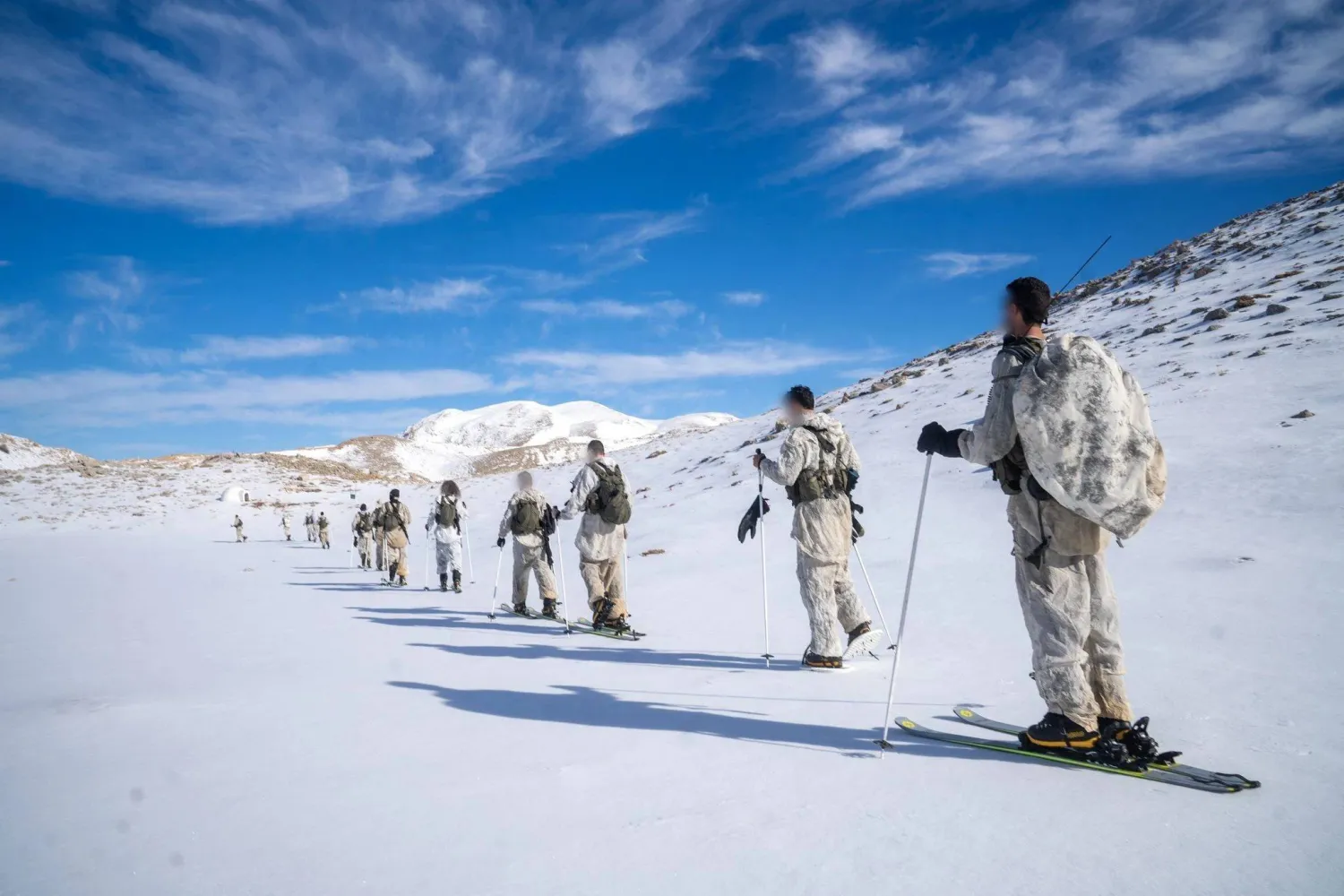
According to the senior official, Israel’s conditions include maintaining the new reality that emerged after Assad’s downfall in December 2024. This includes areas formerly designated as a UN-monitored buffer zone, an additional strip deeper along the border covering about 450 square kilometers, and all the peaks of Mount Hermon.
Israel is also seeking to strip the Syrian army of what it defines as strategic weapons, including advanced anti-aircraft systems or any arms that could disrupt the existing military balance. In addition, it demands that no foreign forces be present in Syria if they could restrict the Israeli army’s freedom of movement, specifically Russian or Turkish forces.
The report noted that the US administration, while pressing both sides to advance toward security understandings, supports Israeli demands it considers essential to Israel’s security, particularly remaining on Mount Hermon, though Washington is expected to propose compromise arrangements.
At the same time, Barsky reported growing concern in Tel Aviv over a parallel Syrian track: efforts by Damascus to coordinate with Moscow to redeploy Russian military forces in Syria, especially in the south.
Israel views such a move as a direct threat to its operational freedom and has worked to thwart initiatives aimed at restoring a Russian presence there. According to Maariv, Israel has conveyed a firm message to Damascus, Moscow, and Washington that it will not tolerate Russian forces in southern Syria.
The newspaper linked this stance to past experience, noting that while Russia maintained two main bases in Syria - Hmeimim Air Base and the naval facility in Tartus - it also deployed military police and observation posts near the disengagement zone in the south. Israel believes a return to that model would impose new operational constraints and alter the rules of engagement.
Although Russia’s footprint in Syria shrank after Assad’s fall, Israeli assessments suggest Moscow is seeking, in coordination with Syria’s new authorities, to rebuild its influence despite its preoccupation with the war in Ukraine.
The report said that both Moscow and Damascus view a Russian presence in southern Syria as strategically valuable, particularly as a means of constraining Israel.