
Italy Uncovers Basilica Designed by Vitruvius, the 'Father of Architecture'

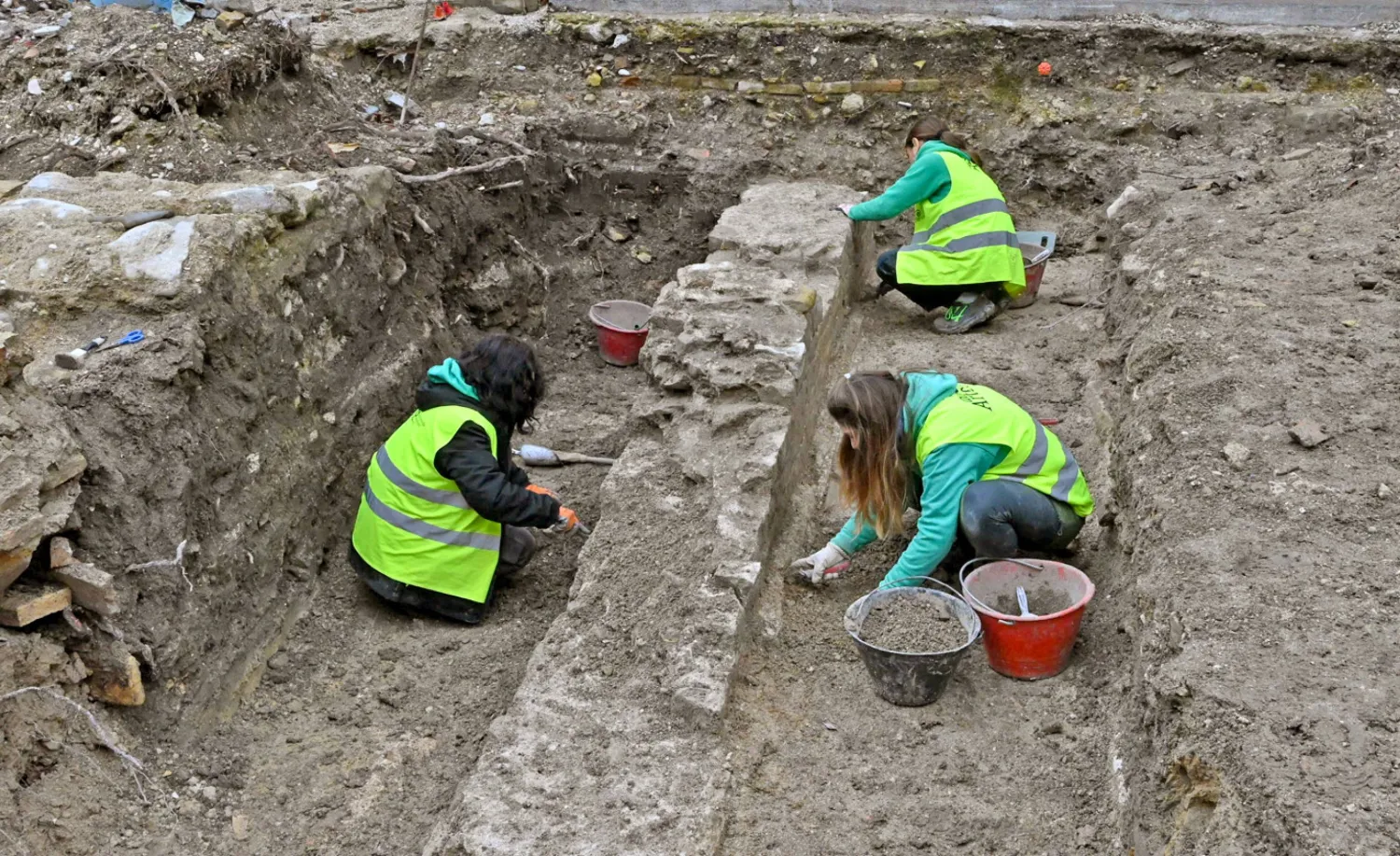
A handout photo made available by Regione Marche press office shows the excavations in Piazza Andrea Costa from which large columns emerge, remains believed of the Basilica of Vitruvius, in Fano, Italy, 19 January 2026. (EPA/Regione Marche press office)
TT

Italy Uncovers Basilica Designed by Vitruvius, the 'Father of Architecture'

A handout photo made available by Regione Marche press office shows the excavations in Piazza Andrea Costa from which large columns emerge, remains believed of the Basilica of Vitruvius, in Fano, Italy, 19 January 2026. (EPA/Regione Marche press office)

Italian officials on Monday hailed the discovery of a more than 2,000-year-old public building attributed to Vitruvius, the ancient Roman architect and engineer known as the "father of architecture."

"It is a sensational finding ... something that our grandchildren will be talking about," Italian Culture Minister Alessandro Giuli told a press conference.

Vitruvius, who lived in the ‌1st century BC, ‌is celebrated for having written "De architectura," ‌or ⁠The Ten ‌Books on Architecture, the oldest surviving treatise on the subject.

His teachings on the classical proportions of buildings have inspired artists over centuries, including Leonardo da Vinci, whose famous drawing of the human body is known as the "Vitruvian Man."

Archaeologists believe they have found ⁠the remains of an ancient basilica, or public building, in the central ‌Italian city of Fano northeast of ‍Rome, that was created ‍by Vitruvius.

"I feel like this is the discovery ‍of the century, because scientists and researchers have been searching for this basilica for over 500 years," said the Mayor of Fano Luca Serfilippi.

"We have absolute match" between what was discovered and the descriptions given by Vitruvius in his books, regional archaeological superintendent Andrea Pessina told reporters.

The basilica had a rectangular layout, with 10 columns on the long side, and four on the short ones, Pessina said.

During excavation, when traces of four columns emerged, archaeologists used Vitruvius' descriptions to calculate where the top right column should be. When they started digging, they found it immediately, Pessina said.

"The are few certainties in archaeology ... but we were impressed by the precision" of the match, he added.

Further digging will determine whether more of the ‌basilica lies underground and if the site can be shown to the public, the superintendent said.


Riyadh Art Program and Wrth Sign MoU to Strengthen Cooperation in Cultural and Creative Fields

The agreement aims to develop initiatives that bring together contemporary and traditional arts, serve the objectives of both parties, and enhance their cultural impact - SPA
TT

Riyadh Art Program and Wrth Sign MoU to Strengthen Cooperation in Cultural and Creative Fields

The agreement aims to develop initiatives that bring together contemporary and traditional arts, serve the objectives of both parties, and enhance their cultural impact - SPA

The Riyadh Art Program, one of the programs of the Royal Commission for Riyadh City, signed a memorandum of understanding (MoU) with the Royal Institute of Traditional Arts "Wrth" to strengthen cooperation in cultural and creative fields.

The agreement aims to develop initiatives that bring together contemporary and traditional arts, serve the objectives of both parties, and enhance their cultural impact, SPA reported.

The MoU covers the development of joint creative initiatives that bring together contemporary and traditional arts through the exchange of expertise, art residency programs, and seasonal events.

It also includes cooperation to enhance the presence of both parties' projects and programs at relevant international events and forums.


Van Gogh Work Unseen in Public for 60 Years on Show in Hong Kong

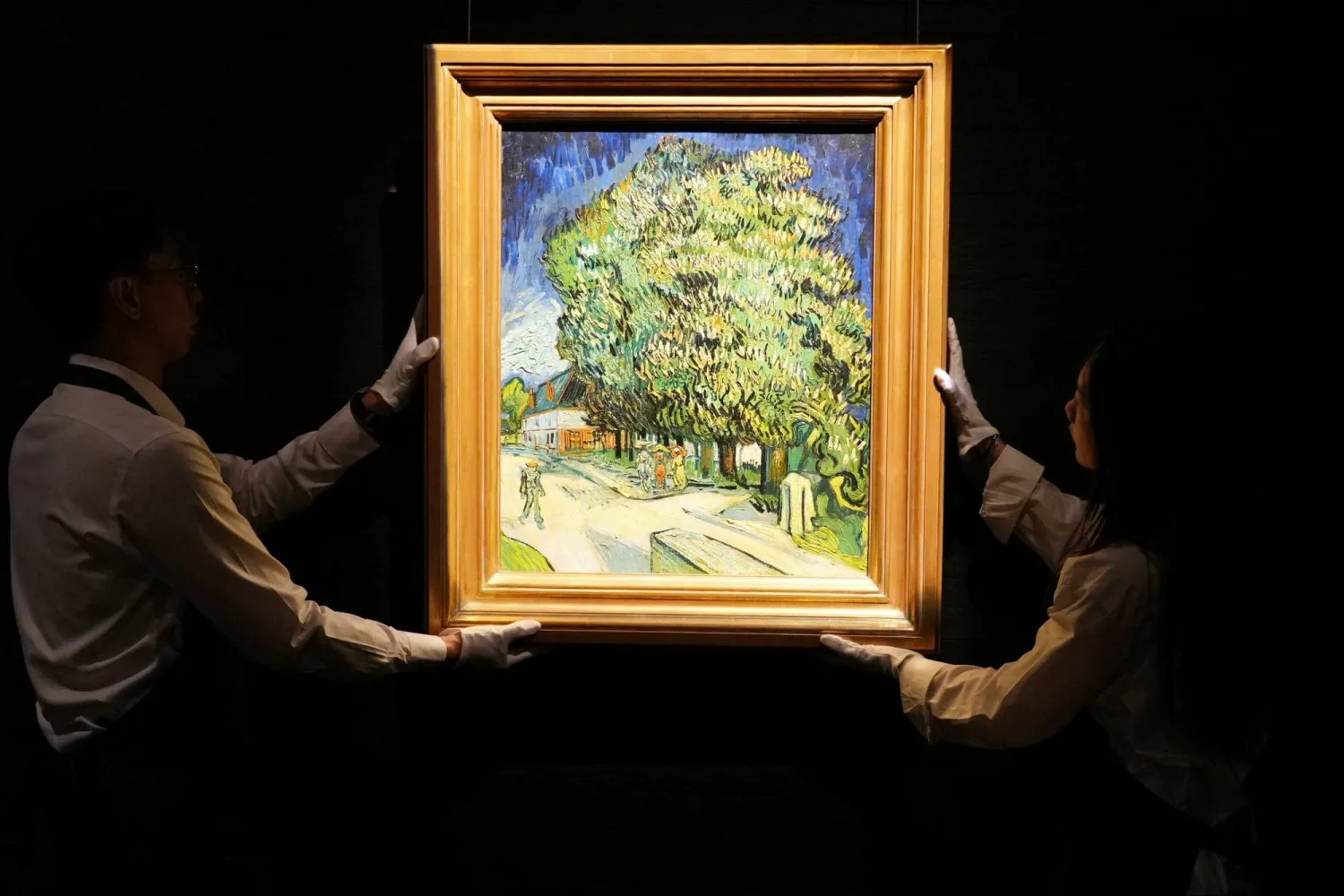
Staff members pose with Vincent van Gogh's "Chataigniers en fleurs" (Chestnut Trees in Blossom) at a media preview ahead of its auction in New York, at Sotheby's in Hong Kong, China, October 13, 2026. REUTERS/Joyce Zhou
TT

Van Gogh Work Unseen in Public for 60 Years on Show in Hong Kong

Staff members pose with Vincent van Gogh's "Chataigniers en fleurs" (Chestnut Trees in Blossom) at a media preview ahead of its auction in New York, at Sotheby's in Hong Kong, China, October 13, 2026. REUTERS/Joyce Zhou

Hundreds of people queued on Tuesday outside a Hong Kong gallery to see a Vincent van Gogh painting on public display for the first time in six decades.

The Dutch artist's "Chataigniers en fleurs" ("Chestnut Trees in Blossom") was on show in Hong Kong ahead of its November 18 auction in New York, where it is expected to smash records and fetch around $180 million, according to Sotheby's.

It was one of 12 works owned by late Argentine collectors Nelly Arrieta de Blaquier and Carlos Pedro Blaquier. Others by Claude Monet, Camille Pissarro and Paul Cezanne will also go under the hammer.

The van Gogh, which according to Sotheby's was unseen by the public for over 60 years, portrays a blossoming chestnut tree with a solitary man walking past three women in Japanese attire.

Completed in 1890, it is from the last two months of van Gogh's life.

"It's one of the last, most expressive and hopeful works by van Gogh in this final phase of his career," Scott Niichel, a vice chairman at Sotheby's, told AFP.

It is one of approximately 70 works van Gogh created after leaving the psychiatric asylum of Saint-Remy, where he had created his famous "The Starry Night.”

During these final days of his life, van Gogh was producing at a frantic rate -- averaging around one work a day.

He died shortly after at the age of 37, two days after shooting himself in the chest following well-documented mental health struggles.

"This manic frenzy of paint application suggests he has so much more to give, and he's just racing to put it to canvas," Niichel said, noting the thickness of the paint layers.

"Orchard with Cypresses" set the current record for a van Gogh price point, selling for $117.2 million in a 2022 auction.

Niichel said that "anything is possible" for who might claim the painting in November.

"Our revealing in Hong Kong suggests that Asia is certainly a possibility."


Egypt’s Fayoum Mummy Portraits to Travel Abroad for 1st Time after Restoration

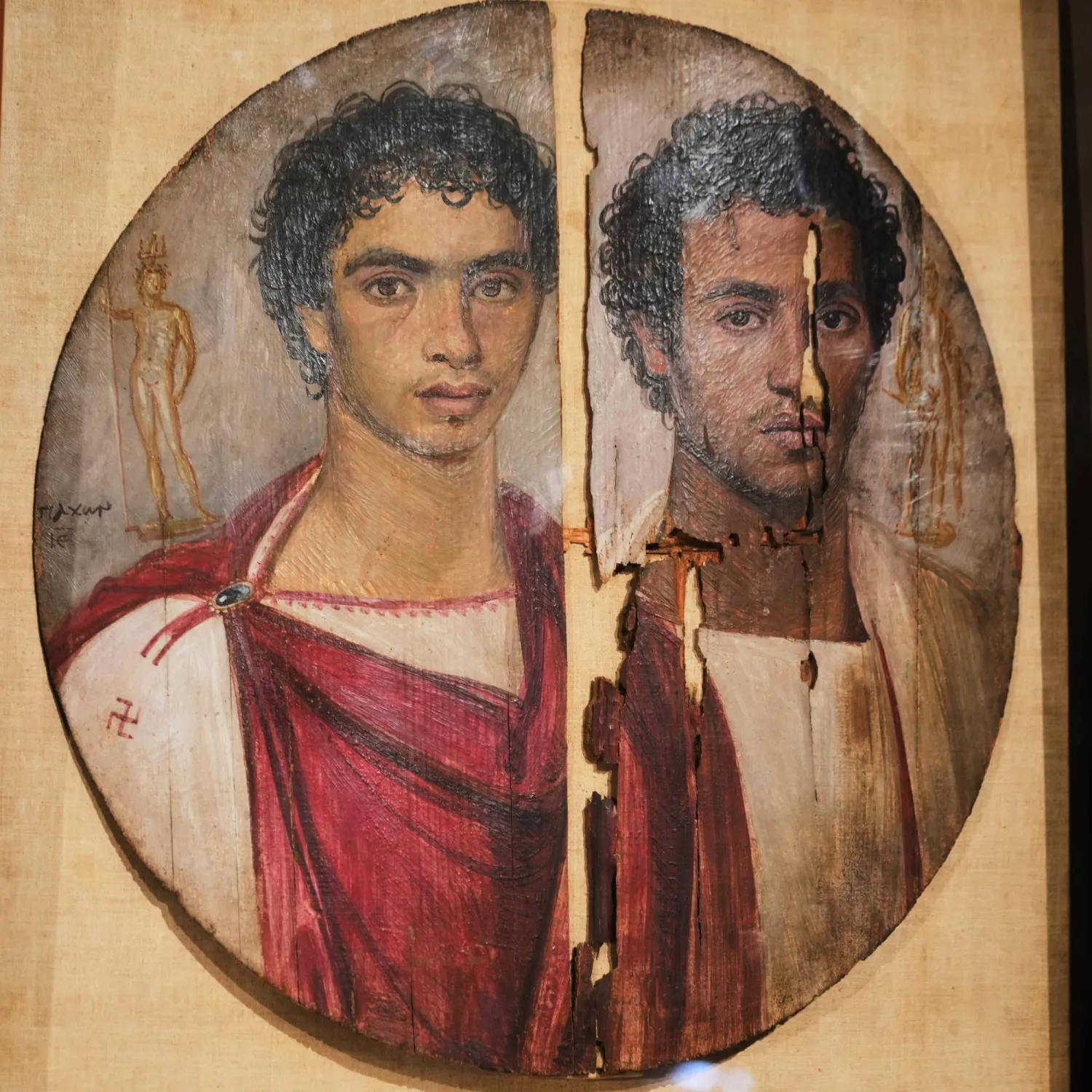
Fayoum portraits, "Tondo of the Two Brothers", Egyptian icons from the Greco-Roman period the 1st century BC, are displayed at the Egyptian Museum in Cairo, Egypt, Sunday, Oct. 11, 2026, after being restored. (AP Photo/Amr Nabil)
TT

Egypt’s Fayoum Mummy Portraits to Travel Abroad for 1st Time after Restoration

Fayoum portraits, "Tondo of the Two Brothers", Egyptian icons from the Greco-Roman period the 1st century BC, are displayed at the Egyptian Museum in Cairo, Egypt, Sunday, Oct. 11, 2026, after being restored. (AP Photo/Amr Nabil)

Egypt unveiled Sunday a restored version of the “Tondo of the Two Brothers,” a prized 2nd-century painting from the famed Fayoum portraits.

Specialists from Rome worked alongside conservators from the Egyptian Museum in Tahrir — where the collection is usually kept — for three weeks to restore the artwork, officials said at a press conference.

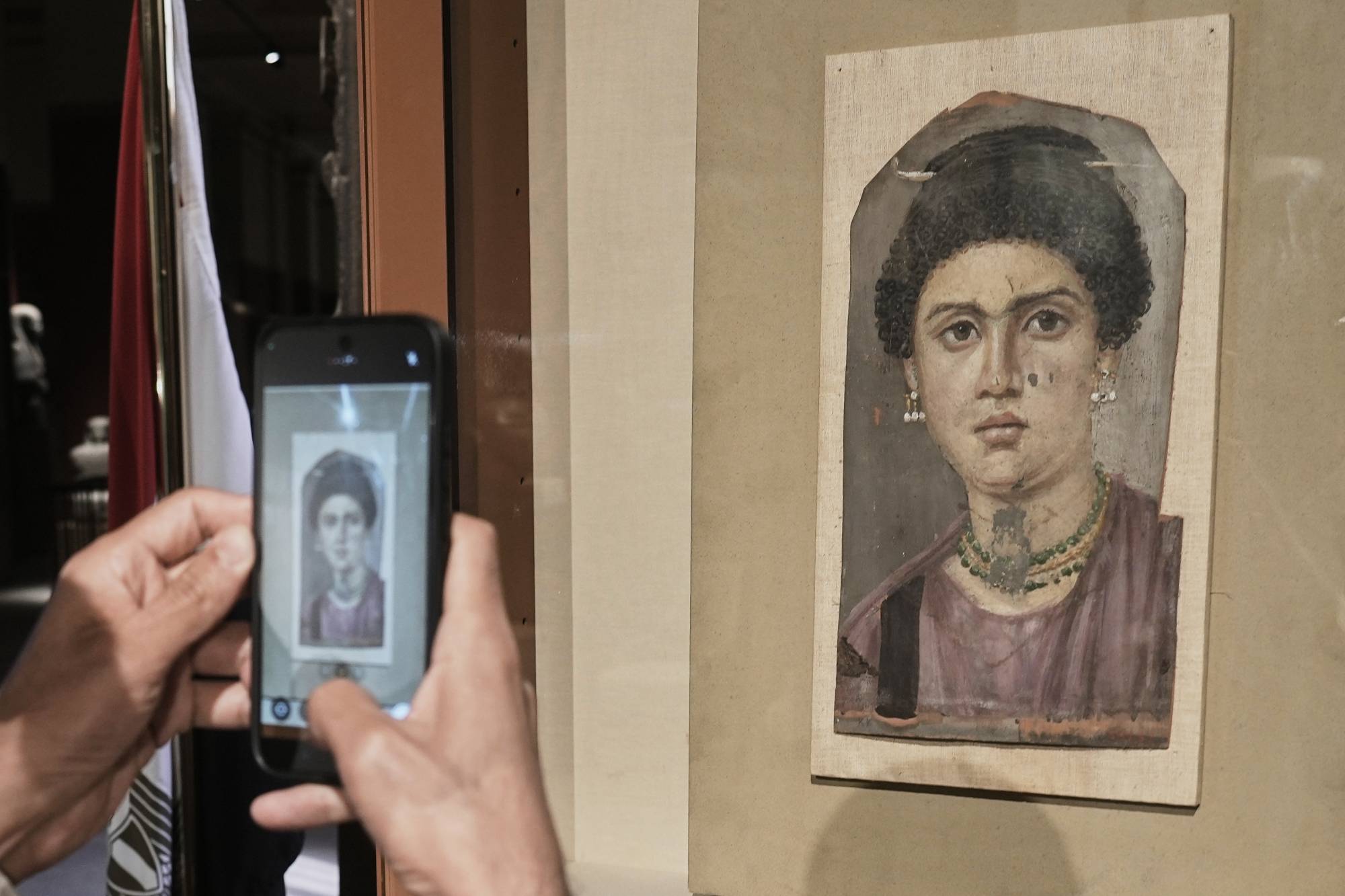
A visitor films one of Fayoum portraits, "Demos", from the Greco-Roman period the 1st century BC, at the Egyptian Museum in Cairo, Egypt, Sunday, Oct. 11, 2026, after being restored. (AP Photo/Amr Nabil)

Fayoum mummy portraits were painted primarily on thin wooden panels and placed over the faces of the deceased within mummy wrappings, combining Egyptian funerary traditions with artistic influences from the wider Greco-Roman world.

Egypt will lend a major part of the collection to a temporary exhibition in Rome, marking the first time it will travel abroad.

“The restoration of the Tondo of the Two Brothers is an important example of what can be achieved through international cooperation in the preservation and study of cultural heritage,” said Sherif Fathy, Egypt’s minister of tourism and antiquities. “Egypt and Italy share deep historical and cultural ties, and this project brings together Egyptian and Italian expertise to preserve an exceptional work of art for future generations.”

Experts describe the painting as unusual because of its circular shape and its depiction of two people instead of one, and rank it among the most vivid surviving portraits from Roman-era Egypt. It was painted using a technique in which pigments are mixed with molten wax, and restorers were able to recover the features of the brother on the right.

Aly Abdel Halim, director general of the Egyptian Museum in Tahrir, said the conservation required careful intervention because both the wooden support, damaged by termites, and the painted surface were fragile.

Fayoum portraits, "Tondo of the Two Brothers", Egyptian icons from the Greco-Roman period the 1st century BC, are displayed at the Egyptian Museum in Cairo, Egypt, Sunday, Oct. 11, 2026, after being restored. (AP Photo/Amr Nabil)

The portraits will be featured in an exhibition in Rome from November to May 2027, The Associated Press reported.

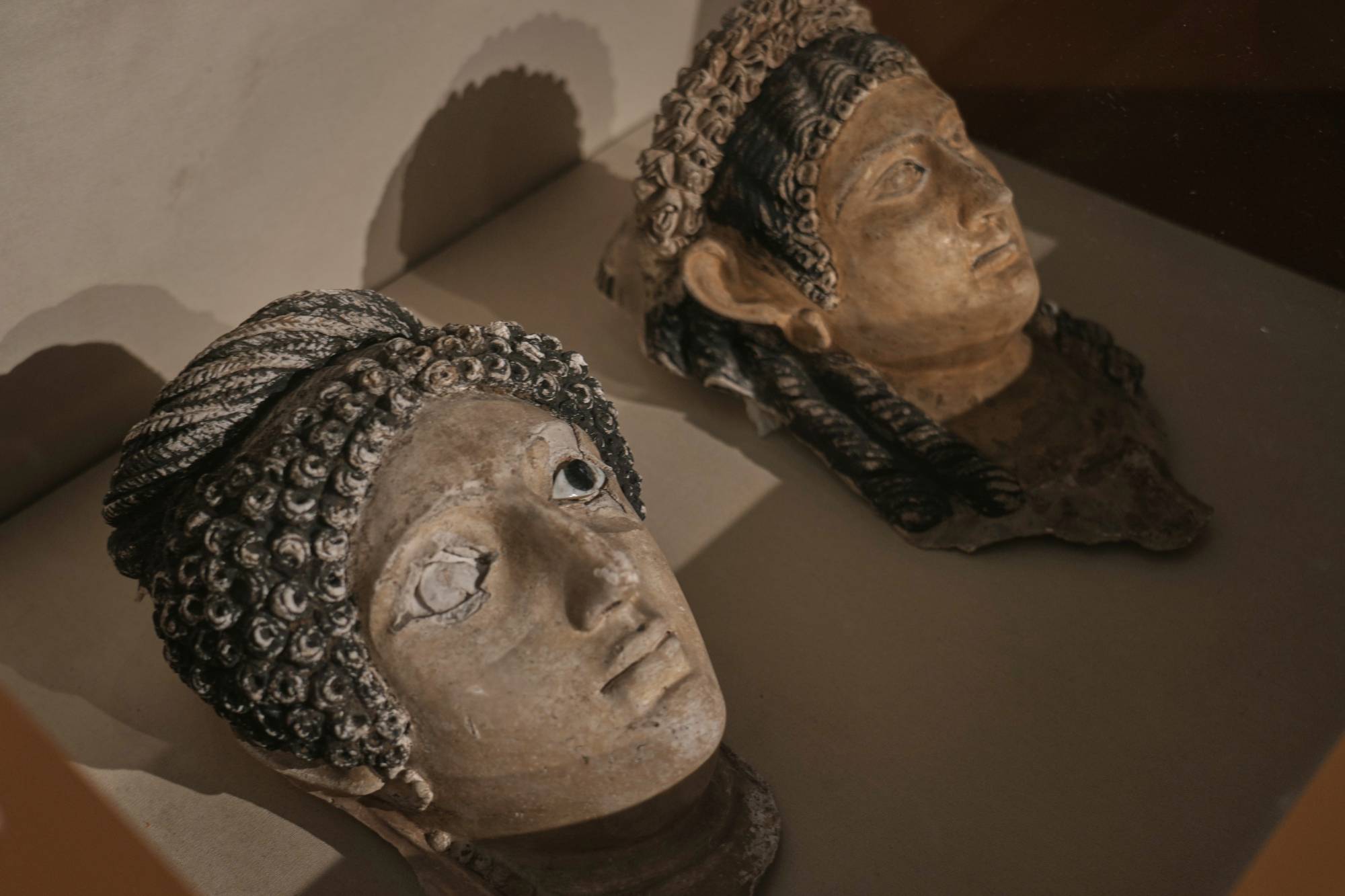
Tomaso Radaelli, chairman of MondoMostre, the exhibition’s organizer, said it will bring together more than 110 objects, including painted panels, funerary shrouds, masks, marble portraits, plaster casts and ancient jewelry.