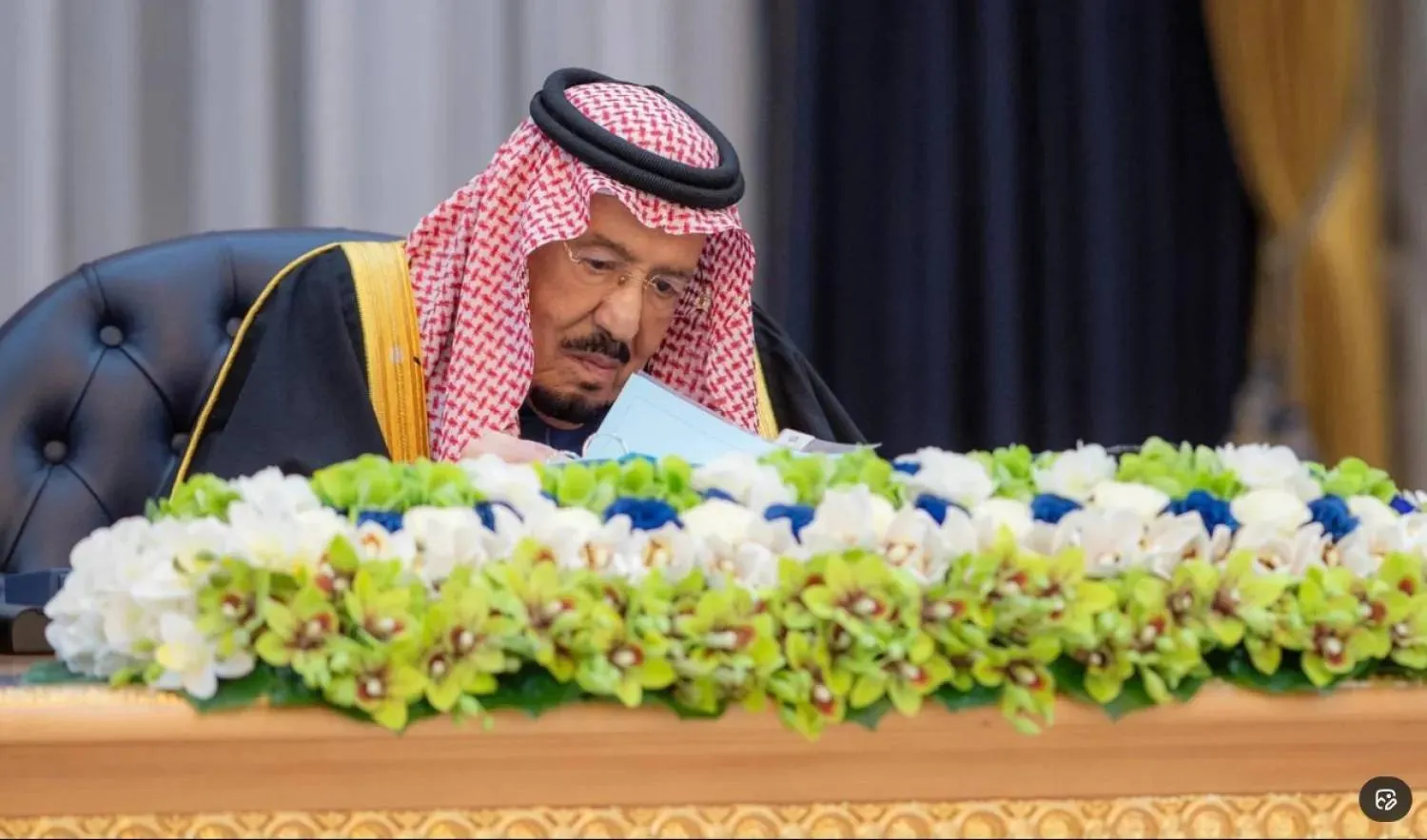

On the anniversary of the pledge of allegiance to the Custodian of the Two Holy Mosques, King Salman bin Abdulaziz, Saudi Arabia’s digital transformation stands as one of the most consequential shifts in the kingdom’s modern history.
What began as the use of technology to support state functions has evolved into a comprehensive digital model in which the economy, knowledge, and artificial intelligence are deeply intertwined.
Since King Salman assumed power in 2015, and guided by the vision of Crown Prince Mohammed bin Salman, Saudi Arabia has launched a far-reaching overhaul of its institutions, legislation, and governance structures.
These changes have repositioned the state around data, computing, and innovation, propelling the kingdom into the ranks of the world’s most advanced digital governments and ushering in a new era of computational sovereignty and artificial intelligence.
Since the launch of Vision 2030 in 2016, Saudi leadership has placed technology at the core of national transformation and economic diversification. The objective was not limited to providing electronic services, but to reshaping society and institutions to leverage the digital age fully.
Saudi Arabia and digital services
The United Nations E-Government Survey 2022 ranked Saudi Arabia in the highest category of the E-Government Development Index, placing the kingdom 31st out of 193 countries. Riyadh was also ranked among the top cities globally for the quality of online services.
The ranking reflects extensive government efforts to modernize communications infrastructure and services, positioning Saudi Arabia among countries rated “very high” in digital service delivery.
The report noted that digital transformation under Vision 2030 aims to reshape Saudi society and institutions toward a knowledge-based future, focusing on improving government services, stimulating investment and innovation, and aligning with sustainable development goals through world-class digital infrastructure.
Digital leadership during global crises
Saudi Arabia’s presidency of the G20 in 2020 under King Salman marked a historic moment that underscored the kingdom’s emergence as a global digital leader. Held at the height of the COVID-19 pandemic, the summit was held virtually, making it the first online G20 leaders’ summit.
The event demonstrated the maturity of Saudi Arabia’s digital infrastructure and its ability to host a major international gathering through secure and reliable digital platforms. It also highlighted the leadership’s use of technology and data to coordinate global responses to health and economic crises.
Under King Salman, the summit became a global model for how a digital state can continue to lead and make decisions under extreme circumstances, in line with Saudi Arabia’s vision of a smart government and a knowledge-based economy.
Digital sovereignty and artificial intelligence
As part of efforts to strengthen artificial intelligence infrastructure, the Saudi Data and Artificial Intelligence Authority announced in early 2026 the launch and operation of the Hexagon data center. The facility is one of the largest data centers in the region and the world’s largest government data center.
Hexagon is a cornerstone of Saudi Arabia’s digital sovereignty project, providing high-performance computing capabilities for storing and processing national data, training advanced AI models, and enabling government agencies and the private sector to develop intelligent solutions locally.
The project falls under the National Strategy for Data and Artificial Intelligence launched during King Salman’s reign, reflecting the leadership’s vision of data and AI as key enablers of development, economic leadership, and national sovereignty.
SDAIA and artificial intelligence
To implement Vision 2030, Saudi Arabia established new institutions focused on data and AI, led by the Saudi Data and Artificial Intelligence Authority (SDAIA). The authority was established by royal order on August 30, 2019, and reports directly to the prime minister.
SDAIA oversees all matters related to data, artificial intelligence, and big data, including protecting national data and developing national strategies.
Among its initiatives, SDAIA launched the National Data Bank, integrating more than 150 government datasets, and the Deem Government Cloud, which hosts more than 149 government data centers and provides cloud services to over 40 entities.
During the COVID-19 pandemic, SDAIA developed digital services including the Boroq virtual meetings platform, the Tawakkalna and Tabaud applications, and the unified national access service Nafath.
In September 2020, SDAIA adopted five national data governance policies covering data classification, personal data protection, data sharing, freedom of information, and open data, providing a framework for secure and transparent data exchange.
The National Strategy for Data and Artificial Intelligence was launched on October 21, 2020, with targets including placing Saudi Arabia among the top 15 countries in AI, the top 10 in open data, and the top 20 in scientific research contributions.
The strategy aims to train more than 20,000 specialists, attract 75 billion riyals in investment, and establish 300 AI-focused startups.
Digital government
On March 9, 2021, the Council of Ministers established the Digital Government Authority to replace the Yesser E-government program. The authority reports to the prime minister and serves as the national regulator for digital government activities.
Its mandate includes developing the national digital government strategy, setting technical standards, overseeing government cloud governance, and building national capabilities.
The authority aims to place Saudi Arabia among the world’s top 10 digital governments and, in 2022, launched the Digital Government Investment and Procurement Center, known as SADAF, to encourage private-sector participation and shift government digital services from capital expenditure to operational expenditure models.
Cybersecurity governance
Cybersecurity has been positioned as a core pillar of digital transformation. The National Cybersecurity Authority was established in 2017 by royal order to protect critical infrastructure, government services, and national interests.
The authority develops and implements the national cybersecurity strategy, manages cyber risk across sectors, operates national monitoring and response centers, and issues standards and controls. Updated Essential Cybersecurity Controls were issued in 2024, aligned with global standards such as NIST and ISO 27001.
Global digital rankings
Saudi Arabia has made notable advances in global digital government indicators. The World Bank’s Digital Government Maturity Index 2022 ranked the kingdom third globally and first regionally, with a maturity score of 97.13 percent.
The report showed scores of 96.29 percent for core government systems, 97.93 percent for service delivery, and 96.62 percent for citizen engagement.
Personal data protection
Saudi Arabia enacted the Personal Data Protection Law under Royal Decree No. M 19 in 2021. The law came into force on September 14, 2023, following a one-year transition period.
The law applies to entities inside the kingdom and those processing data of Saudi individuals abroad. It mandates the registration of data controllers, the appointment of data protection officers, the adoption of privacy policies, the conduct of impact assessments, and strict requirements for cross-border data transfers. Sensitive data is prohibited from use in marketing.
International digital cooperation
Saudi Arabia has also expanded its global digital role through the International Digital Cooperation Organization, launched in November 2020 and headquartered in Riyadh. Membership has grown to 11 countries.
The organization aims to promote inclusive digital prosperity through policy development and best practices, earning praise from United Nations officials for its potential to build digital capacity and share expertise.
From use to production in artificial intelligence
Saudi Arabia’s digital transformation has driven AI adoption across government sectors. The Ministry of Interior uses data analytics and crowd management technologies during Hajj and Umrah.
In healthcare, platforms such as Tawakkalna and Mawid have improved diagnostics and service delivery.
The Ministry of Transport has deployed algorithms to manage traffic and reduce accidents, while innovative city projects use connected infrastructure to improve municipal services, energy, and water management.
Saudi Arabia ranked first globally in the Government AI Strategy Index issued by Tortoise Intelligence in 2023, reflecting strength in policy development, talent building, and technology adoption.
Strategic partnership with the United States
On May 12, 2025, ahead of a visit by US President Donald Trump, Crown Prince Mohammed bin Salman announced the launch of HUMAIN, an artificial intelligence company owned by the Public Investment Fund.
The company aims to develop data centers, cloud computing services, and advanced AI models, positioning Saudi Arabia as a global technology hub.
The launch coincided with Trump’s visit and the Saudi US Investment Forum in Riyadh, where artificial intelligence featured prominently. Subsequent agreements included US approval to export advanced Nvidia Blackwell chips to Saudi Arabia and the UAE, reflecting confidence in the kingdom’s AI ambitions.
Saudi Arabia and the United States announced a strategic AI partnership to build AI infrastructure, advance research, and deploy applications across sectors. Major US technology firms, including AMD, Oracle, and Microsoft, invested billions of dollars in data centers and cloud services.
A shift from consumption to production
The establishment of HUMAIN marks a turning point in Saudi Arabia’s AI journey, signaling a move from technology consumption to production.
The company aims to develop Arabic large language models, build domestic high-performance computing infrastructure, launch AI platforms for government and industry, and form partnerships with global technology leaders.
HUMAIN will also focus on developing national talent and linking research with industrial applications, reinforcing Saudi Arabia’s transition toward computational sovereignty.
Saudi Arabia’s digital transformation under King Salman has gone beyond upgrading government services, laying the foundations of an integrated digital state built on data, regulation, and advanced technologies.
Institutions such as SDAIA, the Digital Government Authority, and the National Cybersecurity Authority form a comprehensive digital governance ecosystem that has propelled the kingdom to leading global positions in digital government and artificial intelligence.