


Ukraine, Russia to Hold Second Day of Direct Talks on US Plan

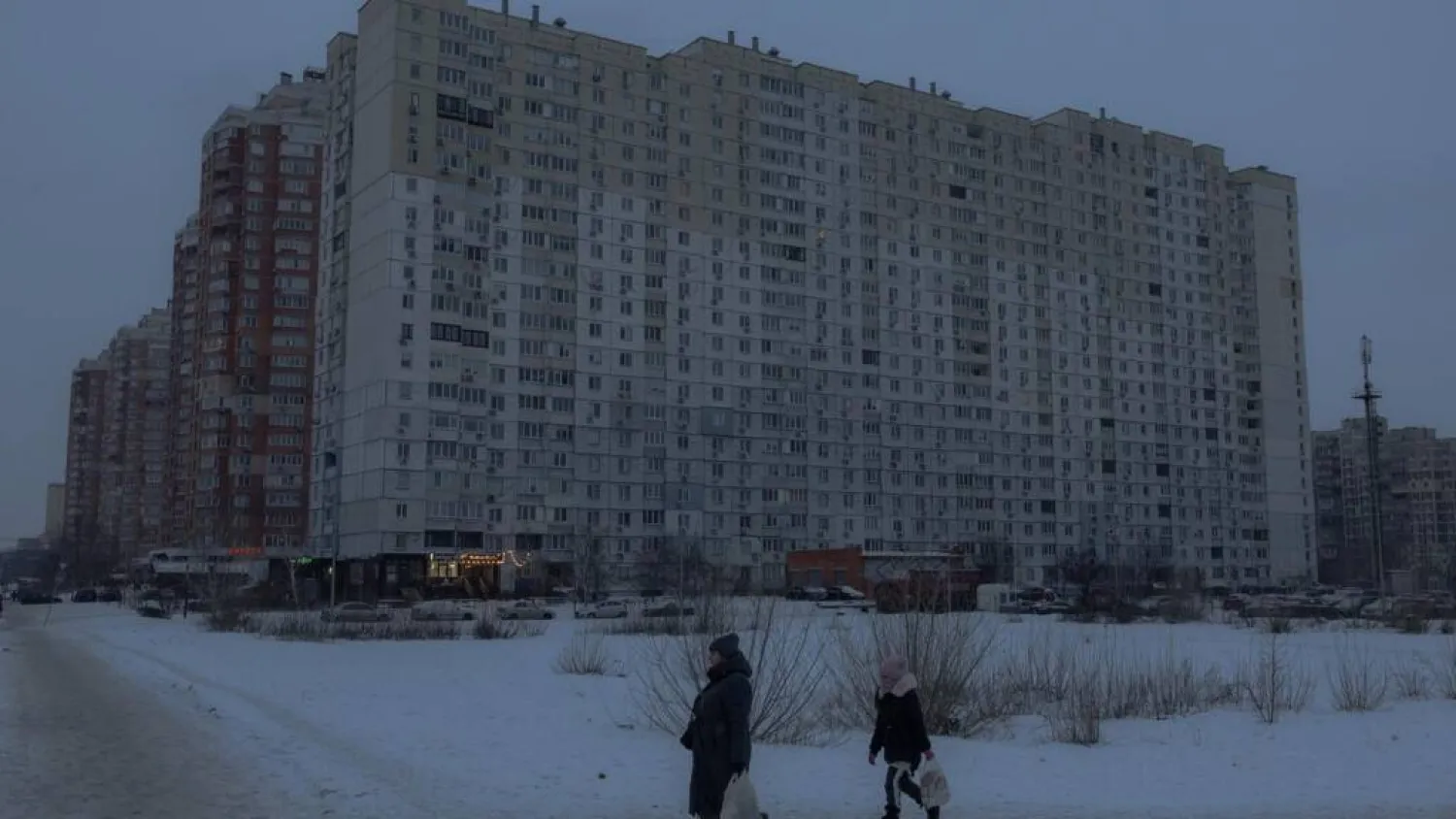
The talks began as thousands of people in Kyiv were without heating in sub-zero temperatures due to Russian strikes. Roman PILIPEY / AFP
TT

Ukraine, Russia to Hold Second Day of Direct Talks on US Plan

The talks began as thousands of people in Kyiv were without heating in sub-zero temperatures due to Russian strikes. Roman PILIPEY / AFP

Negotiators from Russia, Ukraine and the United States will meet in Abu Dhabi on Saturday for the second day of negotiations on a plan being pushed by US President Donald Trump to end the almost four-year-long war.

The first known direct contact between Ukrainian and Russian officials on the proposal began Friday. Ukraine's chief negotiator Rustem Umerov said the discussions focused "on the parameters for ending Russia's war and the further logic of the negotiation process".

An initial US draft drew heavy criticism in Kyiv and western Europe for hewing too closely to Moscow's line, while later iterations prompted pushback from Russia for floating the idea of European peacekeepers, said AFP.

Both sides say the fate of territory in the eastern Donbas region is one of the main outstanding issues in the search for a settlement to a war that has killed tens of thousands, displaced millions and decimated parts of Ukraine.

Trump met Ukrainian President Volodymyr Zelensky at the World Economic Forum in Davos on Thursday and US envoy Steve Witkoff later held talks with Vladimir Putin in the Kremlin.

Donbas dispute

The Emirates meeting began as thousands of people in Kyiv were without heating in sub-zero temperatures due to Russian strikes.

The European Union, which has sent hundreds of generators, accused Moscow of "deliberately depriving civilians of heat".

Further Russian strikes killed one person and injured 22 others in Ukraine's capital and the northeastern city of Kharkiv overnight, authorities said early Saturday.

"Kyiv is under a massive enemy attack," Mayor Vitali Klitschko posted on Telegram, adding that several non-residential buildings had been hit and telling residents to remain in shelters.

While diplomacy to end Europe's worst conflict since World War II has gained pace, Moscow and Kyiv appear deadlocked over the issue of territory.

Hours after Putin met Witkoff -- and Trump's son-in-law Jared Kushner -- in Moscow, the Kremlin said its maximalist demand that Kyiv withdraw from the eastern Donbas region still stood.

"Russia's position is well known on the fact that Ukraine, Ukrainian armed forces, have to leave the territory of the Donbas," Kremlin spokesman Dmitry Peskov said.

"This is a very important condition," he added.

Kyiv, which still controls around 20 percent of the eastern region, has rejected such terms.

'God willing'

Ahead of the talks Zelensky told reporters territory remained a "key issue" -- with Moscow having said it is not dropping its demand that Kyiv pull out of its eastern Donbas region.

In a post online, he later added: "It is necessary that not only Ukraine has the desire to end the war and achieve full security, but that a similar desire somehow emerges in Russia as well."

Russian and Ukrainian negotiators are last known to have met face-to-face in Istanbul last summer, in talks that ended only in deals to exchange captured soldiers.

The Abu Dhabi meeting is the first time they have faced each other to talk about the Trump administration's plan.

Putin has repeatedly said Moscow intends to get full control of eastern Ukraine by force if talks fail.

After the Russia-US talks in the Kremlin, Putin aide Yuri Ushakov insisted Moscow was "genuinely interested in resolving" the war diplomatically.

Trump has in the past pressured Ukraine to agree to terms that Kyiv sees as capitulation.

Trump repeated on Wednesday his belief that Putin and Zelensky were close to a deal.

"I believe they're at a point now where they can come together and get a deal done. And if they don't, they're stupid -- that goes for both of them," he said.



Russian Attacks on Ukraine Kill 1 and Wound 18 ahead of Second Day of Peace Talks

A resident inspects a compound of car workshop and garage hit during Russian overnight drone and missile strikes, amid Russia's attack on Ukraine, in Kyiv, Ukraine January 24, 2026. REUTERS/Valentyn Makarenko
TT

Russian Attacks on Ukraine Kill 1 and Wound 18 ahead of Second Day of Peace Talks

A resident inspects a compound of car workshop and garage hit during Russian overnight drone and missile strikes, amid Russia's attack on Ukraine, in Kyiv, Ukraine January 24, 2026. REUTERS/Valentyn Makarenko

Russian attacks on Ukraine killed at least one person and wounded 18 overnight into Saturday, as negotiators from Ukraine, Russia and the United States were set to meet in Abu Dhabi for a second day of talks to end Russia’s nearly four-year full-scale invasion.

One person was killed and four wounded in Russian drone attacks on the Ukrainian capital, Kyiv, according to Kyiv City Military Administration head Tymur Tkachenko.

In Ukraine’s second-largest city, Kharkiv, drone attacks wounded 14 people, the State Emergency Service said Saturday.

The attacks came as envoys were expected to meet in the United Arab Emirates for a second day of talks on Saturday. The talks are the first known instance that officials from the Trump administration have sat down with both countries as part of Washington’s push for progress to end Moscow’s nearly 4-year-old invasion.

There has been a flurry of diplomatic activity in recent days, from Switzerland to the Kremlin, even though serious obstacles remain between both sides, said The Associated Press.

While Ukrainian President Volodymyr Zelenskyy said in Davos, Switzerland, on Thursday that a potential peace deal was “nearly ready,” certain sensitive sticking points — most notably those related to territorial issues — remain unresolved.

Just hours before the three-way talks began, Russian President Vladimir Putin discussed a Ukraine settlement with US President Donald Trump’s envoys Steve Witkoff and Jared Kushner during marathon overnight talks. The Kremlin insists that to reach a peace deal, Kyiv must withdraw its troops from the areas in the east that Russia illegally annexed but has not fully captured.


US Military to Prioritize Homeland and Curbing China, Limit Support for Allies

The US Navy's USS Cincinnati (LCS-20) littoral combat ship (L) arrives for a port call at the Ream Naval base, located in Cambodia's southern coast in Preah Sihanouk province, on January 24, 2026. (Photo by Suy SE / AFP)
TT

US Military to Prioritize Homeland and Curbing China, Limit Support for Allies

The US Navy's USS Cincinnati (LCS-20) littoral combat ship (L) arrives for a port call at the Ream Naval base, located in Cambodia's southern coast in Preah Sihanouk province, on January 24, 2026. (Photo by Suy SE / AFP)

The US military will prioritize protecting the homeland and deterring China while providing "more limited" support to allies in Europe and elsewhere, a Pentagon strategy document released on Friday said.

The 2026 National Defense Strategy (NDS) marks a significant departure from past Pentagon policy, both in its emphasis on allies taking on increased burdens with less backing from Washington, and its softer tone on traditional foes China and Russia.

"As US forces focus on homeland defense and the Indo-Pacific, our allies and partners elsewhere will take primary responsibility for their own defense with critical but more limited support from American forces," the strategy said.

The previous NDS -- released under President Donald Trump's predecessor Joe Biden -- described China as Washington's most consequential challenge and said that Russia posed an "acute threat."

The new document however urges "respectful relations" with Beijing -- while making no mention of US ally Taiwan, which China claims as its territory -- and describing the threat from Russia as a "persistent but manageable" one affecting NATO's eastern members.

Both the Biden and Trump strategies say homeland defense is important, but their descriptions of the threats facing the US differ significantly.

The Trump administration's NDS takes aim at the past administration for neglecting border security, saying this led to a "flood of illegal aliens" and widespread narcotics trafficking.

"Border security is national security," and the Pentagon "will therefore prioritize efforts to seal our borders, repel forms of invasion, and deport illegal aliens," it said.

- 'Restore military dominance' -

Biden meanwhile focused on China and Russia, saying they posed "more dangerous challenges to security and safety at home" than even the threat of terrorism.

The 2026 NDS also includes no mention of the dangers of climate change -- which Biden's administration had identified as an "emerging threat."

Like Trump's national security strategy, which was released last month, the NDS elevates Latin America to the top of the US agenda.

The Pentagon "will restore American military dominance in the Western Hemisphere. We will use it to protect our Homeland and our access to key terrain throughout the region," the NDS said.

The document called that the "Trump Corollary to the Monroe Doctrine," a reference to the declaration two centuries ago by the then-young United States that Latin America was off limits to rival powers.

Since returning to office last year, Trump has repeatedly employed the US military in Latin America, ordering a shocking raid that captured Venezuelan leader Nicolas Maduro and his wife, as well as strikes on more than 30 alleged drug-smuggling boats that have killed more than 100 people.

Trump's administration has provided no definitive evidence that the sunken vessels were involved in drug trafficking, and international law experts and rights groups say the strikes likely amount to extrajudicial killings as they have apparently targeted civilians who do not pose an immediate threat to the United States.


Cocaine Lab Explosion Kills Nine in Colombia

A shot showing the southern part of the city of Cali, Colombia (AFP)
TT

Cocaine Lab Explosion Kills Nine in Colombia

A shot showing the southern part of the city of Cali, Colombia (AFP)

A cocaine laboratory explosion killed nine people Friday on Colombia's Pacific coast, police said.

The blast happened in southwest Narino department in a cocaine-producing area inhabited by the Indigenous Awa people and rife with illegal armed groups. Eight people were wounded, said AFP.

These victims worked for the National Coordinator Bolivarian Army, a renegade faction of the now defunct FARC guerrilla group.

A preliminary investigation found a gas cylinder exploded while being used to make the drug, police colonel John Jairo Urrea told local media via video.

"Due to human error and the handling of gas cylinders... the place went up in flames in a matter of seconds," the renegade group said in a statement.

It rejected a 2016 peace agreement with the FARC that ended decades of fighting, and remains in talks with the leftist government of President Gustavo Petro.

The region where the lab blew up has been crucial to cocaine trafficking to the United States for decades, and drug smugglers have strengthened their local control with the help of Mexican cartels.

Ecuador's conservative President Daniel Noboa launched a trade war with Colombia Wednesday by imposing a 30 percent tariff on imports from its neighbor. He accused leftist President Gustavo Petro's government of not doing enough to curb drug trafficking along their shared border.

Petro hit back with the same tariff, and defended his efforts against illegal drug traffickers.

After facing similar accusations from US President Donald Trump over the past year, Petro is slated to travel to Washington for meetings with his US counterpart on February 3.