


US Military to Prioritize Homeland and Curbing China, Limit Support for Allies

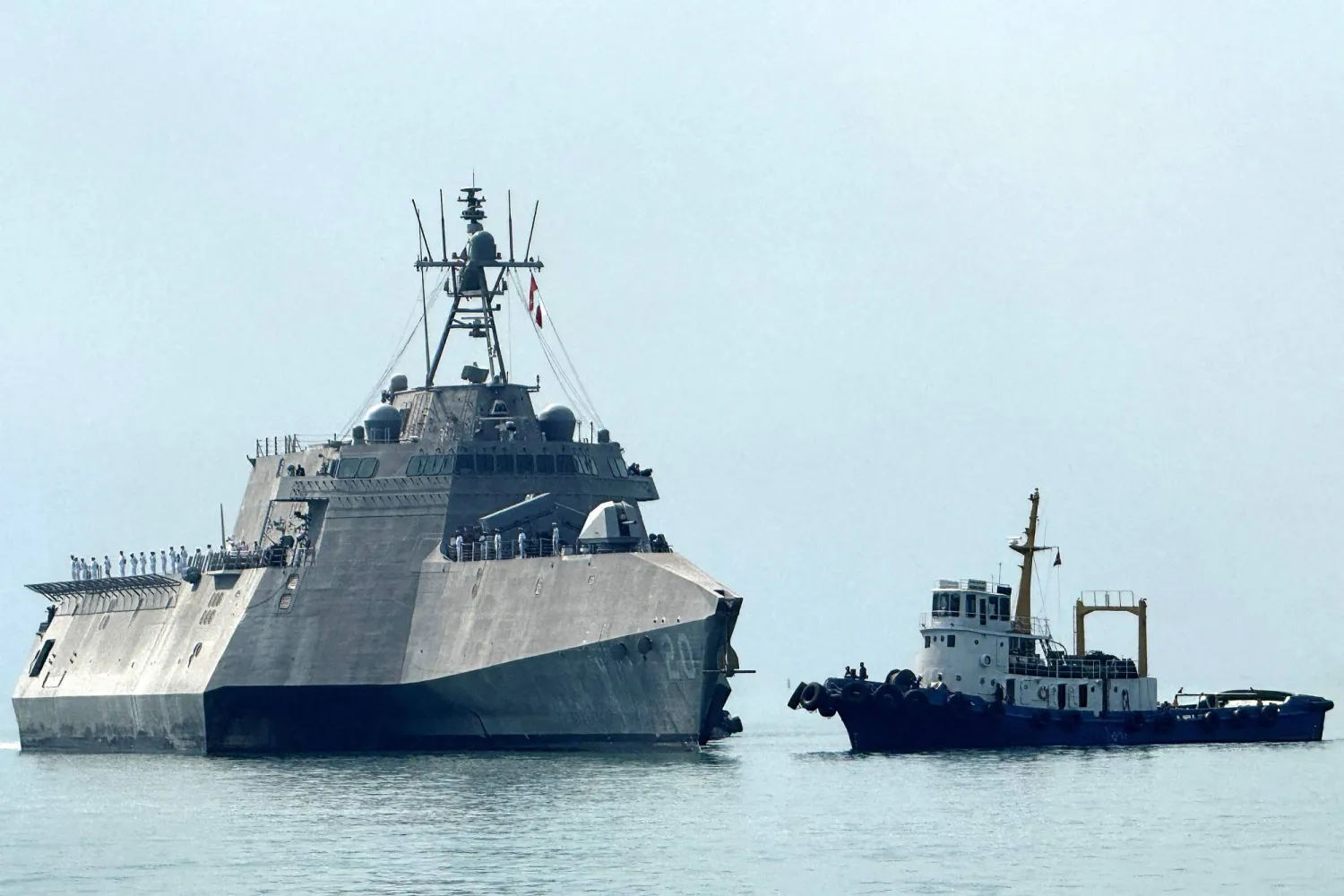
The US Navy's USS Cincinnati (LCS-20) littoral combat ship (L) arrives for a port call at the Ream Naval base, located in Cambodia's southern coast in Preah Sihanouk province, on January 24, 2026. (Photo by Suy SE / AFP)
TT

US Military to Prioritize Homeland and Curbing China, Limit Support for Allies

The US Navy's USS Cincinnati (LCS-20) littoral combat ship (L) arrives for a port call at the Ream Naval base, located in Cambodia's southern coast in Preah Sihanouk province, on January 24, 2026. (Photo by Suy SE / AFP)

The US military will prioritize protecting the homeland and deterring China while providing "more limited" support to allies in Europe and elsewhere, a Pentagon strategy document released on Friday said.

The 2026 National Defense Strategy (NDS) marks a significant departure from past Pentagon policy, both in its emphasis on allies taking on increased burdens with less backing from Washington, and its softer tone on traditional foes China and Russia.

"As US forces focus on homeland defense and the Indo-Pacific, our allies and partners elsewhere will take primary responsibility for their own defense with critical but more limited support from American forces," the strategy said.

The previous NDS -- released under President Donald Trump's predecessor Joe Biden -- described China as Washington's most consequential challenge and said that Russia posed an "acute threat."

The new document however urges "respectful relations" with Beijing -- while making no mention of US ally Taiwan, which China claims as its territory -- and describing the threat from Russia as a "persistent but manageable" one affecting NATO's eastern members.

Both the Biden and Trump strategies say homeland defense is important, but their descriptions of the threats facing the US differ significantly.

The Trump administration's NDS takes aim at the past administration for neglecting border security, saying this led to a "flood of illegal aliens" and widespread narcotics trafficking.

"Border security is national security," and the Pentagon "will therefore prioritize efforts to seal our borders, repel forms of invasion, and deport illegal aliens," it said.

- 'Restore military dominance' -

Biden meanwhile focused on China and Russia, saying they posed "more dangerous challenges to security and safety at home" than even the threat of terrorism.

The 2026 NDS also includes no mention of the dangers of climate change -- which Biden's administration had identified as an "emerging threat."

Like Trump's national security strategy, which was released last month, the NDS elevates Latin America to the top of the US agenda.

The Pentagon "will restore American military dominance in the Western Hemisphere. We will use it to protect our Homeland and our access to key terrain throughout the region," the NDS said.

The document called that the "Trump Corollary to the Monroe Doctrine," a reference to the declaration two centuries ago by the then-young United States that Latin America was off limits to rival powers.

Since returning to office last year, Trump has repeatedly employed the US military in Latin America, ordering a shocking raid that captured Venezuelan leader Nicolas Maduro and his wife, as well as strikes on more than 30 alleged drug-smuggling boats that have killed more than 100 people.

Trump's administration has provided no definitive evidence that the sunken vessels were involved in drug trafficking, and international law experts and rights groups say the strikes likely amount to extrajudicial killings as they have apparently targeted civilians who do not pose an immediate threat to the United States.



Greenland, Denmark Set Aside Troubled History to Face Down Trump

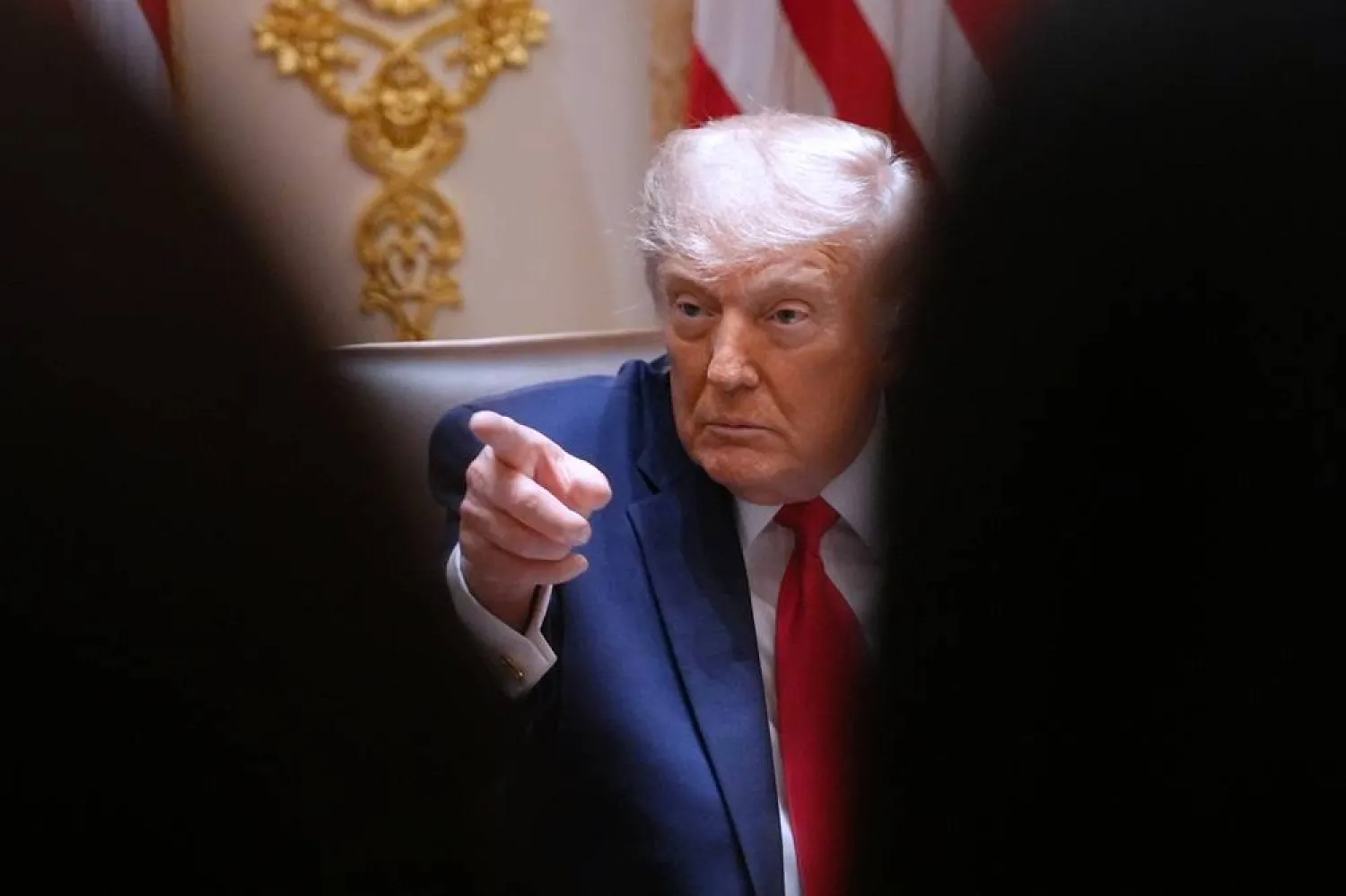
Greenland and Denmark put their difficult past to one side to face the greater threat from the United States. Jonathan NACKSTRAND / AFP
TT

Greenland, Denmark Set Aside Troubled History to Face Down Trump

Greenland and Denmark put their difficult past to one side to face the greater threat from the United States. Jonathan NACKSTRAND / AFP

Greenland and Denmark have formed a united front to face down US President Donald Trump, momentarily setting aside the troubled history between them.

The Arctic island, a Danish colony for three centuries, still has a complicated relationship with Denmark, which now rules it as an autonomous territory.

Greenland's main political parties all want independence, but disagree on how exactly to get there. Trump's designs on the island led them to forge a coalition government in March last year, AFP said.

Greenland's leaders made clear last week they had no interest in Trump's bid to take over the vast island -- an idea he pushed hard, before backing off on Wednesday after reaching what he called a framework deal on Arctic security with NATO's secretary-general.

"Greenlanders still have a lot of grievances concerning Denmark's lack of ability to reconsider its colonial past," said Ulrik Pram Gad, a researcher at the Danish Institute for International Studies (DIIS).

"But Trump's pressure has prompted the wide majority of the political spectrum that forms (Greenland's) coalition government to put independence preparations -- always a long-term project -- aside for now," he told AFP.

"The clear European support has made this easier in the sense that the relation to Denmark feels a lot less claustrophobic when joined by others," he added.

While the main Greenland parties differ on how to achieve independence, the growing US pressure led them in March 2025 to put their differences to one side to form their coalition.

Only the Naleraq party, which wants a fast track to independence, stayed in opposition.

At the height of the crisis, Greenland's Prime Minister Jens-Frederik Nielsen made it clear that if the government had to choose between the United States and Denmark, it would choose Denmark.

Colonial past

Trump's talk of a framework deal negotiated with NATO chief Mark Rutte prompted Denmark and Greenland to reiterate that only they can take decisions concerning them.

In the last month of diplomatic back-and-forth, Greenland and Denmark have presented a united front, speaking with one voice.

On January 14, Greenland's Foreign Minister Vivian Motzfeldt was in Washington alongside her Danish counterpart Lars Lokke Rasmussen for talks with US Vice President JD Vance and Secretary of State Marco Rubio.

By Monday, she was in Brussels for talks with Rutte, this time with Denmark's Defense Minister Troels Lund Poulsen.

But that unity conceals the scars of their colonial past.

Greenland was a Danish colony from the early 18th century. It became a Danish territory in 1953, a full part of Denmark -- before becoming an autonomous territory in 1979, a status that was strengthened in 2009.

"It's a long history. It has gone through different stages," said Astrid Andersen, a specialist in Danish-Greenlandic relations at the Danish Institute for International Studies.

"Any colonial relation is a question of domination and there have been some injustices committed."

Forced sterilization

Those injustices include a 1951 social experiment in which 22 Inuit children were forcibly separated from their families and prevented from speaking Greenlandic -- part of bid to create a Danish-speaking elite.

In 2021, the six still alive were each awarded compensation of 250,000 crowns (33,500 euros).

Another dark chapter was Denmark's efforts from the 1960s and for three decades on to reduce the birth rate in Greenland.

Several thousand women and teenagers -- at least 4,000 -- had IUDs fitted without their consent to prevent them conceiving.

Prime Minister Mette Frederiksen has presented her apologies to the women concerned -- nearly half of whom were unable to have children -- and a compensation procedure is underway.

Denmark's social services even used controversial psychological tests to -- as they saw it -- evaluate if Greenlandic mothers were fit to be parents.

A 2022 study showed that in metropolitan Denmark, children born to Greenlandic families were five to seven times more at risk of being placed in children's homes than those born to Danish families.

The use of such tests was only discontinued last year.

The recent debate over these issues has, for the moment, been put to one side, said Andersen.

"Right now I think there's a general agreement with a few exceptions that the common opponent right now is Trump and we kind of need to face this together somehow."


Russian Attacks on Ukraine Kill 1 and Wound 18 ahead of Second Day of Peace Talks

A resident inspects a compound of car workshop and garage hit during Russian overnight drone and missile strikes, amid Russia's attack on Ukraine, in Kyiv, Ukraine January 24, 2026. REUTERS/Valentyn Makarenko
TT

Russian Attacks on Ukraine Kill 1 and Wound 18 ahead of Second Day of Peace Talks

A resident inspects a compound of car workshop and garage hit during Russian overnight drone and missile strikes, amid Russia's attack on Ukraine, in Kyiv, Ukraine January 24, 2026. REUTERS/Valentyn Makarenko

Russian attacks on Ukraine killed at least one person and wounded 18 overnight into Saturday, as negotiators from Ukraine, Russia and the United States were set to meet in Abu Dhabi for a second day of talks to end Russia’s nearly four-year full-scale invasion.

One person was killed and four wounded in Russian drone attacks on the Ukrainian capital, Kyiv, according to Kyiv City Military Administration head Tymur Tkachenko.

In Ukraine’s second-largest city, Kharkiv, drone attacks wounded 14 people, the State Emergency Service said Saturday.

The attacks came as envoys were expected to meet in the United Arab Emirates for a second day of talks on Saturday. The talks are the first known instance that officials from the Trump administration have sat down with both countries as part of Washington’s push for progress to end Moscow’s nearly 4-year-old invasion.

There has been a flurry of diplomatic activity in recent days, from Switzerland to the Kremlin, even though serious obstacles remain between both sides, said The Associated Press.

While Ukrainian President Volodymyr Zelenskyy said in Davos, Switzerland, on Thursday that a potential peace deal was “nearly ready,” certain sensitive sticking points — most notably those related to territorial issues — remain unresolved.

Just hours before the three-way talks began, Russian President Vladimir Putin discussed a Ukraine settlement with US President Donald Trump’s envoys Steve Witkoff and Jared Kushner during marathon overnight talks. The Kremlin insists that to reach a peace deal, Kyiv must withdraw its troops from the areas in the east that Russia illegally annexed but has not fully captured.


Cocaine Lab Explosion Kills Nine in Colombia

A shot showing the southern part of the city of Cali, Colombia (AFP)
TT

Cocaine Lab Explosion Kills Nine in Colombia

A shot showing the southern part of the city of Cali, Colombia (AFP)

A cocaine laboratory explosion killed nine people Friday on Colombia's Pacific coast, police said.

The blast happened in southwest Narino department in a cocaine-producing area inhabited by the Indigenous Awa people and rife with illegal armed groups. Eight people were wounded, said AFP.

These victims worked for the National Coordinator Bolivarian Army, a renegade faction of the now defunct FARC guerrilla group.

A preliminary investigation found a gas cylinder exploded while being used to make the drug, police colonel John Jairo Urrea told local media via video.

"Due to human error and the handling of gas cylinders... the place went up in flames in a matter of seconds," the renegade group said in a statement.

It rejected a 2016 peace agreement with the FARC that ended decades of fighting, and remains in talks with the leftist government of President Gustavo Petro.

The region where the lab blew up has been crucial to cocaine trafficking to the United States for decades, and drug smugglers have strengthened their local control with the help of Mexican cartels.

Ecuador's conservative President Daniel Noboa launched a trade war with Colombia Wednesday by imposing a 30 percent tariff on imports from its neighbor. He accused leftist President Gustavo Petro's government of not doing enough to curb drug trafficking along their shared border.

Petro hit back with the same tariff, and defended his efforts against illegal drug traffickers.

After facing similar accusations from US President Donald Trump over the past year, Petro is slated to travel to Washington for meetings with his US counterpart on February 3.