


Trump Threatens Canada with 100% Tariff Over Pending Trade Deal with China

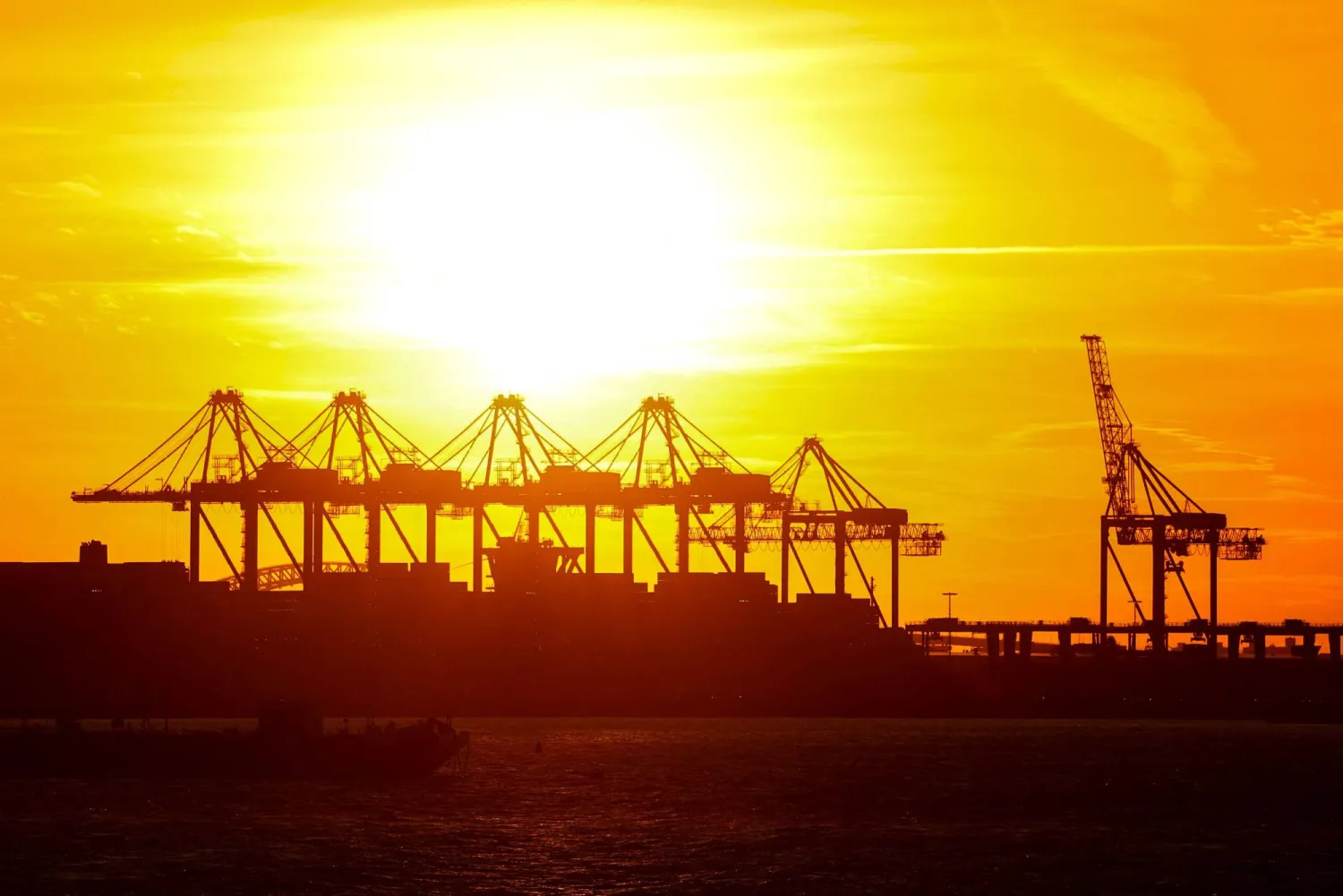
 Container loading cranes are seen at the Port Jersey Container Terminal in Jersey City, New Jersey on January 23, 2026. (AFP)
Container loading cranes are seen at the Port Jersey Container Terminal in Jersey City, New Jersey on January 23, 2026. (AFP)
TT

Trump Threatens Canada with 100% Tariff Over Pending Trade Deal with China

 Container loading cranes are seen at the Port Jersey Container Terminal in Jersey City, New Jersey on January 23, 2026. (AFP)
Container loading cranes are seen at the Port Jersey Container Terminal in Jersey City, New Jersey on January 23, 2026. (AFP)

US President Donald Trump said on Saturday he would impose a 100% tariff on Canada if it follows through on a trade deal with China and warned Canadian Prime Minister Mark Carney that a deal would endanger his country.

"China will eat Canada alive, completely devour it, including the destruction of their businesses, social fabric, and general way of life," Trump wrote on Truth Social.

"If Canada makes a deal with China, it will immediately be hit with a 100% Tariff against all Canadian goods and products coming into the USA."

In a video on Saturday, Carney urged Canadians to buy domestic products, but did not directly mention Trump's tariff threat.

"With our economy under threat from abroad, Canadians have made a choice to focus on what we can control," Carney said. "We can’t control what other nations do, we can be our own best customer."

The Canadian prime minister this month traveled to China to reset the countries' strained relationship and reached a trade deal with Canada's second-biggest trading partner ‌after the United States.

Immediately ‌after Carney's China trip, Trump sounded supportive. "It's a good thing for him to sign ‌a ⁠trade deal," Trump told ‌reporters at the White House on January 16. "If you can get a deal with China, you should do that."

"There is no pursuit of a free trade deal with China. What was achieved was resolution on several important tariff issues," Dominic LeBlanc, the minister responsible for Canada-US Trade, said on Saturday in a post on X.

US-Canada tensions have grown in recent days following Carney's criticism of Trump's pursuit of Greenland.

MORE PRESSURE ON CANADIAN INDUSTRIES

Trump on Saturday suggested China would try to use Canada to evade US tariffs. "If Governor Carney thinks he is going to make Canada a 'Drop Off Port' for China to send goods and products into the United States, he is sorely mistaken," Trump said, using a title for Carney that ⁠refers to Trump's past calls for Canada to become the 51st US state.

In a second Saturday post, Trump said, "The last thing the World needs is to have China take ‌over Canada. It’s NOT going to happen, or even come close to happening!"

If Trump ‍makes good on Saturday's threat, the new tariff would greatly increase ‍US duties on its northern neighbor, adding pressure to Canadian industrial sectors such as metal manufacturing, autos and machinery.

Relations between Carney and ‍Trump seemed relatively placid until the Canadian leader this week spoke out forcefully against Trump's pursuit of Greenland.

Carney subsequently at the World Economic Forum called on nations to accept that a rules-based global order was over and pointed to Canada as an example of how "middle powers" might act together to avoid being victimized by American hegemony.

Carney, during his speech in Davos, Switzerland, did not directly call out Trump or the United States by name. However, the prime minister argued that "middle powers must act together because if you are not at the table, you are on the menu."

Many world leaders and industry titans present at the Switzerland confab responded with a standing ovation.

Trump shot back ⁠in his own Davos speech and said Canada "lives because of the United States," a statement that Carney rejected on Thursday.

"Canada and the United States have built a remarkable partnership in the economy, in security and in rich cultural exchange," Carney said in Quebec. "Canada doesn't live because of the United States. Canada thrives because we are Canadian." Since then, Trump has dug in against Canada, revoking its invitation to his Board of Peace that he wants to deal with international conflicts and Gaza’s future.

After Carney’s election last year, Trump and Carney shared a congenial tone. "I think the relationship is going to be very strong," Trump said at the time.

But Trump this month dismissed the mega trade deal between the United States, Canada, and Mexico — up for renegotiation in July — as "irrelevant."

Trump has issued many tariff threats since returning to the presidency, though in several cases he has paused them or relented entirely during negotiations. This week, Trump backed off his recent threat to impose stiff tariffs on European allies after the NATO chief and other leaders promised to step up security in the Arctic.

"We hope the two governments can come to a better understanding quickly that ‌can alleviate further concerns for businesses who face the immediate consequences of torqued up uncertainty," the Canadian Chamber of Commerce's Matthew Holmes said in a statement.


Saudi Arabia’s flynas, Syrian Civil Aviation Authority Partner to Launch 'flynas Syria'

The new airline will operate commercial air transport services in accordance with approved regulations and standards (flynas)
TT

Saudi Arabia’s flynas, Syrian Civil Aviation Authority Partner to Launch 'flynas Syria'

The new airline will operate commercial air transport services in accordance with approved regulations and standards (flynas)

Saudi budget carrier flynas has signed an agreement with the Syrian General Authority of Civil Aviation and Air Transport to establish a new commercial airline under the name "flynas Syria," with operations scheduled to begin in the fourth quarter of 2026.

Saturday’s agreement comes within the framework of bilateral cooperation between Saudi Arabia and Syria, as well as the strategic investment agreements between the two countries, coordinated with the Saudi Ministry of Investment and the Syrian General Authority of Civil Aviation and Air Transport.

The new airline will operate commercial air transport services in accordance with approved regulations and standards, meeting the highest safety and aviation security requirements. All licensing and operational procedures will be completed in coordination with the relevant authorities.

The carrier will be established as a joint venture, with 51% ownership held by the Syrian General Authority of Civil Aviation and Air Transport and 49% by flynas.

The new airline will operate flights to several destinations across the Middle East, Africa, and Europe. This expansion aims to bolster air traffic to and from Syria, enhance regional and international connectivity, and meet growing demand for air travel.

"This step is part of our commitment to supporting high-quality cross-border investments. The aviation sector is a key enabler of economic development, and the establishment of 'flynas Syria' serves as a model for constructive investment cooperation,” said Saudi Minister of Investment Khalid Al-Falih.

“This partnership enhances economic integration and market connectivity and supports development goals by advancing air transport infrastructure, ultimately serving the mutual interests of both nations and promoting regional economic stability,” he added.

President of the Syrian General Authority of Civil Aviation and Air Transport Omar Hosari also stated that the establishment of flynas Syria represents a strategic step within a comprehensive national vision aimed at rebuilding and developing Syria's civil aviation sector on modern economic and regulatory foundations.

“This will be achieved while balancing safety requirements, operational sustainability, investment stimulation, and passenger services. The partnership reflects the state's orientation toward smart cooperation models with trusted regional partners, ensuring the transfer of expertise, the development of national capabilities, and the enhancement of Syria's air connectivity with regional and international destinations, in line with global best practices in the air transport industry."

flynas Chairman Ayed Al-Jeaid stated that the company continues to pursue strategies aimed at growth and international expansion, describing the agreement as a historic milestone in the company's journey and a promising investment model in partnership with Syria.

flynas CEO Bander Al-mohanna said the step represents a qualitative leap in the company's strategy and financial performance, highlighting the transfer of the company's low-cost aviation experience to the Syrian market to support regional and international air connectivity.

flynas currently operates 23 weekly flights from Riyadh, Jeddah, and Dammam to Damascus, including two daily direct flights from Riyadh, one daily flight from Jeddah, and two weekly flights from Dammam.

The airline made history on June 5, 2025, by adding the Syrian capital to its network, becoming the first Saudi carrier to resume scheduled flights to Damascus.


Egypt to Establish Middle East’s 1st Sodium Cyanide Plant for Gold Extraction

CEO of the General Authority for Investment and Free Zones (GAFI) Mohamed el-Gawsaky, received a delegation from DrasChem Specialty Chemicals (Egyptian Cabinet)
TT

Egypt to Establish Middle East’s 1st Sodium Cyanide Plant for Gold Extraction

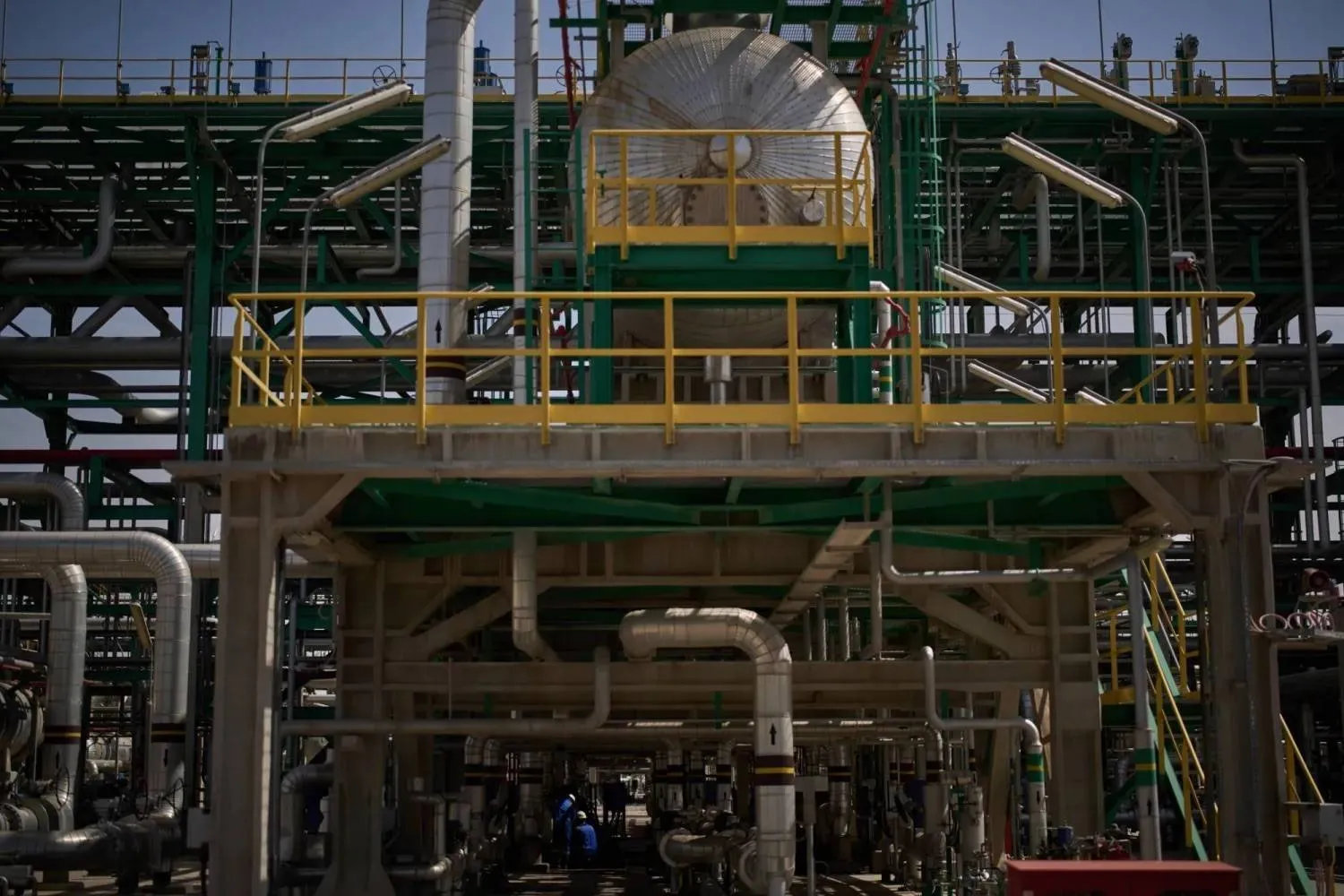
CEO of the General Authority for Investment and Free Zones (GAFI) Mohamed el-Gawsaky, received a delegation from DrasChem Specialty Chemicals (Egyptian Cabinet)

The Egyptian government has announced the establishment of the first sodium cyanide production plant in the Middle East in Alexandria Governorate on the Mediterranean coast, with an annual production capacity of 50,000 tons and investments of $200 million in the first phase.

In a statement, the cabinet said on Saturday that CEO of the General Authority for Investment and Free Zones (GAFI) Mohamed el-Gawsaky met with a delegation from DrasChem Specialty Chemicals, a Private Free Zone company, to discuss the steps required to establish the company’s sodium cyanide production facility at the Sidi Kerir Petrochemicals Complex in Alexandria.

The DrasChem project plans to begin production in 2028 following the completion of the facility’s first phase, with initial investments estimated at $200 million. This phase targets the production and export of 50,000 tons of sodium cyanide annually, a key input in gold extraction.

The second phase will focus on either doubling production capacity or manufacturing additional sodium cyanide derivatives, while a third phase will target the production of sodium-ion battery components.

El-Gawsaky said the project aligns with the country’s developmental priorities, particularly those related to increasing exports, transferring and localizing advanced technology, deepening local manufacturing and creating sustainable job opportunities.

The CEO also noted that the plant would benefit from the results of Egypt's economic reform program, which has caused significant improvements in investment, trade, and logistics indicators.

El-Gawsaky urged Egyptian companies, including DrasChem, to adopt integrated, export-oriented industrial strategies, with a particular focus on African markets.

He said the Ministry of Investment and Foreign Trade aims to increase exports by $4 billion. The focus will be on sectors with high competitive advantages, particularly the chemicals sector.

He also highlighted that DrasChem’s sodium cyanide products are of strategic importance to gold mines in Africa, which account for about a quarter of global gold production.

Bassem El-Shemmy, Vice President for Strategic Partnerships at Austria-based Petrochemical Holding GmbH, the largest shareholder in DrasChem, said project partner Draslovka of the Czech Republic will, for the first time, transfer its proprietary technology - developed at its facilities in the US - to Africa and the Middle East.

This move, he said, will help position Egypt as a regional hub for gold extraction technologies and sodium-ion battery manufacturing, a more sustainable and cost-effective alternative to lithium-ion batteries.

For his part, Andrey Yurkevich, Deputy Managing Director for Strategy and Business Development at Petrochemical Holding GmbH, said the DrasChem facility will create up to 500 direct jobs and generate approximately $120 million in annual foreign-currency revenues.

He said that the project will enhance the stability and sustainability of local supply chains and strengthen Egypt’s regional standing as home to the first sodium cyanide production facility in both Egypt and the Middle East.


Türkiye Says to Maintain Tight Monetary Policy, Fiscal Discipline

FILE PHOTO: People shop at a green market in Istanbul, Türkiye, October 22, 2025. REUTERS/Dilara Senkaya/File Photo
TT

Türkiye Says to Maintain Tight Monetary Policy, Fiscal Discipline

FILE PHOTO: People shop at a green market in Istanbul, Türkiye, October 22, 2025. REUTERS/Dilara Senkaya/File Photo

Türkiye will maintain its tight monetary policy and keep fiscal discipline in order to further lower inflation, Vice President Cevdet Yilmaz said on Saturday.

Turkish consumer price inflation leapt to a higher-than-expected 4.84% month-on-month in January, official data showed on Tuesday, driven in part by new year price adjustments and a jump in food and non-alcoholic drinks prices. Annual inflation dipped to 30.65%.

Speaking at an event in the southeastern province of Siirt, Yilmaz said ⁠the 45-point fall in inflation since May 2024 was not enough, adding the government was on a path to further lower consumer prices.

"We will maintain our tight monetary policy, we will keep our disciplined fiscal policies, we are determined to do this. But ⁠these are not enough either. On the other hand, we have to contribute to our battle with inflation through our supply-side policies," he added, according to Reuters.

Last month, Türkiye's central bank lowered its key interest rate by a less-than-expected 100 basis points to 37%, citing firming inflation, pricing behavior and expectations that threaten the disinflation process.

After a brief policy reversal early last year due to political turmoil, the bank's ⁠rate-cutting cycle resumed in July with a 300-basis-point cut, followed by more subsequent cuts.

The bank has eased by 1,300 points since 2024, when it held rates at 50% for most of the year to wrestle down inflation expectations.

Last month, the head of the Turkish Exporters Assembly told reporters late that Türkiye's extended period of tight economic policies had hurt manufacturers, with high interest rates and costs posing risks to the country's official $282 billion export target.