


Iraqi Lawmakers to Elect President Tuesday, PM Appointment Next

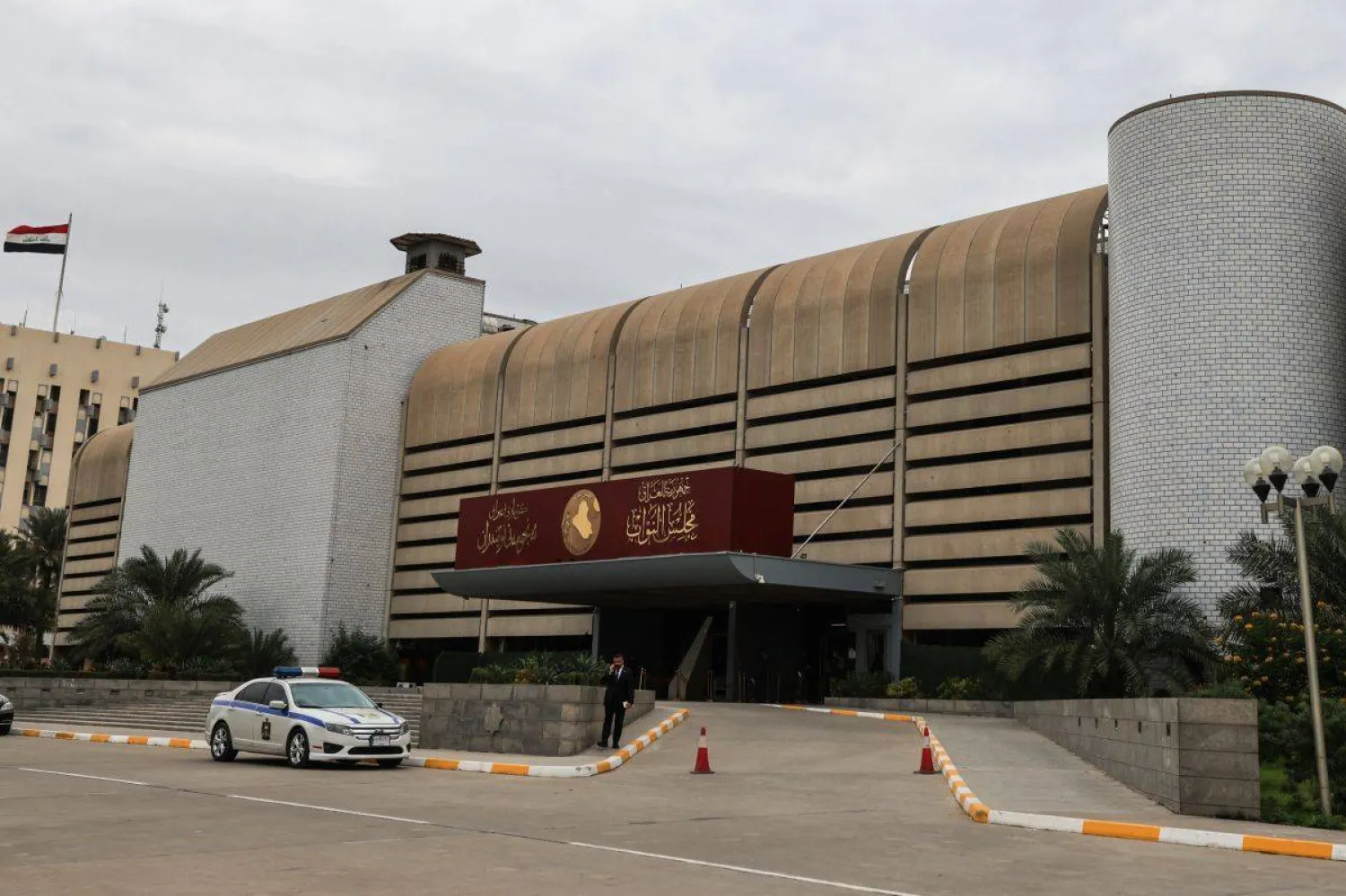
 A photograph shows Iraq's parliament building in Baghdad as newly elected lawmakers are due to hold their first session on Dec. 29, 2025. (AFP)
A photograph shows Iraq's parliament building in Baghdad as newly elected lawmakers are due to hold their first session on Dec. 29, 2025. (AFP)
TT

Iraqi Lawmakers to Elect President Tuesday, PM Appointment Next

 A photograph shows Iraq's parliament building in Baghdad as newly elected lawmakers are due to hold their first session on Dec. 29, 2025. (AFP)
A photograph shows Iraq's parliament building in Baghdad as newly elected lawmakers are due to hold their first session on Dec. 29, 2025. (AFP)

Iraq's parliament will meet on Tuesday to elect the country's new president, who will then appoint a prime minister expected to be Nouri al-Maliki after he was endorsed by the largest Shiite bloc.

By convention, a Shiite holds the post of prime minister, the parliament speaker is Sunni and the largely ceremonial presidency goes to a Kurd.

Parliamentary speaker Haibat al-Halbousi announced on Sunday that the new parliament will convene on Tuesday to elect a president, according to the official INA press agency.

The president will then have 15 days to appoint a prime minister, who is usually nominated by the largest Shiite bloc formed through post-election alliances.

On Saturday, the Coordination Framework alliance -- whose Shiiite factions have varying links to Iran -- endorsed former prime minister and powerbroker Maliki as the country's next premier.

The alliance, to which Maliki belongs, spoke of his "political and administrative experience and his record in running the state".

Kurdish parties have yet to agree on a presidential candidate, who must be endorsed by other blocs and win a two-thirds majority in parliament.

The presidency is usually held by the Patriotic Union of Kurdistan (PUK). This year, the rival Kurdistan Democratic Party (KDP) named its own candidate: Foreign Minister Fuad Hussein.

Although Maliki's endorsement effectively guarantees him the post, forming a new government remains a daunting challenge that could drag on for months and still fail.

The designated premier has one month to form a government and present it to parliament for a vote of confidence.

The 75-year-old Maliki, a shrewd politician, is set to return to power at a time of seismic changes in the Middle East, as Tehran's regional influence wanes and tensions with Washington rise.

Government formation in Iraq must balance internal political dynamics and power-sharing among major parties, all under the continued influence of Iraq's two main allies: Iran and the United States.

A close Iran ally, Maliki will be expected to address Washington's longstanding demand that Baghdad dismantle Tehran-backed factions, many of which are designated terrorist groups by the US.

Last month, Iraqi officials and diplomats told AFP that Washington demanded the eventual government exclude Iran-backed armed groups, even though most of them hold seats in parliament, and have seen their political and financial clout increase.

But Iraq is struggling with weak economic growth and cannot risk punitive measures by the US, which has already sanctioned several Iraqi entities, accusing them of helping Tehran evade sanctions.



US Embassy Urges Americans to Leave Iraq

A photograph shows the damage following a reported drone strike on the US embassy in Baghdad's fortified "Green Zone" on March 14, 2026. (Photo by Murtadha RIDHA / AFP)
TT

US Embassy Urges Americans to Leave Iraq

A photograph shows the damage following a reported drone strike on the US embassy in Baghdad's fortified "Green Zone" on March 14, 2026. (Photo by Murtadha RIDHA / AFP)

US citizens should leave Iraq immediately, the US embassy in Baghdad said in an updated security alert ⁠on Saturday, following ⁠an overnight missile attack on the ⁠embassy's building.

"US citizens choosing to remain in Iraq are strongly encouraged to reconsider in light of the ⁠significant ⁠threat posed by Iran-aligned terrorist militia groups," the embassy said.


Israel Threatens to Strike Ambulances in Lebanon in Hezbollah Fighting

Rescue workers carry a body from an apartment destroyed in an Israeli airstrike in the southern port city of Sidon, Lebanon, Saturday, March 14, 2026. (AP Photo/Mohammad Zaatari)
TT

Israel Threatens to Strike Ambulances in Lebanon in Hezbollah Fighting

Rescue workers carry a body from an apartment destroyed in an Israeli airstrike in the southern port city of Sidon, Lebanon, Saturday, March 14, 2026. (AP Photo/Mohammad Zaatari)

The Israeli military warned on Saturday that it may strike ambulances and medical facilities which it said were being used unlawfully by Hezbollah in Lebanon, though it did not provide evidence for the claim.

"As part of its terrorist activities, Hezbollah is using ambulances extensively for military purposes," the Israeli military's Arabic spokesman Avichai Adraee said on X, adding that such use must immediately stop, AFP reported.

"If this practice does not stop, Israel will act in accordance with international law against any military activity carried out by the terrorist group Hezbollah using these facilities and ambulances," Adraee said.

A Hezbollah official said that the group was not using ambulances and medical facilities for military purposes.

The Israeli military did not immediately respond to a request to provide evidence that Hezbollah was using medical facilities or ambulances unlawfully.

At least 26 medics and first responders have been killed in Israeli strikes since March 2 according to the Lebanese Health Ministry. The Israeli military says it takes precautions to try to reduce any harm to civilians.

On Friday, Israeli aircraft dropped flyers over Beirut threatening to inflict damage on Lebanon similar to the devastation wrought on Gaza during Israel's two-year war with Palestinian militant group Hamas. Much of Gaza has been reduced to rubble and its population largely displaced.

On Friday Israel bombed a bridge in southern Lebanon which it said was being used by Hezbollah and Israeli Defense Minister Israel Katz threatened to strike national infrastructure exploited by Hezbollah.

Israel has deployed more troops to its northern border with Lebanon, and has signalled it is planning for a long campaign.

An Israeli official told Reuters on Friday that the campaign against Hezbollah would likely be intensified and continue even after strikes on Iran die down.

The official said that attacks on civilian infrastructure were being debated by the decision-makers.

Hezbollah leader Naim Qassem said on Friday that his group was prepared for a long confrontation.


UN Chief Says 'Diplomatic Avenues' Available to Stop War in Lebanon

Israeli soldiers work on the belts for their tanks at a staging area in the Upper Galilee in northern Israel near the border with Lebanon on March 13, 2026.  (Photo by Odd ANDERSEN / AFP) /
Israeli soldiers work on the belts for their tanks at a staging area in the Upper Galilee in northern Israel near the border with Lebanon on March 13, 2026. (Photo by Odd ANDERSEN / AFP) /
TT

UN Chief Says 'Diplomatic Avenues' Available to Stop War in Lebanon

Israeli soldiers work on the belts for their tanks at a staging area in the Upper Galilee in northern Israel near the border with Lebanon on March 13, 2026.  (Photo by Odd ANDERSEN / AFP) /
Israeli soldiers work on the belts for their tanks at a staging area in the Upper Galilee in northern Israel near the border with Lebanon on March 13, 2026. (Photo by Odd ANDERSEN / AFP) /

UN chief Antonio Guterres said Saturday on a visit to Beirut that diplomatic channels remained open to end the war between Israel and Iran-backed Hezbollah and urged the international community to support Lebanon.

"There is no military solution, only diplomacy, dialogue and full implementation of the UN Charter and Security Council resolutions. The diplomatic avenues are available, including through my special coordinator for Lebanon... and through key member states," he said.

Lebanon was dragged into the Middle East war last week when militant group Hezbollah attacked Israel in response to the killing of Iranian supreme leader Ali Khamenei in US-Israeli strikes.

"We are doing everything we can now to bring about an immediate de-escalation and the cessation of hostilities," Guterres told reporters.

"My special coordinator is engaging with all actors around the clock to bring the parties to the table and UNIFIL peacekeepers... remain in position," he said, referring to the UN Interim Force in Lebanon.

He said attacks against peacekeepers and positions were "completely unacceptable and they must stop. They are in breach of international law and may constitute war crimes".

Three peacekeepers serving with the Ghanaian contingent were wounded earlier this month in south Lebanon.

Guterres arrived in Beirut on Friday for what he called a "solidarity" visit, and launched a $325 million humanitarian appeal to support Lebanon as it responds to the displacement crisis.

On Saturday, he urged support for the Lebanese government, which last year committed to disarming Hezbollah.

"My message to the international community is simply step up your engagement, empower the Lebanese state and support the Lebanese Armed Forces to secure the capabilities and resources they need. Respond generously to the humanitarian appeal," he said.

The Israeli army has issued sweeping evacuation orders to residents of south Lebanon and Beirut's southern suburbs, with the Norwegian Refugee Council saying they cover 14 percent of Lebanese territory.

"Evacuation orders in a situation where so many vulnerable populations exist in the areas that are asked to be evacuated does not create enough security for civilians, and whatever does not create enough security for civilians inevitably becomes in violation of international humanitarian law," Guterres said.