


Lebanon Says Israeli Strike on South Kills One

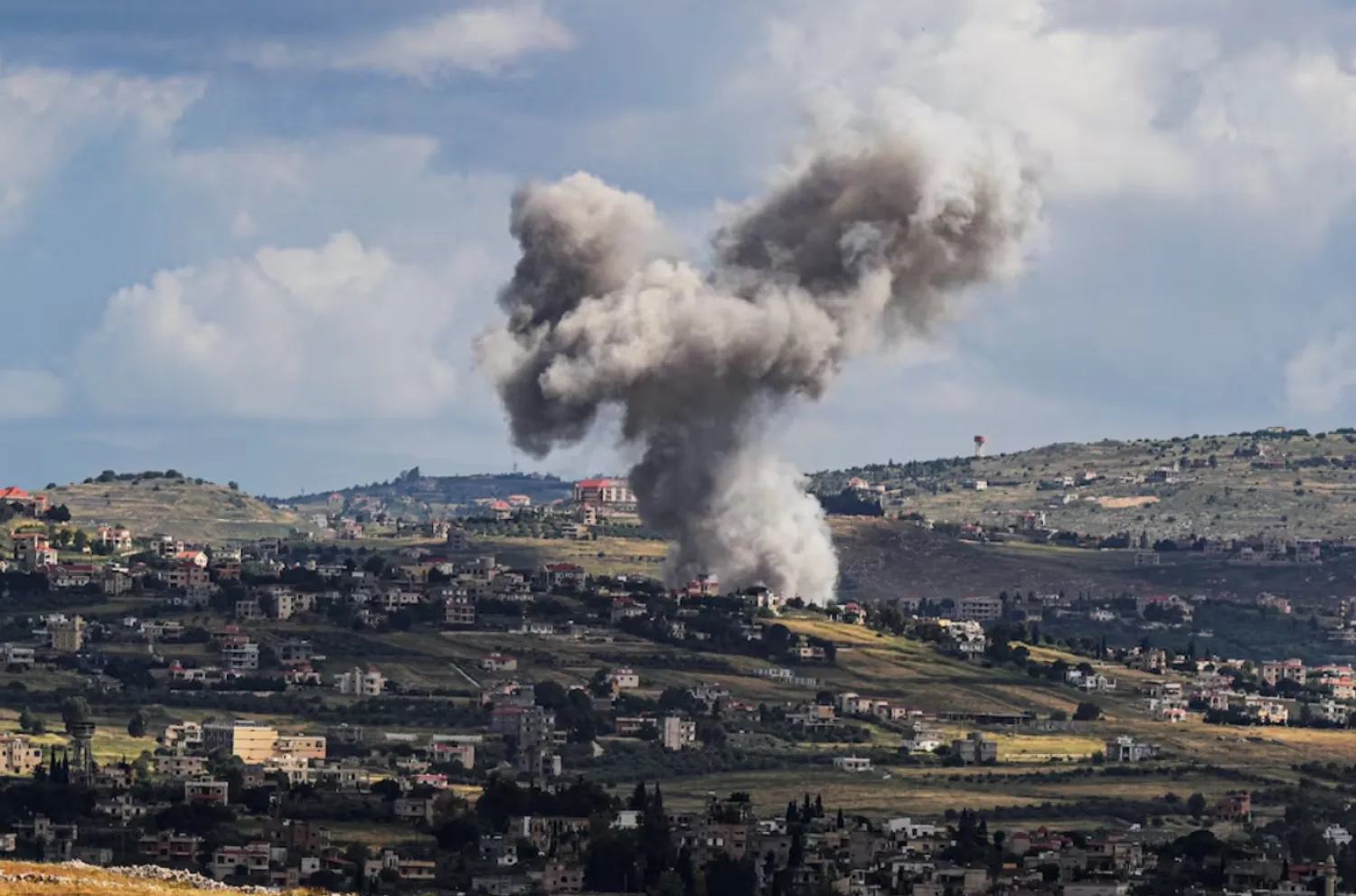
Smoke rises above Lebanon, following an Israeli strike, amid ongoing cross-border hostilities between Hezbollah and Israeli forces, as seen from Israel's border with Lebanon in northern Israel, May 5, 2024. REUTERS/Ayal Margolin /File Photo
TT

Lebanon Says Israeli Strike on South Kills One

Smoke rises above Lebanon, following an Israeli strike, amid ongoing cross-border hostilities between Hezbollah and Israeli forces, as seen from Israel's border with Lebanon in northern Israel, May 5, 2024. REUTERS/Ayal Margolin /File Photo

An Israeli strike on south Lebanon killed one person on Sunday, the health ministry reported, as Israel's military said it struck Hezbollah targets.

Israel has kept up regular strikes in Lebanon despite the November 2024 truce that sought to end more than a year of hostilities with Hezbollah, usually saying it is targeting members of the Iran-backed group or its infrastructure, AFP reported.

In a statement, the ministry said "an Israeli enemy raid" near Khirbet Selm, south Lebanon, killed one person and wounded another in a preliminary toll.

The Israeli army said it struck a Hezbollah "weapons manufacturing site" in the south where it "identified the terrorist activity of Hezbollah operatives".

The army said it also struck "military infrastructure sites belonging to Hezbollah" in the eastern Bekaa area.

Lebanon's state-run National News Agency reported that the strike on the south targeted a hangar, while the attacks on the east hit mountains near the town of Nabi Sheet.

On Wednesday, Israel struck four crossings along the Syria-Lebanon border, alleging they were used by Hezbollah to smuggle weapons.

Lebanon's army said this month it had completed the first phase of its plan to disarm Hezbollah, covering the area south of the Litani river, around 30 kilometres (20 miles) from the Israeli border.

Israel, which accuses Hezbollah of rearming, has criticized the army's progress as insufficient, while Hezbollah has rejected calls to surrender its weapons.

More than 350 people have been killed by Israeli fire in Lebanon since the ceasefire, according to an AFP tally of health ministry reports.



Israeli Fire Kills Three in Gaza, as US Seeks to Advance Gaza Deal

Palestinian children play with a wheelchair amid destroyed buildings in Khan Younis, in the southern Gaza Strip on January 25, 2026. (AFP)
TT

Israeli Fire Kills Three in Gaza, as US Seeks to Advance Gaza Deal

Palestinian children play with a wheelchair amid destroyed buildings in Khan Younis, in the southern Gaza Strip on January 25, 2026. (AFP)

Israeli fire killed three Palestinians in two separate incidents in the Gaza Strip on Sunday, while an Israeli drone wounded four others in Gaza City, local health authorities said on Sunday.

Medics said Israeli fire killed at least two people east of Tuffah neighborhood in the northern Gaza Strip, while a 41-year-old man was killed by Israeli forces in Khan Younis, in the south of the enclave.

Earlier medical workers said an Israeli ‌drone exploded ‌on the rooftop of a multi-floor building in ‌Gaza ⁠City, wounding four civilians ‌in the street nearby.

There was no comment by the Israeli military on any of the incidents.

US ENVOYS MEET WITH ISRAEL PM NETANYAHU

US envoys Steve Witkoff and Jared Kushner met in Israel on Saturday with Israeli Prime Minister Benjamin Netanyahu, mainly to discuss Gaza, Witkoff said on Sunday.

"The discussion was constructive and positive, with both sides aligned on next steps and the importance of ⁠continued cooperation on all matters critical to the region," Witkoff said in a post on X.

Gaza ‌has been reduced to rubble in the ‍war that was triggered by an attack ‍by the Palestinian group Hamas on southern Israel on October ‍7, 2023 in which 1,200 people were killed, according to Israeli tallies.

The Gaza health ministry says more than 71,000 people, mostly civilians, have been killed by Israeli fire since then. It also says that at least 480 people have been killed by Israeli fire since a ceasefire agreement came into effect last October.

BOTH SIDES TRADE BLAME FOR VIOLATIONS

Israel has said four soldiers ⁠had been killed by militants in Gaza since the ceasefire began. Both sides have traded blame for violations of the truce.

Earlier this month, Washington said the plan had moved into a second phase, in which Israel is expected to withdraw troops further from Gaza, and Hamas is due to yield control of the territory's administration.

Meanwhile, in Khan Younis, more than 100 people attended the funeral of a person killed by Israeli drone fire on Saturday, after holding special prayers in front of his white-shrouded body at the morgue in Nasser Hospital.

"They are liars, there is no ceasefire," said Fares Erheimat, a relative ‌of the dead man, during the funeral.


Damascus Opens Humanitarian Corridor to Kurdish-Majority Town

Members of Kurdish-led Syrian Democratic Forces (SDF) arrive in Kobane on January 23, 2026, after withdrawing from areas in eastern Syria. © AFP
TT

Damascus Opens Humanitarian Corridor to Kurdish-Majority Town

Members of Kurdish-led Syrian Democratic Forces (SDF) arrive in Kobane on January 23, 2026, after withdrawing from areas in eastern Syria. © AFP

Syria's military said on Sunday it had opened a humanitarian corridor to the Kurdish-majority town of Kobane, filled with people displaced by recent clashes, as a UN convoy carrying life-saving aid headed there.

The aid came as the Syrian government and Kurdish forces extended a ceasefire agreement by 15 days, after Kurdish forces relinquished swathes of territory to government troops.

Earlier this week, residents in Kobane, also known as Ain al-Arab in Arabic, told AFP that they lacked food, water and power and that the enclave was flooded with people who had fled the Syrian army's advances.

In a statement, the Syrian military said it was opening two corridors, one to Kobane and another in nearby Hasakeh province to allow "the entry of aid".

Gonzalo Vargas Llosa, representative of the United Nations' refugee agency in Syria, said on X that "thanks to the cooperation with the Syrian government... a convoy of 24 trucks carrying essential food, relief items, and diesel" departed for Kobane "to deliver life-saving and winter assistance to civilians affected by the hostilities".

The town is surrounded by the Turkish border to the north and government forces on all sides. It is around 200 kilometres (125 miles) from the Kurds' stronghold in Syria's far northeast.

Kobane, which Kurdish forces liberated from a lengthy siege by the ISIS group in 2015, became a symbol as their first major victory against ISIS.

On Saturday, Syria's government and Kurdish forces extended their truce with Damascus saying it was intended to support the US transfer of ISIS group detainees from Syria to prisons in Iraq, which started earlier this week.


Israel Army Investigates Soldier over Palestinian's Fake Abduction

Palestinians walk surrounded by the rubble of houses destroyed in Israeli strikes during the war, in Khan Younis, southern Gaza Strip, January 22, 2026. REUTERS/Ramadan Abed/File Photo
TT

Israel Army Investigates Soldier over Palestinian's Fake Abduction

Palestinians walk surrounded by the rubble of houses destroyed in Israeli strikes during the war, in Khan Younis, southern Gaza Strip, January 22, 2026. REUTERS/Ramadan Abed/File Photo

Israel's military said Sunday it had launched an investigation into a soldier who reportedly fabricated a kidnapping of a Palestinian detainee and demanded ransom from his family.

The Palestinian man had been detained at a holding facility when a military police guard photographed him and sent the image to his family, falsely claiming he had been kidnapped, the Times of Israel reported.

In a separate report, Israeli Army Radio said the soldier demanded the family transfer money in exchange for his release.

Confirming the case to AFP, the military said an investigation had been launched but declined to provide details.

"Following the incident, an inquiry has been opened by the Internal Inquiry Unit," it said in a statement.

"We will not provide details of the inquiry while it is ongoing."

The Palestinian had been detained while attempting to enter Israel illegally from the occupied West Bank, the Times of Israel reported.

Israeli security officials say a significant number of Palestinians from the West Bank attempt to enter Israel illegally, often by climbing over a barrier separating Jerusalem from the Palestinian territory.

They are driven largely by economic hardship and the loss of work permits since the start of the Gaza war, Palestinian officials say.

Most of them are arrested, while some have died or been injured fleeing from Israeli forces, Palestinian officials add.

An Israeli parliamentary committee said in October that around 6,000 Palestinians attempted to enter Israel in this way last year, with about 5,300 arrested.

Israel began building the barrier at the height of the second Palestinian intifada that erupted in 2002, saying it was needed to maintain security amid suicide bombings in Jerusalem and Israeli cities.

The barrier cuts into many parts of the West Bank, and Palestinians see it as a land grab and de facto border illegal under international law.

Palestinians also say the barrier has exacerbated an economic crisis in the West Bank, which Israel has occupied since 1967.