Saudi Defense Minister Meets US Senator Lindsey Graham

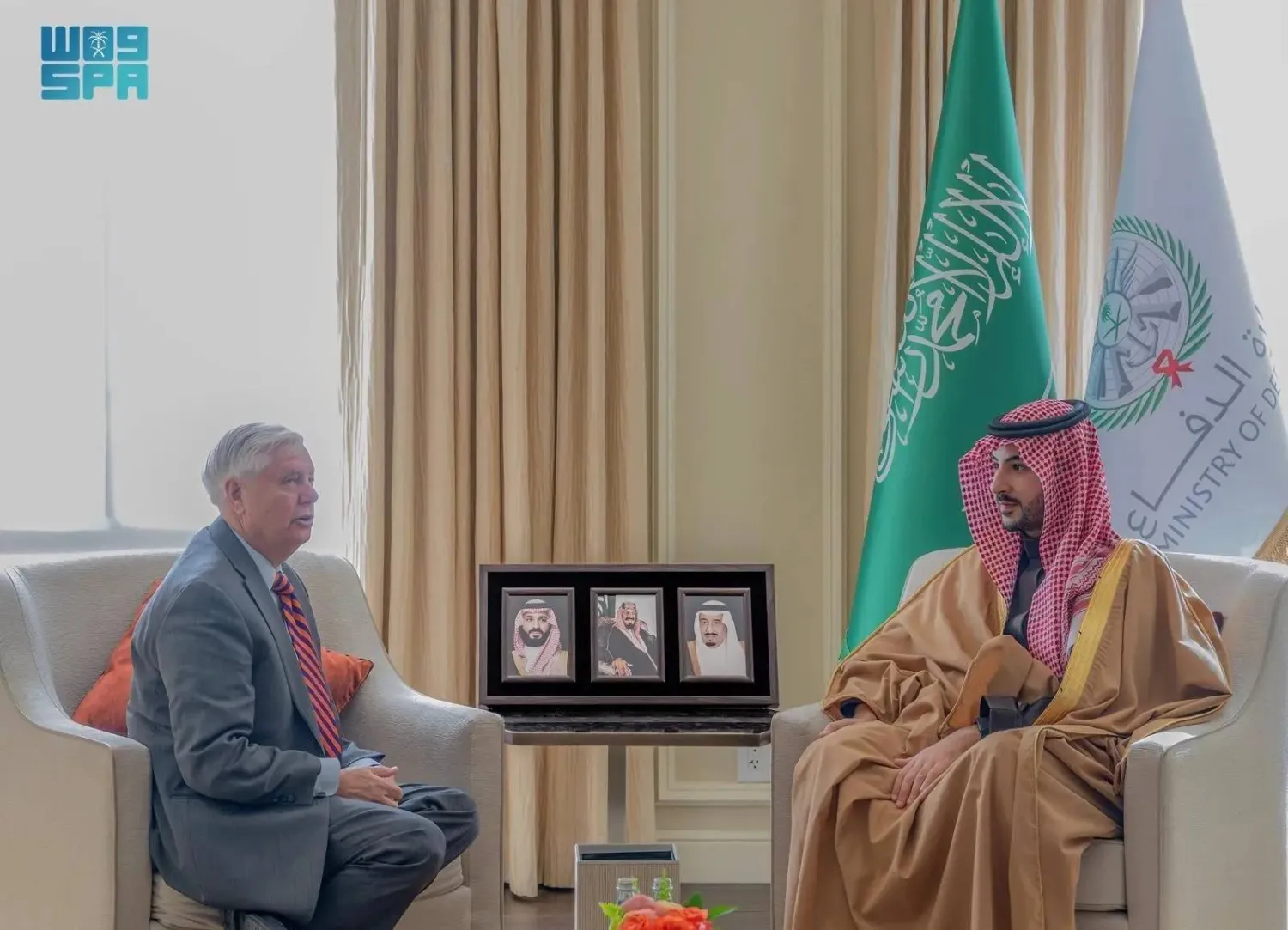
Saudi Minister of Defense Prince Khalid bin Salman bin Abdulaziz met in Washington, D.C. with US Senator Lindsey Graham. (SPA)
TT

Saudi Defense Minister Meets US Senator Lindsey Graham

Saudi Minister of Defense Prince Khalid bin Salman bin Abdulaziz met in Washington, D.C. with US Senator Lindsey Graham. (SPA)

Saudi Minister of Defense Prince Khalid bin Salman bin Abdulaziz met in Washington, D.C. on Thursday with US Senator Lindsey Graham, the Saudi Press Agency said.

During the meeting, the two officials reviewed the longstanding friendship and cooperation between the two countries and discussed regional and international developments, along with issues of mutual interest.

The meeting was attended by Saudi Ambassador to the United States of America Princess Reema bint Bandar bin Sultan bin Abdulaziz, and Advisor to the Minister of Defense for Intelligence Affairs Hisham bin Abdulaziz bin Saif.


Saudi Arabia Stresses Institutional, Geographic Unity Between Gaza, the West Bank

Saudi Arabia stressed the need to ensure the withdrawal of Israeli forces, end the occupation, and create the conditions necessary for political progress (AP). 
TT

Saudi Arabia Stresses Institutional, Geographic Unity Between Gaza, the West Bank

Saudi Arabia stressed the need to ensure the withdrawal of Israeli forces, end the occupation, and create the conditions necessary for political progress (AP). 

Saudi Arabia has emphasized the need to implement UN Security Council Resolution 2803 (to end the Gaza conflict) as the primary legal and political framework, particularly regarding the work of the Peace Council, the withdrawal of Israeli forces, the end of the occupation, and the creation of conditions conducive to political progress.

Saudi Minister Plenipotentiary, Cabinet of the Minister of Foreign Affairs Dr. Manal Radwan said the current phase requires intensified diplomatic efforts, dialogue, and coordinated action to keep the peace process aligned with its core goal of ending the conflict and achieving lasting peace.

Radwan was speaking at the eighth meeting of the Global Alliance for Implementing the Two-State Solution in Dublin, held under the patronage of Ireland’s Ministry of Foreign Affairs and Trade and attended by member states and international partners.

She stressed the importance of supporting the Palestinian National Authority, strengthening its institutional capacity, and ensuring institutional and geographic continuity between Gaza and the West Bank to preserve the unity of Palestinian territory.

Radwan said the Global Alliance provides a unique international platform to align peace efforts and enhance their effectiveness in advancing a political solution.

She praised the pivotal role of the United States and the efforts led by President Donald Trump, noting that coordination with Washington to implement a comprehensive peace plan offers a genuine opportunity to end the conflict and move toward regional integration and sustainable stability.

She highlighted that Ireland’s experience in peacebuilding shows that complex conflicts can be resolved when peace processes are guided by a comprehensive approach, a clear political horizon, the rejection of violence, and the promotion of dialogue and confidence-building.

Radwan reiterated warnings about ongoing violations by Israeli occupation forces and breaches of the ceasefire agreement, stressing the importance of the New York Declaration, the comprehensive peace plan, and Security Council Resolution 2803 as an integrated framework.

In closing, she reaffirmed Saudi Arabia’s commitment to working with regional and international partners to achieve a just and lasting peace that meets the Palestinian people’s aspirations for self-determination and an independent state, while ensuring security and stability across the region.


Saudi Arabia Supports Rehabilitation of Aden International Airport

Launching the third phase of the rehabilitation of Aden International Airport with Saudi support (X). 
TT

Saudi Arabia Supports Rehabilitation of Aden International Airport

Launching the third phase of the rehabilitation of Aden International Airport with Saudi support (X). 

The Saudi Program for the Development and Reconstruction of Yemen has launched the third phase of the Aden International Airport Rehabilitation Project, marking a major step in upgrading Yemen’s air transport infrastructure and underscoring continued Saudi support for economic and service-sector recovery in the country’s liberated governorates.

The launch ceremony was attended by Aden Governor and Minister of State Abdulrahman Sheikh Al-Yafei and several senior officials, who stressed the project’s strategic importance in enhancing aviation safety and strengthening Yemen’s regional and international connectivity.

The third phase focuses on rehabilitating and upgrading the airport’s main runway, which has suffered significant deterioration in its pavement layers, posing technical risks to flight operations.

It also includes the provision of advanced navigation equipment and modern communication systems to address existing shortages and ensure compliance with international civil aviation standards.

The project aims to improve the airport’s operational efficiency, air traffic management, and safety for aircraft and passengers.

It is also expected to boost the airport’s capacity to handle regional and international flights, support economic, commercial and tourism activity, facilitate the movement of passengers and cargo, and enhance humanitarian access to Aden and neighboring governorates.

Support for the Aviation Sector

Earlier in Riyadh, the head of Yemen’s General Authority of Civil Aviation and Meteorology, Saleh bin Nahid, met with Hassan Al-Attas, Assistant Supervisor General of the Saudi Program for the Development and Reconstruction of Yemen and Head of the Projects and Development Programs Sector, to review progress on civil aviation projects implemented by the program in several liberated governorates.

Bin Nahid praised the program’s role in supporting and financing development projects at civil aviation facilities and institutions, describing them as essential to improving service quality and strengthening aviation safety.

He said the cost of rehabilitating Aden International Airport’s runway and equipping it with advanced navigation systems exceeds $12 million, helping to enhance the airport’s technical readiness and increase airlines’ confidence in using it as a safe and reliable operational hub.


Saudi Arabia Calls for Stronger Regional Efforts for MGI Implementation

The council commended the efforts of the Kingdom of Saudi Arabia in coordinating and collaborating with the regional member countries and their representatives on the Executive Committee - SPA
TT

Saudi Arabia Calls for Stronger Regional Efforts for MGI Implementation

The council commended the efforts of the Kingdom of Saudi Arabia in coordinating and collaborating with the regional member countries and their representatives on the Executive Committee - SPA

The Kingdom of Saudi Arabia emphasized the importance of regional cooperation and joint action to support the Middle East Green Initiative (MGI), and to advance toward achieving its objectives of protecting the environment, expanding vegetation cover, and addressing the challenges of desertification, drought, and climate change. The Kingdom also announced the launch of the initiative’s operational phase and preparations for the start of its ambitious projects.

This was stated during the speech of Minister of Environment, Water and Agriculture Abdulrahman Alfadley, who is also chairperson of the second session of the MGI Ministerial Council, at the conclusion of the second Ministerial Council meeting held today in Jeddah. The meeting was attended by 30 member states from Asia and Africa, in addition to the United Kingdom, which participated as a non-regional observer, SPA reported.

According to a press release issued by the Ministry of Environment, Water and Agriculture today, Alfadley called for intensified efforts to rehabilitate degraded lands and combat desertification. He underscored how these actions are vital to overcoming the region’s challenges with drought and land degradation. Additionally, he welcomed the new members, noting that their accession is a pivotal step toward meeting the initiative’s ambitious targets.

He praised the efforts of the regional member states to their national targets, which aim to expand vegetation cover through the planting of over 37 billion trees and the restoration of 92 million hectares of degraded land. Commending the progress achieved thus far—with 3.5 billion trees already planted and 550,000 hectares rehabilitated—he noted that these results demonstrate a steadfast dedication to both national and regional greening objectives.

The Ministerial Council Communiqué of the second Ministerial Council meeting of the Middle East Green Initiative was issued, and the council adopted several key decisions supporting the launch of the initiative’s operational phase. The council also renewed its commitment to enhancing regional cooperation to combat land degradation, halt desertification, strengthen resilience to drought, and adapt to its severe environmental, social, and economic impacts while mitigating their effects.

Furthermore, the council welcomed the accession of the Republic of Ghana, the Republic of Sierra Leone, the Democratic Socialist Republic of Sri Lanka, and the Syrian Arab Republic as new regional members of the Middle East Green Initiative, bringing the total number of regional member states to 34, in addition to the United Kingdom as a non-regional observer. The council noted that this number is expected to increase, reflecting the strong interest and commitment of countries in the region to achieving the initiative’s objectives.

The MGI Ministerial Council expressed its profound gratitude and appreciation to Custodian of the Two Holy Mosques King Salman bin Abdulaziz Al Saud, and to His Royal Highness Prince Mohammed bin Salman bin Abdulaziz Al Saud, Crown Prince and Prime Minister, for their outstanding support of the Middle East Green Initiative. The council also extended sincere thanks to Minister of Environment, Water and Agriculture Abdulrahman Alfadley and Chairperson of the Ministerial Council, for organizing the second meeting of the Ministerial Council, which marks a major milestone in advancing the implementation and objectives of the initiative. The MGI Ministerial Council also congratulated Eng. Ibrahim Alturki on his appointment as the Secretary-General of MGI.

The Ministerial Council took note of the MGI Executive Committee report and the MGI Secretary-General report, highlighting key achievements during the foundational phase, including the approval of the Country Host Agreement, the signing of the Fund Trustee Agreement with the Islamic Development Bank (IsDB). It also noted the delivery of capacity-building and knowledge-sharing events, as well as the signing of several memoranda of understanding with relevant international organizations.

These steps pave the way for the operational phase and the launch of projects to develop vegetation cover and restore degraded lands in member countries. The council commended the efforts of the Kingdom of Saudi Arabia in coordinating and collaborating with the regional member countries and their representatives on the Executive Committee. It also praised the Kingdom’s support in equipping the General Secretariat and funding its operational budget. Furthermore, the council welcomed the progress achieved in securing the necessary components and enablers to launch the initiative’s implementation phase.

The council emphasized the importance of strengthening multilateral collaboration with regional and international organizations and acknowledged the critical role of the private sector, financial institutions, and civil society in addressing the challenges of land degradation, desertification, and drought. These contributions will play a key role in mitigating the effects of climate change and improving the quality of life. The council approved 35 regional and international technical and financial organizations and institutions to collaborate with, and to sign agreements and memoranda of understanding aimed at achieving the initiative’s objectives.

The council welcomed the Kingdom of Saudi Arabia’s continued chairpersonship of the MGI Ministerial Council for the year 2026. This will ensure the continued development of the Initiative’s Secretariat and the completion of its institutional structure, in preparation for the launch of land rehabilitation projects in the initiative’s regional member countries.

According to SPA, the council also approved a rotating continental approach to the Chairpersonship of the Ministerial Council of the Middle East Green Initiative. Under this approach, the chairpersonship will rotate among member states from the two continents —Africa and Asia—starting in 2027. Africa will hold the chairpersonship in 2027, with countries assuming the role in alphabetical order in English.

The Ministerial Council congratulated the Kingdom of Saudi Arabia on the outstanding success of the Sixteenth Session of the Conference of the Parties (COP16) to the United Nations Convention to Combat Desertification (UNCCD), held in Riyadh from December 2 to 13, 2024. The council emphasized its full support for the outcomes of COP16, which marked a historic turning point in advancing global support to the convention and significantly contributed to strengthening multilateral cooperation to address combating land degradation and drought challenges.

It further encouraged MGI regional member countries to actively participate in future UNCCD COPs and continue to play a leading role in promoting the implementation of the Convention objectives and raising international momentum to combat land degradation, halt desertification, accelerate land restoration, and enhance drought resilience.

The Ministerial Council welcomed COP16’s ambitious outcomes, most notably the Riyadh Declaration and the pioneering initiatives launched by the Kingdom of Saudi Arabia at COP16, such as the Riyadh Global Drought Resilience Partnership, the International Initiative on Early Warning of Sand and Dust Storms, and the Business for Land Initiative.

The Ministerial Council also welcomed the launch of the Riyadh Action Agenda at COP16, which aims to shift from ambition to action, and commended the strong engagement of many countries, international organizations, the private sector, and civil society, which collectively launched around 40 initiatives under the Riyadh Action Agenda to deliver lasting and effective solutions for land restoration, sustainable land management, the empowerment of Indigenous Peoples and local communities, and drought adaptation.

The Ministerial Council commended the leadership of the Kingdom of Saudi Arabia during its presidency of COP16 to strengthen synergies between the three Rio Conventions, and acknowledge Brazil’s strong focus on land protection and restoration during its presidency of COP30 of the United Nations Framework Convention on Climate Change (UNFCCC) held in Belém, Brazil, from 10 to November 21, 2025, which led to the launch of the Resilient Agriculture Investment for Net Zero Land Degradation (RAIZ) and the launch of Tropical Forests Forever Facility.

These initiatives will support land restoration efforts in alignment with the objectives of the MGI. The council also welcomed the COP30 decision to increase adaptation financing by 2035, as this decision will hopefully lead to allocation of more financial resources towards support nature-based solutions specially projects aiming to accelerating land restoration and strengthening drought resilience.

The council also welcomed the outcomes of the 7th Session of the United Nations Environment Assembly (UNEA-7), which contributes to advancing international cooperation to address global environmental challenges. The council commended the leadership of the MGI member countries, notably the Sultanate of Oman’s presidency of UNEA-7, which follows the Kingdom of Morocco’s presidency of UNEA-6 in 2024.

The Ministerial Council welcomed the announcement by the Arab Coordination Group (ACG) to allocate $12 billion by 2030 to support global projects aimed at restoring degraded lands and building resilience to drought and desertification. The council commended the Group’s support for environmental priorities in the region and globally and reaffirmed the Middle East Green Initiative’s key role as a platform for the transformative projects.

On the sidelines of the Ministerial Council meeting, the Middle East Green Initiative Fund Secretariat Agreement was signed between the General Secretariat of the initiative and the Islamic Development Bank. The bank will manage the fund to support the operational phase and the implementation of the initiative’s projects.