



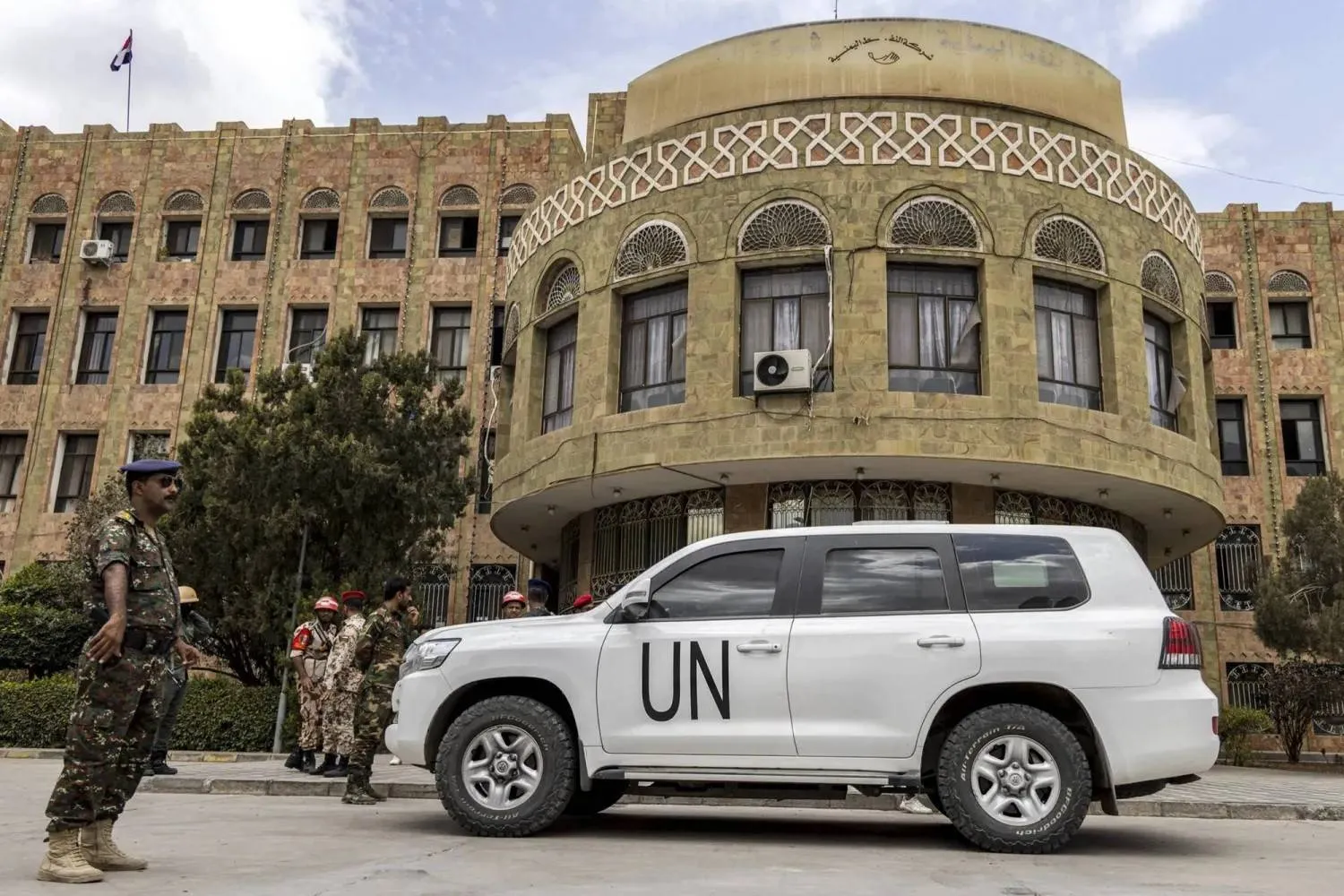

The United Nations said on Friday that the Houthi group in Sanaa has taken unilateral steps that undermine its humanitarian operations in Yemen, seizing UN equipment and assets and blocking humanitarian flights at a time when aid needs are mounting for millions of people.
In an official statement issued on Friday, the United Nations Resident Coordinator and Humanitarian Coordinator for Yemen, Julien Harneis, said Houthi de facto authorities stormed at least six UN offices in Sanaa on Thursday, January 29, 2026. All the offices were unoccupied at the time.
The authorities removed most communications equipment and several UN vehicles and transferred them to an unknown location, without any prior coordination or notification.
The statement said the United Nations had not authorized the transfer of these assets and had received no official explanation for the move.
It stressed that all the seized equipment had been brought into Yemen through approved legal procedures with the necessary permits from the relevant authorities, and that it forms part of the minimum infrastructure required to maintain a UN presence and implement its humanitarian programs.
The measures were not limited to asset seizures. The statement said the de facto authorities have, for more than a month, prevented United Nations Humanitarian Air Service flights to Sanaa.
Flights to Marib province, under the internationally recognized government's control, have also been suspended for more than four months without any official explanation.
UNHAS flights are the only means allowing UN staff and international nongovernmental organization workers to enter and leave areas controlled by the Houthis.
The disruption has therefore imposed additional restrictions on the delivery of humanitarian aid and undermined international organizations' ability to respond to growing needs in those areas.
The humanitarian coordinator warned that these measures come at an extremely sensitive time, as Yemen is experiencing an unprecedented humanitarian deterioration, particularly in areas under Houthi control.
He said that continuing such practices would worsen living conditions and increase civilian suffering.
Collapsed operating environment
The escalation coincides with a deepening crisis related to the detention of United Nations staff by the Iran-aligned group. The number of arbitrarily detained employees had risen to at least 69 by last December, marking one of the most serious waves of targeting of humanitarian workers.
Those detained include Yemeni staff working for major UN agencies, including the World Food Programme, UNICEF, and the United Nations Development Programme, as well as staff of the UN clinic in Sanaa.
The arrests are often carried out through home raids, intimidation of families, and the transfer of employees to undisclosed locations, without allowing them to contact their families or lawyers.
The Houthi group has promoted accusations of “espionage” for foreign parties, allegations the United Nations has categorically rejected, saying the staff are being targeted solely for carrying out humanitarian work.
In this context, the UN resident coordinator in Yemen recalled Security Council resolutions 2801 (2025) and 2813 (2026), which call on the Houthis to provide a safe and secure operating environment and to immediately and unconditionally release all detained staff.
Against this backdrop, the United Nations announced in early 2025 the suspension of non-life-saving activities in Houthi-controlled areas.
The World Food Programme said in January 2026 that it had laid off several Yemeni staff due to the freezing of relief operations, underscoring the severity of these practices and their direct impact on Yemen’s humanitarian situation.


