


Iran Army Chief Warns US and Israel, Says Forces on High Alert

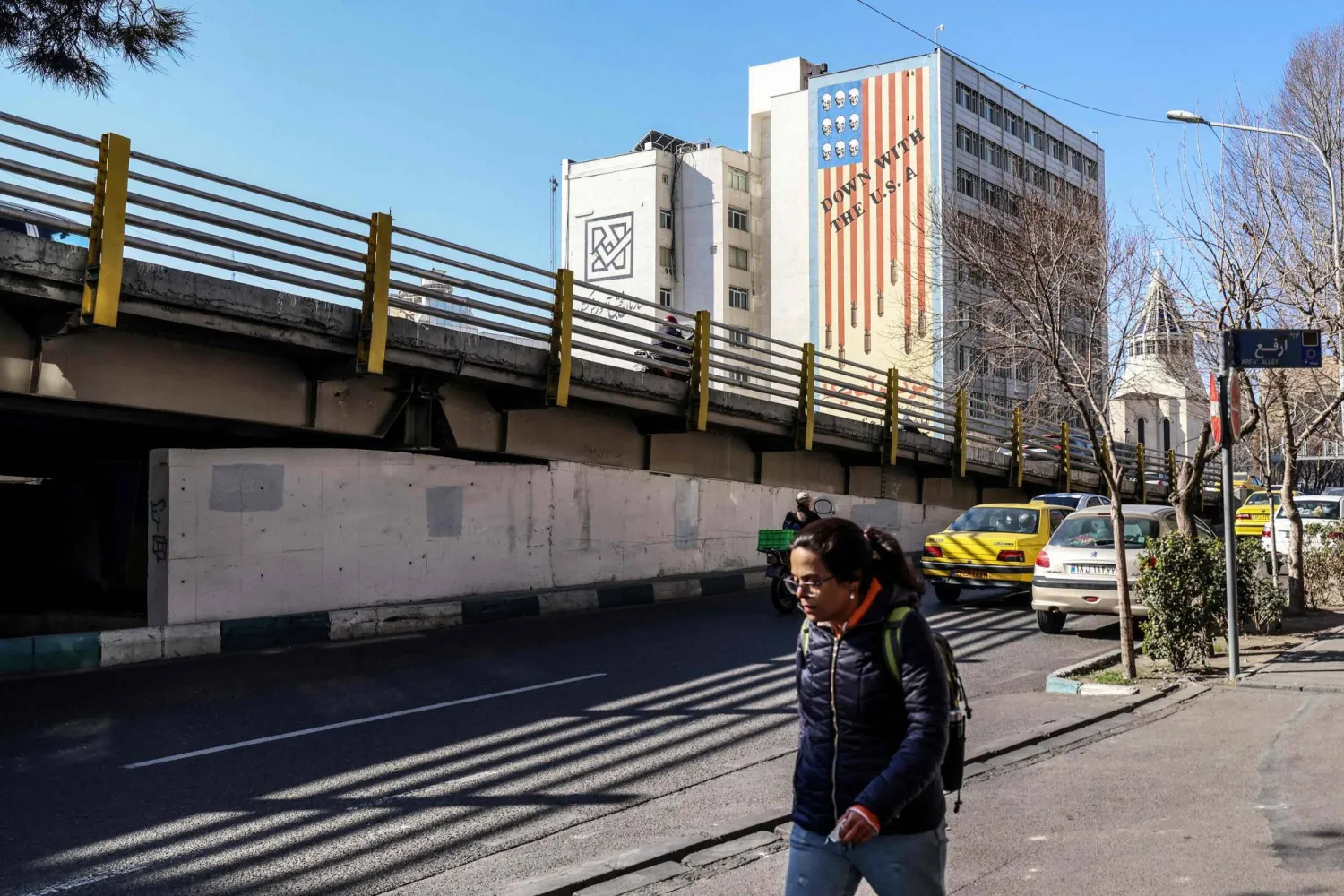
An Iranian walks past a huge anti-US mural painted on the side of a building in the Iranian capital Tehran on January 31, 2026. (Photo by Atta KENARE / AFP)
TT

Iran Army Chief Warns US and Israel, Says Forces on High Alert

An Iranian walks past a huge anti-US mural painted on the side of a building in the Iranian capital Tehran on January 31, 2026. (Photo by Atta KENARE / AFP)

Iranian army chief Amir Hatami on Saturday warned the United States and Israel against an attack, saying his country's forces were on high alert.

He also insisted Iran’s nuclear expertise could not be eliminated, after US President Donald Trump said he expected Tehran to seek a deal to avoid US strikes.

"If the enemy makes a mistake, without a doubt it will endanger its own security, the security of the region, and the security of the Zionist regime," Hatami said, according to the official IRNA news agency.

According to AFP, he noted that Iran's armed forces were "at full defensive and military readiness".

Washington sent a naval strike group to the Middle East led by the USS Abraham Lincoln aircraft carrier, with Trump threatening to intervene militarily after a deadly crackdown by Iranian authorities on two weeks of anti-government protests.

The deployment has raised fears of a possible direct confrontation with Iran, which has warned it would respond with missile strikes on US bases, ships and allies -- notably Israel -- in the event of an attack.

On Friday, Trump said he predicted that Iran would seek to negotiate a deal over its nuclear and missile programs rather than face American military action.

Iranian Foreign Minister Abbas Araghchi had said earlier that Tehran was ready for nuclear talks, but its missiles and defense "will never be negotiated".

The US carried out strikes on key Iranian nuclear sites in June when it briefly joined Israel's 12-day war against its regional foe.

Israeli attacks also hit military sites across the country and killed senior officers and top nuclear scientists.

But Hatami on Saturday insisted that Iran's nuclear technology "cannot be eliminated, even if scientists and sons of this nation are martyred".

On Friday, US Central Command (CENTCOM) said Iran's Revolutionary Guard Corps (IRGC) would conduct "a two-day live-fire naval exercise" in the Strait of Hormuz, a key transit hub for global energy supplies.

In a statement, CENTCOM warned the IRGC against "any unsafe and unprofessional behavior near US forces".

Nationwide protests against the rising cost of living erupted in Iran on December 28, before turning into a broader anti-government movement that peaked on January 8 and 9.

Iranian authorities have said the protests began peacefully before turning into "riots" involving killings and vandalism, blaming the United States and Israel for fomenting the unrest in a "terrorist operation".

The official death toll from the authorities stands at 3,117.

However, the US-based Human Rights Activists News Agency (HRANA) said it has confirmed 6,563 deaths, including 6,170 protesters and 124 children.

The protests have since subsided.


Israel Military Says It Has Destroyed Half of Iran's Missile Stockpiles

 A video grab image taken from footage released by the Israeli military on March 1, 2026, shows what it says are large-scale strikes on "the headquarters of the Iranian terror regime" in Tehran on March 1. (Photo by Handout / Israeli Army / AFP)
A video grab image taken from footage released by the Israeli military on March 1, 2026, shows what it says are large-scale strikes on "the headquarters of the Iranian terror regime" in Tehran on March 1. (Photo by Handout / Israeli Army / AFP)
TT

Israel Military Says It Has Destroyed Half of Iran's Missile Stockpiles

 A video grab image taken from footage released by the Israeli military on March 1, 2026, shows what it says are large-scale strikes on "the headquarters of the Iranian terror regime" in Tehran on March 1. (Photo by Handout / Israeli Army / AFP)
A video grab image taken from footage released by the Israeli military on March 1, 2026, shows what it says are large-scale strikes on "the headquarters of the Iranian terror regime" in Tehran on March 1. (Photo by Handout / Israeli Army / AFP)

The Israeli military on Sunday said it had destroyed roughly half of Iran's missile stockpiles in the previous war in June 2025, adding the Iranian republic had been producing dozens of surface-to-surface missiles each month.

"During the operation (in June 2025), we destroyed approximately half of the Iranian regime's missile stockpiles and prevented the production of at least 1,500 additional missiles," military spokesman Brigadier General Effie Defrin said in a televised statement.

"The regime had recently been producing dozens of surface-to-surface missiles per month and intended to increase production to hundreds per month."


North Korea Condemns US-Israel Attacks on Iran as ‘Illegal’

Smoke rises in central Tehran after an Israeli attack in Iran, 01 March 2026. (EPA)
TT

North Korea Condemns US-Israel Attacks on Iran as ‘Illegal’

Smoke rises in central Tehran after an Israeli attack in Iran, 01 March 2026. (EPA)

North Korea condemned on Sunday the ongoing United States and Israeli attack on Iran as an "illegal act of aggression", claiming it had shown Washington's "gangster-like" nature.

The military campaigns against Iran by the two states "constitute a thoroughly illegal act of aggression and the most vile form of violation of sovereignty in their nature", a spokesperson for the North's foreign ministry said in a statement carried by the official Korean Central News Agency.

Pyongyang said the military actions showed the "shameless and gangster-like conduct" of the two allies, who it said had chosen to "abuse military force to fulfil their selfish and hegemonic ambitions".

North Korea and the United States are longtime adversaries but Washington has mounted a push to revive high-level talks with Pyongyang in recent months, eyeing a potential summit between US President Donald Trump and the North's Kim Jong Un this year.

After largely ignoring those overtures for months, Kim said this week that the two nations could "get along" if Washington accepted Pyongyang's nuclear status.


Khamenei’s Killing ‘Defining Moment’ in Iran’s History, Says EU’s Kallas

 EU High Representative and Vice-President for Foreign Affairs and Security Policy Kaja Kallas speaks to the press as she arrives for the EU Foreign Affairs Council in Brussels on February 23, 2026. (AFP)
EU High Representative and Vice-President for Foreign Affairs and Security Policy Kaja Kallas speaks to the press as she arrives for the EU Foreign Affairs Council in Brussels on February 23, 2026. (AFP)
TT

Khamenei’s Killing ‘Defining Moment’ in Iran’s History, Says EU’s Kallas

 EU High Representative and Vice-President for Foreign Affairs and Security Policy Kaja Kallas speaks to the press as she arrives for the EU Foreign Affairs Council in Brussels on February 23, 2026. (AFP)
EU High Representative and Vice-President for Foreign Affairs and Security Policy Kaja Kallas speaks to the press as she arrives for the EU Foreign Affairs Council in Brussels on February 23, 2026. (AFP)

EU foreign policy chief Kaja Kallas said Sunday that the killing of Iran's supreme leader Ali Khamenei in US-Israeli strikes was a defining moment in the country's history.

"The death of Ali Khamenei is a defining moment in Iran's history. What comes next is uncertain. But there is now an open path to a different Iran, one that its people may have greater freedom to shape," Kallas wrote on X.

"I'm in contact with partners, including those in the region that bear the brunt of Iran's military actions, to find practical steps for de-escalation."
