
The Kurdistan Regional Government (KRG) has renewed a retroactive demand for compensation from Iraq’s federal government for crimes committed by the regime of the late president Saddam Hussein against the Kurds.
The move is widely seen as a calculated bid for leverage as calls grow to scrutinize the region’s revenues and governance.
In a statement issued on Thursday, the KRG said it is seeking $384.6 billion in compensation for the people of the Kurdistan Region for damages resulting from “crimes committed by the Iraqi regime between 1963 and 2003”, the period of Baath Party rule from its coup against the government of Abdul Karim Qasim until the US-led invasion that toppled it.
The claim is not unprecedented. Erbil made the same demand in 2013, according to a statement issued at the time by the KRG’s Ministry of Martyrs and Anfal Affairs.
Why now?
Explaining the timing, Jotiar Adil, head of the KRG’s Department of Media and Information, told Asharq Al-Awsat that “Erbil did not choose the timing; it was imposed by the painful paradox in Baghdad’s dealings with the region.”
Constitutional rights, he said, “do not lapse with time,” adding that reopening the compensation file is meant to remind partners in Baghdad that the people of Kurdistan are owed billions of dollars for widespread destruction and genocide.
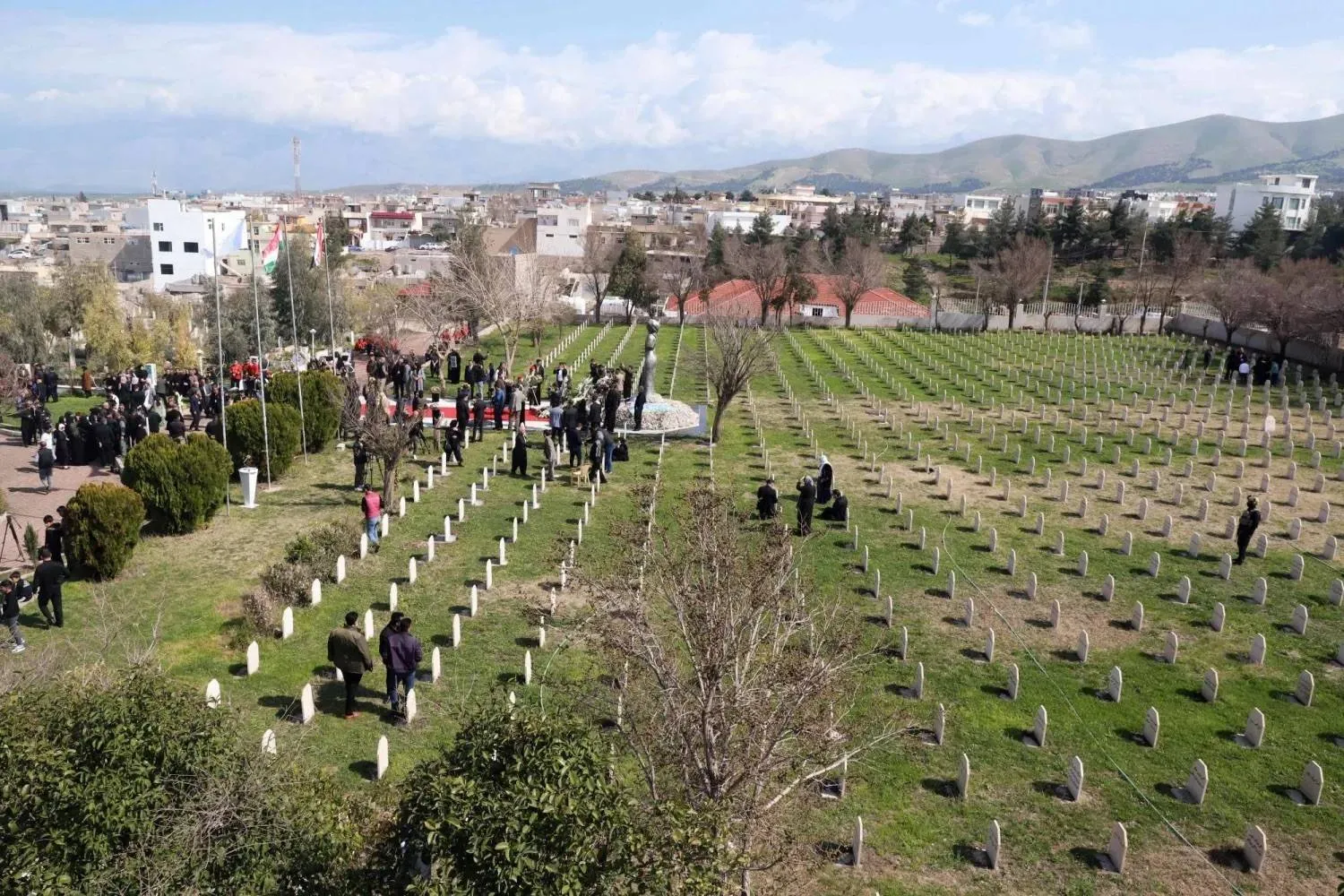
Adil argued that subjecting the region to “microscopic scrutiny” over oil and non-oil revenues while ignoring the destruction of 4,500 villages—wiped out during the 1988 military campaign internationally recognized as genocide—was illogical.
“The timing carries a message,” he said. “Before you cut our people’s livelihoods today, remember your historical debts to them.” He rejected suggestions that the move was political maneuvering, describing it instead as “a legal rights case aimed at justice, not at paralyzing Baghdad.”
A dispute over resources
Baghdad has insisted on implementing agreements governing oil revenues and border crossings before releasing the region’s financial entitlements. Technical disputes are often entangled with political negotiations over forming federal governments.
Iraq’s constitution provides for joint management of oil and gas, equitable revenue distribution based on population, and temporary allocations for areas damaged by past conflicts.
For years, the Kurdistan Region exported oil via Türkiye’s Ceyhan port without Baghdad’s approval. Exports were halted in 2023 following an international arbitration ruling requiring sales to be conducted through the state oil marketer, SOMO, exacerbating tensions.
Although an agreement was reached in 2025 on handing over the region’s oil, it has yet to be implemented. Baghdad later cut public-sector salaries in the Kurdistan Region as leverage, a move Erbil condemned as a violation of citizens’ rights.
Adil said the compensation figure was based on international standards similar to those used by the UN Compensation Commission in assessing damages to Kuwait after Iraq’s 1990 invasion, factoring in cumulative harm and present value.
He noted that post-2003 governments honored Saddam-era obligations abroad — paying compensation to Kuwait and settling Paris Club debts — while rejecting comparable responsibility toward victims at home.