Sudan’s army chief Abdel Fattah al-Burhan has reiterated his refusal to negotiate with the paramilitary Rapid Support Forces (RSF) or “any other party,” vowing to continue military operations despite renewed US efforts to secure a political settlement.
His remarks came after Massad Boulos, US President Donald Trump’s senior adviser for Arab and African affairs, announced that he had met Burhan in Egypt earlier this week.
Meanwhile, a drone attack on Damazin, the capital of Blue Nile state, killed four women and wounded dozens of civilians, according to a Sudanese human rights group.
Addressing residents of Amri locality in Northern state on Tuesday, Burhan declared: “There will be no negotiations with the rebels or with any other party,” without specifying whom else he meant.
“We are a state of institutions. Decisions on negotiations, peace and war are therefore made by the Security and Defense Council,” he added, according to a statement from the Sovereignty Council’s media office.
Burhan, who heads the Sovereignty Council and commands the armed forces, reaffirmed his determination to continue what he described as efforts to defeat and eliminate the rebellion.
He also praised Amri residents for supporting the army and the Popular Resistance, reiterating the military’s commitment to what it calls the “Battle of Dignity.”
Deadly drone attack
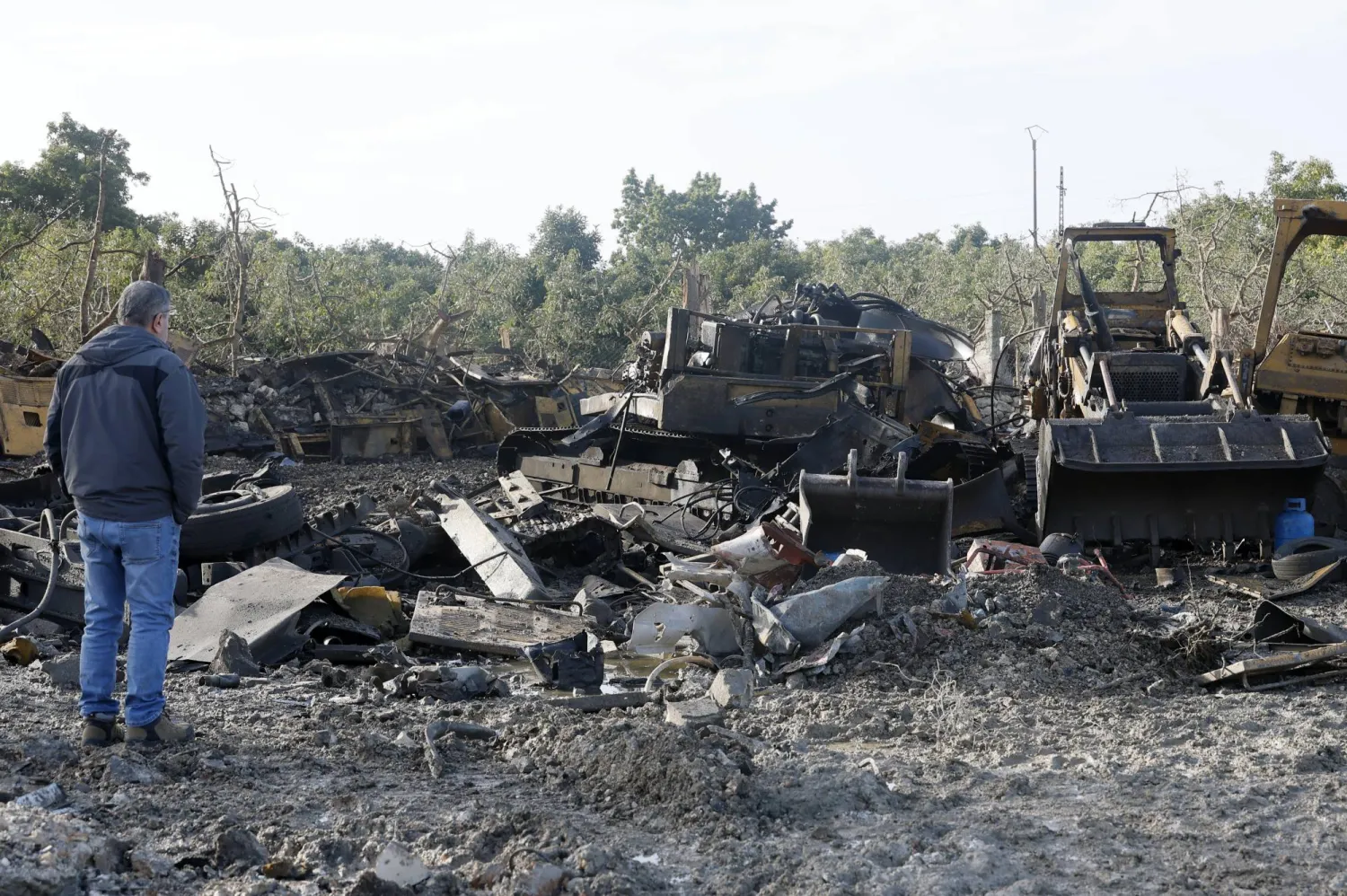
Hours after Burhan’s remarks, Emergency Lawyers, a volunteer human rights organization, reported that drones belonging to the RSF had struck civilian sites in Damazin early Wednesday.
The strikes hit homes and a mosque, killing four women in the Al-Hijra neighborhood and wounding dozens of civilians, the group alleged.
Its statement provided no further details about the wounded or how it had established responsibility for the attack.
Emergency Lawyers warned against continued attacks on civilian sites, stressing that deliberately targeting them constitutes a serious violation of international humanitarian law.
The organization demanded an end to the attacks and accountability for those responsible, urging all parties to the conflict to respect civilian protections and avoid endangering lives.
Neither the army nor the RSF issued a comment, although platforms aligned with the paramilitary group reported that the drones had targeted the homes of the finance and information ministers.
In a separate statement, Damazin Technical College condemned a two-drone attack on its campus, reporting damage to classrooms, administrative offices, laboratories, and other infrastructure.
Diplomatic efforts
Burhan’s rejection of negotiations came less than a day after Boulos announced that he had attended a lunch hosted by Egyptian President Abdel Fattah al-Sisi in New Alamein, on the sidelines of an African Union coordination meeting, where he met the Sudanese leader.
In a post on X on Monday, Boulos reaffirmed Washington’s commitment to working with regional and international partners toward a political settlement that would help end Sudan’s war and alleviate the country’s humanitarian suffering.
He emphasized US support for Sudan’s unity, sovereignty and territorial integrity.
According to Boulos, the diplomatic efforts aim to restore security and stability, begin reconstruction and development, and facilitate a transition to a civilian-led government through an inclusive national dialogue owned and led by the Sudanese people.
In a television interview last September, Boulos maintained that Washington engaged with both sides in Sudan’s conflict without formally recognizing either.
He also stressed that his meetings with Burhan did not constitute recognition of the Sudanese government.
However, in his latest X post, Boulos referred to Burhan by his official title, “Chairman of Sudan’s Transitional Sovereignty Council,” wording that some interpreted as tacit recognition.
Boulos has argued that maintaining contact with both warring parties is essential to reaching a peaceful settlement and facilitating humanitarian aid deliveries.
His remarks followed a Sept. 22 statement by US State Department spokesperson Tommy Pigott, who declared that neither the Sudanese army nor the RSF and their leaders represented a legitimate constitutional government of Sudan.
Pigott also affirmed Washington’s readiness to work with partners committed to peace.
The diplomatic exchanges coincided with Washington’s refusal to grant Burhan a visa to attend the United Nations General Assembly meetings in New York.
Reuters reported at the time, citing a Sudanese diplomatic source and a Western analyst, that Burhan’s participation had been made conditional on his acceptance of a 90-day truce proposed by Boulos. The US State Department declined to comment.