Container Traffic at Morocco's Tanger Med Port Rises 8% in 2025https://english.aawsat.com/business/5236420-container-traffic-moroccos-tanger-med-port-rises-8-2025
Container Traffic at Morocco's Tanger Med Port Rises 8% in 2025
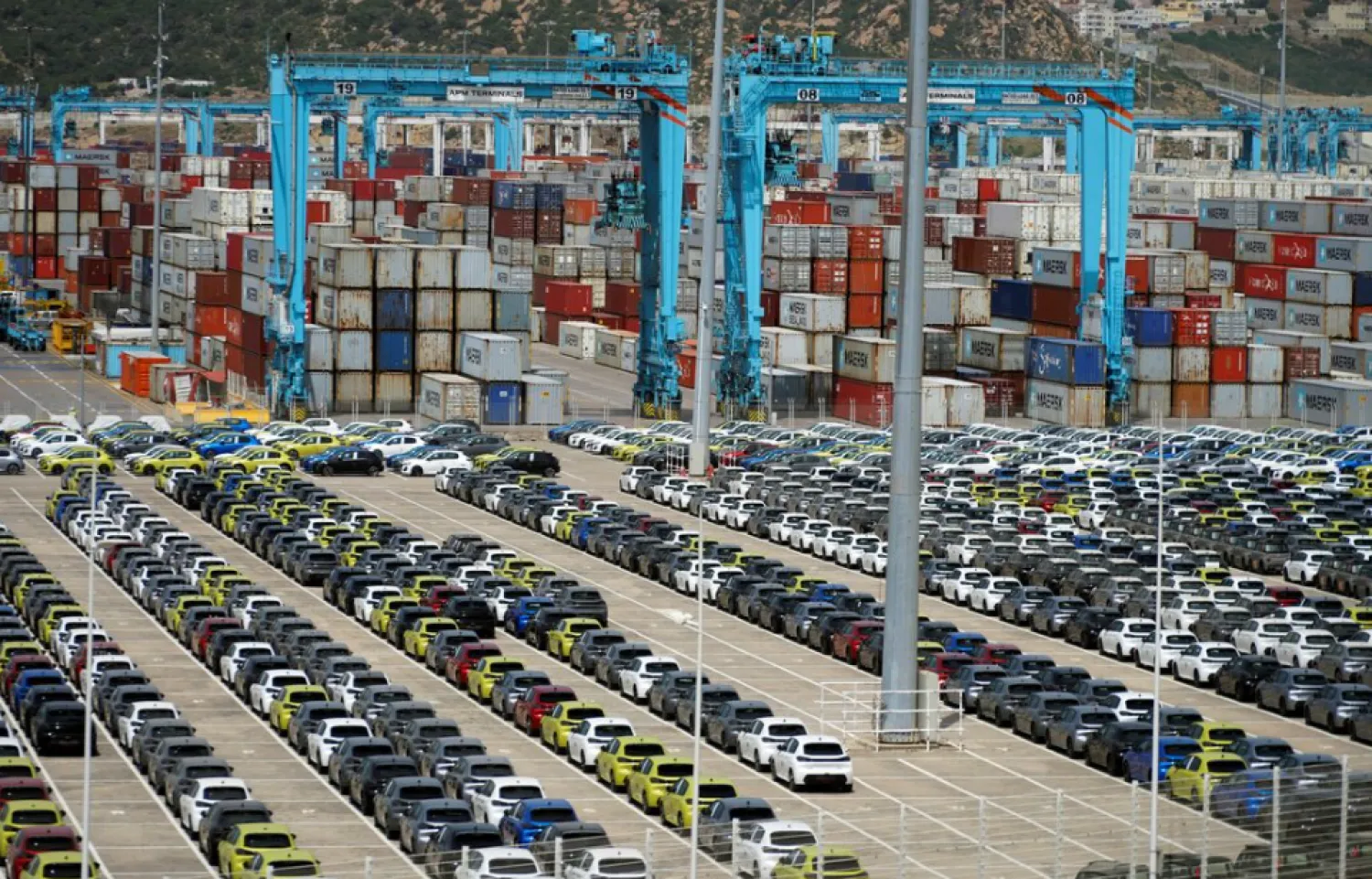
Cars, made in Morocco and intended for export, wait to be shipped at Tanger Med Port, on the Strait of Gibraltar, east of Tangier, Morocco June 6, 2024. REUTERS/Abdelhak Balhaki
Container Traffic at Morocco's Tanger Med Port Rises 8% in 2025
Cars, made in Morocco and intended for export, wait to be shipped at Tanger Med Port, on the Strait of Gibraltar, east of Tangier, Morocco June 6, 2024. REUTERS/Abdelhak Balhaki
Morocco's Tanger Med Port said on Monday it maintained its position as the Mediterranean and Africa's leading port, handling 11.1 million containers in 2025, up 8.4% from a year earlier.
The growth was partly driven by the expansion of a terminal operated by APM Terminals, the port authority said in a statement.
The port saw truck traffic grow 3.6% to 535,203 units, driven by higher exports of industrial products and agri-food goods.
Passenger traffic totalled 3,220,422 in 2025, up 5.7%, while cars using the port to cross into or out of Morocco reached 895,341 vehicles in 2025, up 5%, it said, Reuters reported.
The number of vehicles exported through the port dropped 12% to 526,862, mostly produced by Renault and Stellantis plants in the country, the port authority said.
Morocco’s automotive exports fell 2% last year to $17 billion but remained the country's biggest export, according to official trade data.
Overall, the port handled a total of 161 million tons of cargo in 2025, up 13.3% from 2024, it said.
Last week, Morocco said it will start operating Nador West Med, its second Mediterranean deep sea port, in the fourth quarter of this year.
The $5.6 billion facility will open with an annual capacity of 5 million containers, expandable to 12 million.
Further south on the Atlantic coast, Morocco is building a $1 billion deepwater port in Dakhla, in Western Sahara.
SAMA Governor: Saudi Infrastructure Sustains Oil Supplies, Regional Trade Amid Conflict
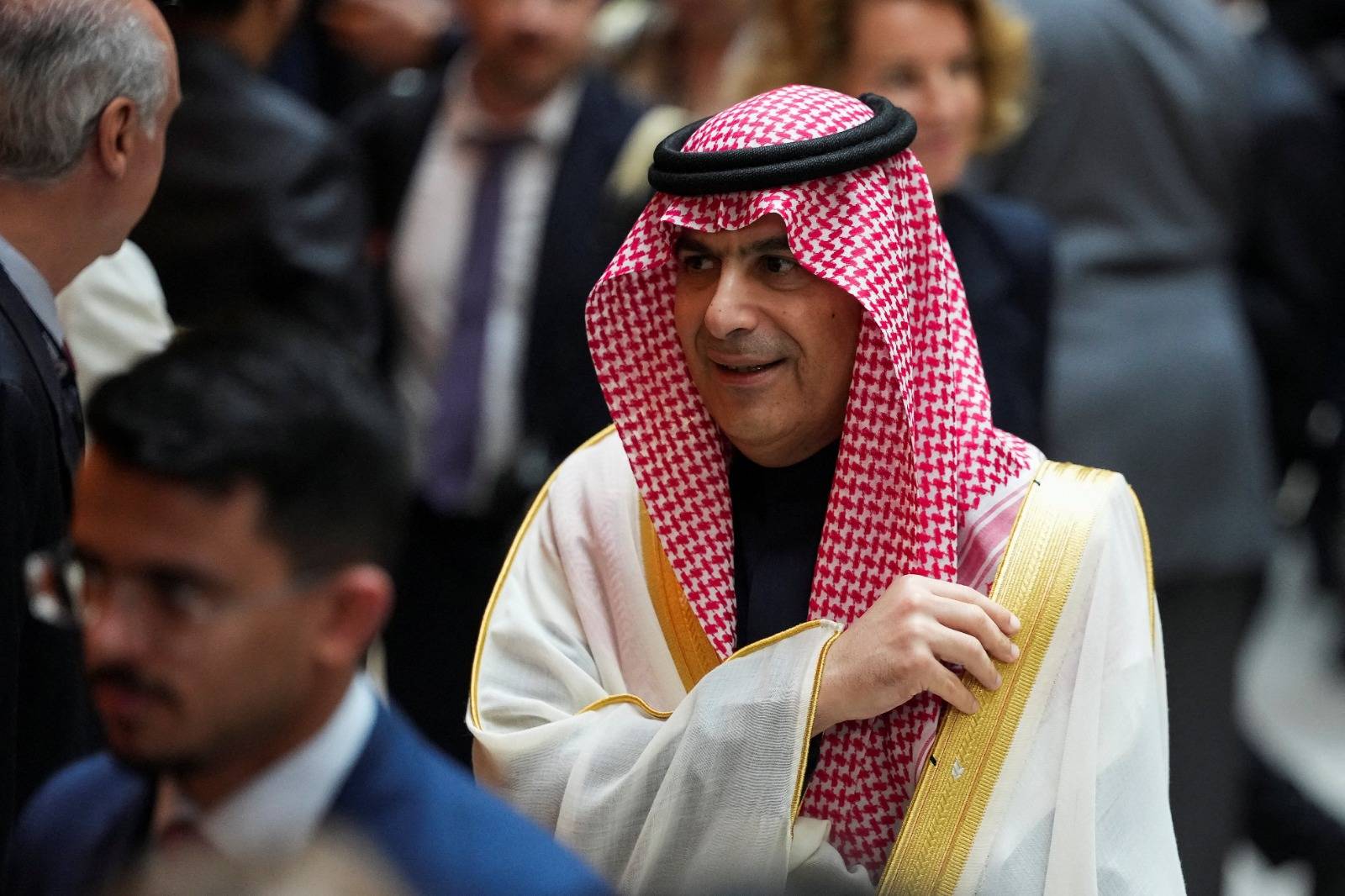
Officials at the meeting of the International Monetary and Financial Committee of the International Monetary Fund in Bangkok. (X)
Saudi Arabia’s diversified energy infrastructure and logistics networks have enabled the Kingdom to maintain oil supplies and regional trade despite the widening economic fallout from the Middle East conflict, said Saudi Central Bank (SAMA) Governor Ayman Al-Sayari.
Addressing the International Monetary and Financial Committee (IMFC) of the International Monetary Fund in Bangkok, chaired by Saudi Finance Minister Mohammed Al-Jadaan, Al-Sayari highlighted the Kingdom’s ability to withstand the crisis, supported by prudent policies, substantial financial and nonfinancial buffers, and a well-capitalized banking sector.
He stressed Saudi Arabia’s commitment to supporting economic activity and preserving monetary and financial stability without compromising fiscal sustainability.
Al-Sayari stressed that energy security depended not only on the availability of supplies but also on their reliable and affordable delivery to international markets.
He called for sustained investment throughout the energy supply chain, from production and refining to storage and diversified transport routes, as well as across all energy sources, including oil and gas.
The conflict’s initial impact, concentrated in energy markets and major shipping corridors, had gradually spread to trade, transportation, inflation, financing conditions and investor confidence.
Disruptions had also extended beyond crude oil and natural gas to refined petroleum products, particularly transportation fuels, as well as fertilizers and essential production inputs, increasing price pressures and threatening food security and production.
While rerouting supplies and drawing down inventories had helped cushion the immediate shock, those measures had reduced the capacity to absorb further disruptions, Al-Sayari cautioned.
Banking sector withstands shocks
Turning to the domestic economy, Al-Sayari highlighted the resilience of Saudi banks, whose capital and liquidity positions remain robust, with financial soundness indicators among the strongest in the region.
He attributed the Kingdom’s ability to preserve domestic stability to decades of prudent economic management, effective risk management and strategic investment, explaining that its extensive energy and logistics infrastructure had also helped maintain oil supplies and regional commerce and mitigate the impact of disruptions in global energy markets.
He underlined that Saudi Arabia would continue adjusting its response as the conflict evolved, preserving room to address further developments while maintaining fiscal discipline.
Saudi Central Bank (SAMA) Governor Ayman Al-Sayari. (IMF)
Vision 2030 strengthens economic foundations
Al-Sayari said Saudi Vision 2030, now entering its tenth year, had reinforced the Kingdom’s economic foundations by expanding non-oil activity, increasing private sector participation and strengthening institutions and reform implementation.
He underlined the government’s commitment to productivity-enhancing reforms, greater private investment opportunities, more efficient public spending and sound public finances.
The next phase would focus on further diversification, deeper financial markets and human capital development, alongside improvements in infrastructure and institutional capacity to support sustainable and inclusive growth.
IMF urged to implement institutional reforms
On international cooperation, Al-Sayari called on the IMF to prioritize the implementation of recently reviewed institutional reforms covering economic surveillance, program design and conditionality, financial sector assessments and the debt sustainability framework for low-income countries.
Fund-supported programs should reflect individual countries’ circumstances, needs and capacity to implement reforms with conditions focused on measures essential to their success, he remarked.
He also advocated closer coordination between surveillance, lending and technical assistance, as well as timely and orderly resolution of unsustainable debt and stronger cooperation among creditors.
Al-Sayari reiterated Saudi Arabia’s support for IMF capacity development, including its $279 million pledge and backing for the Fund’s regional office in Riyadh.
He also drew attention to risks stemming from volatile capital flows, rising sovereign bond yields and the expanding role of nonbank financial institutions.
Artificial intelligence and stablecoins presented implications for both productivity and financial stability, underscoring the importance of strengthening analysis and oversight to address emerging risks, he noted.
Asian Shares are Mixed with Tech Stocks Volatile, and Oil Falls on Trump's Russian Sanctions Waiverhttps://english.aawsat.com/business/5331053-asian-shares-are-mixed-tech-stocks-volatile-and-oil-falls-trumps-russian-sanctions
Asian Shares are Mixed with Tech Stocks Volatile, and Oil Falls on Trump's Russian Sanctions Waiver
Passersby walk past a stock market indicator board in Tokyo, Japan, 15 October 2026. EPA/FRANCK ROBICHON
Asian shares were mixed Monday as volatility in technology stocks persisted, while US equity futures edged higher ahead of another week of American corporate earnings results.
Oil prices fell more than 1% after US President Donald Trump’s decision to waive sweeping sanctions on Russia, including on Russian energy, The Associated Press said.
A sell-off of technology shares from Asia to Wall Street recently put downward pressure on stock markets, as investor concerns grow over the sustainability of the artificial intelligence boom.
South Korea’s benchmark Kospi index was up 1.1% to 5,729.58 on Monday, after falling sharply last week. The Kospi is down more than 18% over the past month, and still well below the 9,000 mark it crossed in June at its peak on the global AI frenzy.
Samsung Electronics was up 0.7%, while memory chipmaker SK Hynix fell 0.9%.
Japan’s Nikkei 225 lost 0.8% to 64,799.03. Japanese chip equipment maker Tokyo Electron lost 2.1%, and OpenAI investor SoftBank Group dropped 3.6%.
Hong Kong’s stock market was closed because of a holiday. The Shanghai Composite index edged 0.2% higher to 3,722.20, after China reported better-than-expected growth of 4.5% for its economy in the July-September quarter.
CXMT, China’s leading memory chipmaker, fell more than 7% despite the company forecasting a strong profit for the first nine months.
Taiwan’s Taiex fell 1%. Shares of Taiwan Semiconductor Manufacturing Co., or TSMC, the world’s biggest contract chipmaker, were down 0.6%.
Australia’s S&P/ASX 200 was 0.3% higher at 8,832.20.
India’s Sensex edged down 0.1%.
Indonesia’s benchmark stock index fell another 5% to its lowest level since 2020, after it plunged over 11% on Friday following a warning from index provider MSCI that it would downgrade the country from its “emerging market” status.
On Friday, Wall Street’s benchmark S&P 500 declined 1.1%. The Dow Jones Industrial Average fell 0.3%, and the technology-heavy Nasdaq composite sank 2.1%.
Investors this week are watching for more big corporate earnings results from the US, including Meta, Netflix, General Motors, Tesla and IBM. Strong company earnings have been one factor that’s been keeping US stocks robust lately.
Oil prices were down early Monday, with Brent crude, the international standard, falling 1.8% to $107.86 per barrel.
Benchmark US crude dropped 1.6% to $97.43 per barrel.
Oil fell after Trump on Friday signed an executive order to put new broad US sanctions against Russia on hold just days before they were to come into effect, drawing disappointment from Ukraine, with the move likely resulting in more energy exports from Russia.
Trump's decision came not long after he said earlier this month he had reached a diesel deal with Russia in an attempt to bring down elevated US fuel prices ahead of the Nov. 3 midterm elections.
But even with the decline, oil prices have remained elevated compared with those seen before the Iran war. Global oil supply risks are still high amid tensions in the Middle East, including uncertainty surrounding oil transport in the Strait of Hormuz, adding upward pressure to prices.
The US dollar fell slightly to 158.09 Japanese yen from 158.10 yen. The euro was trading at $1.1231, down from $1.1234.
Anthropic Commits 5% of Its Stock to a New 'Public Benefit' Fundhttps://english.aawsat.com/business/5331039-anthropic-commits-5-its-stock-new-public-benefit-fund
FILE PHOTO: An Anthropic logo is displayed at Moscone Center during the Dreamforce 2026 technology summit in San Francisco, California, US, September 17, 2026. REUTERS/Carlos Barria/File Photo
Anthropic Commits 5% of Its Stock to a New 'Public Benefit' Fund
FILE PHOTO: An Anthropic logo is displayed at Moscone Center during the Dreamforce 2026 technology summit in San Francisco, California, US, September 17, 2026. REUTERS/Carlos Barria/File Photo
Anthropic said Sunday it is committing 5% of its shares to a new “public benefit” fund, with the fund's worth potentially increasing as its shares grow in value.
The shares will go to the Anthropic Public Benefit Fund, a new entity within the company, The Associated Press said.
The fund “will have increased flexibility and scale, enabling us to pursue our mission in new ways: for example, we might explore large donations to traditional nonprofits or direct distributions to specific populations,” Anthropic said in a blog post. It gave labor market impacts as an example, saying that while it has already committed $200 million to study the effects of artificial intelligence, “given the pace of AI progress, bolder approaches may be needed.”
CEO Dario Amodei and the company’s five other cofounders established Anthropic as a public benefit corporation, a designation that for-profit companies select to balance financial goals and social impact.
They have also pledged that they will donate 80% of their wealth. An equity donation match program, in which about half of the company's employees participate, lets workers pledge equity that Anthropic matches.
When combined with Sunday’s announcement, Anthropic said roughly 20% of its shares will be dedicated to the “public good,” plus any additional percentage that could be added if the company’s valuation reaches specific milestones.
Anthropic is planning a massive initial public offering as soon as November.
لم تشترك بعد
انشئ حساباً خاصاً بك لتحصل على أخبار مخصصة لك ولتتمتع بخاصية حفظ المقالات وتتلقى نشراتنا البريدية المتنوعة