


Iran Strikes Hard Line on US Talks, Saying Tehran's Power Comes From Saying 'No'

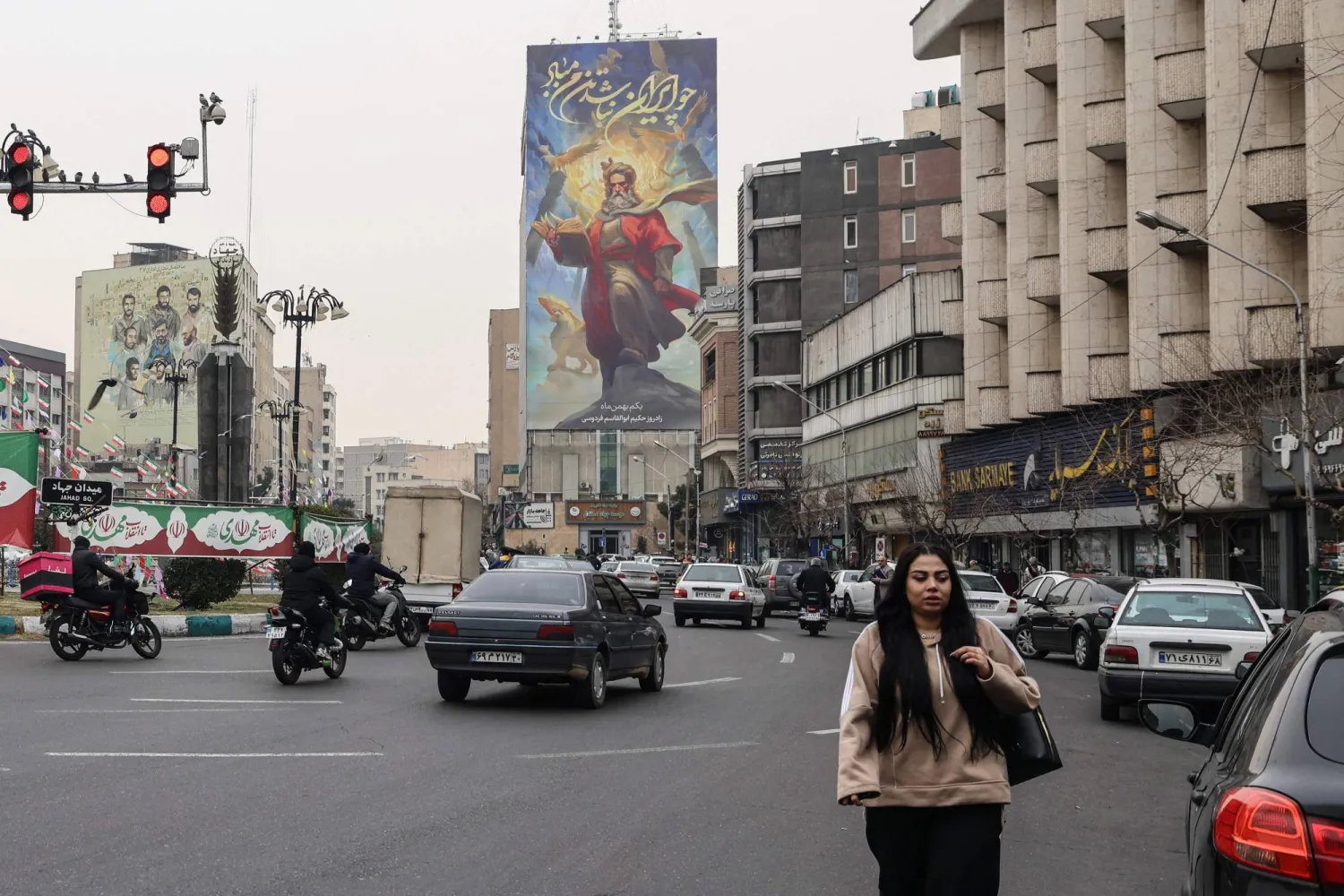
Traffic moves through a street in Tehran on February 7, 2026. (Photo by ATTA KENARE / AFP)
TT

Iran Strikes Hard Line on US Talks, Saying Tehran's Power Comes From Saying 'No'

Traffic moves through a street in Tehran on February 7, 2026. (Photo by ATTA KENARE / AFP)

Iran's top diplomat insisted Sunday that Tehran's strength came from its ability to “say no to the great powers," striking a maximalist position just after negotiations with the United States over its nuclear program and in the wake of nationwide protests.

Foreign Minister Abbas Araghchi, speaking to diplomats at a summit in Tehran, signaled that Iran would stick to its position that it must be able to enrich uranium — a major point of contention with President Donald Trump, who bombed Iranian atomic sites in June during the 12-day Iran-Israel war.

Iran will never surrender the right to enrich uranium, even if war "is imposed on us,” he noted.

"Iran has paid a very heavy price for its peaceful nuclear program and for uranium enrichment." 

Israeli Prime Minister Benjamin Netanyahu is expected to travel to Washington this week, with Iran expected to be the major subject of discussion, his office said.

While Iranian President Masoud Pezeshkian praised the talks Friday in Oman with the Americans as “a step forward,” Araghchi's remarks show the challenge ahead. Already, the US moved the aircraft carrier USS Abraham Lincoln, ships and warplanes to the Middle East to pressure Iran into an agreement and have the firepower necessary to strike the Islamic Republic should Trump choose to do so, according to The AP news.

“I believe the secret of the Islamic Republic of Iran’s power lies in its ability to stand against bullying, domination and pressures from others," Araghchi said.

"They fear our atomic bomb, while we are not pursuing an atomic bomb. Our atomic bomb is the power to say no to the great powers. The secret of the Islamic Republic’s power is in the power to say no to the powers.”

‘Atomic bomb’ as rhetorical device Araghchi's choice to explicitly use an “atomic bomb” as a rhetorical device likely wasn't accidental. While Iran has long maintained its nuclear program is peaceful, the West and the International Atomic Energy Agency say Tehran had an organized military program to seek the bomb up until 2003.

Iran had been enriching uranium up to 60% purity, a short, technical step to weapons-grade levels of 90%, the only non-weapons state to do so. Iranian officials in recent years had also been increasingly threatening that Tehran could seek the bomb, even while its diplomats have pointed to Iranian Supreme Leader Ali Khamenei’s preachings as a binding fatwa, or religious edict, that Iran wouldn’t build one.

Pezeshkian, who ordered Araghchi to pursue talks with the Americans after likely getting Khamenei's blessing, also wrote on X on Sunday about the talks.

“The Iran-US talks, held through the follow-up efforts of friendly governments in the region, were a step forward,” the president wrote. “Dialogue has always been our strategy for peaceful resolution. ... The Iranian nation has always responded to respect with respect, but it does not tolerate the language of force.”

It remains unclear when and where, or if, there will be a second round of talks. Trump, after the talks Friday, offered few details but said: “Iran looks like they want to make a deal very badly — as they should.”

Aircraft carrier in the Arabian Sea During Friday's talks, US Navy Adm. Brad Cooper, the head of the American military's Central Command, was in Oman. Cooper's presence was apparently an intentional reminder to Iran about US military power in the region. Cooper later accompanied US special envoy Steve Witkoff and Jared Kushner, Trump's son-in-law, to the Lincoln out in the Arabian Sea after the indirect negotiations.

Araghchi appeared to be taking the threat of an American military strike seriously, as many worried Iranians have in recent weeks. He noted that after multiple rounds of talks last year, the US “attacked us in the midst of negotiations."

“If you take a step back (in negotiations), it is not clear up to where it will go,” Araghchi said.


Mojtaba Khamenei Says Closure of Strait of Hormuz Should be Used as 'Leverage'

(FILES) In this picture obtained from Iran's ISNA news agency, Mojtaba Khamenei (C), son of Iran's supreme leader Ayatollah Ali Khamenei, walks along a street in Tehran on May 31, 2019. (Photo by Hamid FOROUTAN / ISNA / AFP)
TT

Mojtaba Khamenei Says Closure of Strait of Hormuz Should be Used as 'Leverage'

(FILES) In this picture obtained from Iran's ISNA news agency, Mojtaba Khamenei (C), son of Iran's supreme leader Ayatollah Ali Khamenei, walks along a street in Tehran on May 31, 2019. (Photo by Hamid FOROUTAN / ISNA / AFP)

Iran’s Supreme Leader Mojtaba Khamenei issued his first statement on the war on Thursday, saying that the leverage of closing the Strait of Hormuz should be used.

Khamenei called on people in Gulf countries to “shut down” US bases, saying promised US protection is “nothing more than a lie.”

Khamenei did not appear on camera. Israeli intelligence assessed that he was likely wounded in the war’s opening salvo, which he said also killed his wife, one of his sisters, his niece and his father, Supreme Leader Ali Khamenei.

US President Donald Trump has promised to “finish the job,” even as Iran is “virtually destroyed.” The first week of the war cost the United States $11.3 billion, according to the Pentagon.

“One point I must emphasize is that, in any case, we will obtain compensation from the enemy,” Khamenei said.

“If it refuses, we will take from its assets to the extent we deem appropriate, and if that is not possible, we will destroy its assets to the same extent.”


Russia Condemns Trump Comments on 'Takeover' of Cuba

US President Donald Trump greets Russian President Vladimir Putin, Aug. 15, 2025, at Joint Base Elmendorf-Richardson, Alaska. (AP Photo/Julia Demaree Nikhinson, File)
TT

Russia Condemns Trump Comments on 'Takeover' of Cuba

US President Donald Trump greets Russian President Vladimir Putin, Aug. 15, 2025, at Joint Base Elmendorf-Richardson, Alaska. (AP Photo/Julia Demaree Nikhinson, File)

Russia condemned on Thursday what it called blackmail and threats by US President Donald Trump to initiate a "takeover" of Cuba, a traditional ally of Moscow.

Russian Foreign Ministry spokeswoman Maria Zakharova said Moscow would provide all possible political and diplomatic support to Cuba and called for a diplomatic solution to the tensions with Washington, Reuters reported.

Trump said on Monday that Cuba was in "deep trouble" and that US Secretary of State Marco Rubio was dealing with the issue, which may or may not be a "friendly takeover."


Trump Says Stopping a Nuclear Iran More Important than Oil Prices

US President Donald Trump talks to the media upon his arrival at Joint Base Andrews, Maryland, US, March 11, 2026.  REUTERS/Kevin Lamarque
US President Donald Trump talks to the media upon his arrival at Joint Base Andrews, Maryland, US, March 11, 2026. REUTERS/Kevin Lamarque
TT

Trump Says Stopping a Nuclear Iran More Important than Oil Prices

US President Donald Trump talks to the media upon his arrival at Joint Base Andrews, Maryland, US, March 11, 2026.  REUTERS/Kevin Lamarque
US President Donald Trump talks to the media upon his arrival at Joint Base Andrews, Maryland, US, March 11, 2026. REUTERS/Kevin Lamarque

US President Donald Trump on Thursday said that stopping Iran from getting nuclear weapons was more important to him than controlling oil prices, Reuters reported.

"The United States is the largest Oil Producer in the World, by far, so when oil prices go up, we make a lot of money. BUT, of far greater interest and importance to me, as President, is stopping an evil Empire, Iran, from having Nuclear Weapons, and destroying the Middle East and, indeed, the World," said Trump in a post on his Truth Social platform.
