


Gaza's Rafah Crossing Reopens, Allowing Limited Travel as Palestinians Claim Delays, Mistreatment

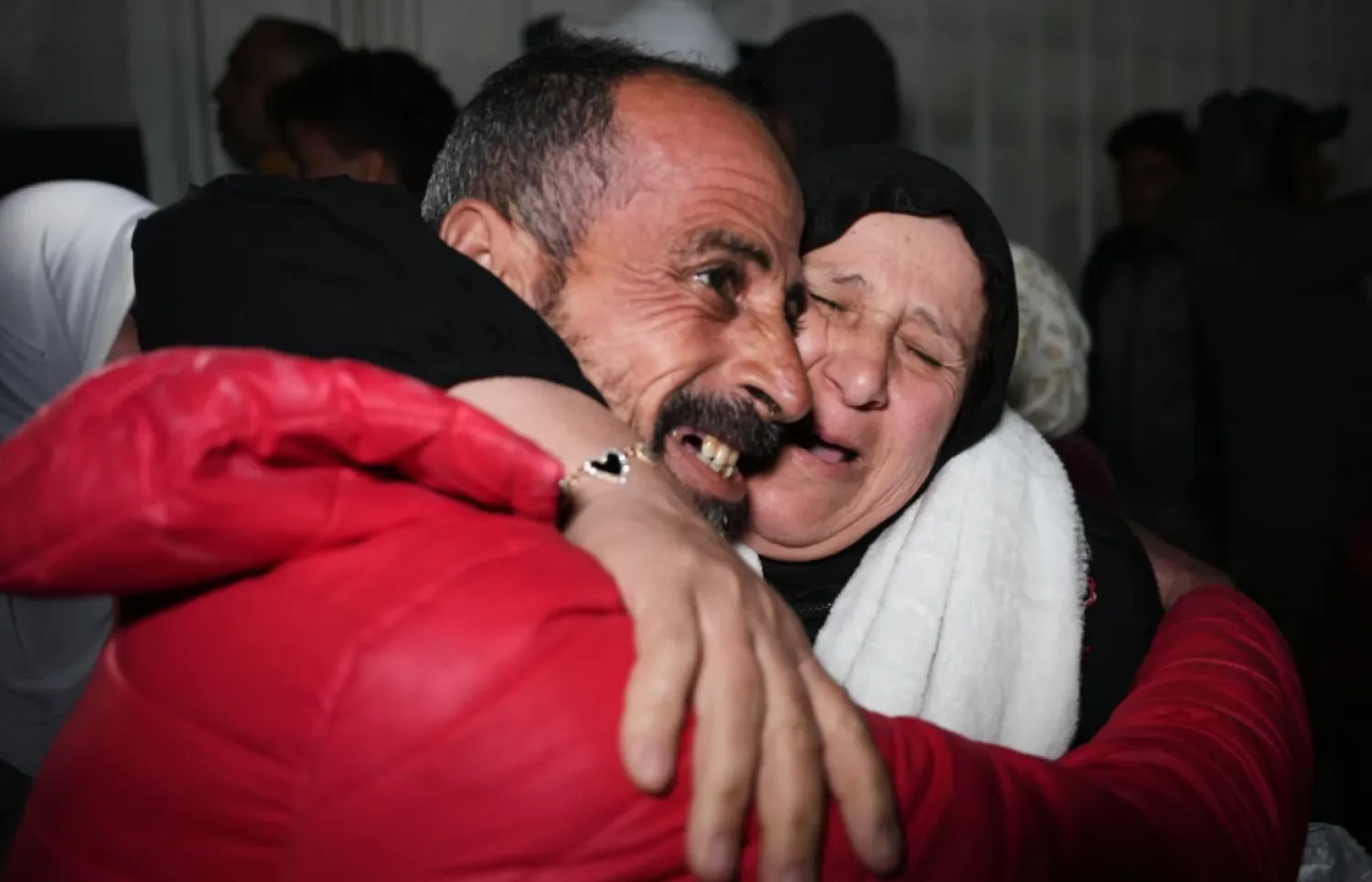
Ayada Al-Sheikh is welcomed by his sister, Nisreen, upon his arrival in Khan Younis in the southern Gaza Strip after returning to Gaza following the long-awaited reopening of the Rafah border crossing, early Thursday, Feb. 5, 2026. (AP Photo/Abdel Kareem Hana)
TT

Gaza's Rafah Crossing Reopens, Allowing Limited Travel as Palestinians Claim Delays, Mistreatment

Ayada Al-Sheikh is welcomed by his sister, Nisreen, upon his arrival in Khan Younis in the southern Gaza Strip after returning to Gaza following the long-awaited reopening of the Rafah border crossing, early Thursday, Feb. 5, 2026. (AP Photo/Abdel Kareem Hana)

A limited number of Palestinians were able to travel between Gaza and Egypt on Sunday, after Gaza's Rafah crossing reopened after a two-day closure, Egyptian state media reported.

The vital border point opened last week for the first time since 2024, one of the main requirements for the US-backed ceasefire. The crossing was closed Friday and Saturday because of confusion about reopening operations.

Egypt's Al Qahera television station said that Palestinians began crossing in both directions around noon on Sunday. Israel didn't immediately confirm the information, according to The AP news.

Meanwhile, Israeli Prime Minister Benjamin Netanyahu is expected to travel to Washington this week, though the major subject of discussion will be Iran, his office said.

Over the first four days of the crossing's opening, just 36 Palestinians requiring medical care were allowed to leave for Egypt, plus 62 companions, according to UN data, after Israel retrieved the body of the last hostage held in Gaza and several American officials visited Israel to press for the opening.

Palestinian officials say nearly 20,000 people in Gaza are seeking to leave for medical care that isn't available in the territory. Those who have succeeded in crossing described delays and allegations of mistreatment by Israeli forces and other groups involved in the crossing, including an Israeli-backed Palestinian armed group, Abu Shabab.

A group of Palestinian patients and wounded gathered Sunday morning in the courtyard of a Red Crescent hospital in Gaza’s southern city of Khan Younis, before making their way to the Rafah crossing with Egypt for treatment abroad, family members told The Associated Press.

Amjad Abu Jedian, who was injured in the war, was scheduled to leave Gaza for medical treatment on the first day of the crossing’s reopening, but only five patients were allowed to travel that day, his mother, Raja Abu Jedian, said. Abu Jedian was shot by an Israeli sniper while he doing building work in the central Bureij refugee camp in July 2024, she said.

On Saturday, his family received a call from the World Health Organization notifying them that he is included in the group that will travel on Sunday, she said.

“We want them to take care of the patients (during their evacuation),” she said. “We want the Israeli military not to burden them.”

The Israeli defense branch that oversees the operation of the crossing didn't immediately confirm the opening.

Heading back to Gaza A group of Palestinians also arrived Sunday morning at the Egyptian side of the Rafah crossing to return to the Gaza Strip, Egypt’s state-run Al-Qahera News satellite television reported.

Palestinians who returned to Gaza in the first few days of the crossing's operation described hours of delays and invasive searches by Israeli authorities and Abu Shabab. A European Union mission and Palestinian officials run the border crossing, and Israel has its screening facility some distance away.

The crossing was reopened on Feb. 2 as part of a fragile ceasefire deal to halt the Israel-Hamas war.

The Rafah crossing, an essential lifeline for Palestinians in Gaza, was the only one in the Palestinian territory not controlled by Israel before the war. Israel seized the Palestinian side of Rafah in May 2024, though traffic through the crossing was heavily restricted even before that.

Restrictions negotiated by Israeli, Egyptian, Palestinian and international officials meant that only 50 people would be allowed to return to Gaza each day and 50 medical patients — along with two companions for each — would be allowed to leave, but far fewer people have so far crossed in both directions.

A senior Hamas official, Khaled Mashaal, said the militant group is open to discuss the future of its arms as part of a “balanced approach” that includes the reconstruction of Gaza and protecting the Palestinian enclave from Israel.

Mashaal said the group has offered multiple options, including a long-term truce, as part of its ongoing negotiations with Egyptian, Qatari and Turkish mediators.

Hamas plans to agree to a number of “guarantees,” including a 10-year period of disarmament and an international peacekeeping force on the borders, “to maintain peace and prevent any clashes,” between the militants and Israel, Mashaal said at a forum in Qatar’s capital, Doha.

Israel has repeatedly demanded a complete disarmament and destruction of Hamas and its infrastructure, both military and civil.

Mashaal accused Israel of financing and arming militias, like the Abu Shabab group which operates in Israeli military-controlled areas in Gaza, “to create chaos” in the enclave.

In the forum, Mashaal was asked about Hamas’ position from US President Donald Trump’s Board of Peace. He didn’t offer a specific answer, but said that the group won’t accept “foreign intervention” in Palestinian affairs.

“Gaza is for the people of Gaza. Palestinians are for the people of Palestine,” he said. “We will not accept foreign rule.”

Israeli Strikes Kill Three Palestinians, Including a Child, in Gaza, Medics Say

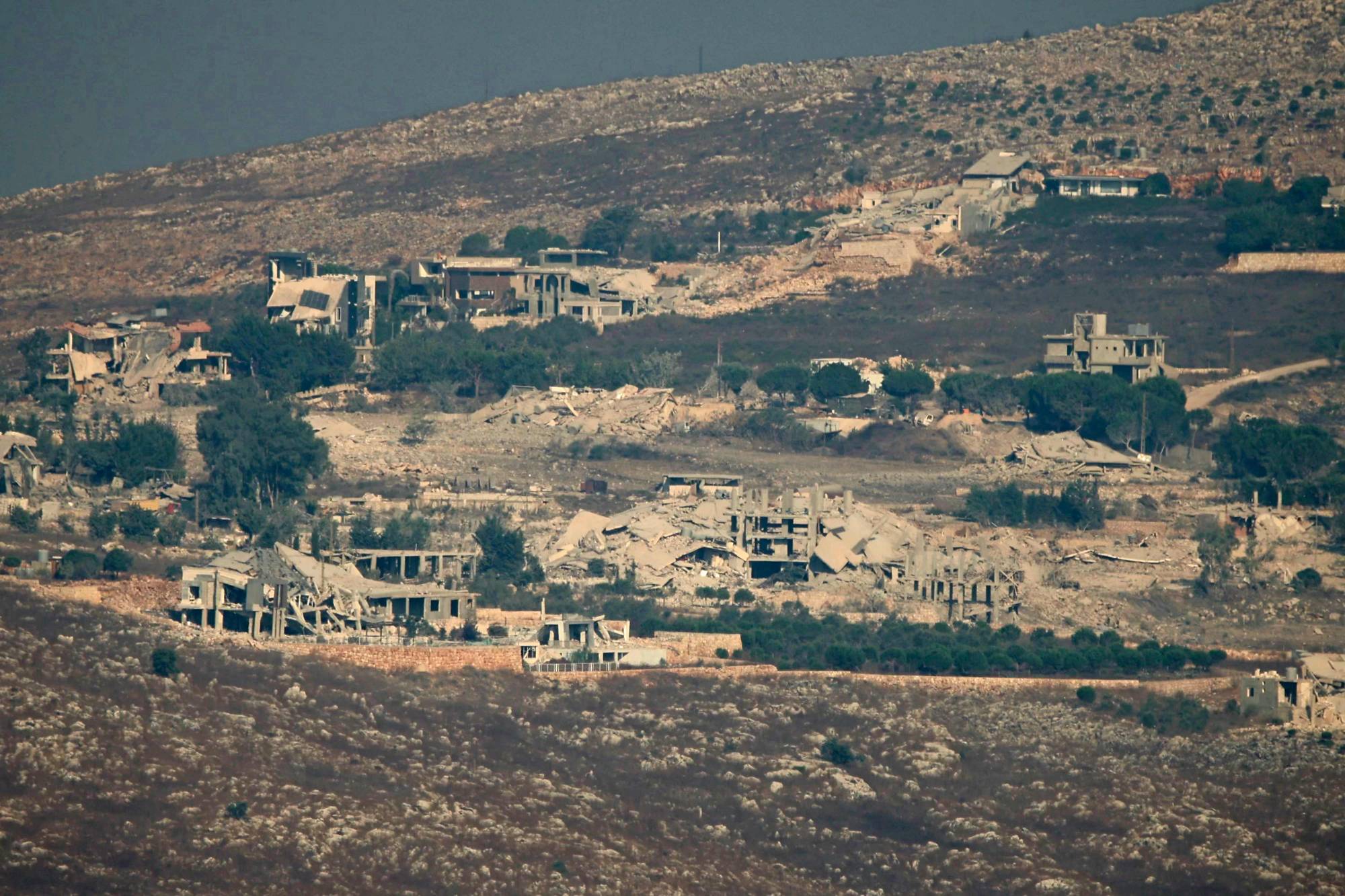
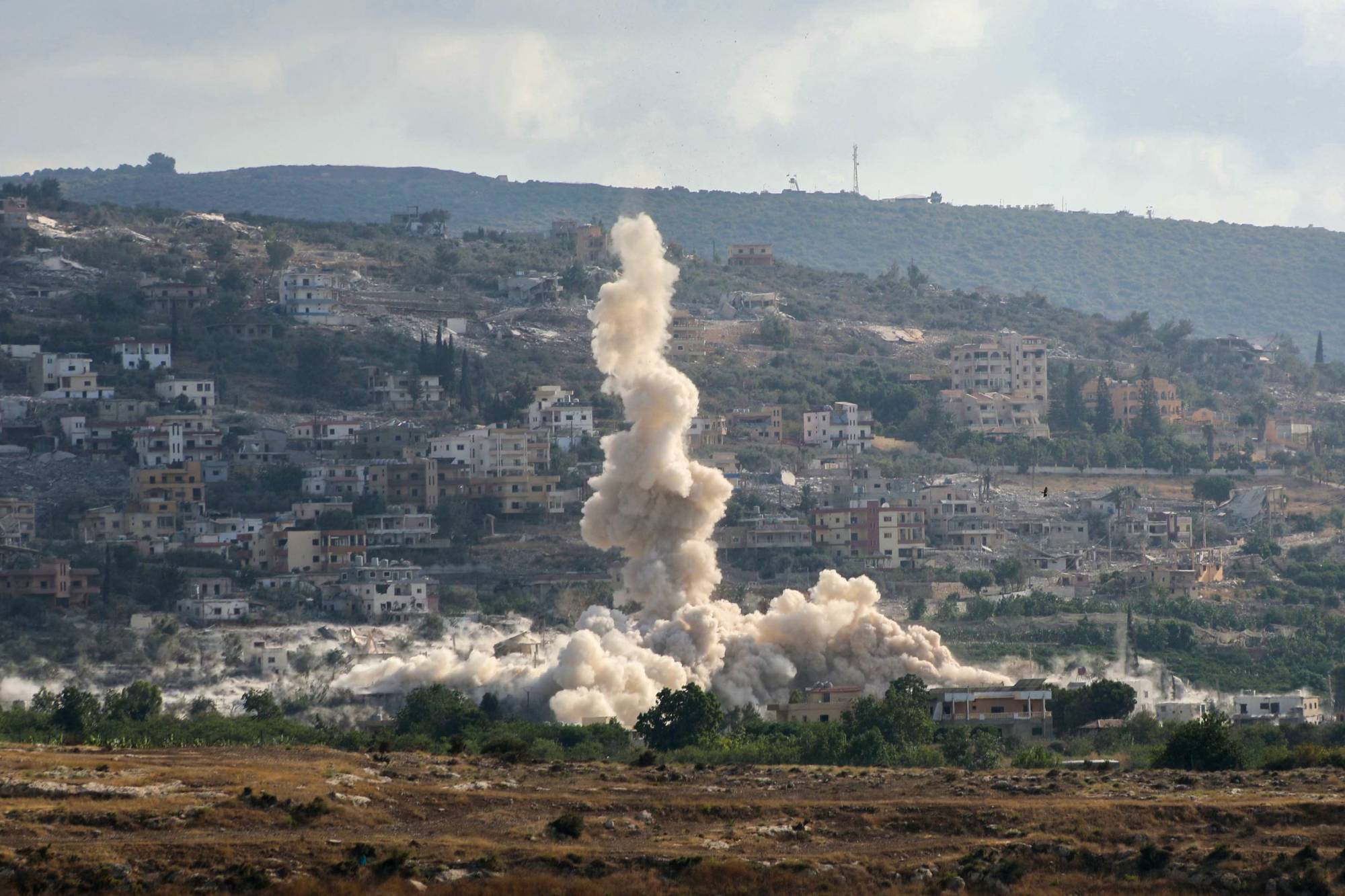
 Palestinians inspect the site of an Israeli strike that targeted a police post, in Gaza City, May 5, 2026. (Reuters)
Palestinians inspect the site of an Israeli strike that targeted a police post, in Gaza City, May 5, 2026. (Reuters)
TT

Israeli Strikes Kill Three Palestinians, Including a Child, in Gaza, Medics Say

 Palestinians inspect the site of an Israeli strike that targeted a police post, in Gaza City, May 5, 2026. (Reuters)
Palestinians inspect the site of an Israeli strike that targeted a police post, in Gaza City, May 5, 2026. (Reuters)

Israeli strikes killed at least three Palestinians, including a child, and wounded several others in the Gaza Strip on Tuesday, health officials said.

Medics said a Palestinian was killed and two others were wounded by an Israeli airstrike near the Sheikh Radwan neighborhood in Gaza City, while another was killed and several others were wounded by Israeli tank shelling near the central area of the enclave.

Later on Tuesday, an Israeli strike targeted a police station in northern Gaza, killing a 15-year-old child, medics said. The Hamas-run interior ministry said ‌some policemen ‌were also wounded in the attack.

Reuters has previously reported ‌that ⁠Israel has intensified its ⁠attacks on Gaza's Hamas-run police force, which the group has used to reinforce its hold in the areas it controls in the strip.

There was no immediate Israeli comment on any of the incidents.

Violence in Gaza has persisted despite an October 2025 ceasefire, with Israel conducting almost daily attacks on Palestinians. Israel and Hamas have blamed each ⁠other for ceasefire violations.

At Al Shifa Hospital, the largest ‌medical facility still partially functional in the ‌enclave, relatives and friends arrived to bid farewell to one of those ‌killed on Tuesday, Mohammed Al-Ghandour. Two girls were crying and being ‌comforted by a woman outside the hospital's morgue.

"The Zionist enemy doesn't know anything called truce and does not commit to international treaties or laws or humanitarian laws," said the victim's uncle, Abu Omar Al-Naffar.

At least 830 Palestinians ‌have been killed since the ceasefire deal took effect, according to local medics, while Israel says fighters have ⁠killed four ⁠of its soldiers over the same period.

Israel says its strikes are aimed at thwarting attempts by Hamas and other Palestinian fighters to stage attacks against its forces.

More than 72,500 Palestinians have been killed since the Gaza war started in October 2023, most of them civilians, according to Gaza health authorities.

Since the truce last October, Israel still occupies more than half of Gaza, where it has ordered residents out and demolished almost all remaining structures. Nearly the entire population of more than 2 million Palestinians now lives in a narrow strip along the coast, mainly in tents and damaged buildings, under the de facto control of Hamas.


Israel Court Extends Gaza Flotilla Activists’ Detention Until Sunday

 Brazil's activist Thiago Avila is escorted into court in the Israeli coastal city of Ashkelon on May 5, 2026. (AFP)
Brazil's activist Thiago Avila is escorted into court in the Israeli coastal city of Ashkelon on May 5, 2026. (AFP)
TT

Israel Court Extends Gaza Flotilla Activists’ Detention Until Sunday

 Brazil's activist Thiago Avila is escorted into court in the Israeli coastal city of Ashkelon on May 5, 2026. (AFP)
Brazil's activist Thiago Avila is escorted into court in the Israeli coastal city of Ashkelon on May 5, 2026. (AFP)

An Israeli court has extended the detention of two foreign activists from a Gaza-bound flotilla until Sunday, a rights group representing them said, as authorities continue to question the pair.

Spanish national Saif Abu Keshek and Brazilian national Thiago Avila appeared before a court in the city of Ashkelon for their second hearing on Tuesday, after they were brought to Israel for questioning last week.

The two, held in a prison in the southern Israeli city, were among dozens of activists aboard a Gaza-bound flotilla intercepted by Israeli forces off the coast of Greece early on Thursday.

At their first hearing on Sunday, the court extended their detention by two days. A second hearing was held on Tuesday, where both appeared with their legs shackled.

"The court approved their detention until Sunday morning" at Tuesday's hearing, Miriam Azem, international advocacy coordinator at the Israeli rights group Adalah told AFP.

An AFP journalist saw the two activists brought to the courtroom.

Adalah said the two activists were on hunger strike, with Tuesday their sixth day of protest.

On Monday, the rights group alleged the pair had been subjected to physical and psychological abuse in detention.

- Abuse claims -

Both Abu Keshek and Avila are being held in isolation, with "high-intensity lighting" on at all times in their cells, Adalah said, adding that Avila was being held in "extremely cold temperatures".

"They are kept blindfolded at all times whenever they are moved outside their cells, including during medical examinations," it said.

Israeli authorities have rejected the abuse claims.

At Sunday's hearing, Adalah said the state attorney had presented a list of offences the pair were accused of, including "assisting the enemy during wartime" and "membership in and providing services to a terrorist organization".

But Adalah's lawyers challenged the state's jurisdiction, arguing there had been an "unlawful abduction" of the two activists in international waters.

Israel's foreign ministry said both individuals were affiliated with the Popular Conference for Palestinians Abroad (PCPA), a group accused by Washington of "clandestinely acting on behalf of" Palestinian group Hamas.

The ministry said Abu Keshek was a leading PCPA member, and that Avila was also linked to the group and "suspected of illegal activity".

The flotilla's vessels had set sail from France, Spain and Italy with the aim of breaking Israel's blockade of Gaza and bringing humanitarian supplies to the devastated Palestinian territory.

But they were intercepted by Israeli forces off the coast of Greece.

The Global Sumud Flotilla's first voyage last year was also intercepted by Israeli forces off the coasts of Egypt and Gaza.

Israel controls all entry points into Gaza, which has been under an Israeli blockade since 2007.

Throughout the Gaza war that started in October 2023, there have been shortages of critical supplies in the territory, with Israel at times cutting off aid entirely.


With Wood Scarce, Gaza Carpenters Make Simple Beds from Pallets

 Palestinian carpenter Mohammed Wafi builds furniture from recycled wooden pallets in his workshop amid shortages of materials in Khan Younis, in the southern Gaza Strip, May 2, 2026. (Reuters)
Palestinian carpenter Mohammed Wafi builds furniture from recycled wooden pallets in his workshop amid shortages of materials in Khan Younis, in the southern Gaza Strip, May 2, 2026. (Reuters)
TT

With Wood Scarce, Gaza Carpenters Make Simple Beds from Pallets

 Palestinian carpenter Mohammed Wafi builds furniture from recycled wooden pallets in his workshop amid shortages of materials in Khan Younis, in the southern Gaza Strip, May 2, 2026. (Reuters)
Palestinian carpenter Mohammed Wafi builds furniture from recycled wooden pallets in his workshop amid shortages of materials in Khan Younis, in the southern Gaza Strip, May 2, 2026. (Reuters)

As Israeli restrictions continue to curb the entry of goods into Gaza, local carpenters are turning to scrap wood and shipping pallets to make much-needed basic beds and tables in a strip battered by two years of war between Hamas and Israel.

In a workshop in southern Gaza, carpenters dismantle used pallets to make beds, cupboards, and shelves for families displaced by fighting, after regular construction materials became scarce or prohibitively expensive.

Mohammed Wafi, 34, a carpenter in Khan Younis, said pallets became one of the few available sources of wood when limited ‌aid trucks began entering ‌Gaza.

Demand for his handiwork has grown as people living ‌in ⁠tents seek basic furniture ⁠to get by, Wafi said. Even recycled furniture has become more costly as prices for basic components soar.

"Today people say, 'I just need something to get by, something to get my clothes off the floor'... especially those (living) in tents," said Wafi, who has worked in carpentry for 16 years.

"Due to the rats and cockroaches, they need a tent or a bed to be lifted off the ground," he said.

Rats and parasites are spreading ⁠through Gaza's tent camps, biting people as they sleep, gnawing through ‌possessions, and spreading disease.

COGAT, the Israeli military agency ‌that coordinates aid into Gaza, didn't respond to a request for comment. Wood is a construction material ‌that Israel bans from entry to Gaza because it is considered a dual-use ‌item - items for civilian but also potential military use.

"We used to get a kilo of nails for 5 shekels ($1.70). Today, a kilo of nails costs around 100 or 130 shekels," Wafi said. Hinges and other fittings have also multiplied in price.

Still, furniture made from pallets remains far ‌cheaper than conventional bedroom sets, consisting of a bed, closet and dresser, he said. A pallet set sells for 4,000 to ⁠5,000 shekels compared ⁠to 18,000 for a traditional set.

Shortages of electricity and wood have slowed production, he added, leaving carpenters unable to guarantee delivery times.

The ceasefire in Gaza has been repeatedly violated, with over 830 Palestinians and four Israeli soldiers reported killed since it began in October, according to Palestinian and Israeli tallies.

Israel cites security concerns for curbs on Gaza, and COGAT has previously said it invests considerable efforts to ensure aid reaches Gaza and has denied restricting supplies.

In tent encampments near Khan Younis, Mohammed Tayseer, who has lived in a tent for two years, said he slept on the ground until recently.

"The ground is sandy and dirty, and as you can see, you find the clothes full of sand. There are rats and mice," he said.

"One's back hurts and is stiff from sleeping on the floor... now (we) have a bed," he said.
