

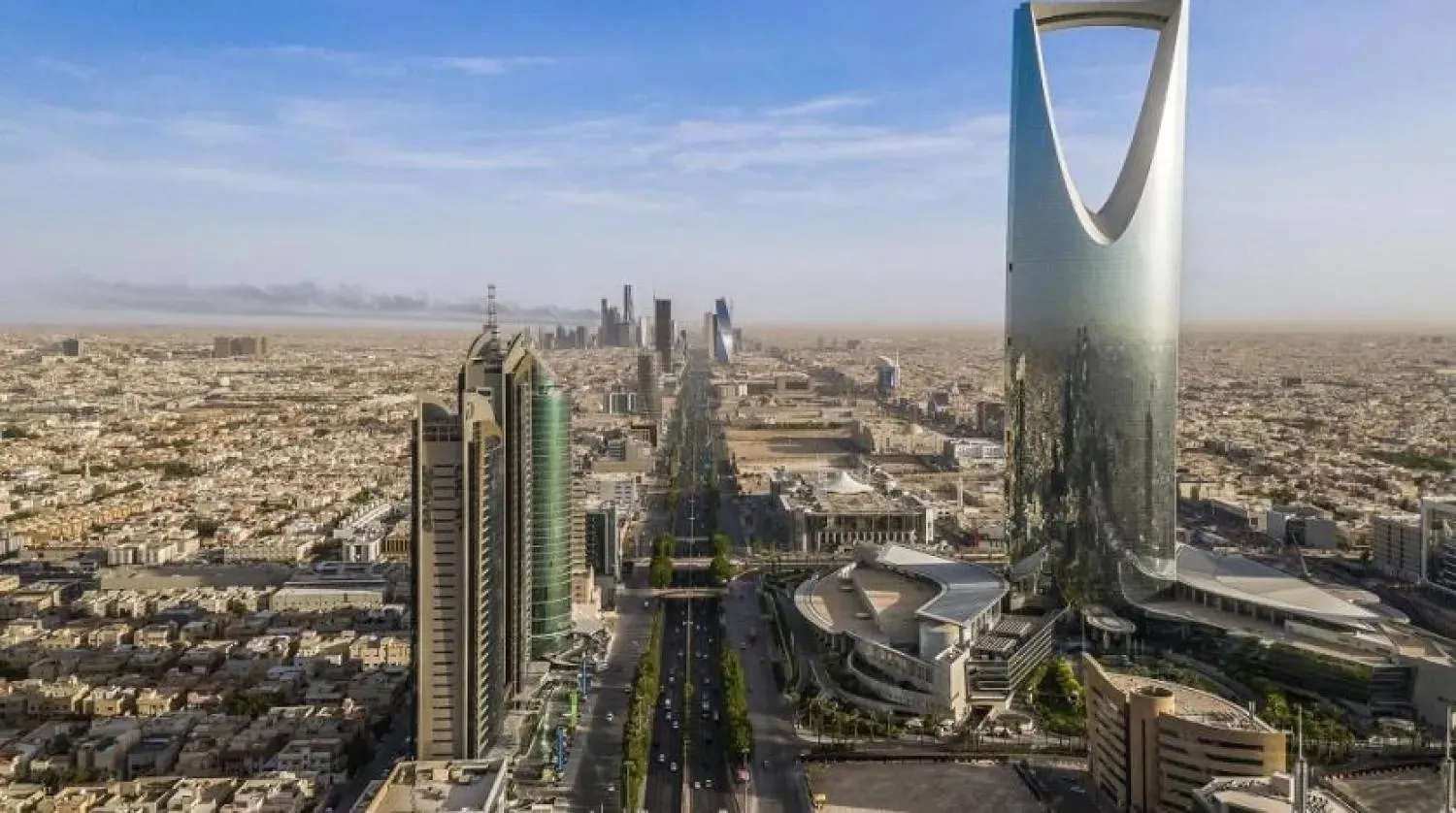

Saudi Arabia Participates in Drafting the International AI Safety Report 2026

General view of Riyadh, Saudi Arabia. (SPA)
TT

Saudi Arabia Participates in Drafting the International AI Safety Report 2026

General view of Riyadh, Saudi Arabia. (SPA)

The Kingdom of Saudi Arabia, represented by the Saudi Data and Artificial Intelligence Authority (SDAIA), participated for the second consecutive year in the preparation of the International AI Safety Report 2026, reinforcing its international efforts to advance AI safety and support responsible innovation worldwide, the Saudi Press Agency said on Monday.

The report, emerging from the 2023 AI Safety Summit at Bletchley Park, provides a scientific assessment of advances in advanced AI systems, examines associated risks, and outlines practical approaches to strengthening safety standards and global governance, serving as a key reference for policymakers, regulators, and researchers.

The report is a comprehensive global document assessing AI risks and related challenges and serves as a trusted scientific reference to support regulatory policies and the development of governance frameworks for the safe and responsible use of advanced technologies.

The report was developed by a distinguished group of international scientists and experts in AI safety and technology governance, featuring specialists from prestigious universities and research centers, as well as representatives from over 30 countries and major international organizations, including the United Nations, the Organization for Economic Co-operation and Development, and the European Union.

The report highlights several key messages, notably the importance of keeping pace with the rapidly growing capabilities of AI through advanced regulatory and scientific frameworks, the need to invest in safety and technical compliance research to ensure systems remain under effective human oversight, and the promotion of international coordination to establish common standards supporting the safe and responsible use of advanced technologies.

It also emphasizes the need to consider economic and social dimensions to ensure the fair distribution of AI benefits and reduce inequality gaps.

Saudi Arabia’s participation in this international effort aligns with the objectives of Saudi Vision 2030, which aims to establish the Kingdom as a global hub for technological innovation while upholding the highest standards of responsibility and technical security.

It reflects the Kingdom’s commitment to actively shaping the global future of AI, promoting sustainable development, safeguarding community security, and enhancing international cooperation toward a safer, more stable technological future.



Japan Approves Stem-cell Treatment for Parkinson's in World First

Parkinson's disease. John SAEKI, Adrian LEUNG / AFP
TT

Japan Approves Stem-cell Treatment for Parkinson's in World First

Parkinson's disease. John SAEKI, Adrian LEUNG / AFP

Japan has approved ground-breaking stem-cell treatments for Parkinson's and severe heart failure, one of the manufacturers and media reports said Friday, with the therapies expected to reach patients within months.

Pharmaceutical company Sumitomo Pharma said it received the green light for the manufacture and sale of Amchepry, its Parkinson's disease treatment that transplants stem cells into a patient's brain, said AFP.

Japan's health ministry also gave the go-ahead to ReHeart, heart muscle sheets developed by medical startup Cuorips that can help form new blood vessels and restore heart function, media reports said.

The treatments could be on the market and rolled out to patients as early as this summer, reports said, citing the health ministry, becoming the world's first commercially available medical products using (iPS) cells.

Japanese scientist Shinya Yamanaka won the Nobel Prize in 2012 for his research into iPS, which have the potential to develop into any cell in the body.

"I hope this will bring relief to patients not only in Japan but around the world," health minister Kenichiro Ueno told a press conference.

"We will promptly carry out all necessary procedures to ensure it reaches all patients without fail."

In a statement, Sumitomo Pharma said it had obtained "conditional and time-limited approval" for the manufacture and marketing of Amchepry under a system which is reportedly designed to get these products to patients as quickly as possible.

The approval is a kind of "provisional license", the Asahi newspaper said, after the safety and efficacy of the treatment was judged based on data from fewer patients than in ordinary clinical trials for drugs.

A trial led by Kyoto University researchers indicated that the company's treatment was safe and successful in improving symptoms.

The study involved seven Parkinson's patients aged between 50 and 69, with each receiving a total of either five million or 10 million cells implanted on both sides of the brain.

The iPS cells from healthy donors were developed into the precursors of dopamine-producing brain cells, which are no longer present in people with Parkinson's disease.

The patients were monitored for two years and no major adverse effects were found, the study said. Four patients showed improvements in symptoms.

Parkinson's disease is a chronic, degenerative neurological disorder that affects the body's motor system, often causing shaking and other difficulties in movement.

Worldwide, about 10 million people have the illness, according to the Parkinson's Foundation.

Currently available therapies "improve symptoms without slowing or halting the disease progression," the foundation says.

iPS cells are created by stimulating mature, already specialized, cells back into a juvenile state -- basically cloning without the need for an embryo.

The cells can be transformed into a range of different types of cells, and their use is a key sector of medical research.


Saudi Red Sea Authority Appoints Dr. Maryam Ali Ficociello as CEO

The Saudi Red Sea Authority (SRSA) logo
TT

Saudi Red Sea Authority Appoints Dr. Maryam Ali Ficociello as CEO

The Saudi Red Sea Authority (SRSA) logo

The Saudi Red Sea Authority (SRSA) has appointed Dr. Maryam Ali Ficociello as Chief Executive Officer effective March 22.

“Ficociello brings more than two decades of leadership experience spanning governance, risk management, resilience, and compliance across public and private sectors, including state-owned entities. She has also represented the Kingdom at various international forums,” SRSA said in a statement on Thursday.

Commenting on her appointment, Ficociello said: “It is an honor to join the Saudi Red Sea Authority at this pivotal stage in its journey. SRSA has a critical role in enabling a world-class coastal tourism sector that is safe, well-governed, and investment-ready, while protecting the Red Sea’s unique marine ecosystems.”

“I look forward to working with our stakeholders across government and industry to strengthen regulatory excellence, embed sustainability and resilience across the sector, and advance the Kingdom’s ambitions for responsible coastal tourism and the blue economy,” she added.


Tourism on Hold as Middle East War Casts Uncertainty

Tourism to the Middle East has boomed in recent years but war now threatens that success. Ryan Lim / AFP
TT

Tourism on Hold as Middle East War Casts Uncertainty

Tourism to the Middle East has boomed in recent years but war now threatens that success. Ryan Lim / AFP

Cancelled flights, postponed trips and a great deal of uncertainty: the war in the Middle East is casting a long shadow over the tourism outlook for a region that has become a prized destination for travelers worldwide.

"My last group of tourists left three days ago, and all the other groups planned for March have been cancelled," said Nazih Rawashdeh, a tour guide near Irbid, in northern Jordan.

"This is the start of the high season here. It's catastrophic," he told AFP.

"And yet there's no problem in Jordan. It's perfectly safe."

Across the world, tour operators are scrambling to find solutions for clients stranded in the region or who had trips planned there.

"The priority is getting those already there back home," said Alain Capestan, president of the French tour operator Comptoir des Voyages.

He said however that the war is also affecting customers who have travelled to other parts of the world, as the Gulf region is home to several major aviation hubs.

Like other companies, the German tour operators surveyed by AFP -- Alltours, Dertour, Schauinsland-Reisen -- announced they would cover the cost of extra nights for clients stranded in the Middle East. They also cancelled trips to the UAE and Oman until at least March 7.

The British travel industry association ABTA said agencies "would not be sending customers to the region for as long as the British Foreign Office advises against all non-essential travel".

Customers whose holidays were cancelled in recent days will be able to rebook or receive a refund, it said.

- Economic impact -

The war is disrupting a sector that had been booming in the region.

According to UN Tourism, in 2025 around 100 million tourists visited the Middle East -- nearly seven percent of all international tourists recorded worldwide. That figure had grown three percent year-on-year and 39 percent compared to the pre-pandemic period.

Depending on the destination, Europeans make up a large share of visitors, followed by tourists from South Asia, the Americas, and other Middle Eastern countries.

For example, nearby markets accounted for 26 percent of total visitors to Dubai in 2025, according to its Ministry of Tourism and Economy.

Against this backdrop analysts Oxford Economics warns that "a decline in tourist flows to the region will deal a more severe economic blow than in the past, as tourism's share of GDP has grown, as has employment in the sector".

"We estimate inbound arrivals to the Middle East could decline 11-27 percent year-on-year in 2026 due to the conflict, compared to our December forecast that projected 13 percent growth," said Director of Global Forecasting Helen McDermott.

That would translate, according to the firm, to between 23 and 38 million fewer international visitors compared to the prior scenario, and a loss of $34 to $56 billion in tourist spending.

After Covid and then the conflict in Gaza, tourists had been coming back, said Rawashdeh, the Jordanian tour guide.

"For the past six months, people working in tourism here had hope. And now there's a war. This is going to be terrible for the economy," he said.

"We've definitely noticed an understandable slowdown in new bookings from our partners right now, but we fully expect that to bounce back as soon as things settle down and travelers feel more confident," said Ibrahim Mohamed, marketing director of Middle East Travel Alliance, which offers direct tours to American and British operators.

He remains optimistic: "The Middle East has always been an incredibly resilient market, and demand always bounces back fast once stability returns."