Syria Joining Anti-ISIS Coalition 'Marks New Chapter' in Global Security, US Envoy Says

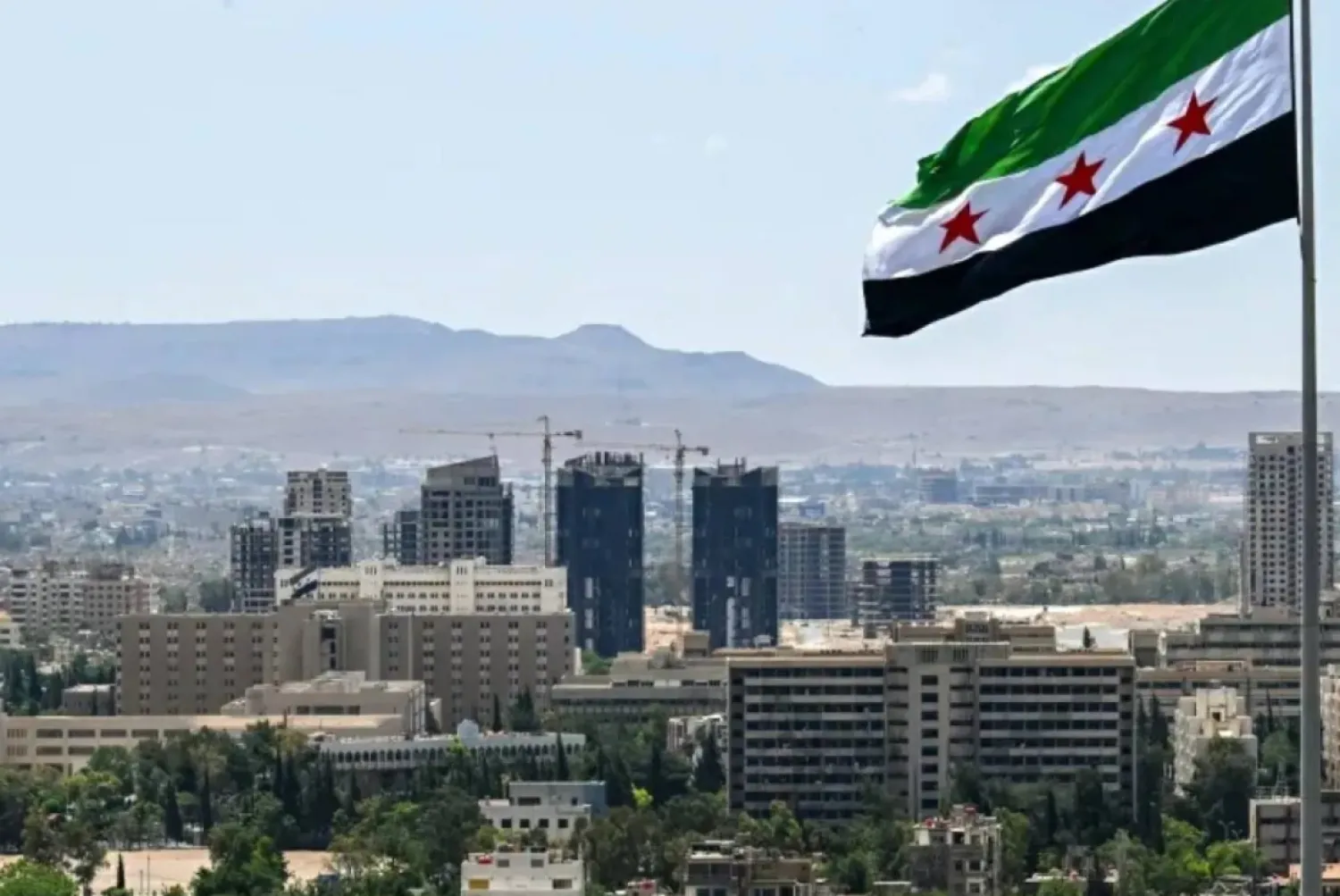
A large Syrian flag flutters above Tishreen Park in Damascus, June 4, 2025. (AFP)
TT

Syria Joining Anti-ISIS Coalition 'Marks New Chapter' in Global Security, US Envoy Says

A large Syrian flag flutters above Tishreen Park in Damascus, June 4, 2025. (AFP)

The US-led international coalition to fight the ISIS has welcomed Syria in the fight against the extremists, saying that the priorities include the swift transfer of ISIS detainees to Iraq and third-country repatriation of families linked to ISIS held in two camps in Syria.

The State Department also welcomed a recent ceasefire that ended fighting between Syrian government forces and the US-backed and Kurdish-led Syrian Democratic Forces that were a main force in the fight against ISIS in Syria, The AP news reported.

Representatives from Syria — which officially joined the global coalition against ISIS in November during a historic visit by Syria’s President Ahmad al-Sharaa’s to Washington — attended a meeting on Monday of some officials from the 90-member coalition in Saudi Arabia.

“Regional solutions, shared responsibility. Syria’s participation in the D-ISIS Coalition meeting in Riyadh marks a new chapter in collective security,” Tom Barrack, the US envoy to Syria, said in comments posted on X on Tuesday.

The US military began transferring some of the about 9,000 ISIS detainees held in northeastern Syria last month to secure facilities in Iraq, following clashes between government forces and the SDF.

Monday's State Department statement said coalition members “underscored their readiness to work closely with the Syrian government” and encouraged members to provide direct support to Syrian and Iraqi efforts.

It said that in addition to the transfer of detainees to Iraq, the participants reaffirmed their priorities that include “dignified reintegration” of families from the al-Hol and Roj camps, in northeast Syria, to their communities of origin. Syria's government took over al-Hol in late January.

The camps house more than 25,000 mostly women and children linked to ISIS militants, the vast majority of them from Syria and Iraq. The State Department called on dozens of countries other than Syria and Iraq to repatriate their citizens from al-Hol and Roj camps.

“Officials commended Iraq’s efforts to securely detain ISIS militants” the statement said, adding that they also welcomed Syria’s assumption of responsibility for detention facilities and displacement camps housing ISIS militants and their family members.

The SDF, which controls much of the detention facilities in northeast Syria, will merge into the national army as part of a deal reached with the central government last month.

Part of the deal reached last month, government delegations visited over the past days the Qamishli International Airport in the predominantly Kurdish city of Qamishli as well as some oil fields and the headquarters of a national oil company as SDF members withdraw from some of their positions.

Government forces also entered parts of the northeastern city of al-Hassakeh. In the near future, Syria’s central authorities are supposed to take over border crossings with neighboring Iraq and Türkiye.


Drone-Making Equipment Bound for Houthis Seized in Bab el-Mandeb

The boat was transporting equipment used to manufacture drones and explosive-laden boats (Giants Forces) 
TT

Drone-Making Equipment Bound for Houthis Seized in Bab el-Mandeb

The boat was transporting equipment used to manufacture drones and explosive-laden boats (Giants Forces) 

Yemen’s Southern Giants Brigades announced they had intercepted a boat carrying equipment allegedly intended for manufacturing Houthi drones and explosive-laden boats as it attempted to reach the Red Sea coast of Hodeidah province, home to ports controlled by the Iran-backed group.

According to the forces, the seized cargo included equipment used in the production and operation of drones and suicide boats, including a hydraulic drilling machine, servers, electronic control chips, GPS devices for target guidance, engines, and other specialized components.

The interception took place Monday evening following an intelligence-led surveillance operation. Three sailors allegedly affiliated with the Houthis were arrested aboard the vessel, which was reportedly transporting equipment intended for manufacturing drones used in the group’s attacks.

Col. Adel al-Mahwali, head of operations for the 17th Giants Brigade, said the operation reflected the forces’ “high level of vigilance.” He added that all seized materials had been secured and that legal procedures were underway.

Al-Mahwali revealed that the operation was part of the Giants Forces’ broader efforts to secure Yemen’s coastline and vital shipping lanes, in line with directives from Presidential Leadership Council member and Southern Armed Forces commander Abdul Rahman Al-Mahrami, widely known as Abu Zaraa, who has made combating smuggling a priority.

Al-Mahrami, for his part, praised the operation and called for intensified efforts to combat smuggling, tighten oversight of Houthi supply routes, and prevent the trafficking of weapons and equipment that, he said, threaten Yemen’s security and regional stability.

Information Minister Muammar al-Eryani also welcomed what he described as a significant security success, saying the interception demonstrated a high level of professionalism, readiness, and vigilance in protecting Yemen’s coastline and maritime corridors, according to the official Saba News Agency.

Al-Eryani said the seizure provided fresh evidence that Iran continues to supply the Houthis with advanced weapons and military components in violation of UN Security Council resolutions and the arms embargo imposed on the group. He stressed that the interception underscored Tehran’s continued use of the Houthis to advance its regional agenda and threaten Yemen’s security, regional stability, and international shipping.


What Is Behind Claims of RSF Training Camps in Libya?

Military vehicles belonging to the Libyan “National Army” in the south last March. (General Staff)
TT

What Is Behind Claims of RSF Training Camps in Libya?

Military vehicles belonging to the Libyan “National Army” in the south last March. (General Staff)

Talk of ties between Libya's "National Army," led by Field Marshal Khalifa Haftar, and Sudan's Rapid Support Forces (RSF) has resurfaced following fresh allegations that RSF fighters are being trained at camps inside Libya.

The army's General Command rejected the allegations, describing them as "part of a campaign aimed at tarnishing its image."

A senior Libyan military source on Thursday also denied foreign media reports of RSF training camps in Libya, telling Asharq Al-Awsat that the claims were "baseless."

The source, who requested anonymity because of the sensitivity of his position, said the report was “an attempt to cloud the security stability achieved in eastern and southern Libya ... This is false propaganda the General Command has faced for years, especially since the outbreak of the war in Sudan.”

Libyan lawmaker Ali al-Soul, a member of parliament’s National Security Committee, echoed the denial, saying reports of RSF camps on Libyan territory were “nothing more than media lies unsupported by any facts on the ground.”

Al-Soul told Asharq Al-Awsat that “Libya does not interfere in the internal affairs of neighboring countries, and has not and will not fuel any conflicts there.”

“There are no foreign forces from neighboring countries witnessing conflicts, especially Sudan, inside Libyan territory,” adding that Libya acts only through “good offices to calm tensions and protect its national security,” he said.

The Libyan lawmaker said the “National Army” was “doing its duty to protect the country’s sovereignty, borders and resources, fighting smuggling gangs with the available means, and respecting the sovereignty of other states by not backing one side against another.”

Recent reports said southern and eastern Libya host a logistical hub for training RSF fighters, identifying four training camps in areas under the control of the “National Army.”

They include “Camp 17” near Benghazi, where fighters are trained to operate drones and heavy weapons, according to analysis of satellite images and open-source videos.

The reports drew on an investigation by the Dutch organization Lighthouse Reports, in cooperation with Sudan War Monitor and Evident Media, a group specializing in visual investigations.

People close to the “National Army” see the accusations through a different lens, linking them to Libya’s political situation and active international efforts to resolve the crisis, as the country remains divided politically and militarily more than a decade on.

Libyan political analyst Ayoub al-Awjali said the timing of the accusations was “not innocent.”

He told Asharq Al-Awsat they “coincide with the US initiative led by US presidential adviser Massad Boulos on the Libya file,” suggesting they may be part of attempts to “shuffle the political cards and influence the course of ongoing understandings.”

Libya’s political scene is currently focused on an initiative attributed to Boulos that would see Saddam Haftar, deputy commander of the “National Army,” take over the Presidential Council, while the interim Government of National Unity's Prime Minister, Abdulhamid Dbeibah, would remain in a senior role at the head of a unified government.

Al-Awjali did not rule out “efforts by some international parties involved in the Libyan crisis to use such accusations to achieve political gains or reshape the scene in ways that serve their interests, given the advanced steps made by the Boulos initiative.”

He expected “new accusations and attempts” to use various crisis cards in the next phase.

The “National Army” maintains that it has no involvement in Sudan’s conflict, saying its mission is limited to protecting the southern border and preventing threats to Libyan security.

Chief of the General Staff Lieutenant General Khaled Haftar previously made the same point in a televised interview, saying: “The conflict in Sudan is an internal matter in which we do not interfere. Our role is limited to securing Libya’s borders with neighboring countries.”

The parliament-appointed government and Libya’s House of Representatives have also said the same.

Sudan’s representative to the UN Security Council, Al-Harith Idris, had accused Libya’s “National Army” of providing logistical support to the RSF.

In a briefing to the Security Council last month, he said the Subul al-Salam Battalion, based in Kufra, was transferring ammunition and mortar rounds from the warehouses of the 106th Brigade to the RSF.

In December, Reuters reported that an airstrip at Kufra airport in southeastern Libya had been used as a logistical platform to support military operations linked to El Fasher, an allegation the “National Army” denied.


Syrian FM in Beirut to Reassure Lebanon Over Military Intervention Fears

 Syrian Foreign Minister Asaad al-Shibani arrives at the government palace in Beirut. (AP)
Syrian Foreign Minister Asaad al-Shibani arrives at the government palace in Beirut. (AP)
TT

Syrian FM in Beirut to Reassure Lebanon Over Military Intervention Fears

 Syrian Foreign Minister Asaad al-Shibani arrives at the government palace in Beirut. (AP)
Syrian Foreign Minister Asaad al-Shibani arrives at the government palace in Beirut. (AP)

Syrian Foreign Minister Asaad al-Shibani sought on Thursday to allay Lebanese fears of possible Syrian military intervention, assuring that Damascus had “no intention of taking any military step.”

The assurance came during his visit to Beirut, whose meetings extended beyond Lebanese officials, including his first meeting with Parliament Speaker Nabih Berri, to a broad spectrum of political forces. During the visit, Shibani also expressed Damascus's openness to meeting Hezbollah “if the interest requires it.”

The broad meetings in Beirut conveyed a message of Syrian openness toward Lebanon's political forces. They were the first of their kind between a senior Syrian official and representatives of Lebanese parties, underscoring Damascus' desire to open a new chapter with all Lebanese, across the political spectrum.

The most striking stop was Shibani’s first meeting with Berri, one of Hezbollah’s most prominent allies inside Lebanon.

Afterward, Shibani described the meeting as excellent. He also said a future meeting with Hezbollah was possible “if the interest requires it,” while stressing that no such meeting was scheduled during his current visit to Beirut.

Military intervention confusion

Shibani arrived in Lebanon on Thursday morning on his second visit to the neighboring country. He began his meetings with Lebanese President Joseph Aoun, during which the Syrian delegation sought to “clarify the confusion” surrounding talk of a Syrian military intervention in Lebanon.

The delegation said “Syria has no intention of taking such a step,” stressing that Damascus wanted to deal with Lebanon “from state to state.”

It said Syria stood by the Lebanese state in its decisions and choices, and wanted to develop bilateral and economic ties while contributing to Lebanon’s security and stability, which it said would also benefit Syria.

Shibani said the visit aimed to strengthen and steadily develop relations between the two countries, praising existing coordination.

He said Syria’s current authorities were working to close the chapter on the mutual interference that had marked relations in the past, and wanted to expand cooperation at all levels while engaging with all Lebanese parties.

Shibani called for continued and stronger coordination between Lebanon and Syria, and for a shared vision for solutions in the region and in both countries.

He pointed to efforts to build a Lebanese-Syrian economic partnership with Gulf states open to the idea, and said coordination through the committee formed by the two countries was important to advance work on the economy, energy and other fields.

Shibani also invited Aoun to visit Damascus and hold a summit with Syrian President Ahmed al-Sharaa.

Aoun

The Lebanese presidency said Aoun “affirmed Lebanon’s commitment to brotherly relations with Syria based on cooperation, coordination and non-interference in the internal affairs of both countries,” and to developing those ties across all fields.

Aoun said such relations were especially important after a previous period of mutual interference that created tension and caution.

He said that the chapter should end through state-to-state relations, respect for each country’s particularity and good neighborly ties, because what affects Syria, positively or negatively, also affects Lebanon, and vice versa.

Aoun welcomed security coordination between the two countries, “particularly in controlling the border and preventing all forms of smuggling, including weapons, drugs and people, in both directions, in the interest of both Lebanon and Syria.”

He also welcomed the formation of a higher committee to safeguard their shared interests.

Aoun said Lebanon was following events in Syria, especially in the south. He said he always calls, in regional and international meetings and contacts, for Israel to withdraw from Lebanon and Syria so the region can enjoy stability and security.

He said he was keen on Syria’s stability, just as Syria was keen on Lebanon’s stability.

Economic cooperation

Shibani also met Prime Minister Nawaf Salam. At a joint news conference, the two sides announced the formation of a joint higher committee that Shibani said would serve as “a platform for all relevant ministries to develop economic, investment and trade partnerships, as well as security understandings, and expand cooperation between the two countries.”

Salam said the two sides also discussed electricity interconnection between Lebanon and Syria, transport, the exchange of goods and easier movement across their border, which stretches for more than 300 km.

He said he had discussed those issues with Sharaa during his last visit to Damascus in May.

Dar al-Fatwa

Shibani visited Lebanon’s Grand Mufti, Sheikh Abdul Latif Derian. Dar al-Fatwa said the meeting covered Islamic and national affairs, strengthening ties between the two countries, and the importance of consultation, communication, cooperation and coordination between the Lebanese and Syrian states.

Derian praised “the efforts and endeavors of Syrian President Ahmed al-Sharaa and his keenness on Lebanon’s sovereignty, unity, Arab identity and the extension of its authority over all Lebanese territory.”

Derian placed great importance on the Syrian foreign minister’s visit to Lebanon at a difficult time for the country.

“Lebanon will remain in solidarity and cooperation with Syria and with all brotherly Arab states, away from axes and conflicts that threaten the security of Lebanon and the Arab region,” he said.

Shibani also visited Maronite Patriarch Bechara al-Rai.

Jumblatt

Former Progressive Socialist Party leader Walid Jumblatt received Shibani.

“Between a balanced and objective relationship with Syria, and an agreement that could lead to worse than the May 17 Agreement, I prefer a balanced relationship with Syria,” Jumblatt said after the meeting.

“A good relationship between Lebanon and Syria is a historical destiny,” he added.