



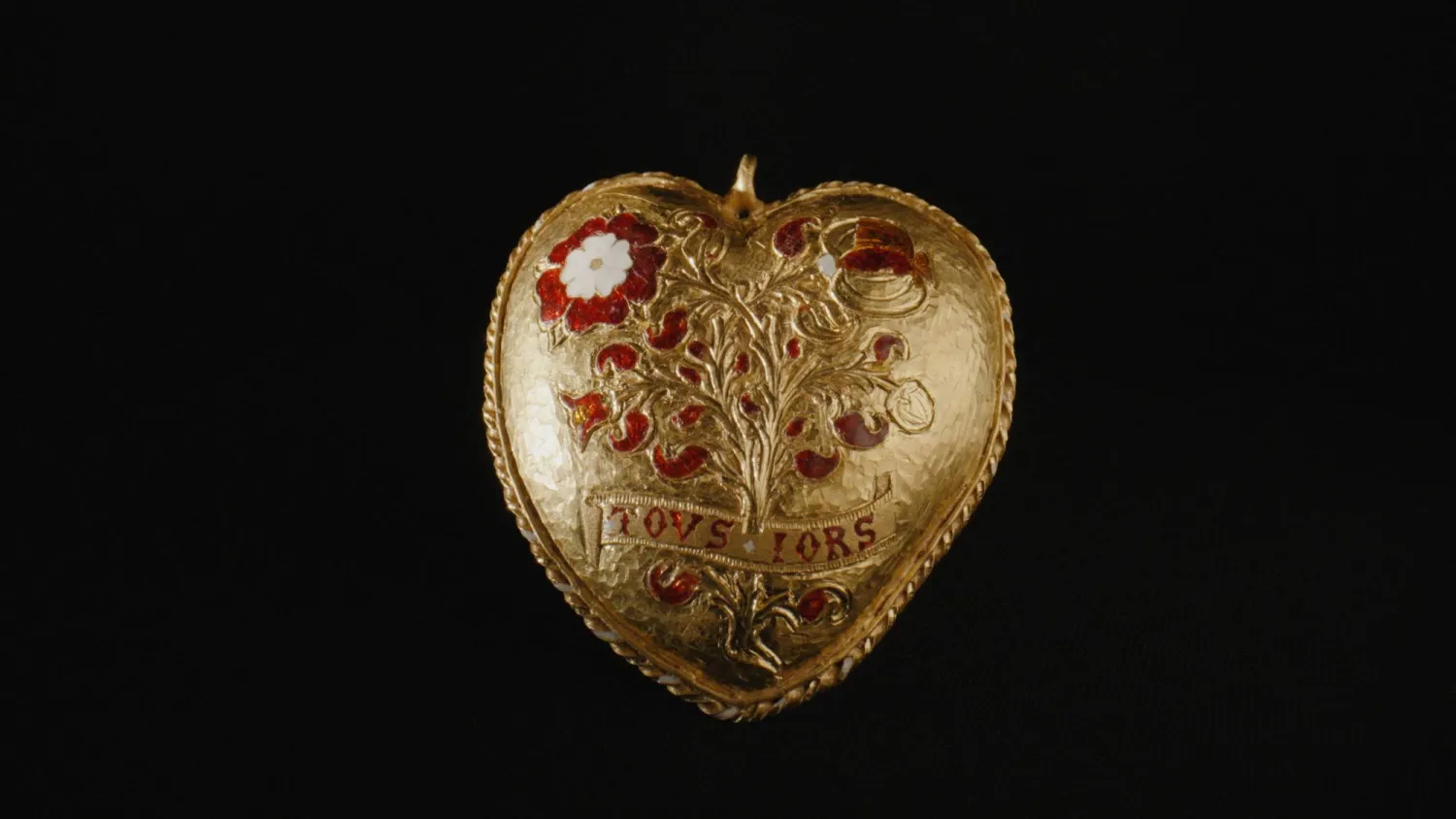

The British Museum has successfully raised £3.5 million ($4.8 million) to keep a gold pendant linked to King Henry VIII's marriage to his first wife, Katherine of Aragon, according to BBC.
The central London museum launched a fundraising appeal in October so it could permanently acquire the Tudor Heart, found by a metal detectorist in a Warwickshire field in 2019.
It has now announced that it reached its fundraising goal after receiving £360,000 in public donations and a string of donations from grants, trusts and arts organizations.
Museum director Nicholas Cullinan said: “The success of the campaign shows the power of history to spark the imagination and why objects like the Tudor Heart should be in a museum.”
Research led by the British Museum has revealed that the Tudor Heart pendant may have been made to celebrate the betrothal of their two-year-old daughter Princess Mary to the eight-month-old French heir-apparent in 1518.
The pendant unites the Tudor rose with Katherine's pomegranate symbol and features a banner that reads “tousiors,” the old French for “always.”
After it was found, the pendant was reported under the Treasure Act 1996, which gives museums and galleries in England a chance to acquire historical objects and put them on display.
In order to put the pendant on permanent display, the museum had to pay a reward to the metal detectorist who made the discovery and the owner of the land it was found on.
The museum was keen to keep the Tudor Heart as it believed that few artifacts related to Henry VIII's marriage to Katherine of Aragon have survived.
Since the appeal, it said, more than 45,000 members of the public had contributed to the cause, helping it raise just over 10% of its £3.5 million goal.
It also received £1.75 million from The National Heritage Memorial Fund, which aims to save the UK's most outstanding, at-risk heritage treasures.
Other donors include the charity Art Fund, the Julia Rausing Trust and The American Friends of the British Museum.
Cullinan told BBC Radio 4's Today program: “The fact 45,000 members of the public have got behind this and donated money to keep it on the country on public display shows the enthusiasm for this object - it really is unique.”


