


Saudi Health Minister: We Act Proactively on Health Risks

Saudi Health Minister: We Act Proactively on Health Risks
TT

Saudi Health Minister: We Act Proactively on Health Risks

Saudi Health Minister: We Act Proactively on Health Risks

Saudi Arabia’s Cabinet, chaired Tuesday by Custodian of the Two Holy Mosques King Salman bin Abdulaziz, approved the formation of a permanent committee to oversee all matters related to asbestos and ensure enforcement of its ban, marking a new step in public health and regulatory oversight.

Saudi Health Minister Fahad Al-Jalajel told Asharq Al-Awsat that the Kingdom approaches health risks with a proactive strategy grounded in clear policies and long-term planning.

“Any risk we detect affecting citizens, the government works to develop the necessary tools to avert it and to continue enhancing quality of life,” Al-Jalajel said, citing previous announcements including a national drowning prevention policy and a strategic drug policy.

Saudi action on asbestos dates back years, and the decision to establish a monitoring committee follows earlier Cabinet rulings. Decisions numbered 1419 and 1422 halted the use of asbestos, barred its inclusion in official specifications, and banned its import, export, and manufacture.

The measures also mandated the replacement and safe disposal of asbestos in buildings and water networks, alongside continued studies due to its health and environmental hazards.

Scientifically, asbestos refers to a group of naturally occurring mineral fibers once widely used commercially and, in some cases, still in use. Exposure can be fatal, affecting workers and others who come into contact with the fibers.

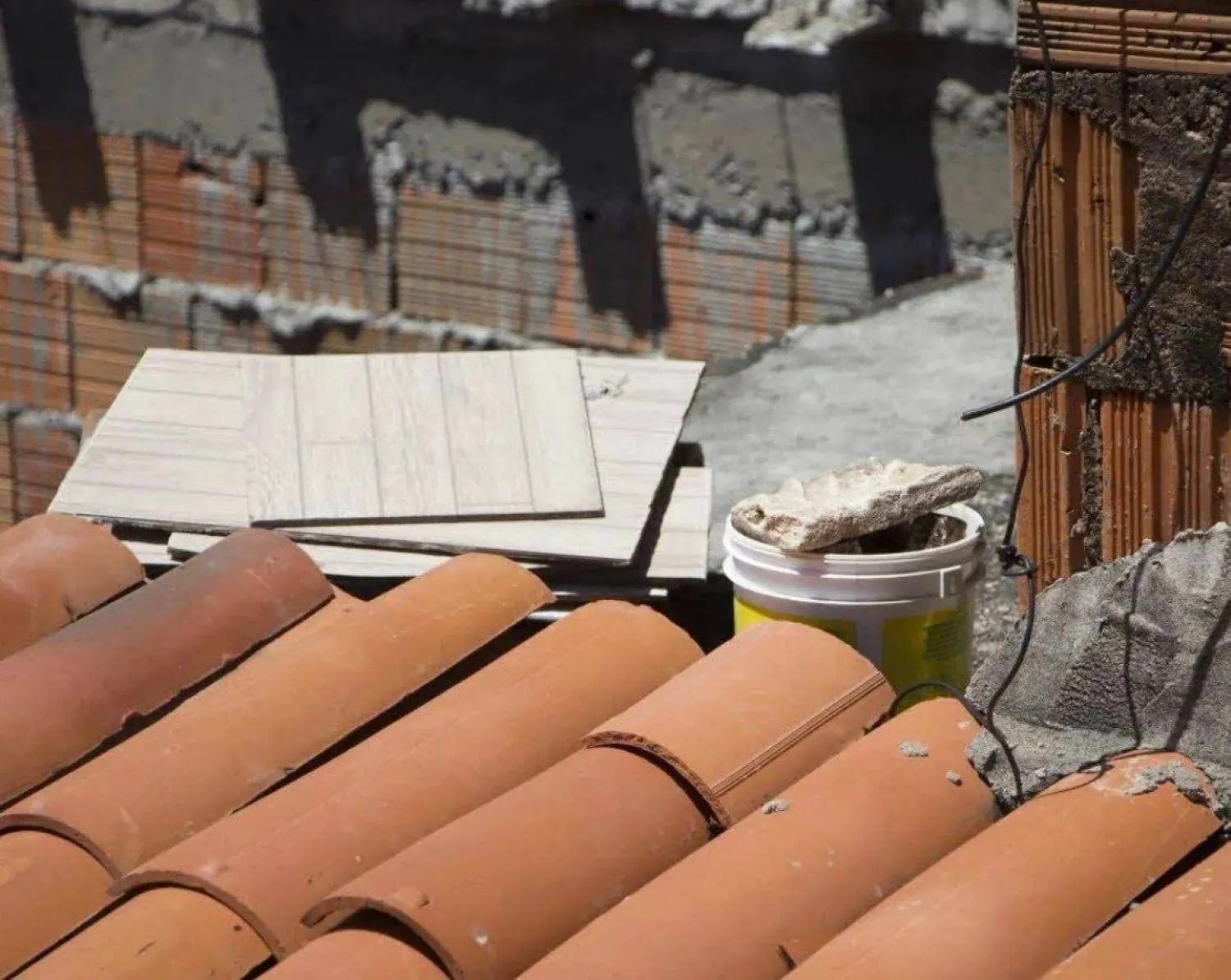
The material gained commercial value for its exceptional tensile strength, low heat conductivity, and relative resistance to chemical damage. It has been used for insulation in buildings and in products such as roofing sheets, water supply pipes, fire blankets, plastic fillers, medical packaging, vehicle clutches, and brake linings.

There are six main forms of asbestos, with chrysotile, or white asbestos, among the most widely used today. The World Health Organization has concluded that all forms of asbestos cause cancer. It also links asbestos exposure to chronic respiratory diseases.

Because asbestos has been embedded in construction materials, those involved in building, maintaining, or demolishing affected structures may face risks even decades after installation.

WHO assessments classify all six major forms of asbestos as carcinogenic to humans. Exposure, including to chrysotile, is associated with cancers of the lung, larynx, and ovary, as well as mesothelioma, a cancer of the pleural and peritoneal linings.

Clear scientific evidence also shows it causes chronic respiratory diseases such as asbestosis and other severe lung damage.

The World Health Organization estimates that about 125 million people worldwide are currently exposed to asbestos at work. More than 107,000 people die each year from lung cancer, mesothelioma, and asbestosis linked to occupational exposure.

Globally, asbestos is responsible for more than 200,000 deaths annually, according to the WHO, and accounts for roughly one-third of occupational cancer deaths. Thousands more fatalities each year are attributed to domestic exposure.

As of 2024, 50 countries had banned asbestos. In others, uncertainty remains amid insufficient and incomplete data.


Saudi Crown Prince, Italian PM Discuss Fallout of Military Escalation in the Region

Saudi Crown Prince and Prime Minister, Prince Mohammed bin Salman, meets Italian Prime Minister Giorgia Meloni in Jeddah (SPA)
TT

Saudi Crown Prince, Italian PM Discuss Fallout of Military Escalation in the Region

Saudi Crown Prince and Prime Minister, Prince Mohammed bin Salman, meets Italian Prime Minister Giorgia Meloni in Jeddah (SPA)

Saudi Crown Prince Mohammed bin Salman bin Abdulaziz met Italian Prime Minister Giorgia Meloni in Jeddah on Friday to review bilateral ties and explore ways to strengthen cooperation.

The two officials also discussed regional developments, including the risks of ongoing military escalation to global trade, energy security, and the world economy, while stressing coordination to support Middle East stability.

Meloni’s visit marks the first by a European Union leader to the region since the outbreak of the US-Israeli war on Iran on February 28, according to Reuters.

In an interview with Italian state television, Meloni said her country stands with Gulf states against Iranian attacks, describing them as “friends and strategic partners,” and calling her visit “a gesture of solidarity.”

Speaking from Jeddah, she stated that her trip is primarily focused on oil, noting that Gulf countries supply about 15% of Italy’s needs. She stressed the importance of securing stable energy supplies.

Meloni arrived in Jeddah Friday and was received at King Abdulaziz International Airport by Prince Saud bin Mishaal bin Abdulaziz, Deputy Governor of the Makkah Region and other Saudi figures.


Islamic Ministers’ Executive Council Condemns Iran’s Attacks on the Region

Saudi Minister of Islamic Affairs, Dawah and Guidance Sheikh Dr. Abdullatif Al Alsheikh addresses the conference. (Asharq Al-Awsat)
TT

Islamic Ministers’ Executive Council Condemns Iran’s Attacks on the Region

Saudi Minister of Islamic Affairs, Dawah and Guidance Sheikh Dr. Abdullatif Al Alsheikh addresses the conference. (Asharq Al-Awsat)

The Executive Council of the Conference of Ministers of Awqaf and Islamic Affairs condemned the deliberate Iranian attacks on Saudi Arabia, the Gulf and Jordan, accusing Tehran of seeking to destabilize the region, terrorize civilians, kill innocents and target homes, infrastructure, desalination plants, airports and diplomatic missions.

In a statement after a virtual meeting in Jeddah, Saudi Arabia, the council said the attacks violated Islamic values and principles, good neighborliness, international treaties and international law, and posed a threat to international peace and security.

The council said the attacks could not be justified under any pretext and called on Iran to halt them immediately and stop supporting, funding or arming affiliated militias.

Saudi Minister of Islamic Affairs, Dawah and Guidance and Chairman of the council Sheikh Dr. Abdullatif Al Alsheikh urged condemnation of the heinous attacks by Iran and its militias on Saudi Arabia, Gulf Cooperation Council states and Jordan.

He said the attacks violated Islamic principles and international laws, undermined regional security and reflected a reckless attempt to push the region toward chaos and strife.

Alsheikh said Saudi Arabia and its leadership were capable of defending the country, protecting Islamic holy sites and confronting any threat to its security and resources.

The Kingdom had strengthened national unity, with citizens rallying behind the leadership and supporting its decisions, he added.

In remarks to Asharq Al-Awsat, the minister said the meeting came at a time of “abnormal circumstances” in the Muslim world marked by rising aggression.

He accused Iran of carrying out daily hostile acts, including launching drones and missiles without justification toward Saudi Arabia, Gulf states and Jordan, and said those countries remained steadfast, strong and aware of their responsibilities toward their religion, leadership and nations.


Saudi FM, Russian Counterpart Discuss Regional Developments

Saudi Minister of Foreign Affairs Prince Faisal bin Farhan bin Abdullah/File Photo
TT

Saudi FM, Russian Counterpart Discuss Regional Developments

Saudi Minister of Foreign Affairs Prince Faisal bin Farhan bin Abdullah/File Photo

Saudi Minister of Foreign Affairs Prince Faisal bin Farhan bin Abdullah held a phone call with Russian Minister of Foreign Affairs Sergei Lavrov, during which they discussed the latest developments in the region, the Saudi Press Agency said on Thursday.

The discussion comes amid heightened tensions in parts of the Middle East, prompting continued diplomatic engagement between major international stakeholders.
