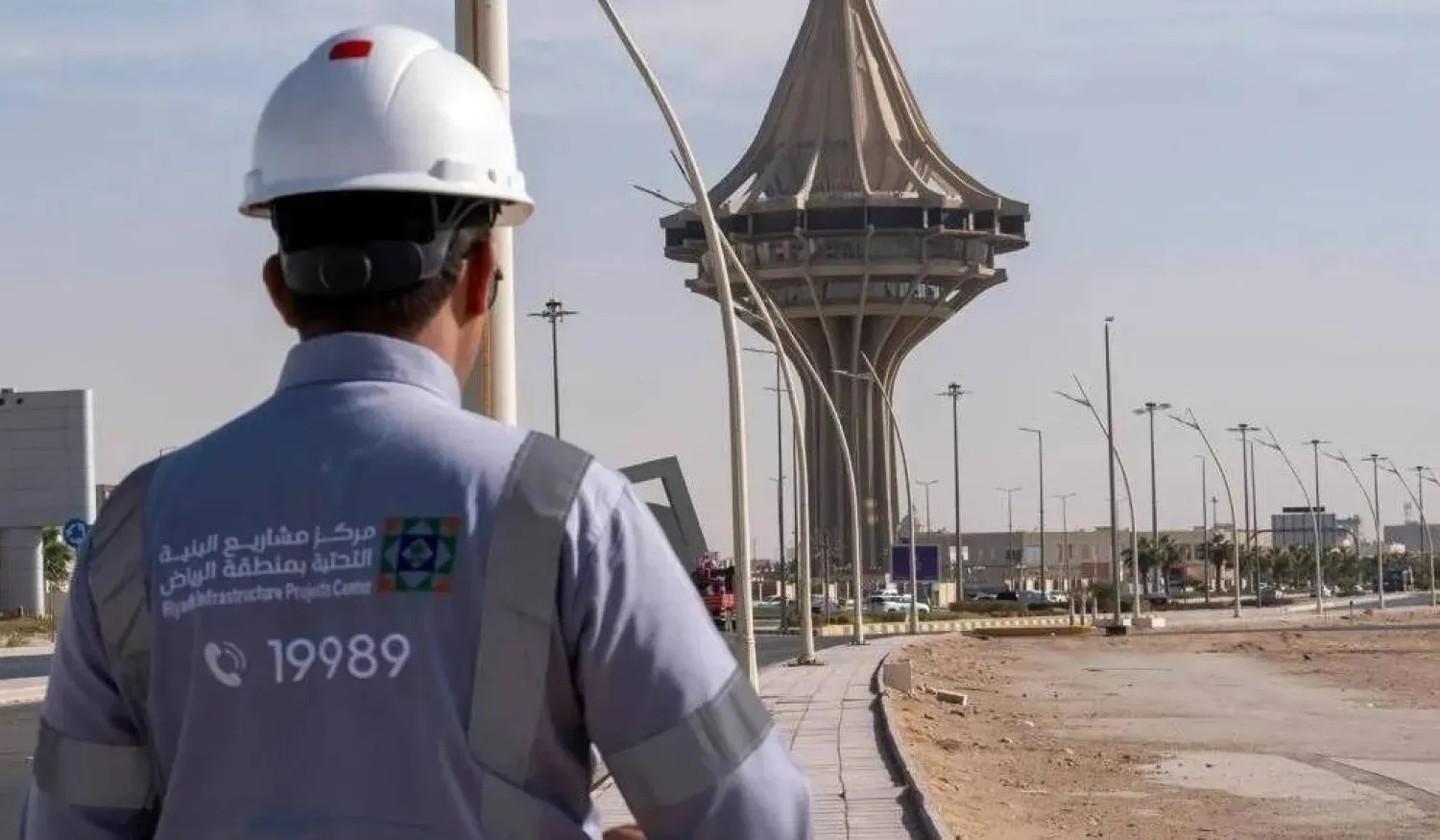
Riyadh Implements More Than 8,000 Infrastructure Projects

An employee at the Riyadh Infrastructure Projects Center (SPA)
TT

Riyadh Implements More Than 8,000 Infrastructure Projects

An employee at the Riyadh Infrastructure Projects Center (SPA)

The Riyadh Infrastructure Projects Center said it coordinated and delivered more than 8,000 infrastructure projects across the Saudi capital in 2025 under a comprehensive master plan launched last year.

The center explained that the plan is built on an integrated spatial and scheduling methodology designed to unify efforts, improve planning and execution efficiency, and reduce conflicts between projects.

The approach helped cut infrastructure project delivery times by 24 percent and generated cost savings through stronger governance, reduced unnecessary road resurfacing, and fewer service disruptions.

The methodology allows projects to be managed within a single regulatory framework that links spatial planning with implementation timelines and provides a centralized source of data.

This framework supports informed decision-making and improves coordination among the energy, water, telecommunications and road sectors.

According to the center, implementation of the master plan led to the resolution of 9,550 spatial conflicts and the management of 82,627 scheduling overlaps, in addition to addressing 436 conflicts related to major public events. These measures reduced project clashes, accelerated delivery, improved operational stability, and minimized the impact of construction on traffic flow and surrounding activities.

The center said the comprehensive master plan is one of its core strategic mandates and has become a unified regulatory reference that strengthens integration among government entities and raises the level of institutional coordination.

Working with more than 22 relevant stakeholders, the center exceeded its first-year targets by 108 percent.

It added that the achievements reflect a commitment to sound regulatory practices that support the sustainability of infrastructure projects, enhance service quality, and maximize developmental impact across the Riyadh region.


Russian Central Bank Cuts Key Rate to 15.5%, Signals More Cuts to Come

People walk along the Zaryadye Floating Bridge on a cold winter day, with the Kremlin in the background, in Moscow, Russia February 5, 2026. REUTERS/Anastasia Barashkova
TT

Russian Central Bank Cuts Key Rate to 15.5%, Signals More Cuts to Come

People walk along the Zaryadye Floating Bridge on a cold winter day, with the Kremlin in the background, in Moscow, Russia February 5, 2026. REUTERS/Anastasia Barashkova

Russia's central bank cut its key interest rate by 50 basis points to 15.5% on Friday and signaled that rates could fall further in a bid to shore up the slowing wartime economy, which is struggling with high borrowing costs.

Of ‌the 24 ‌analysts surveyed by Reuters ahead of ‌the decision, ⁠just eight out ⁠of 24 had predicted a 50-basis-point cut.

"The Bank of Russia will assess the need for a further key rate cut at its upcoming meetings depending on the sustainability of the inflation slowdown and the dynamics of inflation expectations," the bank said.

"The baseline scenario assumes the average key ⁠rate to be in the range from ‌13.5% to 14.5% per annum ‌in 2026," it said.

Russia's economy, which showed significant resilience ‌to Western sanctions over the course of the first ‌three years of the conflict in Ukraine, slowed down sharply last year after the central bank hiked the key rate to fight inflation.

Russia's government forecasts growth of 1.3% this year, after 1.0% ‌in 2025. The central bank sees growth at 0.5-1.5% this year.

The central bank forecast ⁠annual inflation ⁠would decline to 4.5–5.5% in 2026, but cautioned about the rise in prices in January.

Prices have risen by 2.1% since the start of the year, reaching 6.5% on an annual basis, as a result of an increase in value-added tax (VAT), which the government introduced to ensure that the budget was balanced.

"Higher VAT and excise taxes, the indexation of administered prices and tariffs, and price adjustments for fruit and vegetables led to a temporary but considerable acceleration of the current price growth in January," the bank said.


Africa Leads Growth in Solar Energy as Demand Spreads Beyond Traditional Markets, Report Says 

Solar panels are seen on the roof of a company in Nairobi, Kenya, on Sept. 1, 2023. (AP)
TT

Africa Leads Growth in Solar Energy as Demand Spreads Beyond Traditional Markets, Report Says 

Solar panels are seen on the roof of a company in Nairobi, Kenya, on Sept. 1, 2023. (AP)

Africa was the world’s fastest-growing solar market in 2025, defying a global slowdown and reshaping where the momentum in renewable energy is concentrated, according to an industry report released in late last month.

The report by the Africa Solar Industry Association says the continent's solar installed capacity expanded 17% in 2025, boosted by imports of Chinese-made solar panels. Global solar power capacity rose 23% in 2025 to 618 GW, slowing from a 44% increase in 2024.

“Chinese companies are the main drivers in Africa’s green transition,” said Cynthia Angweya-Muhati, acting CEO of the Kenya Renewable Energy Association. “They are aggressively investing in and building robust supply chains in Africa green energy ecosystem.”

Some of that capacity has yet to be rolled out. Africa has only 23.4 gigawatts peak (GWp) of working solar capacity even though nearly 64 GWp of solar equipment has been shipped to the continent since 2017. A gigawatt peak represents 1 billion watts of maximum, optimum power output under ideal conditions.

“Africa's growth is driven by changing policies and enabling conditions in a number of countries,” said John Van Zuylen, CEO of the Africa Solar Industry Association.

“Solar energy has moved beyond a handful of early adopters to become a broader continental priority,” he said recently on the sidelines of the Inter Solar Africa summit in Nairobi. “What we are seeing is not temporary. It is policies aligning with market dynamics.”

Historically, South Africa dominated solar imports in Africa, at one point accounting for roughly half of all panels shipped to the continent. The latest data show its share has slipped below a third as demand surged elsewhere. Last year, 20 African nations set new annual records for solar imports, as 25 countries imported a total of at least 100 megawatts of capacity.

Nigeria has overtaken Egypt as Africa's second-largest importer as solar energy and battery storage provide a practical and affordable alternative to diesel generators and unreliable grid power. In Algeria, solar imports soared more than 30-fold year-on-year. Imports also surged in Zambia and Botswana.

At least 23 African countries, including South Africa, Tunisia, Kenya, Chad and the Central African Republic, are now generating over 5% of their electricity from solar energy, the report said.

Prices have fallen both for solar panels and batteries, mostly from China, enabling households and businesses to rely on solar plus batteries for round-the-clock electricity, the report said. Battery storage costs in Africa fell to $112 per kilowatt-hour in 2025 from an average of $144 per kilowatt-hour in 2023 as improved technology made storage systems more flexible and longer lasting.

“This ever-decreasing price of storage has game-changing implications for Africa, which has a dire need for stable and baseload power,” said Van Zuyken.

The gradual removal of diesel subsidies in Nigeria in the past two years also has helped accelerate adoption of solar energy. The policy was implemented sector by sector to cushion its impact, making diesel increasingly expensive and nudging businesses and households toward solar. In September, Nigeria announced plans for a 1 GW solar panel factory, the largest in West Africa. Similar facilities are under construction in Egypt, South Africa and Ethiopia.

As Africa moves to build its own manufacturing capacity, the industry is looking to China to transfer knowhow to help alleviate Africa’s dependence on imported equipment and technology.

Jobs won't be confined to manufacturing.

“The solar jobs boom is occurring in services including installation, maintenance, distribution and financing, where thousands of small and medium enterprises are emerging to meet rising demand,” Van Zuylen said.

Unlike regions such as the Middle East, where governments publish clear 10 or 20-year energy roadmaps, many African markets lack consistent policy signals. So, uncertainty over policies remains a challenge. Solar firms operating across Africa say unpredictable tax regimes, shifting import duties and unclear long-term energy plans undermine investor confidence.

“The problem is not the opportunity. It’s visibility,” said Amos Wemanya, senior analyst on renewable energy at Powershift Africa. “If a government announces a plan, companies need to trust that it will remain in place.”


US Reaches Trade Deal to Lower Taiwan's Tariff Barriers

Containers stacked at the port of Keelung in northern Taiwan (Reuters file photo)
TT

US Reaches Trade Deal to Lower Taiwan's Tariff Barriers

Containers stacked at the port of Keelung in northern Taiwan (Reuters file photo)

The Trump administration reached a trade deal with Taiwan on Thursday, with Taiwan agreeing to remove or reduce 99% of its tariff barriers, the office of the US Trade Representative said.

The agreement comes as the US remains reliant on Taiwan for its production of computer chips, the exporting of which contributed to a trade imbalance of nearly $127 billion during the first 11 months of 2025, according to the Census Bureau.

Most of Taiwan’s exports to the US will be taxed at a 15% rate, the USTR's office said. The 15% rate is the same as that levied on other US trading partners in the Asia-Pacific region, such as Japan and South Korea.

Trade Representative Jamieson Greer and Commerce Secretary Howard Lutnick attended the signing of the reciprocal agreement, which occurred under the auspices of the American Institute in Taiwan and the Taipei Economic and Cultural Representative Office in the United States. Taiwan’s Vice Premier Li-chiun Cheng and its government minister Jen-ni Yang also attended the signing.

“President Trump’s leadership in the Asia-Pacific region continues to generate prosperous trade ties for the United States with important partners across Asia, while further advancing the economic and national security interests of the American people,” The Associated Press quoted Greer as saying in a statement.

The Taiwanese government said in a statement that the tariff rate set in the agreement allows its companies to compete on a level field with Japan, South Korea and the European Union. It also said the agreement “eliminated” the disadvantage from a lack of a free trade agreement between Taiwan and the US.

The deal comes ahead of President Donald Trump’s planned visit to China in April and suggests a deepening economic relationship between the US and Taiwan.

Cheng said Taiwan hopes the agreement will make it a strategic partner with the US “so as to jointly consolidate the democratic camp’s leading position in high technology.”

The agreement would make it easier for the US to sell autos, pharmaceutical drugs and food products in Taiwan. But the critical component might be that Taiwanese companies would invest in the production of computer chips in the US, possibly helping to ease the trade imbalance.

In a separate but related deal, Taiwan will make investments of $250 billion in US industries, such as computer chips, artificial intelligence applications and energy. The Taiwanese government says it will provide up to an additional $250 billion in credit guarantees to help smaller businesses invest in the US.

The investments helped enable the US to reduce its planned tariffs from as much as 32% initially to 15%.

Taiwan's government said it will submit the reciprocal trade deal and investment plans to its legislature for approval.

In Taipei, President Lai Ching-te told reporters that Taiwan had agreed to reduce tariffs on imports from the US but stressed that the rate on 93 items would remain unchanged to protect important agriculture and industrial sectors such as rice farming.

The US side said the deal with Taiwan would help create several “world-class” industrial parks in America in order to help build up domestic manufacturing of advanced technologies such as chips. The Commerce Department in January described it as “a historic trade deal that will drive a massive reshoring of America’s semiconductor sector.”

In return, the US would give preferential treatment to Taiwan regarding the possible tariffs stemming from a Section 232 investigation of the importing of computer chips and semiconductor manufacturing equipment.