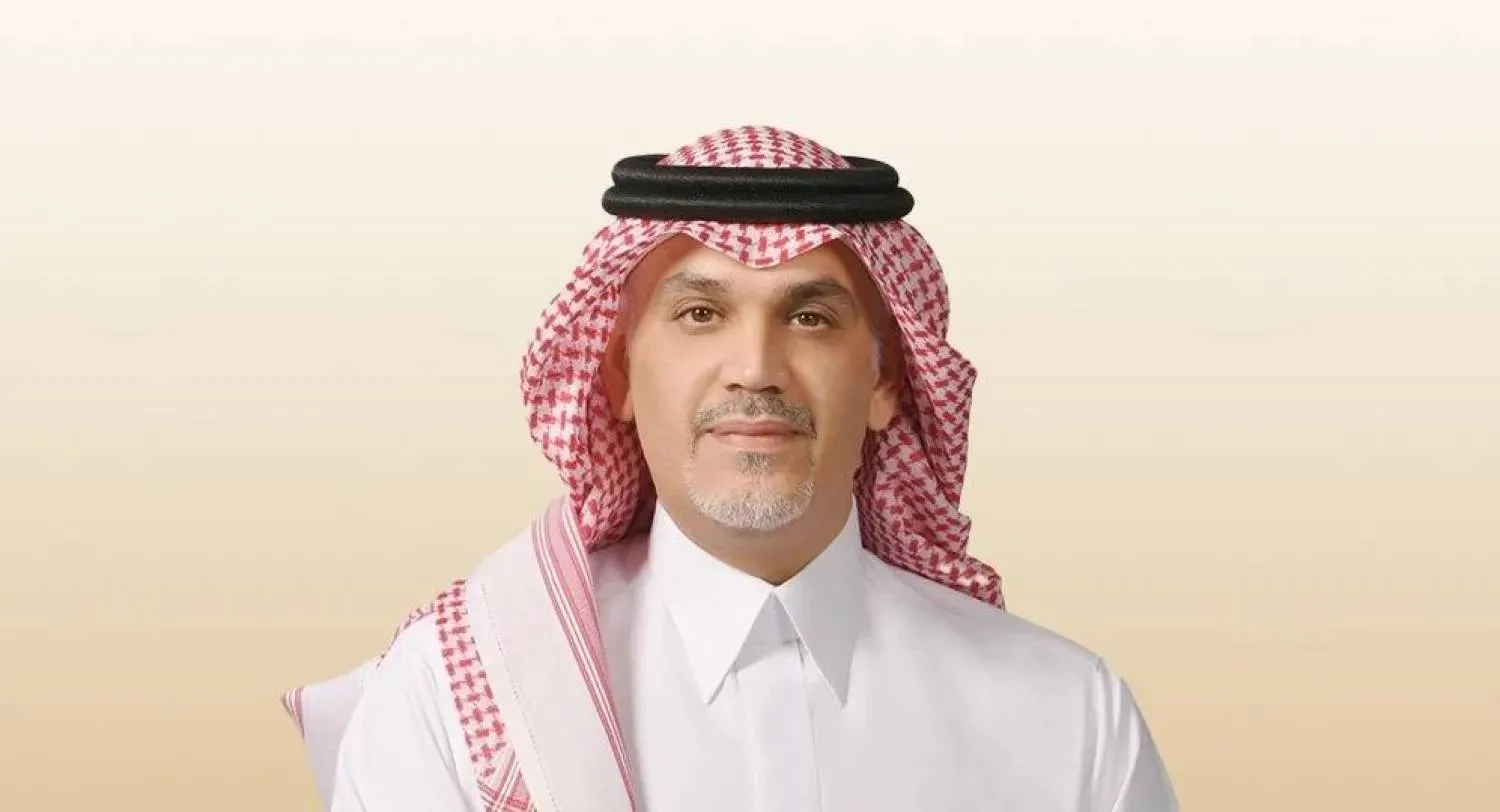
Al-Saif: From Engineering Saudi PIF’s Strategy to Investment Minister 

Saudi Arabia's newly-appointed Investment Minister Fahad Al-Saif. (PIF)
TT

Al-Saif: From Engineering Saudi PIF’s Strategy to Investment Minister 

Saudi Arabia's newly-appointed Investment Minister Fahad Al-Saif. (PIF)

Fahad Al-Saif has been appointed Minister of Investment of Saudi Arabia by royal order of Custodian of the Two Holy Mosques King Salman bin Abdulaziz, capping a career arc that brings financial expertise together with economic vision.

The appointment follows a pivotal tenure at the Saudi Public Investment Fund (PIF), where he helped shape the Kingdom’s overarching investment strategy and led global investment financing.

The move comes at a moment when efforts to attract foreign capital and deepen international partnerships are accelerating.

Drawing on deep experience in capital structuring, market and sustainability strategies, and the management of relationships with financial institutions and investors, Al-Saif is set to usher the Ministry of Investment into a new phase, one defined by the integration of strategic planning with smart financing to support the goals of Vision 2030.

At the PIF, Al-Saif served as Head of Global Investment Financing and previously led the General Department of Investment Strategy and Economic Studies.

Beyond his executive roles, Al-Saif has held a number of prominent board positions. He chaired the boards of Emaar Economic City and aircraft lessor AviLease, and served as a board member of the Saudi Insurance Authority, ACWA Power, the Saudi Real Estate Refinance Company, and the regional Voluntary Carbon Market Company. He also held the position of Vice Chairman of Bahri.

Al-Saif brings more than 20 years of experience across corporate banking, investment, and global banking services. He previously served as Chief Executive Officer and board member of the National Debt Management Center, acted as an adviser to the Minister of Finance, and founded the Public Debt Management Office at the Ministry of Finance.

His past board memberships include the National Center for Privatization, Gulf International Bank – Saudi Arabia, and the International Islamic Trade Finance Corporation.

Earlier in his career, Al-Saif spent several years in the banking sector, holding multiple positions at the Saudi First Bank and senior leadership roles at HSBC Saudi Arabia. He also led the initial public offering of the National Commercial Bank and served on the advisory committee of the Capital Market Authority.

Coalition Says Intercepted Ballistic Missile Targeting Riyadh

Official Spokesman for the Coalition to Restore Legitimacy in Yemen  Major General Turki Al-Malki (Asharq Al-Awsat)
Official Spokesman for the Coalition to Restore Legitimacy in Yemen Major General Turki Al-Malki (Asharq Al-Awsat)
TT

Coalition Says Intercepted Ballistic Missile Targeting Riyadh

Official Spokesman for the Coalition to Restore Legitimacy in Yemen  Major General Turki Al-Malki (Asharq Al-Awsat)
Official Spokesman for the Coalition to Restore Legitimacy in Yemen Major General Turki Al-Malki (Asharq Al-Awsat)

Saudi forces on Tuesday intercepted a ballistic missile aimed at the Kingdom's capital, the Coalition to Restore Legitimacy in Yemen said.

The Kingdom "intercepted and destroyed a ballistic missile launched by the terrorist Houthi militia towards Riyadh,” Coalition Spokesman Major General Turki Al-Malki said in a post on X.

Earlier, the Saudi civil defense said in a statement on X that a warning had been issued by the National Early Warning Platform in Riyadh City to alert for a potential danger.


Egypt Extends to Next Week Discussions on Military Support for Saudi Arabia

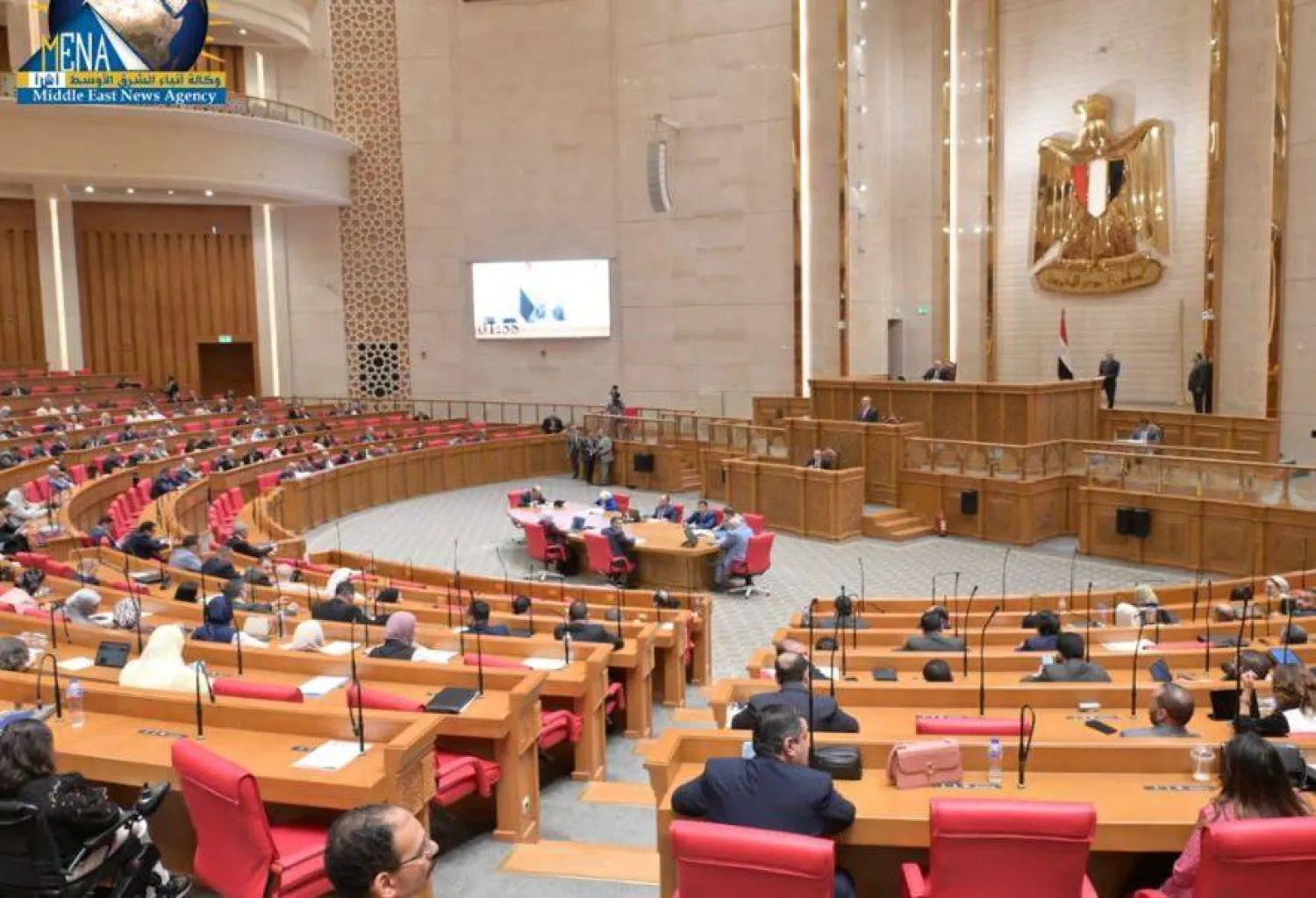
The Egyptian parliament in session. (MENA file)
TT

Egypt Extends to Next Week Discussions on Military Support for Saudi Arabia

The Egyptian parliament in session. (MENA file)

The Egyptian parliament extended to next week on Monday discussions on President Abdel Fattah al-Sisi's authorization to provide military support to Saudi Arabia, a move that observers have interpreted as a "desire for further clarification on the nature of the Egyptian action."

On Saturday, Sisi requested that parliament hold an emergency session to authorize the defense of Gulf states, stressing that his country is "ready to implement any measure requested by Saudi Arabia to protect its security." This was followed by two parliamentary sessions on Sunday and Monday to discuss the issue.

At the conclusion of Monday's meeting, Speaker Hisham Badawi decided to adjourn the sessions until October 26 to resume discussions.

Parliamentary sources said the decision stemmed from the high number of requests from MPs to speak. The sources told Asharq Al-Awsat that the discussions over the two days witnessed broad support for the Kingdom, as well as several requests to clarify the nature of the support, and how Egypt will defend its security and stability.

They added: "In light of hundreds of requests received from MPs to speak, and given the nature of the issue, discussions were extended to next week for further clarifications."

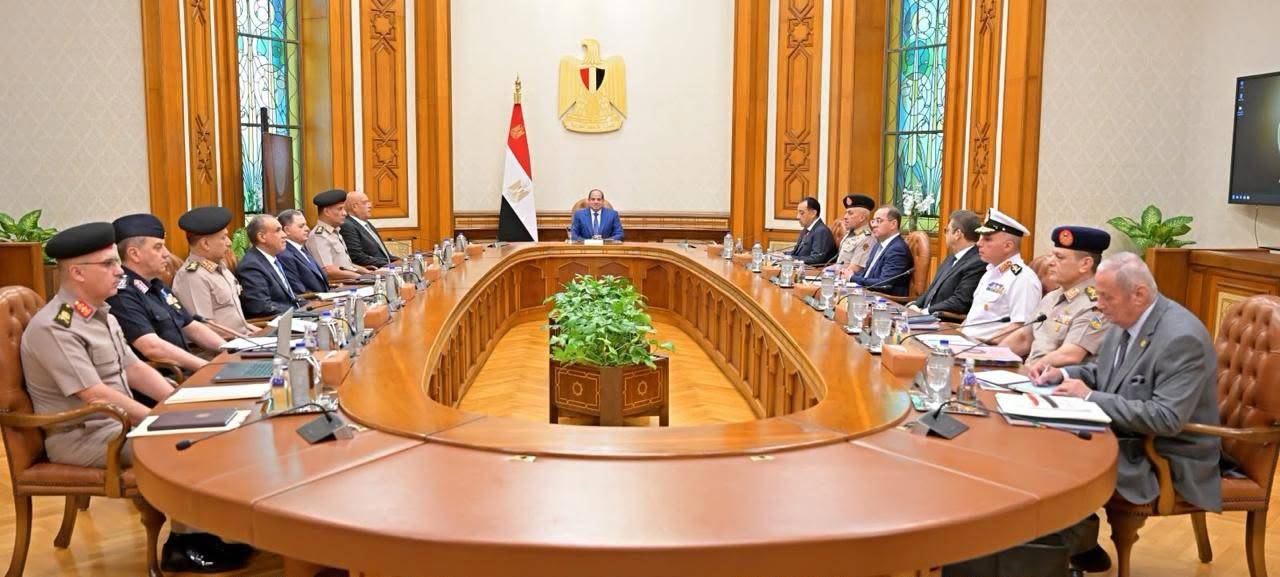
Egyptian President Abdel Fattah al-Sisi chairs a National Defense Council meeting at Ittihadiya Palace on Sunday. (Egyptian Presidency)

This was confirmed by Dr. Abdel Moneim Said, a former member of the Senate, who told Asharq Al-Awsat: "Given the importance of the subject, it was only natural that the discussions would be extended."

He added: "All aspects of the issue must be addressed, starting with the nature of the Egyptian action to defensively support the Kingdom, through to its implications and cost," noting that "the issue enjoys broad support; given its impact on Egyptian national security, which cannot be separated from Gulf security."

Article 152 of the Egyptian Constitution stipulates that "the President of the Republic is the Supreme Commander of the Armed Forces, and shall not declare war, nor send the Armed Forces on a combat mission outside the borders of the State, except after taking the opinion of the National Defense Council, and obtaining the approval of the parliament by a two-thirds majority of its members."

It adds that "if the parliament is dissolved, the opinion of the Supreme Council of the Armed Forces must be taken, alongside the approval of both the Cabinet and the National Defense Council."

Following a meeting chaired by Sisi on Sunday, the National Defense Council decided on "absolute alignment and complete solidarity with Saudi Arabia, and to provide all necessary and possible forms of support to the Kingdom to defend its security and stability, and to safeguard its capabilities, territorial integrity, and Islamic holy sites."

Political parties and MPs stressed their support for the Kingdom.

In a statement on Sunday, the Wafd Party announced its backing, stating that "the security of the Kingdom and Red Sea, and Arab countries bordering it, are closely linked to Egyptian and Arab national security."


UAE, Turkish FMs Condemn Continued Houthi Attacks on Saudi Arabia

Saudi Foreign Minister Prince Faisal bin Farhan bin Abdullah. (AFP)
TT

UAE, Turkish FMs Condemn Continued Houthi Attacks on Saudi Arabia

Saudi Foreign Minister Prince Faisal bin Farhan bin Abdullah. (AFP)

Saudi Minister of Foreign Affairs Prince Faisal bin Farhan bin Abdullah received on Monday separate telephone calls from Deputy Prime Minister and FM of the United Arab Emirates Sheikh Abdullah bin Zayed Al Nahyan and Turkish FM Hakan Fidan.

The FMs discussed regional developments, including the continued attacks by the terrorist Houthi militia on civilian areas in the Kingdom of Saudi Arabia, and expressed their condemnation of these attacks.

Prince Faisal and Sheikh Abdullah bin Zayed stressed the importance of continued coordination and consultations to strengthen joint Gulf cooperation, reduce escalation, prevent tensions from spreading, and maintain regional security and stability.

Prince Faisal and Fidan reviewed the latest developments, Saudi and Turkish efforts to address current challenges, and their joint endeavors to boost regional security and stability.