Saudi Arabia, Arab and Islamic Countries Condemn Israel’s 'State Land' Decision in West Bank 

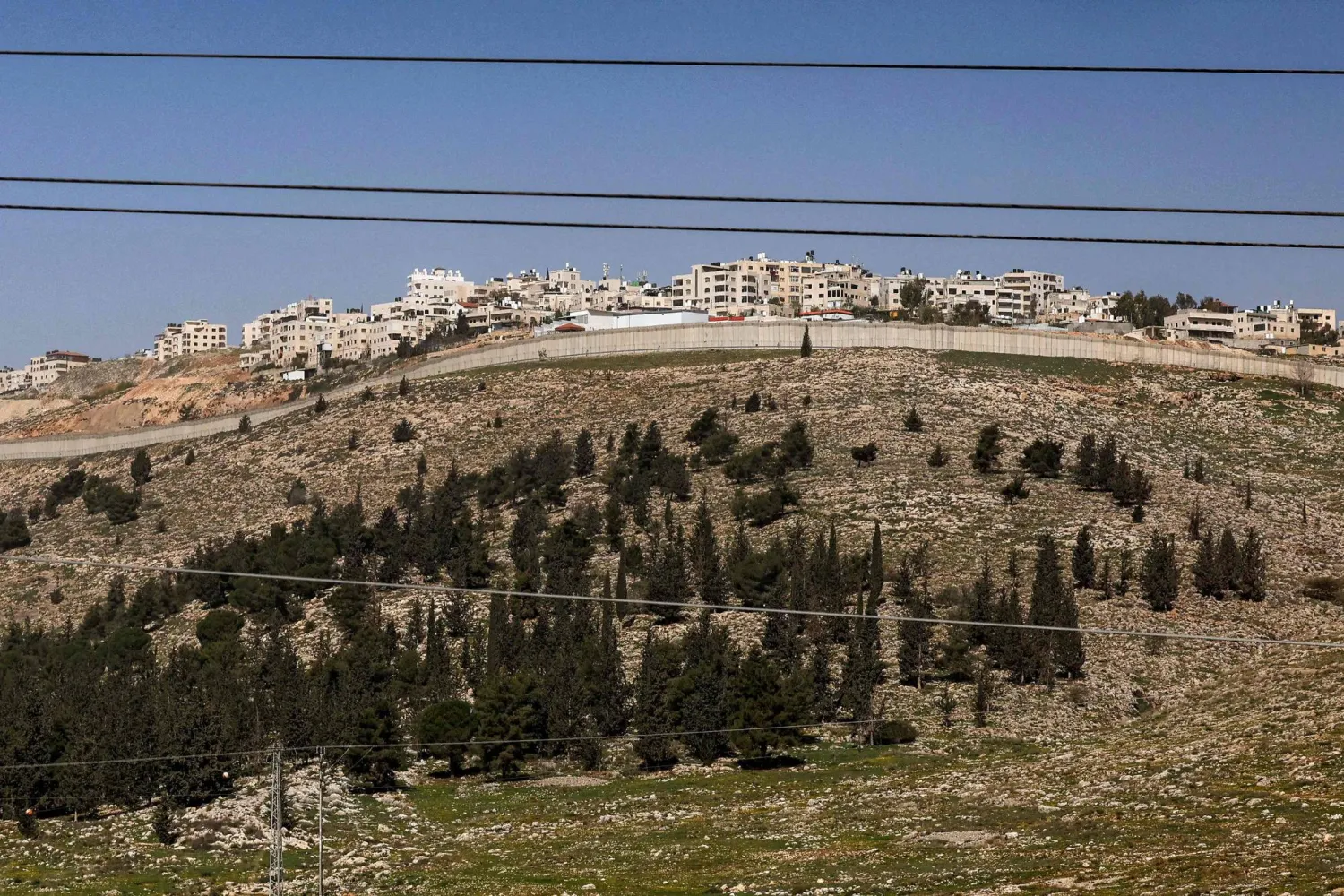
The West Bank village of al-Ram is pictured behind Israel's controversial separation barrier from the outskirts of Jerusalem on February 16, 2026. (AFP)
TT

Saudi Arabia, Arab and Islamic Countries Condemn Israel’s 'State Land' Decision in West Bank 

The West Bank village of al-Ram is pictured behind Israel's controversial separation barrier from the outskirts of Jerusalem on February 16, 2026. (AFP)

The foreign ministers of Saudi Arabia, Jordan, the United Arab Emirates, Qatar, Indonesia, Pakistan, Egypt, and Türkiye strongly condemned on Tuesday Israel's decision to designate lands in the occupied West Bank as so-called "state land".

They also slammed it for approving procedures for the registration and settlement of land ownership across extensive areas of the occupied West Bank for the first time since 1967.

They condemned the moves as “a grave escalation aimed at accelerating illegal settlement activity, land confiscation, entrenching Israeli control, and applying unlawful Israeli sovereignty over the Occupied Palestinian Territory and undermining the legitimate rights of the Palestinian people.”

These measures are “a flagrant violation of international law and international humanitarian law, particularly the Fourth Geneva Convention, as well as a violation of relevant United Nations Security Council resolutions, foremost among them Resolution 2334,” the FMs said in a statement.

“The decision also contradicts the advisory opinion issued by the International Court of Justice concerning the legal consequences arising from Israeli policies and practices in the Occupied Palestinian Territory, which underscored the illegality of measures intended to alter the legal, historical, and demographic status of the Occupied Palestinian Territory, the obligation to end the occupation, and the prohibition of the acquisition of territory by force,” they added.

“This step reflects an attempt to impose a new legal and administrative reality designed to consolidate control over the occupied land, thereby undermining the two-state solution, eroding the prospects for the establishment of an independent and viable Palestinian State, and jeopardizing the attainment of a just and comprehensive peace in the region,” they warned.

The foreign ministers reiterated their “categorical rejection of all unilateral measures aimed at altering the legal, demographic, and historical status of the Occupied Palestinian Territory.”

They stressed that such policies are “a dangerous escalation that will further heighten tensions and instability in the Occupied Palestinian Territory and the region as a whole.”

They called on the international community “to assume its responsibilities and take clear and decisive steps to halt these violations, ensure respect for international law, and safeguard the inalienable rights of the Palestinian people, foremost among them their right to self-determination, ending the occupation, and establishing their independent and sovereign State based on 1967 borders with East Jerusalem as its capital.”


Arab Coalition Intercepts 3 Ballistic Missiles, UAV

Official Spokesperson for the Coalition to Restore Legitimacy in Yemen Major General Turki Al-Malki
TT

Arab Coalition Intercepts 3 Ballistic Missiles, UAV

Official Spokesperson for the Coalition to Restore Legitimacy in Yemen Major General Turki Al-Malki

Official Spokesperson for the Coalition to Restore Legitimacy in Yemen Major General Turki Al-Malki said on Saturday that air defenses intercepted and destroyed three ballistic missiles launched by the terrorist Houthi militia toward Riyadh.

Al-Malki, said in a separate statement, that a UAV launched by the Houthis toward the southern region was also intercepted and destroyed.


Oman Marks National Day Amid Economic Diversification Push, Diplomatic Efforts to Ease Tensions

Sultan Haitham bin Tariq attends a military parade marking Oman's National Day (Oman News Agency)
TT

Oman Marks National Day Amid Economic Diversification Push, Diplomatic Efforts to Ease Tensions

Sultan Haitham bin Tariq attends a military parade marking Oman's National Day (Oman News Agency)

Oman marked its National Day on Friday, Nov. 20, facing two pressing challenges: weaning its economy off oil and gas and preserving its diplomatic role in a region roiled by political and security tensions, particularly the military escalation between the United States and Iran and threats to shipping through the Strait of Hormuz.

The occasion comes as the sultanate presses ahead with its 11th Five-Year Development Plan (2026-2030), the second phase of Oman Vision 2040, aimed at diversifying revenue, expanding the private sector's role, creating jobs and improving public services.

Figures published by the Oman News Agency point to improving public finances, but also underscore persistent challenges in boosting non-oil growth and creating jobs.

Public finances improve

Oman posted a budget surplus of about 90 million Omani rials ($234 million) in the first nine months of 2026, reversing a deficit of 433 million rials ($1.13 billion) in the same period last year.

Government revenue climbed 16% to 9.828 billion rials ($25.56 billion), while public spending stood at 9.738 billion rials ($25.33 billion).

Public debt fell by about 600 million rials ($1.56 billion) to 14.1 billion rials ($36.67 billion) by the end of September, extending the government's efforts to rein in borrowing.

According to the Oman News Agency, the public debt-to-GDP ratio dropped from 65.9% to 34.6% during the first phase of Oman Vision 2040.

In September, S&P Global Ratings affirmed Oman's BBB- credit rating with a stable outlook and raised its real economic growth forecast for 2026 to about 3.5%.

Yet stronger public finances have not loosened the economy's reliance on energy. Oil and gas accounted for roughly 73% of government revenue in the first nine months, leaving the budget exposed to swings in global markets.

GDP figures reveal a stark divide between oil and non-oil sectors.

Oman's economy expanded 5.1% in the second quarter of 2026, fueled by a 14.7% surge in oil activity. Non-oil activity, by contrast, grew just 0.7%.

The gap underscores a central challenge for policymakers: turning new investments and projects into productive industries and revenue streams independent of energy exports.

Oman is banking on manufacturing, logistics, tourism and financial services to drive that shift.

Cargo volumes rose 15% at the Port of Salalah and 52% at the Port of Sohar in the first half of the year.

The Special Economic Zone at Duqm also launched the first phase of a wind turbine manufacturing project worth more than 70 million rials ($182 million), with annual production capacity of up to 1,000 megawatts.

The Sultanate also established the Oman Global Financial Center this year in a push to attract financial institutions and investment and expand its financial services sector.

Jobs put economic transition to the test

Economists see the labor market as a crucial test of Oman's economic transformation, particularly as more young people enter the workforce.

The Ministry of Labor reported 53,525 employment opportunities by the end of September 2026, including direct hiring, workforce replacement and job-linked training, according to the Oman News Agency. That represented 89% of its annual target.

But distinguishing actual hires from training and workforce replacement programs remains essential to gauging their impact on unemployment and the sustainability of jobs.

On the social front, Oman earmarked about 614 million rials ($1.60 billion) in its 2026 budget for its social protection system, which served more than 1.5 million people by the end of 2025.

The year also saw the opening of healthcare facilities, including Al Suwaiq Referral Hospital, built at a cost of more than 75 million rials ($195 million), and Khasab Referral Hospital, alongside other service projects across the country's governorates.

Diplomacy faces a mounting test

Abroad, Muscat has stayed the course on diplomacy, keeping channels open with rival parties and seeking political solutions to regional crises.

That approach has taken on greater significance as tensions persist between Iran and the United States, fueling concerns over shipping security in the Strait of Hormuz and surrounding waterways.

Oman's ties with Gulf Cooperation Council states, coupled with its continued contacts with Tehran and Washington, have enabled it to relay messages and help bridge differences.

But its policy of avoiding escalation and pursuing diplomatic solutions faces a growing test: maintaining access to opposing sides as regional divisions widen and lasting settlements become harder to secure.

As the sultanate enters a new phase of economic development, its domestic and foreign priorities are becoming increasingly intertwined.

Regional stability directly affects trade and investment, particularly for an economy seeking a bigger role in maritime transport and logistics.

Oman's National Day therefore comes at a pivotal moment. The challenge at home is to sustain fiscal gains and translate them into broader growth and more jobs.

Abroad, Omani diplomacy is striving to help resolve one of the region's most serious military conflicts as the risk of further escalation grows.


Coalition Carries out Sophisticated Operation to Neutralize Sources of Threat in Hodeidah

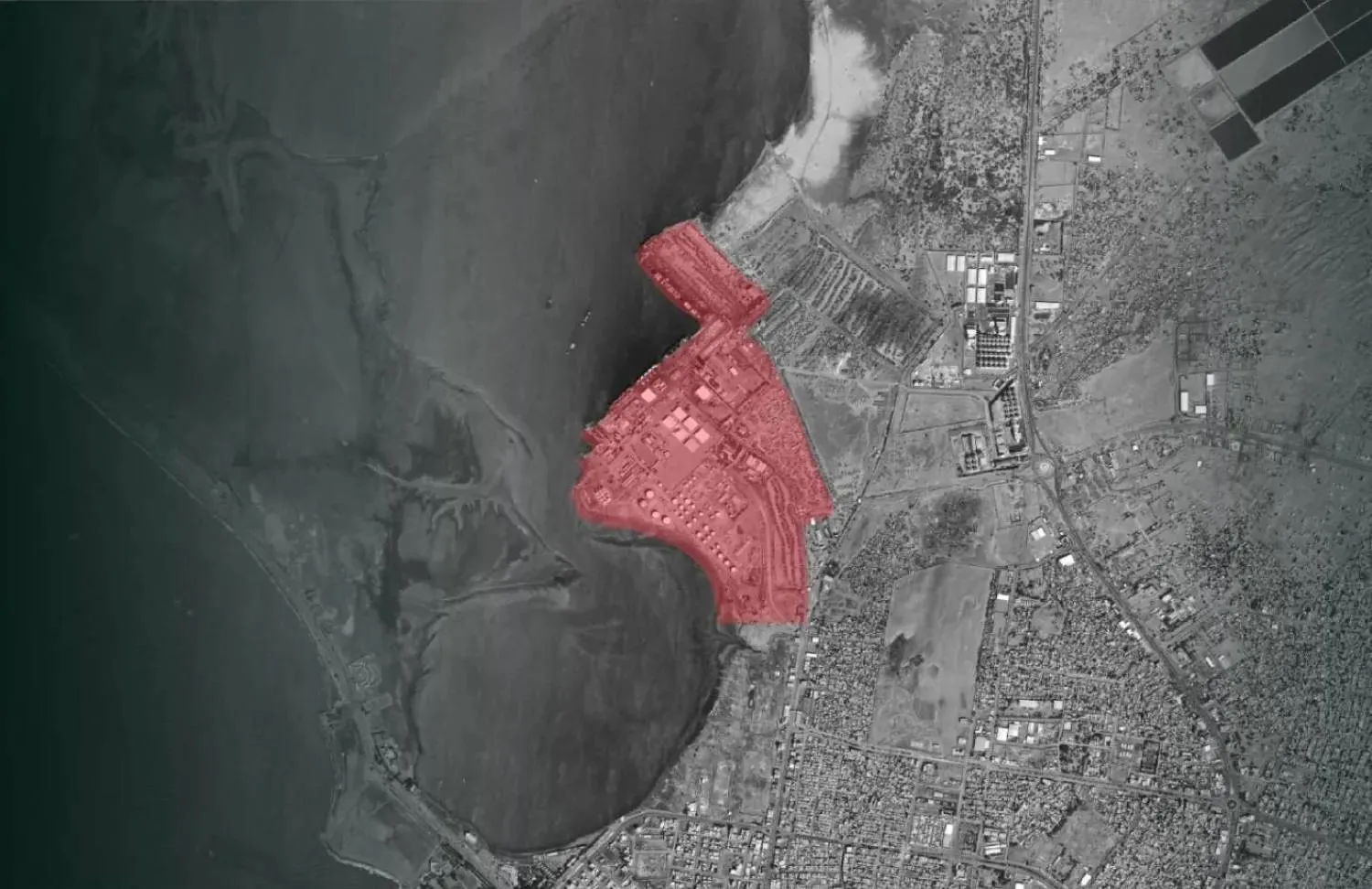
An area of Hodeidah port is highlighted indicating where the operation will be focused. (Coalition to Restore Legitimacy in Yemen)
TT

Coalition Carries out Sophisticated Operation to Neutralize Sources of Threat in Hodeidah

An area of Hodeidah port is highlighted indicating where the operation will be focused. (Coalition to Restore Legitimacy in Yemen)

The Coalition to Restore Legitimacy in Yemen announced on Friday that it carried out a sophisticated operation to neutralize sources of threat used by the terrorist Houthi militia to support its military efforts to attack civilians in Yemen and Saudi Arabia.

Official Coalition Spokesperson Major General Turki Al-Malki operational capabilities at the Yemeni port of Hodeidah, which facilitated the smuggling and transport of weapons and ballistic missiles, were targeted.

An operation was underway to destroy military targets and ballistic capabilities in the governorates of Sanaa, Saada, and Taiz, he added.

A military operation was carried out in Sanaa at dawn on Friday, targeting ballistic missile and drone capabilities, he revealed.

Seven legitimate military targets designated for military use in support of the militia's military efforts have been destroyed, as well as six workshops used for manufacturing and assembling ballistic missile launcher structures and drones, he said.

Al-Malki added that one of the militia's primary supply depots in Sanaa was also neutralized.

The Coalition had earlier on Friday urged civilians to leave Hodeidah port ahead of the operation.

Al-Malki said a ballistic missile and four drones fired by the Houthis towards Saudi Arabia’s Southern Region and a drone launched at the Riyadh Region were destroyed.