

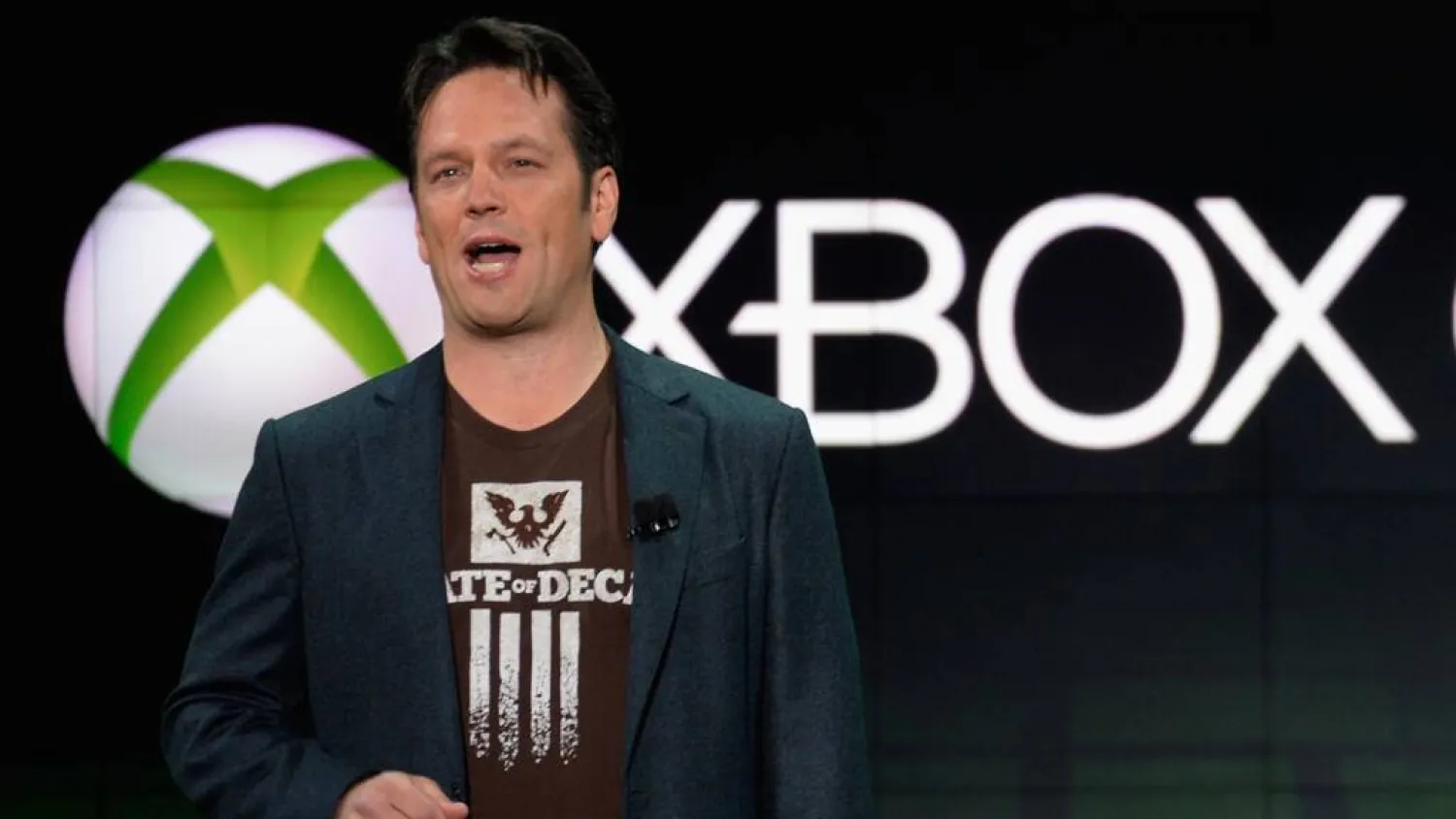

Xbox Boss Phil Spencer Retires as Microsoft Shakes Up Gaming Unit

During 12 years leading Xbox, Phil Spencer oversaw blockbuster studio buys and an evolution to video games being played just about anywhere players can get online. KEVORK DJANSEZIAN / GETTY IMAGES NORTH AMERICA/AFP
TT

Xbox Boss Phil Spencer Retires as Microsoft Shakes Up Gaming Unit

During 12 years leading Xbox, Phil Spencer oversaw blockbuster studio buys and an evolution to video games being played just about anywhere players can get online. KEVORK DJANSEZIAN / GETTY IMAGES NORTH AMERICA/AFP

Microsoft on Friday put out word that Xbox stalwart Phil Spencer is retiring, in a shakeup of leadership at the tech titan's video game unit.

Former Instacart chief operating officer Asha Sharma will take over as head of Microsoft Gaming, with Matt Booty becoming executive vice president and chief content officer, said AFP.

"As we celebrate Xbox's 25th year, the opportunity and innovation agenda in front of us is expansive," Microsoft chief executive Satya Nadella said in a message to employees.

"I am long on gaming and its role at the center of our consumer ambition."

Changes to the gaming team include Sarah Bond leaving her job as Xbox president "to begin a new chapter" away from Microsoft, according to the company.

The shakeup comes as cloud computing and artificial intelligence have become priorities at Microsoft, driving revenue growth but also massive spending on infrastructure to power the technology.

"When I walked through Microsoft's doors as an intern in June of 1988, I could never have imagined the products I'd help build, the players and customers we'd serve or the extraordinary teams I'd be lucky enough to join," Spencer said in a message to colleagues.

"It's been an epic ride and truly the privilege of a lifetime."

Spencer headed the Xbox unit for 12 of his 38 years at Microsoft, nearly tripling the size of the business as video games evolved from packaged software for consoles to subscription services and digital downloads on an array of devices.

Spencer also guided the Xbox team through acquisitions of Activision Blizzard, ZeniMax, and Minecraft.

Xbox boasts more than 500 million monthly users and a vast stable of game studios, along with a subscription gaming service.

"We are witnessing the reinvention of play," Sharma said in a blog post announcing the leadership changes.

"To meet the moment, we will invent new business models and new ways to play by leaning into what we already have: iconic teams, characters and worlds that people love."



Google Limits Meta’s Use of its Gemini AI Models, FT Reports

(FILES) A photo taken on May 19, 2026 shows the US multinational technology and Internet-related services company Google displayed on a smartphone (bottom) in front of the Google's logo on a laptop screen in Frankfurt am Main, western Germany. (Photo by Kirill KUDRYAVTSEV / AFP)
TT

Google Limits Meta’s Use of its Gemini AI Models, FT Reports

(FILES) A photo taken on May 19, 2026 shows the US multinational technology and Internet-related services company Google displayed on a smartphone (bottom) in front of the Google's logo on a laptop screen in Frankfurt am Main, western Germany. (Photo by Kirill KUDRYAVTSEV / AFP)

Google has put limits on Meta’s use of its Gemini AI models after the social media company sought more computing capacity than the rival tech group could provide, the Financial Times reported on Sunday.

Google, owned by Alphabet, told Meta around March it could not meet the full Gemini capacity the company had sought to purchase, the newspaper said, adding ⁠that the shortfall disrupted ⁠and delayed some of Meta’s internal AI projects.

Several other Google clients have also been affected, though to a lesser extent, according to the report. Meta has been particularly impacted due to its exceptionally high ⁠demand for Google’s models, the FT said.

Reuters could not immediately verify the report, which cited people familiar with the matter. Google and Meta did not immediately respond to requests for comment outside business hours.

Due to the restrictions, Meta has encouraged staff to be more efficient with AI tokens, the units that measure AI usage, the FT report said.

Even as companies ⁠continue ⁠to spend billions on chips and data centers, they are still struggling to secure enough computing power to support the growing demand for AI services.

Revenue at Google Cloud grew to $20 billion in the first quarter ended March, but CEO Sundar Pichai said computing power constraints prevented even higher growth and contributed to the cloud unit's backlog nearly doubling quarter on quarter.


How Some Venezuelans’ Smartphones Warned of Quake

A man searches for survivors in the rubble of a collapsed building following twin earthquakes in Caraballeda, La Guaira State, some 40 km northeast of Caracas, on June 25, 2026. (AFP)
TT

How Some Venezuelans’ Smartphones Warned of Quake

A man searches for survivors in the rubble of a collapsed building following twin earthquakes in Caraballeda, La Guaira State, some 40 km northeast of Caracas, on June 25, 2026. (AFP)

Many social media users in Venezuela have reported receiving alerts on Android smartphones moments before Wednesday's quake with almost 600 confirmed dead.

Google's Android and Apple's iOS, both include the option to display government alerts for emergencies like earthquakes.

But the search giant last year also detailed its system that uses the billions of Android smartphones worldwide to detect earthquakes in the first place.

- How it works -

Almost all smartphones contain an accelerometer, a movement sensor used for tasks like flipping the screen when users turn it sideways.

That same sensor "can also detect the ground shaking from an earthquake," Google wrote in a July 2025 blog post.

Accelerometers can spot potential earthquakes' fast-moving initial "P" wave, sending information about the tremor to a Google server.

By rapidly cross-referencing many such reports, the system can "confirm that an earthquake is happening and estimate its location and magnitude," Google said.

"The goal is to warn as many people as possible before the slower, more damaging S-wave of an earthquake reaches them".

Google offers two stages of alerts.

"BeAware" warns of weaker tremors, while for the heaviest quakes, "TakeAction" takes over the screen and plays a loud sound even when the phone is on silent mode.

- How effective is the system? -

Google said last year that its systems had already sent 790 million alerts to individual phones, warning of over 2,000 potentially dangerous earthquakes detected from April 2021.

While that gives many more people than before access to early warning information, there have been hiccups.

Android phones failed to sound warnings ahead of devastating February 2023 earthquakes that killed almost 60,000 people across Türkiye and Syria.

Google said last year that it has since updated its algorithms to avoid a repeat.

The company also apologized in February 2025 for a false alarm sent to some Android users in Brazil.

This week in Venezuela, hundreds of people have posted praise for Google on X, with some including unverified videos of alerts prompting people to leave buildings.

- What about Apple? -

Beyond government warnings, Apple says on its website that users in the US and Taiwan can also receive alerts from other "alert originators" about earthquakes.

The company did not respond to AFP's questions about how that system works by time of publication.

Neither has the iPhone giant enlisted its users' phones for a distributed detection system like Google's.

The hundreds of millions of iPhones around the globe are, however, able to forward alerts they receive to other nearby Apple devices that do not have mobile reception or a WiFi connection -- potentially helping life-saving warnings to get through.


Reports: Samsung to Unveil Record $650 Bn South Korea Investment amid AI Boom

FILE PHOTO: A Samsung Electronics semiconductor plant in Pyeongtaek, South Korea, May 21, 2026. REUTERS/Kim Hong-Ji/File Photo
TT

Reports: Samsung to Unveil Record $650 Bn South Korea Investment amid AI Boom

FILE PHOTO: A Samsung Electronics semiconductor plant in Pyeongtaek, South Korea, May 21, 2026. REUTERS/Kim Hong-Ji/File Photo

South Korea's Samsung Electronics is expected to announce a record domestic investment plan next week, according to local media reports, in a massive bet on AI-driven semiconductor demand.

The 1,000 trillion won ($650 billion) package, to be announced by the chip giant and the government, is in line with President Lee Jae Myung's agenda for development in regions outside of the capital Seoul.

Lee will host a "National Mega Project" briefing on Monday, where Samsung will unveil major long-term investment plans, the reports said.

Rival chipmaker SK hynix is also expected to announce spending plans at the same event.

Both companies are top producers of advanced memory chips used in the data centers that train and run artificial intelligence tools like chatbots and image generators.

The AI boom has sent the firms' profits and share prices skyrocketing, with Samsung recently agreeing a bonus deal with its workers' union to avert a major strike.

The Samsung investment package is expected to include about 300 trillion won for a new semiconductor complex in southwest South Korea -- one of the regions that has fallen behind the capital in tech investment.

Some 60 trillion won would likely be earmarked for six chip manufacturing plants at Yongin in the south, and more than 350 trillion won for AI infrastructure including data centers, according to Maeil Business Newspaper.

The proposed 10-year spending package would be the largest investment commitment ever announced by a South Korean company, AFP reported.

Lee met Samsung chairman Lee Jae-yong in Seoul this week to discuss semiconductor investments, according to news reports.

The president also reportedly met SK Group Chairman Chey Tae-won last week.

Samsung Electronics last year posted an operating profit of 43.6 trillion won -- a 33 percent increase year-on-year.

The company is projected to achieve an operating profit in the mid-to-high 300 trillion won range this year, and 550 trillion won next year.

Kim Yong-beom, the presidential chief of staff for policy, said Wednesday that discussions on the planned semiconductor project in Yongin were in their final stages.

"Once everything is confirmed, we plan to bring together the companies and relevant ministries to explain the plan to the public at once," Kim said.