Countries Issuing Middle East Travel Advisories as Iran Tensions Rise

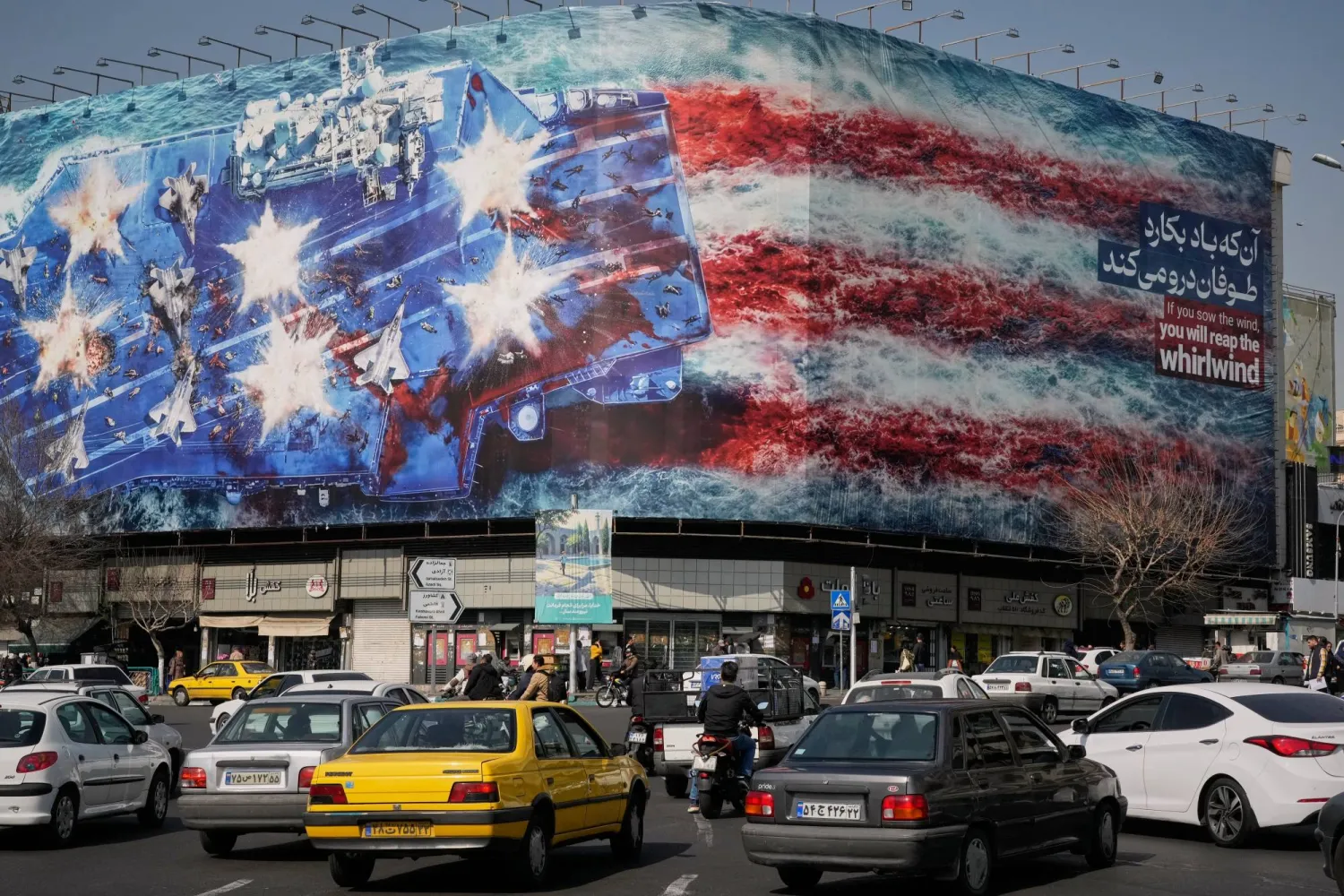
Vehicles pass a billboard depicting a US aircraft carrier with damaged fighter jets on its deck and a sign in Farsi and English reading, "If you sow the wind, you'll reap the whirlwind," at Enqelab-e-Eslami Square in Tehran, Iran, Sunday, Feb. 22, 2026. (AP)
TT

Countries Issuing Middle East Travel Advisories as Iran Tensions Rise

Vehicles pass a billboard depicting a US aircraft carrier with damaged fighter jets on its deck and a sign in Farsi and English reading, "If you sow the wind, you'll reap the whirlwind," at Enqelab-e-Eslami Square in Tehran, Iran, Sunday, Feb. 22, 2026. (AP)

Several countries have begun withdrawing dependents of diplomatic personnel and non-essential staff from some locations in the Middle East, or advising citizens to defer travel to Iran, amid rising tensions between Washington and Tehran.

Here are some of the moves:

AUSTRALIA: The government has told dependents of Australian diplomats in Israel and Lebanon to leave the two countries, citing a deteriorating security situation in the region. It also offered voluntary departures to Australian diplomats' dependents in the United Arab Emirates, Jordan ‌and Qatar. It ‌continues to advise citizens in Israel and ‌Lebanon ⁠to consider leaving ⁠while commercial options remain available. (Foreign Ministry X account)

SERBIA: Serbia has told its nationals in Iran to leave as soon as possible due to increased tensions and the risk of a deterioration of the security situation. (Foreign Ministry)

POLAND: Polish citizens should leave Iran immediately. (Prime Minister Donald Tusk)

UNITED STATES: The US is pulling ⁠non-essential staff and eligible family members from its ‌embassy in Lebanon amid ‌Iran tensions. (Senior State Department official)

SWEDEN: The Foreign Ministry advised its citizens to ‌avoid all travel to Iran and leave the country ‌immediately on January 12. The foreign minister said in February that people who decided to stay should not expect help from the government to be evacuated. (Foreign Ministry website)

INDIA: The Indian embassy in ‌Iran advised citizens currently in Iran to leave by available means of transport, including commercial flights. (Post ⁠on X ⁠by Indian embassy in Iran, on February 23)

CYPRUS: Cyprus advised its citizens to avoid all travel to Iran and leave the country immediately on January 13. (Foreign Ministry)

SINGAPORE: Singapore advised citizens to continue to defer all travel to Iran. (Singapore Foreign Ministry)

GERMANY: Germany has urged its citizens to leave Iran, noting commercial flights out are still operating and departure by land is also possible (Foreign Ministry, January 20)

BRAZIL: Brazil recommended last week that its citizens leave Iran, following a similar alert to citizens in Lebanon in January. The government last year recommended that Brazilians not travel to the two countries.


At a Gaza Zoo, War Takes Its Toll on the Animals

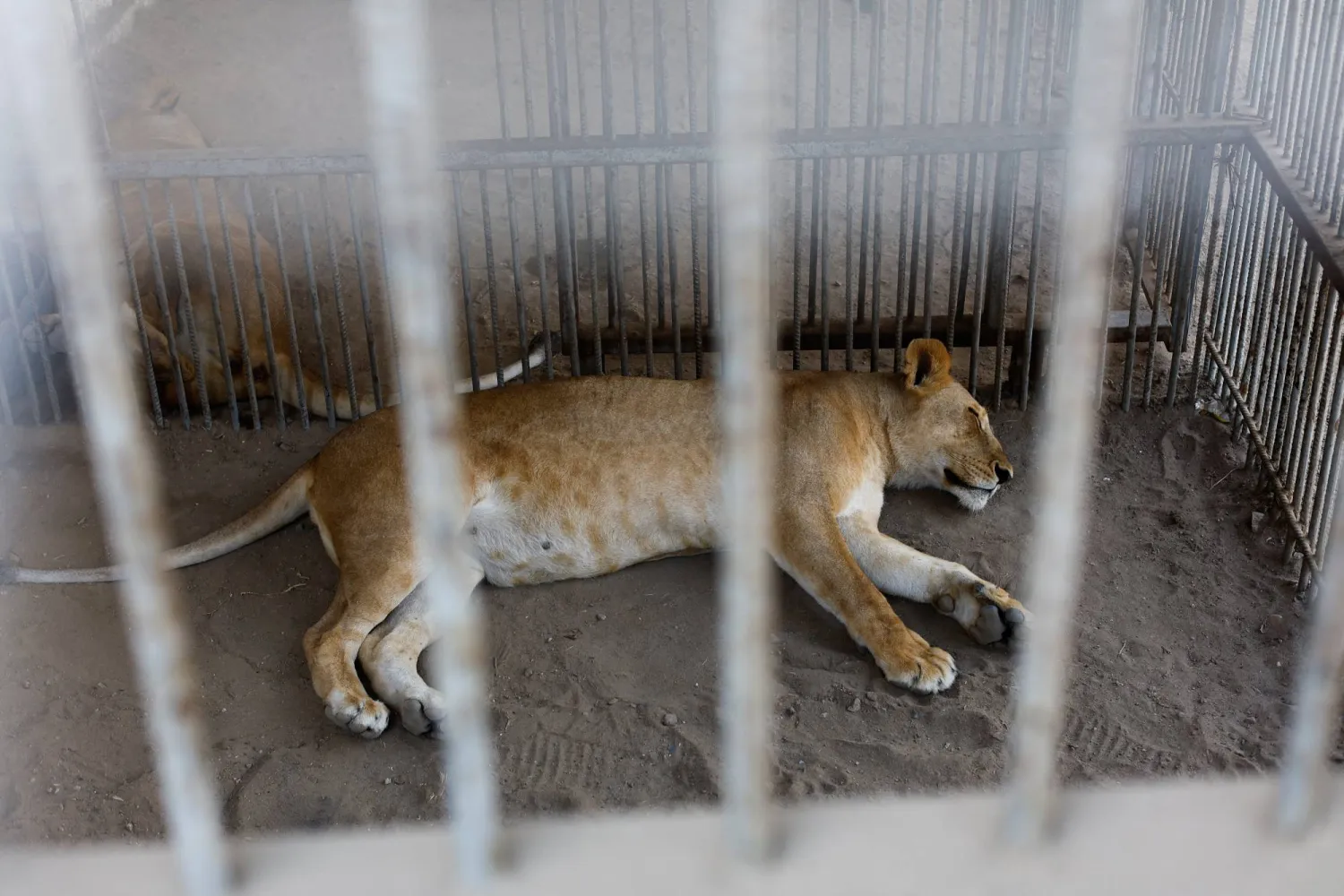
A female lion sleeps inside a cage at a zoo in Nuseirat, in the central Gaza Strip, August 12, 2026. (Reuters)
TT

At a Gaza Zoo, War Takes Its Toll on the Animals

A female lion sleeps inside a cage at a zoo in Nuseirat, in the central Gaza Strip, August 12, 2026. (Reuters)

As children walked into the zoo near Gaza's Nuseirat refugee camp, they found a lion barely looking back at them through the bars of its cage and chimpanzees sitting listlessly in their enclosure.

Many of the animals were malnourished, weakened by shortages of food, medicine and vaccines. But they were still alive, largely thanks to the efforts of zoo owner Mahmoud Gomaa.

He originally ran the attraction in the southern city of Rafah, but said he had to flee when Israeli troops attacked and occupied part of the area in 2024.

As the conflict raged, he moved the surviving animals from town to town before finding a place in Nuseirat ‌in central Gaza earlier ‌this year.

There, he reopened the zoo, hoping to give traumatized youngsters ‌something ⁠to enjoy after ⁠nearly three years of destruction.

ZOOKEEPER RETURNED TO FIND ANIMAL BONES

"In the beginning of the war people were looking for a way to survive ... and I was looking for a way to save the animals more than saving myself," Gomaa told Reuters.

There were a number of zoos in Gaza before the conflict between Israel and Hamas erupted, displaying exotic and wild animals including lions and eagles, municipal records show.

Anyone trying to keep one open now faces enormous challenges, ⁠vets and animal experts said, not least in getting food in ‌a territory struggling to feed its human population.

"Owners ‌are currently feeding them frozen meat," veterinarian Nidal Fadel said. "This is a catastrophe and a wrong nutritional plan ‌because in nature they eat fresh prey."

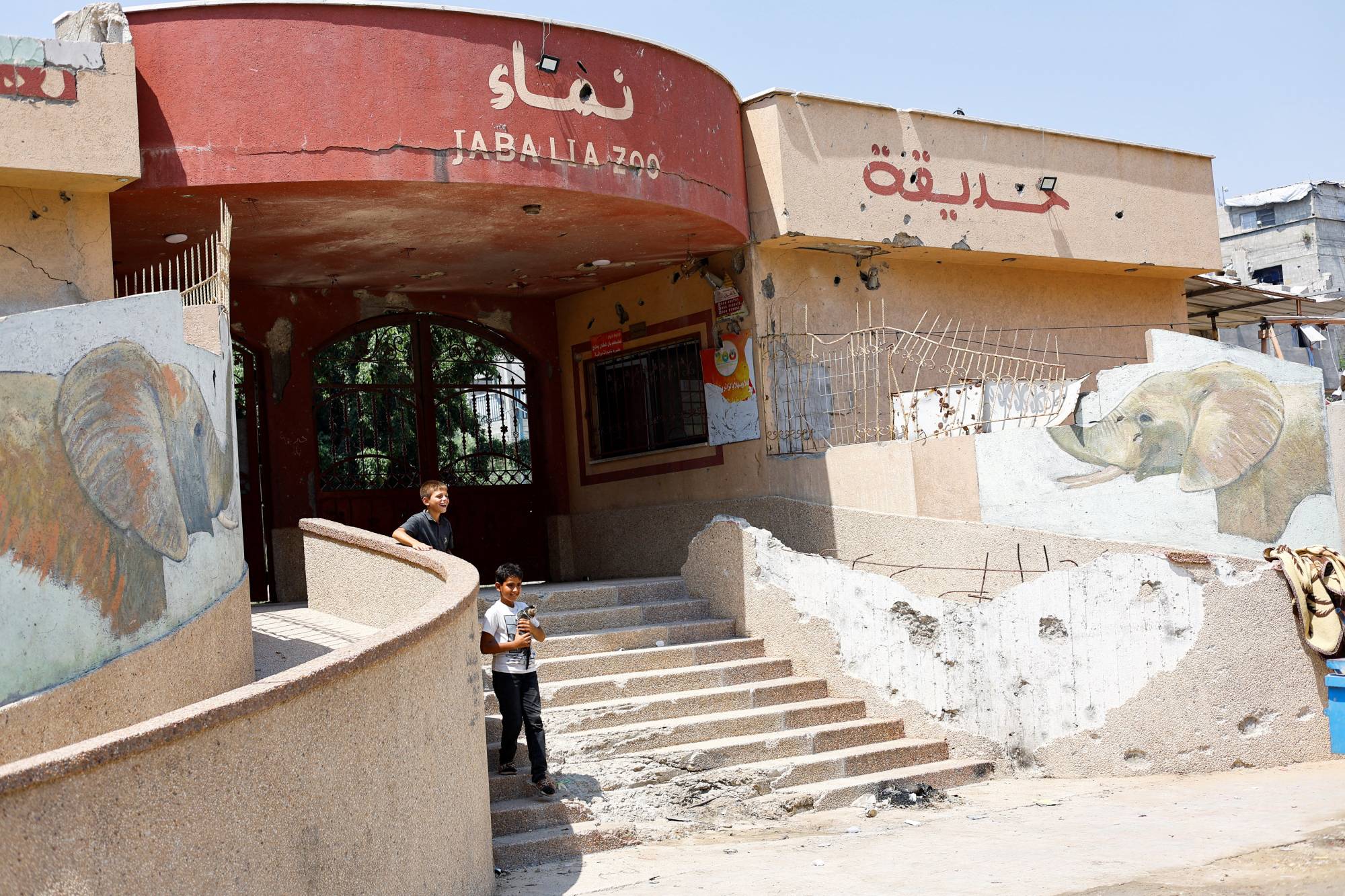
Palestinian children play outside a zoo damaged during the war, in Gaza City, August 15, 2026. (Reuters)

The animals themselves are bearing the brunt ‌of the war — sometimes directly.

When Gomaa fled Rafah, he said he had to leave behind three lions, several crocodiles and some African ostriches.

A few months later, Gomaa returned and only found the bones of the crocodiles and the ostriches. Those three lions, which he had locked in their cages, had ‌disappeared.

There is also the trauma caused by the sound and sight of the conflict raging around them.

"Lions can detect sounds and ⁠disturbances that humans may not ⁠notice," said Amir Khalil, a veterinarian who has led several trips to Gaza by the animal welfare organization Four Paws and rescued other zoos' animals.

"Bombing and constant conflict create enormous stress and fear for them," he added.

In Nuseirat, the surviving lion barely looked up at the visitors. But the children had better luck with some of the other animals, letting parrots ride on their shoulders and petting smaller monkeys.

It was a rare chance to relax in an enclave still facing regular airstrikes, despite a fragile ceasefire. Israel's military, which says its attacks are aimed at militant targets, did not immediately respond to questions about the conflict's impact on civilian facilities like zoos and their animals.

"Today there is no avenue for children to play," said visitor Karam Al-Mazin, 42.

"There is nothing except rubble, stones and tents, so children today are bored and are in a difficult situation."


The 60-day Deadline for an Iran Peace Deal is Expiring. Here's Where Things Stand

A woman holds an Iranian flag as part of a pro-government campaign in downtown Tehran, Iran, Monday, Aug. 17, 2026. (AP Photo/Vahid Salemi)
TT

The 60-day Deadline for an Iran Peace Deal is Expiring. Here's Where Things Stand

A woman holds an Iranian flag as part of a pro-government campaign in downtown Tehran, Iran, Monday, Aug. 17, 2026. (AP Photo/Vahid Salemi)

The deal that US President Donald Trump signed at Versailles in June set an ambitious 60-day deadline for ending the war with Iran and reaching an accord on its nuclear program.

The deadline was Monday, and the two sides are further apart than they were then, The Associated Press said.

Talks, such as they are, have focused on reopening the Strait of Hormuz and lifting a US blockade on Iran, both of which were supposed to have happened under the interim deal. There has been no sign of any compromise on the strait, or that detailed nuclear talks have even begun.

The US, meanwhile, has no good options for getting out of the war it started alongside Israel.

Acceding to Iran's latest demands would mean giving it control over a critical international waterway that carried a fifth of the world's traded oil and gas before the war — and would be tantamount to admitting defeat. Escalating the deeply unpopular war would further draw down US supplies of advanced missile interceptors, jolt the world economy, and drive up gas prices ahead of US congressional elections.

So both sides have dug in, hoping the other will blink first. So far, neither has.

The interim deal collapsed weeks later

The June deal, known as the Memorandum of Understanding, called for a halt to all military operations and set a 60-day deadline for an agreement to permanently end the war and resolve the longstanding dispute over Iran's nuclear activities.

It called for the Strait of Hormuz to be reopened but gave Iran a vaguely defined role in facilitating traffic, leaving open the possibility it could charge fees after the 60-day deadline. Iran has seized on that clause to claim control over the waterway.

A week after the deal was signed, Iran began firing on vessels using a route along the coast of Oman, on the other side of the strait, that is overseen by the US military and intended to bypass Tehran's control.

The US responded by striking Iran, which retaliated by attacking Arab countries hosting American forces, like Jordan, Kuwait and Bahrain. The US canceled waivers issued as part of the deal that had allowed Iran to sell its oil internationally and Trump restored a blockade of Iran's ports.

Each side accused the other of violating the June agreement, of which almost nothing remains.

The fighting eventually died down. A related truce in Lebanon between Israel and the Iran-backed Hezbollah has mostly held, even as Israeli troops occupy large areas in the country's south. Lebanon's "territorial integrity and sovereignty" were to have been ensured under the June deal.

Iranian officials say they stopped negotiating with the US in June, while acknowledging that messages have been relayed by intermediaries. Trump says the talks have continued, occasionally claiming progress after pulling back from threatening major strikes.

Pakistan, which played a key role in brokering the June agreement, noted last week that the deadline was Monday while expressing hope it would be extended.

“We are not closing the chapter,” Foreign Ministry spokesman Tahir Andrabi said. “Pakistan is making all-out efforts to bring the two parties to the negotiating table.”

Iran's leaders think they can force Trump to give up the strait

Earlier this month, Iran issued a list of demands for reopening the strait, including the lifting of the American blockade, the withdrawal of US forces from around Iran and the payment of reparations for damage inflicted in the war started by the US and Israel on Feb. 28.

Even then, Iran has said it would control the strait — and potentially charge fees — through an agreement it is negotiating with Oman, and that the strait will not go back to being an open, toll-free waterway as it was before the war.

Iran-backed Houthis in Yemen have meanwhile begun attacking oil tankers in the Red Sea, threatening another crucial trade route that had been used to relieve some of the pressure from the strait being closed.

Trump has rejected Iran's demands — saying it's Tehran that should pay war reparations and claiming the US controls the strait. He appears to be banking on economic pressure — in the form of the blockade and longstanding sanctions — to bring Iran's rulers to their knees.

Iran's economy has been battered by the war and isolation, and inflation has soared. The crisis could stoke renewed anti-government protests, like those that were brutally crushed in January.

Traffic through the Strait of Hormuz, which rose immediately after the interim deal, is back to a small fraction of what it was before the war. Rising prices of fuel and other goods are expected to climb further the longer this continues with effects far beyond the Middle East.

The clock is still ticking for both sides.


Battered by War, Iran’s Rulers Wary of More Economic Pain and Unrest if US Tightens Pressure

People walk in the Grand Bazaar in Tehran, Iran, August 17, 2026. Majid Asgaripour/WANA (West Asia News Agency) via Reuters
TT

Battered by War, Iran’s Rulers Wary of More Economic Pain and Unrest if US Tightens Pressure

People walk in the Grand Bazaar in Tehran, Iran, August 17, 2026. Majid Asgaripour/WANA (West Asia News Agency) via Reuters

Even as Iran projects resilience in the war with the United States, its leaders are worried that a threat of more economic punishment by Donald Trump could increase hardships, reignite unrest and further erode the regime’s legitimacy.

The US president vowed on Friday to hit Iran hard economically, a day after Treasury Secretary Scott Bessent said Washington would impose measures on Tehran that have "never been seen" as early as next week. Washington has not said what those measures will entail.

For all the bravado of Iran's leaders after holding out in nearly six months of conflict and effectively closing the Strait of Hormuz, a vital global oil supply route, they face mounting pressure at home that could result in nationwide unrest, according to three Iranian officials.

The officials, two political insiders, a former Iranian official and a dozen ordinary Iranians spoke to Reuters for this story on condition of anonymity, either for fear of retribution or because they are not authorized to speak to media.

Iran entered the war with high inflation, a weakening currency, energy shortages, sanctions and deep structural weaknesses, and must now contend with damaged infrastructure, disrupted trade, lost production and the cost of rebuilding.

Arshia, a civil engineer, spent a decade working in Iran’s construction industry before the war that began with US and Israeli attacks on February 28 brought projects largely to a standstill.

He is now struggling ‌to find work as ‌projects are delayed or cancelled and costs soar, with little prospect of a rapid recovery.

"I’m worried. If Trump imposes ‌more sanctions, ⁠how will ordinary ⁠people survive? I don’t want my country to be punished militarily or economically. We’re already struggling,” said the father of two from the central city of Isfahan.

His plight reflects a broader reality across Iran, where US strikes damaged factories, power plants, transport networks and other critical infrastructure, adding to pressure on an already strained economy.

Mohsen, 53, was forced to shut his small import-export business with Gulf countries after Iran retaliated against US strikes by targeting American bases and assets in the region.

"I had to lay off 10 employees. It was painful, but I had no choice. I could no longer afford to pay their salaries, and now I’m relying on my savings to support my family," he said from the southern port city of Bandar Abbas.

INFLATION, UNCERTAINTY HIT HOUSEHOLDS

Iran’s annual inflation rate reached 66% in July, while consumer prices were 87.9% higher than a year earlier, according to Iran’s Statistical ⁠Center. Food inflation hit 128% year-on-year.

For Iran’s rulers, the greater threat may be not economic pain itself, but the risk ‌that worsening hardship reignites mass unrest, said the two insiders and one official.

The appointment of Hossein Taeb ‌last week, a key architect of past crackdowns, to lead Iran’s Basij militia is one of the clearest signs yet of growing concern over a resurgence of unrest, a former reformist ‌official said.

The Basij, a paramilitary volunteer militia, is affiliated with Iran's powerful Revolutionary Guards, which have both been used by the clerical rulers to quell protests.

Economic ‌grievances have repeatedly spilled into nationwide protests in Iran in recent years.

In January, nationwide protests over economic hardships were crushed by the IRGC and the Basij force, with thousands killed.

In recent months, Iran’s clerical rulers have responded to fears of renewed unrest with executions, arrests, summonses and lengthy prison sentences targeting journalists, lawyers, activists, human rights advocates and students, rights groups say.

Officials say the measures are needed to maintain stability during wartime. Critics say they could deepen the divide between the clerical establishment and a public frustrated by rising economic pressures.

SALARY 'GONE WITHIN DAYS'

Families are cutting ‌back on meat and other staples, opting for cheaper alternatives.

"I’m ashamed in front of my children. My salary is gone within days. Meat and chicken have disappeared from our table. I have no idea how we’re going to ⁠get by," said Hossein, a government employee in ⁠the central city of Yazd.

Rents rose 31% year-on-year in March, according to the Statistical Centre, while state media reported Tehran housing prices at roughly 50% above last year.

Iran’s minimum wage was raised by about 60% this year, but continued rial depreciation has eroded purchasing power, with the dollar value of the minimum wage falling from about $105 to $86 since late March.

Bijan, 40, earned about $1,000 a month as an engineer when he entered the job market 15 years ago. He has since turned to online tutoring to make ends meet. Now, he and his wife struggle to make about $400 a month and have left Tehran for a cheaper province.

"I used to work maybe five or six hours a day ... Now, it’s all work or looking for work, or feeling anxious about not having enough work," said Bijan.

For many Iranians, fear of renewed conflict has made planning for the future increasingly difficult.

US NAVAL BLOCKADE RATCHETS UP COSTS

Iran has sought to keep essential goods moving through alternative routes, including land corridors and the Caspian Sea, but those alternatives are also coming under strain.

Strikes on bridges have disrupted overland transport, increasing the cost and time needed to move goods into Iran.

President Masoud Pezeshkian last week acknowledged the squeeze, saying: “Our problems have multiplied several times over, while our income has also fallen.”

Goods that once arrived by ship now take longer routes into Iran, driving up prices, he said, adding that Iran is selling less oil and collecting less tax revenue from damaged or struggling businesses.

The blockade has also effectively cut off Iran’s gasoline imports, lawmaker Reza Sepahvand told Iran's ILNA news agency on Saturday, adding that Iran’s daily gasoline output had reached its limit at about 130 million liters, compared with consumption of 137 million liters.