


Sudan Health Minister: War Has Inflicted $11bn in Health Sector Damage

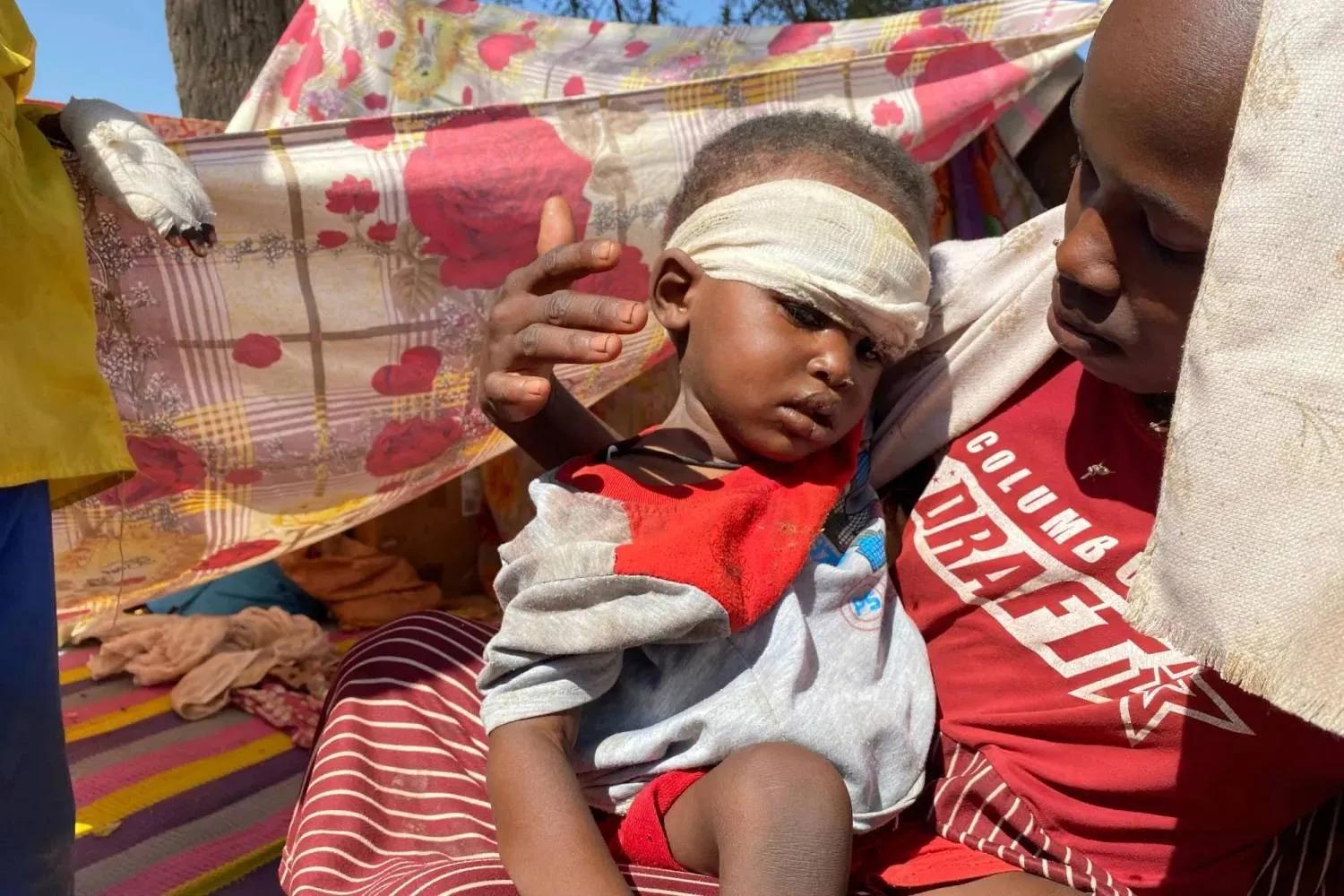
Sudanese child who fled the city of El Fasher with his family receives treatment at a camp in the town of Tawila (file photo - AP)
TT

Sudan Health Minister: War Has Inflicted $11bn in Health Sector Damage

Sudanese child who fled the city of El Fasher with his family receives treatment at a camp in the town of Tawila (file photo - AP)

Sudan’s health system has suffered an unprecedented collapse since war erupted in mid-April 2023, with most hospitals in the capital, Khartoum, and other cities across several states turned into military barracks.

A severe shortage of medical services has fueled widespread epidemics, disease outbreaks and worsening malnutrition.

Health Minister Haitham Mohamed Ibrahim told Asharq Al-Awsat that losses to the sector are “very large.”

“The destruction has affected all Sudanese states,” he said, citing the sabotage of hospitals and health institutions, the looting of medicines, vehicles and equipment, and the direct targeting of health workers.

He said Saudi Arabia is one of Sudan’s main supporters, particularly through the King Salman Humanitarian Aid and Relief Center, mainly by providing medical supplies, equipment and medicines.

Health sector losses

Preliminary estimates put health sector losses at about $11 billion, Ibrahim said, noting that final figures will only be determined after the war ends, as large areas remain under the control of the Rapid Support Forces.

He outlined a $2 billion reconstruction plan to secure basic services and restore the health system in states recaptured by the Sudanese army. But rebuilding what the war destroyed will require additional funding, he said.

“Attacks on hospitals have exceeded 500 incidents, and the tragedy is ongoing,” Ibrahim said. Several health workers have been killed, while others remain under house arrest in North Darfur, unable to reach their families.

Rebuilding and rehabilitating the system will require “massive budgets and exceptional efforts,” he added.

Sudan needs at least $300 million now to secure essential medicines and medical supplies.

Saudi support

Total Saudi humanitarian and relief assistance during the Sudan crisis exceeded $134 million as of early November 2025, according to new figures.

Donations through the Saudi public campaign to support the Sudanese people via the “Sahem” platform have surpassed $19.4 million, based on recent official estimates.

The campaign was launched in May 2023 under directives from Custodian of the Two Holy Mosques King Salman bin Abdulaziz and Crown Prince and Prime Minister Mohammed bin Salman. More than 537,000 donors have contributed.

Ibrahim reiterated that Saudi Arabia remains a key supporter, especially through the King Salman Humanitarian Aid and Relief Center, which primarily supplies medical consumables, equipment, and medicines.

Malnutrition crisis

Sudan ranks among countries in the World Health Organization’s Eastern Mediterranean Region with high malnutrition rates, Ibrahim said. The national average stands at about 15%, rising to 30% in some states, particularly in areas cut off from regular aid, notably in Darfur and parts of Kordofan.

The Health Ministry, working with UNICEF and other UN agencies and nutrition programs, has opened more than 400 supplementary and therapeutic feeding centers in Darfur to serve those in need.

Vaccination coverage fell below 40% in 2023 and 2024 at the outset of the war, he said, but climbed to more than 70% by the end of 2025. He described the rebound as “a major achievement” that helped reduce measles and diphtheria cases.

Authorities have launched campaigns to reach unvaccinated children, alongside polio drives and routine immunization programs targeting more than 9 million children across Sudan.

Funding constraints

Weak funding remains the main challenge facing the health system, Ibrahim said, pointing to widening health and humanitarian gaps, particularly in western states and Darfur. Reconstruction needs and efforts to improve the work environment to restore services to citizens add further pressure.

Access to some areas in the five Darfur states and parts of Kordofan remains difficult, he said, forcing heavy reliance on international and national organizations operating on the ground.

Securing drug supplies

By 2025, stability in the supply of essential medicines had been fully restored, with more than 700 drug items secured without interruption for chronic and life-saving treatments, Ibrahim said.

Several pharmaceutical factories have resumed operations, with more than three fully operational and four preparing to begin production, a move he said would strengthen supply sustainability and health security.

Availability of essential medicines has risen from less than 30% to more than 75%, with a relative decline in shortages of life-saving drugs.

Storage capacity has expanded at the state level, and the reopening of the main Medical Supplies Center in Khartoum has boosted capacity by more than 60% compared with the previous period.

Disease outbreaks

As the health crisis deepens, 79 dengue fever cases have been recorded in the Merowe locality in Northern State, according to the latest official report.

Outbreaks of malaria and dengue in the capital and several states are part of recurring epidemic waves in recent years, Ibrahim said, stressing that authorities have “a clear strategy to combat disease vectors.”

He announced a major malaria eradication campaign to be launched under the patronage of the prime minister, underscoring the need to sustain vector control programs at the locality and administrative unit levels.

The Rapid Support Forces control all hospitals and health facilities in the five Darfur states and large parts of Kordofan. Ongoing clashes and indiscriminate shelling have directly disrupted medical facilities and destabilized health workers.

Delivering services to areas outside government control remains extremely difficult, the minister said, citing reports of severe shortages that require urgent and sustained health and humanitarian intervention.


Civilian Death Toll in Sudan War More than Doubled in 2025, UN Says

A displaced Sudanese woman who left El-Fasher after its fall with others, walks amid the remains of a fire that broke out at a camp in Tawila on February 11, 2026. (Photo by AFP)
TT

Civilian Death Toll in Sudan War More than Doubled in 2025, UN Says

A displaced Sudanese woman who left El-Fasher after its fall with others, walks amid the remains of a fire that broke out at a camp in Tawila on February 11, 2026. (Photo by AFP)

Killings of civilians in Sudan's war more than doubled in 2025 compared with the previous year, the United Nations rights chief said Thursday, warning that thousands more dead are unidentified or remain missing.

Since April 2023, Sudan has been engulfed in a conflict between the army and the Rapid Support Forces (RSF) that has killed tens of thousands, displaced 11 million people and triggered one of the world's worst humanitarian crises.

"This war is ugly. It's bloody and it's senseless," Volker Turk told the UN Human Rights Council, blaming both warring sides, which have so far rejected any form of humanitarian truce. He also blamed foreign sponsors funding what he called a "high-tech" conflict.

"In 2025, my office's documentation points to an over two and a half times increase in killings of civilians compared with the previous year. Many thousands are still missing or unidentified," Turk said.

There have been no official figures on the overall death toll in the conflict.

Turk condemned what he called the "heinous and ruthless" brutalities committed, including sexual violence, summary executions and arbitrary detentions, AFP reported.

He highlighted "carnage" inflicted by the RSF during an attack on the Zamzam displacement camp in April, and again in October in El-Fasher, which was the army's last foothold in western Darfur.

Sexual violence, including rape, gang rape, sexual torture and slavery, has also surged, Turk said, with more than 500 victims documented in 2025. "The bodies of Sudanese women and girls have been weaponised to terrorise communities."

He added that he is "extremely worried these crimes may be repeated".

Since January, escalating drone attacks in the southern Kordofan region and beyond have "killed or injured nearly 600 civilians", Turk said, including in attacks on humanitarian aid convoys.

The UN's resident and humanitarian coordinator for Sudan, Denise Brown, said on Thursday that access to the cities of Kadugli and Dilling in South Kordofan -- long cut off by an RSF siege until the army recently lifted it -- had been effectively impossible.

"We were not able to get supplies in. We had to remove our staff for their own safety," she said, after stepping off the first UN flight to Khartoum since the war began on Thursday.

Humanitarian deliveries resumed only last week, with more than 50 trucks carrying essential supplies for frontline Sudanese responders.

According to AFP, Brown echoed growing UN alarm over escalating hunger, saying that available data suggested there were currently famine conditions in Dilling, which has not been officially confirmed.

In El-Fasher and Kadugli, famine has already been confirmed by a UN-backed assessment.

"It's essential that the world understands the consequences of war," she said, urging global leaders to "put their heads together to find a solution".

Turk said both the army and the RSF continued to use "explosive weapons in densely populated areas, often without warning -- showing utter disregard for human life".

Turk highlighted the "increased use of advanced long-range drones", which has "expanded harm to civilians in areas far from the front lines that were previously peaceful".

Turk also voiced concern over "the growing militarization of society", including the recruitment of children and young people into the fighting.


UN Expert on Palestinian Territories Denounces 'Toxic' Attacks against Her

United Nations Special Rapporteur on the situation of human rights in the occupied Palestinian territory, Francesca Albanese, attends a press conference at the European headquarters of the UN in Geneva, Switzerland, September 15, 2025. REUTERS/Pierre Albouy/File Photo
TT

UN Expert on Palestinian Territories Denounces 'Toxic' Attacks against Her

United Nations Special Rapporteur on the situation of human rights in the occupied Palestinian territory, Francesca Albanese, attends a press conference at the European headquarters of the UN in Geneva, Switzerland, September 15, 2025. REUTERS/Pierre Albouy/File Photo

The UN expert on the Palestinian territories, Francesca Albanese, denounced on Thursday what she described as "toxic" attacks impacting her personal life and work, after a number of European states called for her resignation.

In recent weeks Germany, France, Italy and others have called for Albanese to step down over her criticism of Israel. Albanese, an Italian lawyer, said the remarks were taken out of context and misconstrued.

"I can tell you how toxic and personally damaging for me and for my family these past days, weeks and months have been," Albanese, Special Rapporteur on human rights in the occupied Palestinian territories, told reporters via video link from Jordan.

A letter seen by Reuters, sent by the permanent mission of Israel in Geneva to the Council's president on 15 February, stated that she had flagrantly violated the UN's code of conduct.

"As long as she holds a UN mandate, she fundamentally undermines the credibility and moral authority of the United Nations," the letter stated, adding that Albanese had repeatedly shared antisemitic tropes - allegations that Albanese has previously denied.

On Tuesday the ambassador to the French mission to the UN in Geneva reiterated concerns by the French foreign minister of "extremely problematic statements" by a United Nations Special Rapporteur - in an apparent reference to Albanese, without mentioning her by name.

"All those who speak under the auspices of the United Nations - including Special Rapporteurs - must exercise the restraint, moderation, and discretion required by their mandate," Céline Jurgensen told delegates at the UN Human Rights Council.

Albanese described sanctions imposed on her by the United States in July as being part of a broader strategy by the current US administration to weaken international accountability mechanisms.

The US sanctioned Albanese for what it described as "illegitimate and shameful efforts to prompt (International Criminal Court) action against US and Israeli officials, companies, and executives" in a report to the Human Rights Council.

"These smears, the sanctions, the continuous attacks from all over, from those very states who should use that energy as stamina to go after those who are accused by the highest court in the world of war crimes, crimes against humanity and genocide," Albanese stated.

The president of the UN Human Rights Council, Sidharto Reza Suryodipuro, on Monday expressed concern and regret at personal attacks directed "against certain mandate holders" at the Council and reiterated his support for them.

"Their independence and protection remains essential to the effectiveness, credibility and legitimacy of the council's collective action."


Syrian Government Forces and Druze Factions Exchange Prisoners in Sweida

A delegation from the Sweida Governorate inspects the service situation in the villages of the western countryside (SANA)
TT

Syrian Government Forces and Druze Factions Exchange Prisoners in Sweida

A delegation from the Sweida Governorate inspects the service situation in the villages of the western countryside (SANA)

The Syrian government and Druze factions controlling the southern city of Sweida on Thursday carried out ‌their first ‌prisoner exchange ‌since ⁠deadly clashes in the ⁠predominantly Druze city last summer, according to the Syrian ⁠government's Sweida media office.

The ‌swap ‌involved Damascus ‌releasing 61 ‌prisoners from the Druze factions detained in Adra ‌Central Prison near the capital, in ⁠return ⁠for the Druze's National Guard Forces freeing 25 Syrian government personnel, the media office said.
