

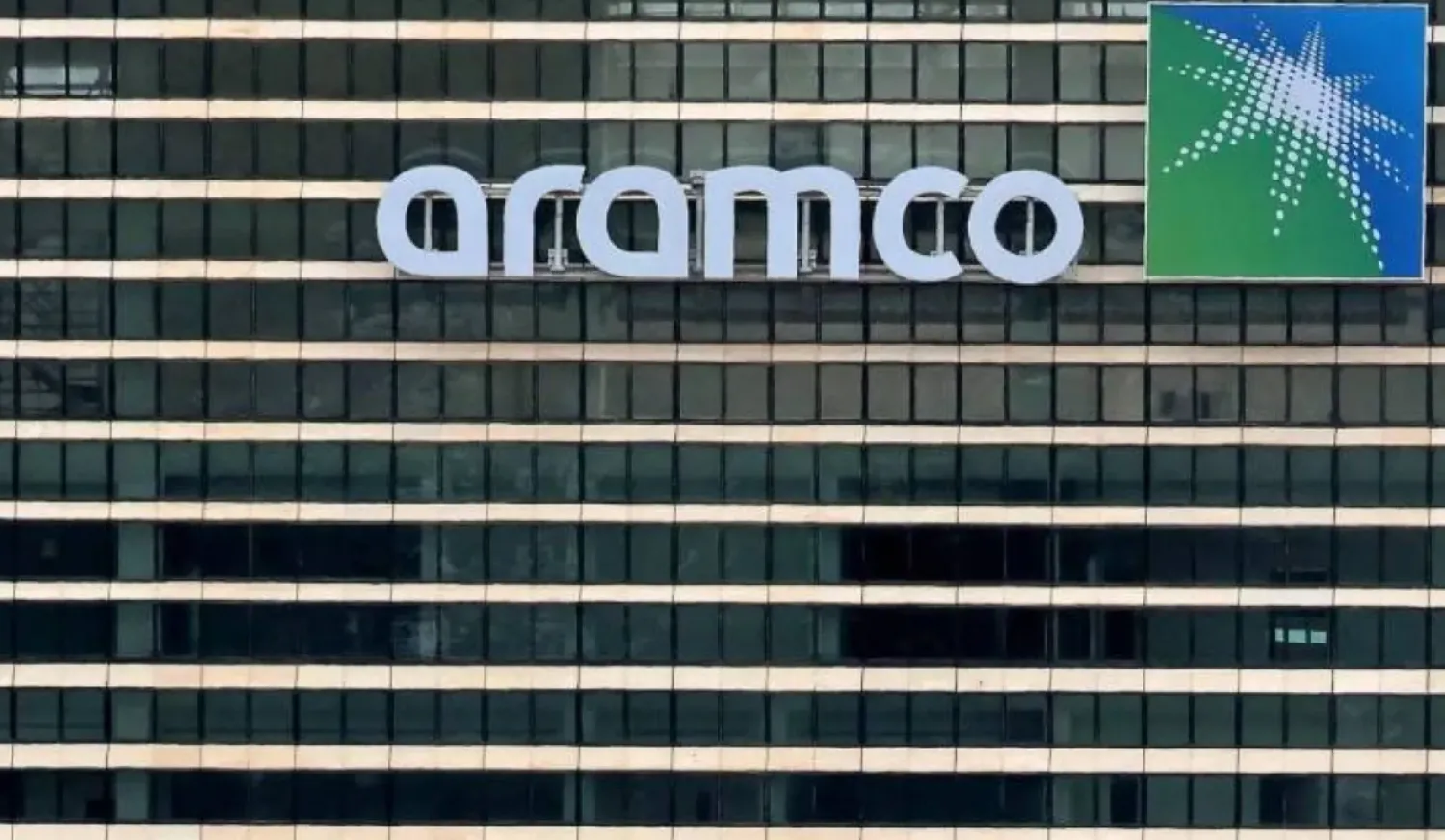

Aramco’s Gas Strategy Builds Momentum with Major Progress Towards Growth Target

This picture shows Aramco tower at the King Abdullah Financial District (KAFD) in Riyadh on April 16, 2023. (Photo by Fayez Nureldine / AFP)
TT

Aramco’s Gas Strategy Builds Momentum with Major Progress Towards Growth Target

This picture shows Aramco tower at the King Abdullah Financial District (KAFD) in Riyadh on April 16, 2023. (Photo by Fayez Nureldine / AFP)

Aramco announced Thursday major progress in its ambitious gas expansion strategy, with the start of production at Jafurah, the Middle East’s largest unconventional gas field, and the commencement of operations at Tanajib Gas Plant, one of the largest gas plants in the world.

This will contribute to Aramco’s plan to increase sales gas production capacity by approximately 80% by 2030, over 2021 production levels, reaching approximately 6 million barrels of oil equivalent per day of total gas and associated liquids production. This is expected to generate incremental operating cash flows of $12 billion to $15 billion in 2030, subject to future sales gas demand and liquids prices, SPA reported.

Aramco President and CEO Amin H. Nasser said: “Jafurah and Tanajib significantly strengthen Aramco’s gas portfolio and expand our capacity at scale. These projects are a major step forward for our company and for the Kingdom’s energy future.

Gas is central to our long-term growth strategy. It is expected to generate substantial earnings, meet rising domestic demand, support development across key sectors, and deliver significant volumes of high-value liquids. Together, these investments make Aramco stronger, more diversified, and better positioned to deliver sustained value to our shareholders. We value the continued leadership and support of the Ministry of Energy in advancing these strategic projects.”

Gas from Jafurah is expected to support the Kingdom’s broader growth ambitions across key sectors such as energy, artificial intelligence, and major industries, including petrochemicals, potentially providing a significant boost to the economy and solidifying Saudi Arabia’s position as one of the world’s top 10 gas producers.

Aramco began producing the first unconventional shale gas at Jafurah in December 2025, with technology playing a key role in unlocking Jafurah’s potential and establishing it as a global benchmark for unconventional gas development. Since its inception, the project has leveraged technology to reduce drilling and stimulation costs and boost well productivity, contributing to its strong economic outlook.

Covering an area of 17,000 square kilometers, Jafurah is estimated to contain 229 trillion standard cubic feet of raw gas and 75 billion stock tank barrels of condensate. By 2030, it aims to deliver 2 billion standard cubic feet of sales gas per day, 420 million standard cubic feet of ethane per day, and approximately 630,000 barrels of high-value liquids per day.

Tanajib Gas Plant is a key component of Aramco’s strategy to increase gas processing capabilities and diversify its energy product portfolio, thereby supporting long-term economic growth. Operations commenced in December 2025, and it is expected to reach a raw gas processing capacity of 2.6 billion standard cubic feet per day in 2026.

The commencement of operations at Tanajib coincided with the start of production at Aramco’s Marjan crude oil increment. The plant, which features digital integration, enhanced operational efficiency, complex project delivery, and maximum resource utilization, processes associated raw gas from crude oil production at the offshore Marjan and Zuluf oil fields.

Aramco’s gas expansion is expected to create thousands of direct and indirect job opportunities, potentially generating substantial added value and reinforcing Aramco’s position as a reliable energy supplier.

In addition to helping meet rising demand for natural gas and enhancing supplies to national industries, Aramco’s gas growth strategy supports efforts to achieve a more optimal energy mix for domestic electricity production. It also advances the Kingdom’s liquid fuel displacement program, complements the Kingdom’s 2060 net-zero ambition, reinforces energy security, and contributes to the development of a diverse national economy.



Gold Drops Below Key $4,000 Level as Dollar Firms, Rate Hike Bets Rise

FILED - 16 March 2023, Bavaria, Munich: FILE PHOTO - Gold bars and coins lie on the table at the Precious metal dealership Pro Aurum. Photo: Sven Hoppe/dpa
TT

Gold Drops Below Key $4,000 Level as Dollar Firms, Rate Hike Bets Rise

FILED - 16 March 2023, Bavaria, Munich: FILE PHOTO - Gold bars and coins lie on the table at the Precious metal dealership Pro Aurum. Photo: Sven Hoppe/dpa

Gold prices fell more than 3% and traded below a key psychological level of $4,000 per ounce, under pressure from a firmer US dollar and growing expectations of interest rate hikes.

Spot gold fell 3.4% to $3,968.41 an ounce as of 1312 GMT, after hitting its lowest level since November 2025.

US gold futures declined nearly 4% to $3,984.40.

The US dollar firmed, making dollar-priced bullion more expensive for holders of other currencies.

Traders have ramped up bets on US interest rate hikes this year after the US central bank struck a hawkish tone at its latest policy meeting and as fears of inflationary pressures stemming from the Iran war persist.

"The market pricing a rate hike as soon as September due to a hawkish Fed, a surging dollar at 13-month highs combined with lower inflation expectations are putting heavy pressure on precious metals," Tai Wong, an independent metals trader, said.

"For gold, there is support just under $3,900 and central bank purchases continue, so a collapse is unlikely, but expect a potentially long period of consolidation as the gold trade is now out of favor," he added.

Gold becomes less attractive to investors when interest rates rise because it offers no yield.

Spot gold, which scaled a record peak of $5,594.82 in late January, has since shed over $1,600 an ounce.

ING analysts cut their gold forecasts, now expecting prices to average $4,300 an ounce in the third quarter of 2026 and $4,600 in the fourth, compared with their previous projections of $4,850 and $5,000, respectively, according to Reuters.

Investors are also awaiting US Personal Consumption Expenditures data, the Fed's preferred inflation measure, due on Thursday for further signals on the monetary policy outlook.

More hawkish signals from Fed officials or economic data that supports the argument for higher rates may translate to further downside risk for gold, said Lukman Otunuga, senior research analyst at FXTM.

Among other metals, spot silver fell 6% to $58.28 per ounce after hitting its lowest level since December 2025.

Platinum lost 4.3% to $1,580.76, and palladium dropped 4.9% to $1,177.50.


Oil Extends Slide to More than 1% on Expectations of Smoother Crude Flows via Hormuz

Storage tanks for crude oil, gasoline, diesel, and other refined petroleum products in Carson, California (Reuters)
TT

Oil Extends Slide to More than 1% on Expectations of Smoother Crude Flows via Hormuz

Storage tanks for crude oil, gasoline, diesel, and other refined petroleum products in Carson, California (Reuters)

Oil prices fell more than 1% on Wednesday, extending this week's losses to hit fresh four-month lows on signs that more oil tankers are set to move out of the Strait of Hormuz.

Brent crude futures were down $1.37, or 1.8%, at $75.71 a barrel by 0805 GMT. US West Texas Intermediate slipped by $1.08, or 1.5%, to $72.13.

Brent touched a low of $75.60, its weakest level since February 27, the day before the initial US-Israeli strikes on Iran. WTI fell as low as $72.03, the weakest since March 3.

"While there are early encouraging signs of increased tanker activity, the market is pricing in the broader scenario of Iranian oil re-entering the global market and the Strait of Hormuz normalising," said Tim Waterer, chief market analyst at KCM Trade.

"If sanctions are eased, Iranian production and exports could ramp up relatively quickly given the substantial amount stored on tankers — we are likely talking weeks rather than months," Waterer added, Reuters reported.

Prices have also come under pressure this week from the 60-day sanctions waiver Washington granted Tehran after initial peace talks, allowing Iran to sell oil, and from an easing of hostilities in Lebanon, with prices approaching pre-war levels.

Ship-tracking data showed that three stranded supertankers passed through the strait on Tuesday. The UN shipping agency said an evacuation plan is under way to enable hundreds of stranded ships to sail through the strait after the US-Iran ceasefire deal.

On Tuesday, Oman and Iran agreed to press on with discussions about managing navigation in the strait. US Secretary of State Marco Rubio said that any attempt by Iran to levy transit fees would violate international law.

Uncertainty remains over the durability of the accord, however. US President Donald Trump said on Tuesday that Iran had agreed to nuclear inspections into "infinity", though Tehran said it had made no such concession.

"Markets are currently assigning too much confidence to a favorable outcome without fully discounting the risks associated with unresolved nuclear issues and inspection disputes," said Mark Malek, CIO at Siebert Financial.

Investors are also watching how quickly Middle Eastern producers can restore exports and whether more ships will enter the region.

Meanwhile, US crude stocks fell by 765,000 barrels in the week to June 19, market sources said, citing data from the American Petroleum Institute.

Nine analysts polled by Reuters estimated, on average, that crude inventories fell by about 4.5 million barrels in the past week.


Saudi Real Estate Sector Prepares for a New Wave of Foreign Investment

Saudi Arabia's capital, Riyadh (Digital Government Authority)
TT

Saudi Real Estate Sector Prepares for a New Wave of Foreign Investment

Saudi Arabia's capital, Riyadh (Digital Government Authority)

Saudi Arabia’s real estate market is preparing to enter a new investment phase following the approval of the executive regulations governing property ownership by non-Saudis, a move that strengthens the sector’s appeal to foreign capital and opens the door to broader opportunities across residential, commercial, and hospitality projects.

The sector is expected to benefit from a wider investor base, positioning real estate as one of the key drivers of growth within the Kingdom’s expanding economy.

During its session on Tuesday, the Council of Ministers, chaired by the Custodian of the Two Holy Mosques, King Salman bin Abdulaziz, approved the executive regulations for non-Saudi property ownership and endorsed the geographical zones in which non-Saudis will be permitted to own real estate.

Minister of Municipalities and Housing Majed Al-Hogail said the Cabinet’s approval of the executive regulations and designated ownership zones marks an important step toward launching a new phase for the Saudi real estate market.

The sector is entering a new stage as the impact of the non-Saudi property ownership framework begins to take shape in market activity. Specialists expect the influx of new investments to encourage developers to expand supply and improve the quality of real estate products.

Experts believe the next phase will not be limited to growing demand. It is also expected to intensify competition among projects, enhancing market efficiency and contributing to a stronger balance between supply, demand, and prices.

Stimulating the Market

Khaled Al-Jasser, a real estate specialist and chairman of Amaken International Group, told Asharq Al-Awsat that the move represents a significant boost for the Kingdom’s real estate ecosystem, strengthening investment activity and stimulating market momentum by broadening participation and expanding available opportunities.

According to Al-Jasser, the measure is also expected to increase real estate supply, enhance competitiveness, improve market efficiency, and provide beneficiaries with a wider range of options and more balanced pricing.

The chairman of Amaken International Group added that the initiative enhances the attractiveness of the Saudi real estate market to foreign investors, particularly in light of the Kingdom’s evolving legislative environment and ongoing reforms. These factors support the inflow of foreign capital and reinforce the real estate sector’s position as one of the most promising sectors under the objectives of Vision 2030.

Attracting Capital

For his part, economic analyst Ahmed Al-Shahri told Asharq Al-Awsat that the approval of the executive regulations for non-Saudi property ownership marks a turning point for the market because it addresses a critical issue: transforming real estate from a locally traded asset into a more open investment sector capable of attracting capital.

The significance of the move lies not only in allowing ownership but also in creating a more competitive market capable of attracting developers and investors seeking long-term opportunities in a Saudi economy currently undergoing rapid expansion.

Al-Shahri expects the impact to be reflected in stronger demand for high-quality real estate products, increased appeal of residential, commercial, and hospitality projects, and greater incentives for developers to bring additional supply to market in order to meet the needs of new categories of investors and residents in the Kingdom.

“This means the most significant impact may be seen in the expansion of the market’s overall size, rather than solely in higher prices,” he said.

Price Balance

He continued: “As for prices, the initial phase may support values in the most attractive locations due to the entry of new demand. However, over the medium term, increased supply and stronger competition among developers will serve as an important balancing factor, because a healthy real estate sector is not built on continuous price increases but on the market’s ability to maintain equilibrium between supply and demand.”

Al-Shahri explained that the move could shift the sector from a phase of “product scarcity and rising value” to one defined by “product quality and market competitiveness.” Projects distinguished by location, services, and design will become best positioned to attract investment, while lower-quality developments may face greater pressure to preserve their value.

The non-Saudi property ownership law entered into force on January 22, 2026. The framework consists of 15 articles governing property ownership procedures for foreign individuals, companies, and non-profit entities.