Report: CIA Intel Guided Strikes That Killed Iran Supreme Leader

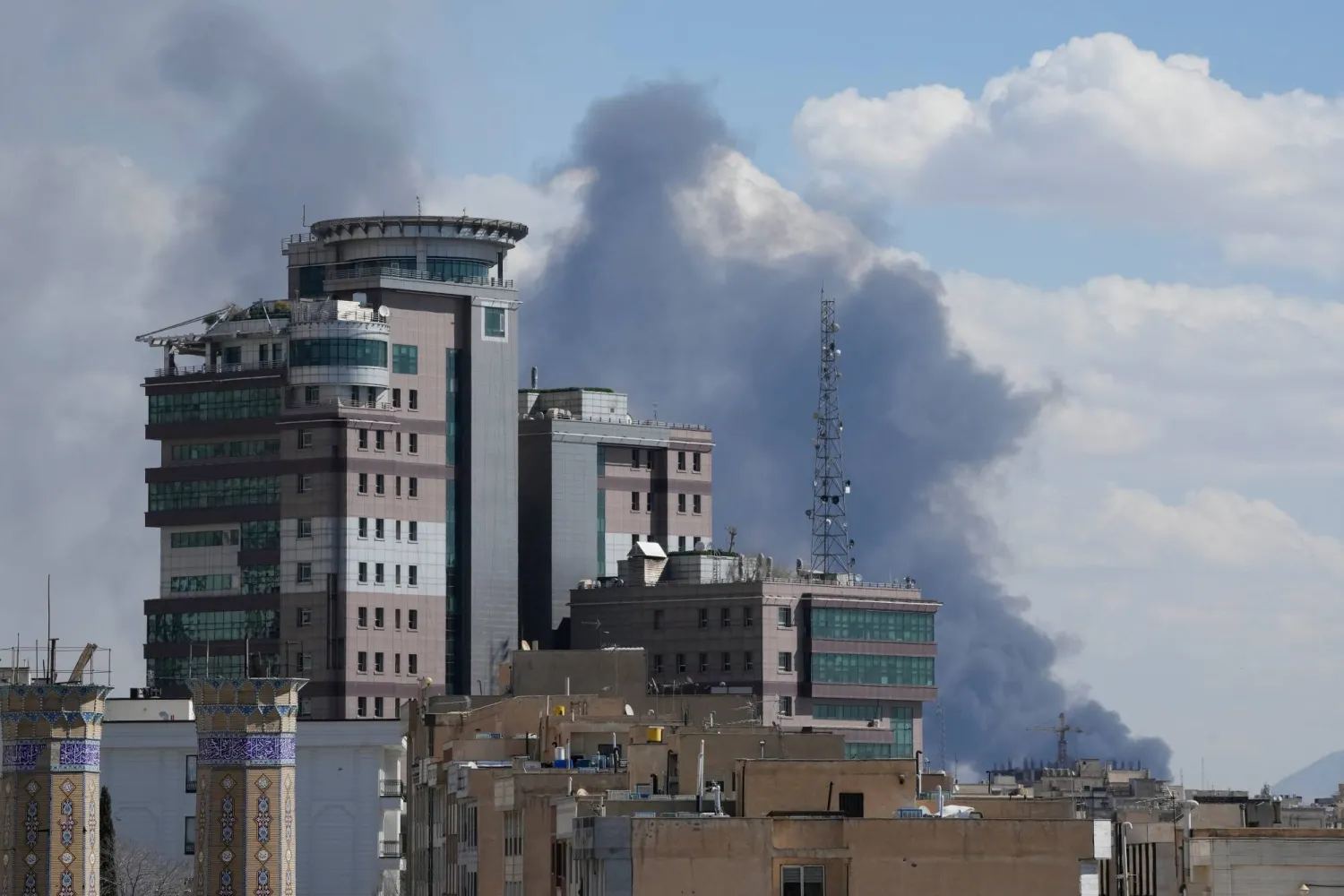
 Smoke rises up after a strike in Tehran, Iran, Sunday, March 1, 2026. (AP)
Smoke rises up after a strike in Tehran, Iran, Sunday, March 1, 2026. (AP)
TT

Report: CIA Intel Guided Strikes That Killed Iran Supreme Leader

 Smoke rises up after a strike in Tehran, Iran, Sunday, March 1, 2026. (AP)
Smoke rises up after a strike in Tehran, Iran, Sunday, March 1, 2026. (AP)

CIA intelligence indicating Ali Khamenei would attend a meeting of top Iranian officials helped guide strikes in a US and Israeli attack that killed Iran's supreme leader, the New York Times reported Sunday.

Khamenei was killed in the strikes on capital Tehran, Iranian state media confirmed Sunday, after the US and Israel vowed to seek regime change in the country.

The American intelligence agency had been tracking Khamenei for months, the Times reported, citing people familiar with the operation, and learned that a meeting of top Iranian officials was set for Saturday morning at a leadership compound in the heart of Tehran.

Washington and Tel Aviv originally planned to launch strikes on Iran at night, but officials adjusted the plan based on the CIA intelligence, according to the Times.

The US gave the information to Israel, who planned to carry out the attack on Iranian leadership, the newspaper reported.

The operation began about 6:00 am in Israel (0400 GMT), and long-range missiles struck the compound about 9:40 am, the Times said.

Senior Iranian national security officials were in one building at the compound, and Khamenei was in a nearby building.

In addition to Khamenei, two top Iranian military leaders were killed in the bombing: the chief of the Revolutionary Guards, General Mohammad Pakpour, and another top security adviser, Ali Shamkhani, Iran's judiciary confirmed.

Iran has since retaliated, with reported strikes across the Gulf, including near regional US military bases, as the threat of a larger regional conflict grows.

US President Donald Trump, meanwhile, has said the American military's bombing will continue "as long as necessary."


IAEA: Turbine Building at Ukrainian Nuclear Plant Attacked

An image showing part of the Russian-controlled Zaporizhzhia nuclear power plant in southeastern Ukraine (Reuters file photo)
TT

IAEA: Turbine Building at Ukrainian Nuclear Plant Attacked

An image showing part of the Russian-controlled Zaporizhzhia nuclear power plant in southeastern Ukraine (Reuters file photo)

The International Atomic Energy Agency (IAEA) on Saturday said it has been informed by the Zaporizhzhia nuclear power plant in southeastern Ukraine that a drone struck ⁠a turbine building ⁠at the site, reportedly causing a hole in its wall.

IAEA chief ⁠Rafael Grossi expressed serious concern about the reported incident and said "Attacking nuclear sites is like playing with fire."

The IAEA’s team at the Russian-held power ⁠plant ⁠has requested access to examine the affected turbine building first-hand, the agency said in an X post.


Did Iran Use Chinese Missile to Shoot Down a US Fighter Jet Last Month?

This handout photo provided by Iran's Revolutionary Guard Corps (IRGC) official website Sepah News on April 5, 2026 reportedly shows the wreckage and remains of targeted and crashed aircraft in central Iran. (Photo by SEPAH NEWS / AFP)
TT

Did Iran Use Chinese Missile to Shoot Down a US Fighter Jet Last Month?

This handout photo provided by Iran's Revolutionary Guard Corps (IRGC) official website Sepah News on April 5, 2026 reportedly shows the wreckage and remains of targeted and crashed aircraft in central Iran. (Photo by SEPAH NEWS / AFP)

The F-15 fighter that was shot down over southwestern Iran last month and set off a dangerous rescue mission was probably struck by a Chinese-made shoulder-launched missile, three people with knowledge of the matter told NBC News on Saturday.

In the early days of the conflict, China also may have provided Iran with a long-range early-warning radar that spots stealth aircraft that are meant to evade detection, according to one of the people and a US official with knowledge of the matter.

US officials are still investigating the circumstances around the shootdown of the American F-15E Strike Eagle in April, the sources said. It was the first time in decades that a US fighter was downed by enemy fire.

It’s not clear when the military equipment was handed over.

But Iran’s use of weapons made in China complicates Americans’ relationship with Beijing at a time when President Donald Trump has sought China’s help in ending the conflict.

At the time the plane was downed last month, Trump said it was struck by a shoulder-launched missile.

About 2.1 meter-long and weighing around 18 kilograms, the weapons, also known as “man-portable air defense weapons,” or “Manpads,” provide an inexpensive, effective way to take down low-flying aircraft.

The two-man crew of the F-15 jet safely ejected from the aircraft over Iran. The pilot was rescued within seven hours, but it took two days to locate and rescue the weapons systems officer, who hid in the foothills of the Zagros Mountains, according to the Pentagon.

Asked about the shootdown of the F-15, a spokesperson for the Chinese Embassy said in a statement: “China always acts prudently and responsibly on the export of military products, and exercises strict control in accordance with China’s laws and regulations on export control and due international obligations. China opposes groundless smear and ill-intentioned association.”

US intelligence reporting suggests China was planning to provide new air defense weaponry to Iran in coming weeks, NBC News reported previously.

US officials may have leaked the intelligence in a possible bid to expose China’s plans, according to former national security officials, a tactic used by previous administrations.

Earlier this month, the Trump administration accused China of allowing Iran access to Chinese satellites to help Tehran target US forces in the region.

The State Department imposed sanctions on three Chinese satellite companies that it said were providing imagery and data to enable Iran to launch attacks against US forces in the Middle East. China denied the accusation.

The US is aware of everything that China is doing to support Iran, according to the US official who had knowledge of the discussions, who said that China supported Iran before the war and any assistance during the ongoing conflict has not made a difference on the battlefield.

“It was not significant support. There was no decisive operational impact to it,” the US official said.

China once sold large quantities of weapons to Iran in the 1980s and 1990s, including ballistic missiles, anti-ship missiles, tanks, artillery and fighter jets.

But after a UN arms embargo against Iran was introduced in 2006, China backed away from major weapons sales and instead provided components and other technology to Iran that had both civilian and military uses, according to experts and the Stockholm International Peace Research Institute.


Trump Says Iran Has Agreed to No Nuclear Weapons

A man holds an Iranian flag near an anti-US billboard depicting US President Donald Trump and the Strait of Hormuz, in Tehran, Iran, May 30, 2026. Majid Asgaripour/WANA (West Asia News Agency) via REUTERS
TT

Trump Says Iran Has Agreed to No Nuclear Weapons

A man holds an Iranian flag near an anti-US billboard depicting US President Donald Trump and the Strait of Hormuz, in Tehran, Iran, May 30, 2026. Majid Asgaripour/WANA (West Asia News Agency) via REUTERS

US President Donald Trump said he had secured guarantees from Iran that it would not develop nuclear weapons.

Trump has said his priorities for any deal include stopping Iran from any nuclear weapon development and re-opening the blockaded Strait of Hormuz.

"The one guarantee that I have to have is that there will be no nuclear weapons. They've agreed to that, and it was very interesting," he told his daughter-in-law Lara Trump in an interview broadcast on her Fox News program on Saturday night.

But Tehran has previously cast doubt on Trump's assertions and the parties appeared far apart on their key priorities.

Iran has said it requires the release of $12 billion in frozen assets before it moved to substantive talks on issues such as its nuclear program and called earlier Trump comments that its enriched uranium -- a precursor for nuclear weapons -- would be destroyed "baseless", according to Iranian media.

Tehran has also insisted that Lebanon must be included in any end to the war despite ongoing fighting.

After Trump and US officials earlier said they were on the brink of striking a deal, he struck a less urgent tone and hinted at renewed military action in the Fox interview.

"I'm in no hurry," he said. "Slowly but surely we're getting, I think, what we want and if we don't get what we want, we're going to end in a different way."