


UN Demands Swift Probe into Israeli Strikes on Lebanon

A fireball ascends from the site of an Israeli airstrike that targeted an area in Beirut's southern suburbs on March 6, 2026. (AFP)
TT

UN Demands Swift Probe into Israeli Strikes on Lebanon

A fireball ascends from the site of an Israeli airstrike that targeted an area in Beirut's southern suburbs on March 6, 2026. (AFP)

The United Nations on Friday demanded swift investigations into fatal Israeli strikes across Lebanon to decide if they complied with international law.

"Lebanon is becoming a key flashpoint," UN rights chief Volker Turk told reporters in Geneva.

"I call for an immediate cessation of hostilities."

Lebanon has been engulfed by the expanding Middle East war, after the Iran-backed group Hezbollah on Monday fired missiles at Israel to avenge the death of Iranian supreme leader Ali Khamenei.

Israel responded with waves of air strikes, and Thursday night it escalated its response by hitting Beirut's southern suburbs where Hezbollah is active -- after warning the area's hundreds of thousands of residents to flee.

Lebanese Prime Minister Nawaf Salam has warned that "a humanitarian disaster is looming" due to the mass displacement.

Turk said he was particularly worried about Israel's "blanket, massive displacement orders" for Beirut's southern suburbs, the Bekaa region and the full area to the south of the Litani river.

These orders were impacting "hundreds of thousands of people", he said, raising "serious concern under international humanitarian law and in particular when it comes to issues around forced transfer".

Turk's spokeswoman Ravina Shamdasani cautioned that the orders risked amounting to "prohibited forced displacement" under international law.

The mass displacement, coupled with "continued air strikes on different parts of the country, are bringing more misery and suffering to an already weary civilian population", she told reporters.

The Israeli military announced Friday that it had carried out 26 waves of strikes on Beirut's southern suburbs in the past four days.

Late Thursday, Lebanon's health ministry said Israeli strikes since Monday had killed 123 people.

Shamdasani pointed to reports that at least eight people were killed in a strike on a residential building in Baalbek on Wednesday, including three girls and two women, and a family of four reportedly died when a building was struck in the Nabatyeh district on Thursday.

"Prompt and thorough investigations must be conducted, particularly to determine whether such attacks complied with the principles of distinction, proportionality and precaution," she said.

Shamdasani highlighted that "Hezbollah has continued launching barrages of rockets into Israel, striking residential areas in the north and the center of the country, with at least three people reportedly injured".

This, she said, raised "concerns, once again, about indiscriminate attacks against civilians".

She called for "urgent de-escalation", insisting "the sovereignty of Lebanon and the human rights of its people must be respected", she said.
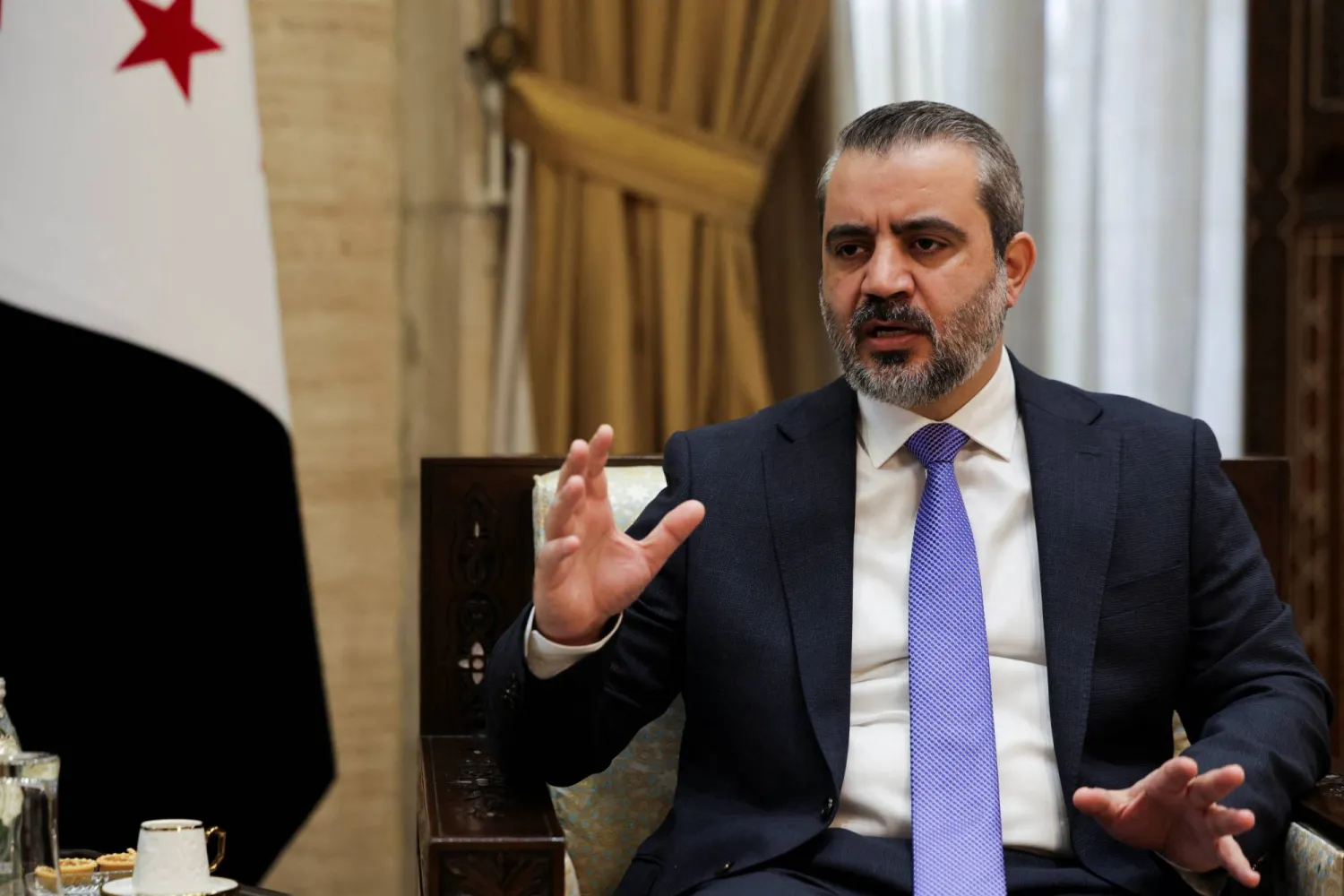



Syria, Israel Hold US-Mediated Talks to Ease Tensions

 Syrian Foreign Minister Asaad al-Shaibani, speaks during an interview with Reuters in Damascus, Syria, August 22, 2026. (Reuters)
Syrian Foreign Minister Asaad al-Shaibani, speaks during an interview with Reuters in Damascus, Syria, August 22, 2026. (Reuters)
TT

Syria, Israel Hold US-Mediated Talks to Ease Tensions

 Syrian Foreign Minister Asaad al-Shaibani, speaks during an interview with Reuters in Damascus, Syria, August 22, 2026. (Reuters)
Syrian Foreign Minister Asaad al-Shaibani, speaks during an interview with Reuters in Damascus, Syria, August 22, 2026. (Reuters)

Syria and Israel held high-level, US-mediated talks in Jordan on Sunday aimed at easing tensions following recent Israeli strikes on Syrian territory, Syria's state news agency SANA reported, citing a diplomatic source at the foreign ministry.

The talks focused on practical mechanisms to halt Israeli strikes, arrests and targeted operations, and on reviving negotiations towards a security ‌agreement that could ‌lay the groundwork for a broader future accord, SANA ‌said.

The ⁠two sides also discussed ⁠efforts to ease tensions between Israel and Türkiye and to prevent their rivalry from spilling onto Syrian territory.

A diplomatic source and a Syrian government source told AFP that Foreign Minister Asaad al-Shaibani met the head of Israel's Mossad intelligence agency Roman Gofman.

Shaibani told Reuters on Saturday that Damascus expected security negotiations with Israel to resume soon, although he added that there was a lack of trust between them.

Talks had been suspended since the start of the Iran war, while Syria cut off contact entirely after Israeli strikes on Syria’s Abu al-Duhur airbase ⁠last week, according to Shaibani.

Washington has for more than a ‌year sought to broker a security agreement between ‌Israel and the government of Syrian President Ahmed al-Sharaa.

Shaibani said the two sides had agreed ‌on paper to “almost everything” around the beginning of the year, including arrangements for security ‌zones in southern Syria and a buffer zone where only United Nations forces would be present, but Damascus doubted Israel's willingness to implement the agreement.

The Israeli prime minister's office did not reply to a request for comment on Shaibani's remarks.

At Sunday’s meeting, SANA said, Syria indicated ‌that its immediate priorities remained an Israeli withdrawal to positions held before Bashar al-Assad's overthrow on December 8, 2024, and the full ⁠restoration of a ⁠1974 disengagement agreement.

Damascus also told the Israeli delegation it would not accept arrangements restricting its right to rebuild and develop its armed forces or determine its alliances and partnerships, SANA said.

Syria reiterated that the Israeli-occupied Golan Heights were Syrian territory but said discussions over the region's final status were premature, according to the SANA report.

Israel has carried out repeated strikes on Syrian military sites since Assad's fall, saying its actions were necessary to protect its security.

Syria has denied posing a threat to Israel and has demanded an end to Israeli strikes and incursions.

Syria and Israel have technically been at war since 1948. Israel captured the Golan Heights from Syria in the 1967 Six-Day War and later annexed it, a move recognized by the United States but not by most of the international community.

Security agreement

In his interview with Reuters on Saturday, Shaibani said Syria respected Israel's security concerns, but that Israel must respect those of Syria, including Israel's use of its airspace, Israeli raids and arrests in the south.

He said that around the ‌beginning of the year, the sides had "agreed on paper to almost everything" regarding a security deal that would require Israel to stop attacking Syria and was tied to its withdrawal from ⁠territory seized after Assad fell.

The ⁠deal would include several security zones in Syrian territory near the Israeli border, including a buffer zone where only the United Nations would be present, and others where Syrian forces would deploy in varying degrees of force.

But he said Israel had sought to evade implementation, adding: "We did not see they had the real will to reach an agreement."

The priority now is to "stop Israeli aggression even before reaching a security agreement", Shaibani said. "Then perhaps we can open the topics of peace and the Golan."

US special envoy for Syria Tom Barrack said on Tuesday that Washington was working to establish a mechanism to prevent conflict among Syria, Türkiye and Israel.

Shaibani said there was no agreement yet on the mechanism, which he said must stop attacks and pave the way for the security deal rather than "entrenching ... Israeli occupation."

Shaibani said negotiations over the security agreement had been frozen since the start of the Iran war, but he expected ‌them to restart. Contact ‌between Syria and Israel was cut after the airbase strike, he said.

"We believe there should be ‌contact, ⁠especially with a ⁠party that constantly threatens the security of Syria. But if this contact doesn’t bring results, then we don’t need it," Shaibani said. "We do not trust Israel currently."

"Israel has tried to maintain its security through brute force and it hasn’t succeeded" anywhere, ‌Shaibani said. "I believe negotiations will resume soon."

No date has been set.

"The US is trying ‌continuously to put pressure on Israel to return to the dialogue table," he added.

Asked how optimistic he was, Shaibani said: "It’s very hard to bet on ‌Israel." But Syria had "very great hope" of building stable relationships with its neighbors.

"Syria is extending its hand for understandings, for peace, for ‌diplomacy" and regional stability.


10 Convicted of Terrorism-Related Crimes Executed in Eastern Libya

Military Prosecutor General of the General Command of the Libyan National Army (LNA). Photo: General Command
TT

10 Convicted of Terrorism-Related Crimes Executed in Eastern Libya

Military Prosecutor General of the General Command of the Libyan National Army (LNA). Photo: General Command

Authorities in eastern Libya have carried out execution sentences by firing squad against 10 individuals convicted of “terrorist crimes” and assassinations targeting military personnel and civilians.

In a statement issued Sunday, the Office of the Military Prosecutor General of the General Command of the Libyan National Army (LNA) said the executions were carried out pursuant to rulings by the Supreme Military Court following deliberations that lasted several years.

The statement stressed that the trials had fulfilled all legal requirements, including prosecution and defense procedures.

According to the military prosecutor, the charges ranged from membership in banned terrorist organizations to carrying out assassinations against military personnel and civilians.

He said the executions were intended to achieve justice and deter anyone considering joining organizations designated as terrorist groups both locally and internationally.

The prosecutor’s office added that all legal and executive procedures necessary to enforce the final and binding court rulings had been completed in line with applicable Libyan legislation.

Human rights activists said those executed had been incarcerated at Al-Qarnada Military Prison in eastern Libya and raised questions regarding the status of other defendants and the methods used in their trials, particularly since the military prosecutor’s statement did not provide such details.

Local media, citing a security source, reported that the executions were carried out after the detainees had been tried before a military court and that their families had been informed to collect their bodies from 1200 Hospital in Benghazi.


Sudanese Powers Reject Burhan’s Call for National Dialogue

Nairobi Declaration forces meet in Addis Ababa on Sunday. (Nairobi Declaration forces)
TT

Sudanese Powers Reject Burhan’s Call for National Dialogue

Nairobi Declaration forces meet in Addis Ababa on Sunday. (Nairobi Declaration forces)

Sudanese political and civilian powers rejected on Sunday the call for dialogue by Chairman of the Transitional Sovereignty Council and Commander of the Sudanese Army Abdel Fattah al-Burhan.

After two days of discussions in the Ethiopian capital Addis Ababa, the powers said the dialogue consolidates division in Sudan.

Earlier this month, al-Burhan declared that he was agreeing to an initiative to form an independent national mechanism that would prepare “comprehensive dialogue”. He vowed to provide legal, security, political and logistic guarantees for the participants, saying no foreign powers would be involved.

While agreeing to the dialogue, al-Burhan also rejected peace that would return the paramilitary Rapid Support Forces (RSF) and its supporters to power.

Peace begins with the RSF laying down its weapons, otherwise the army will continue its operations against it, he warned.

In a statement on Sunday, the gatherers in Addis Ababa said that any political process run from areas controlled by one of the warring parties, and under its protection, seeks to grant political legitimacy to military rule and empower members of the ousted regime

The talks in Ethiopia included that Nairobi Declaration forces of the Somoud civilian alliance, led by former Prime Minister Abdalla Hamdok, Arab Socialist Baath Party, Sudan Liberation Movement faction, led by Abdul Wahid al-Nur, National Umma Party, led by Mubarak al-Fadil, and other independent national figures and civilian and youth organizations.

The gatherers agreed on a document that stresses the importance of humanitarian efforts, a ceasefire and political process, which should be based on negotiations under independent parties.

These parties must include civilian and political forces that are opposed to the war and the parties that are allied with the army and RSF.

They agreed that the role of the two warring parties should be limited to the humanitarian and security tracks, excluding the political one, and that the “National Congress” party and its front, the Islamic Movement”, must be completely barred from the peace process.

They considered the roadmap proposed in August 2025 by the Quad nations – Saudi Arabia, the United States, the United Arab Emirates, and Egypt - to be the best reference for the peace process.

They agreed to form a joint committee to develop understandings and coordinate positions among anti-war factions.