Iraqi Oil Production Collapses as Hormuz Still Blocked by US-Iran War, Sources Say

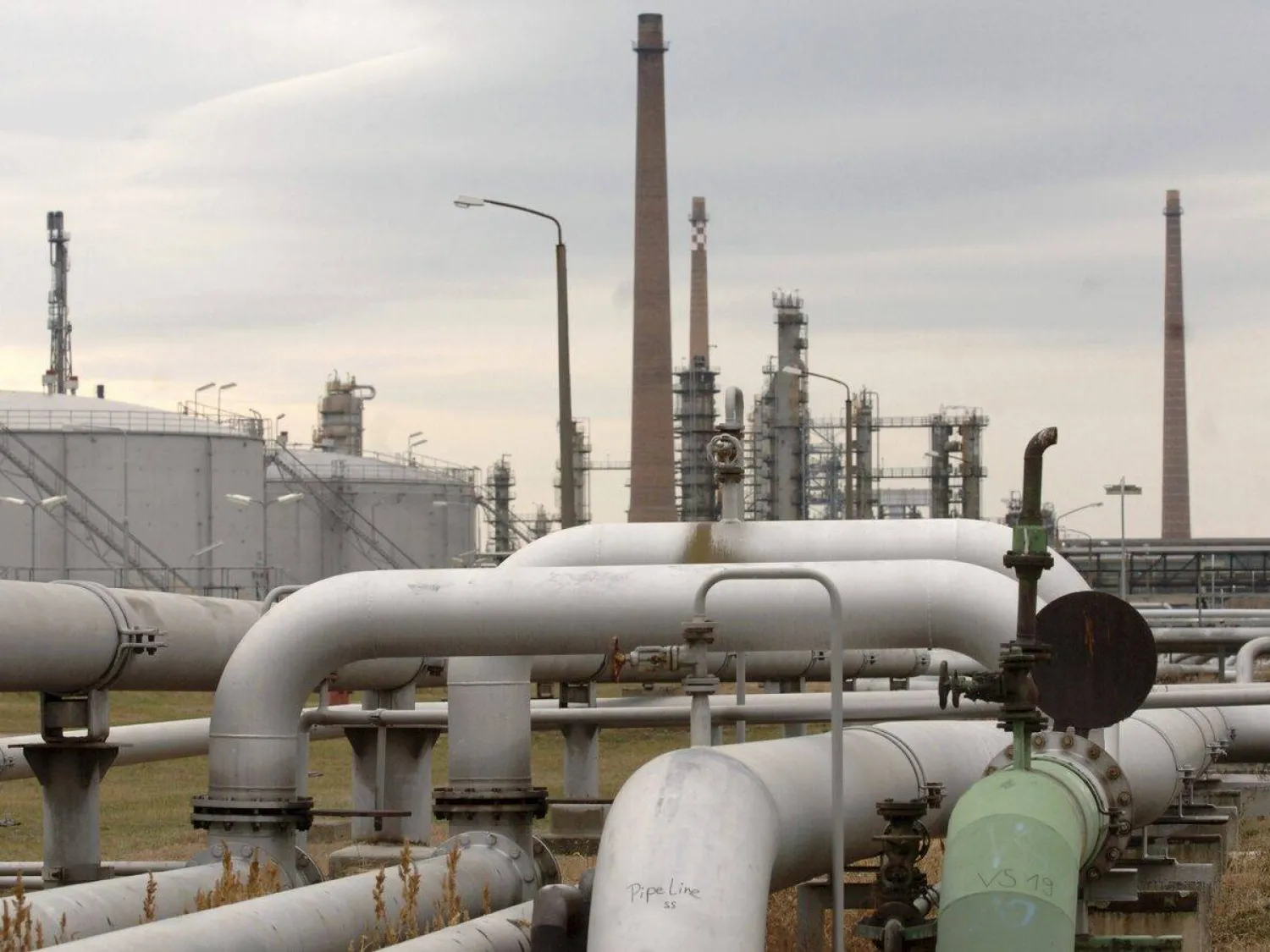
Pumping station at the end of the Druzhba oil pipeline in Schwedt, Germany (AP)
TT

Iraqi Oil Production Collapses as Hormuz Still Blocked by US-Iran War, Sources Say

Pumping station at the end of the Druzhba oil pipeline in Schwedt, Germany (AP)

Iraqi oil production from its main southern oilfields has fallen by 70% to just 1.3 million barrels per day as the country is unable to export oil via the Strait of Hormuz due to the Iran war, 3 industry sources said on Sunday.

According to Reuters, production from the fields stood at around 4.3 million bpd before the war.


Saudi Ports: A Lifeline for Global Trade in an Era of Turbulence

Jeddah Islamic Port (Mawani)
TT

Saudi Ports: A Lifeline for Global Trade in an Era of Turbulence

Jeddah Islamic Port (Mawani)

Amid rising geopolitical tensions in the Arabian Gulf and disruptions to vital shipping routes through the Strait of Hormuz, Saudi Arabia’s ports have emerged as an alternative artery, not only for the region but for global trade.

Designed with advanced infrastructure and high operational capacity, these ports are increasingly seen as an international logistics hub capable of safeguarding energy flows and supply chains at a time when the global economy faces unprecedented security challenges.

Highlighting their growing logistical importance, the Saudi Ports Authority (Mawani) recently announced the addition of two new maritime shipping services at Jeddah Islamic Port in partnership with shipping giants Maersk and Hapag-Lloyd.

The move strengthens maritime connectivity between Saudi Arabia and global markets. The new routes include Maersk’s AE19 service and Hapag-Lloyd’s SE4 service, each with a capacity of about 17,000 twenty-foot equivalent units (TEUs). The services significantly boost the port’s operational efficiency and competitive position.

Through these routes, Jeddah Islamic Port will be connected to nine major regional and international ports, including Tianjin Xingang, Qingdao, Ningbo and Shanghai in China; Busan in South Korea; Tanjung Pelepas in Malaysia; and Singapore.

The network also extends to strategic hubs in the western and eastern Mediterranean, as well as routes reaching South Africa via the Cape of Good Hope, enhancing the flexibility of intercontinental cargo movement.

Saudi energy giant Saudi Aramco recently revealed a significant shift in its export strategy, confirming that part of its crude oil exports is now being redirected to the Port of Yanbu on the Red Sea coast.

According to Reuters, Aramco informed buyers of its Arab Light crude that shipments would be loaded from Yanbu instead of Gulf terminals. The decision reflects growing confidence in the Red Sea ports’ capacity to handle large-scale oil flows safely and efficiently, away from the volatility of Gulf shipping lanes.

Saudi Arabia’s strategic shift relies on an integrated port network managed by the Saudi Ports Authority, which oversees 290 berths equipped with advanced technology. These ports serve not only as logistics gateways but also as vital arteries ensuring the steady flow of oil and essential goods.

Their importance is amplified by the Kingdom’s geographic location linking Asia, Europe and Africa, offering Saudi Arabia significant flexibility in responding to regional or global disruptions. Beyond operational efficiency, the port system has also become a cornerstone for attracting foreign investment. By positioning itself as a reliable and sustainable hub for global trade, Saudi Arabia aims to guarantee secure maritime traffic and more resilient supply chains amid geopolitical uncertainty.

Jeddah Islamic Port remains the kingdom’s principal commercial gateway and the largest hub port on the Red Sea. Located along one of the world’s most important maritime corridors, it serves as a key link connecting trade between Asia, Europe and Africa.

The port covers about 12.5 square kilometers and includes 62 berths along with two specialized container terminals capable of accommodating vessels carrying up to 19,800 TEUs. It handles more than 130 million tons of cargo annually, accounting for roughly 75 percent of Saudi Arabia’s maritime trade.

Major terminals include Red Sea Gateway Terminal and the South Container Terminal, both undergoing continuous expansion with smart systems and automation to enhance efficiency in cargo handling, storage, customs clearance and ship services. The port maintains direct links with European, Asian and African ports.

King Abdullah Port, located in King Abdullah Economic City north of Jeddah, has emerged as one of the world’s most advanced transshipment hubs. Spanning 20 square kilometers within a broader economic zone of 168 square kilometers, it serves as a key node on the East–West trade route linking Asia, Europe and Africa.

The port has an annual container handling capacity of 25 million TEUs, placing it among the largest container ports globally. Equipped with high-capacity cranes, smart gate systems and automated guided vehicles, the facility is designed to handle the world’s largest cargo ships efficiently.

King Fahd Industrial Port in Yanbu is the largest facility on the Red Sea for loading crude oil and petrochemical products, with a handling capacity of 210 million tons annually.

Yanbu Commercial Port is one of the oldest ports on Saudi Arabia’s western coast and represents the kingdom’s second maritime gateway for pilgrims after Jeddah. Officially opened in 1965 during the reign of King Faisal, it lies between Duba Port to the north and the industrial and Jeddah ports to the south. The port is linked by modern road networks to Madinah and Makkah, strengthening its strategic role within the Red Sea port system.

Duba Port serves as a northwestern gateway handling both passengers and cargo with an annual capacity of about 10 million tons.

Jazan Port, located in southern Saudi Arabia, ranks third in design capacity among ports on the Saudi Red Sea coast. It is also the kingdom’s primary entry point for livestock imports from the Horn of Africa and sits about 266 miles from the Bab el-Mandeb Strait.

Ras Al-Khair Port, opened in 2016, is Saudi Arabia’s newest industrial port and serves Ras Al-Khair Industrial City. Connected to mining areas through a dedicated railway, the port exports industrial and mineral products to global markets. It includes 14 berths and supports more than 100 industrial projects operating in the city.

Al-Khafji Port, located on the eastern coast in Saudi Arabia’s Eastern Province, functions primarily as an oil export facility. Its first crude shipment was exported in 1960. The port can accommodate three tankers simultaneously—two for loading and one for unloading—while six additional vessels can wait offshore and up to 30 smaller vessels can dock at its berths.

These expansions and international partnerships align closely with Saudi Arabia’s national development strategy. The Saudi Ports Authority has invested more than 27 billion riyals (about $7.2 billion) in upgrading the infrastructure of major ports and establishing 20 integrated global logistics zones.

These efforts go beyond cargo handling. Technological and structural modernization has enabled Saudi ports to receive the world’s largest container ships with capacities reaching 24,000 TEUs, reinforcing the kingdom’s ambition to become a global logistics hub connecting three continents.

According to logistics expert Hassan Al-Halil, Saudi ports benefit from a unique geographic advantage because they are located close to major international shipping lanes. This proximity allows them to connect Asia, Europe and Africa over shorter sailing distances, creating strong potential for the Kingdom to become a redistribution center for global trade.

Al-Halil noted that Jeddah Islamic Port has long served as Saudi Arabia’s main commercial gateway, with extensive operational experience in handling container traffic. King Abdullah Port, by contrast, was designed from the outset as a modern, scalable facility relying on advanced operational systems and has become one of the fastest-growing container ports in the region.

He stressed that becoming a global trade hub requires more than geographic location. Efficient customs procedures, rapid clearance processes, the capacity to receive mega-ships, and the integration of logistics and industrial zones with ports are equally essential. Seamless connections between ports, road networks and railway infrastructure also play a vital role.

Saudi Arabia has long invested in infrastructure that reduces reliance on the Strait of Hormuz. A key component is the East–West Pipeline, known as Petroline, which transports oil from the kingdom’s eastern fields to the Red Sea coast. The pipeline has a capacity of about 5 million barrels per day and can be increased to roughly 7 million barrels during emergencies.

Yanbu, Al-Halil said, represents a strategic safety valve for Saudi energy exports. The port is capable of exporting between four and five million barrels per day through the Red Sea, ensuring that significant oil flows continue even if shipping through the Strait of Hormuz is disrupted.

The growing focus on Red Sea ports may also benefit Saudi Arabia’s non-oil trade. If global shipping increasingly turns toward the Red Sea as a safer and more stable trade corridor, container and cargo traffic through ports such as Jeddah Islamic Port and King Abdullah Port could increase substantially.

This shift could lead to expanded re-export activity as Saudi ports become distribution centers for Asian goods heading to the Middle East and Africa. It may also stimulate the growth of logistics services such as storage, handling and distribution while increasing demand for trucking and inland transport across the kingdom.

In addition, ports experiencing higher commercial activity often attract related industries, including light manufacturing, assembly operations and regional distribution centers. These developments could strengthen the economic zones surrounding Saudi ports.

As port infrastructure continues to improve and connections to road and rail networks expand, Saudi Arabia may increasingly serve as a major transit hub for goods entering the region rather than simply a destination market. A broader shift of global trade toward the Red Sea could therefore accelerate the expansion of the kingdom’s non-oil trade and support its ambition to become a global logistics hub linking three continents.

Redirecting oil shipments, however, may affect transportation costs. Some cargo bound for Asia from the Red Sea must travel longer distances than shipments departing from the Gulf, which can increase fuel consumption and operating costs. Higher demand at Red Sea ports could also raise service fees or extend vessel waiting times if traffic intensifies.

Marine insurance also plays a role in the cost of transporting oil. Insurers often reassess risk levels when shipping routes change, potentially adjusting premiums or adding surcharges on certain voyages.

Despite these factors, Al-Halil believes the challenges remain manageable. Saudi Arabia’s advanced infrastructure and pipeline network allow crude oil to move quickly to large-scale loading facilities capable of handling significant volumes. Continued upgrades to port capacity, improved vessel traffic management and long-term agreements with shipping and insurance companies are also effective tools for keeping costs under control.

In the short term, modest increases in logistics costs may be the price of strategic flexibility. Ensuring uninterrupted energy supplies to global markets, he said, is ultimately more valuable than marginal differences in shipping costs in a world where energy security remains paramount.


Iran War Sends Shockwaves Through African Fuel Market and Economies

 A motorist fills a container with fuel at a petrol station, as the price of oil and gas has surged amid the conflict in the Middle East, in London, Britain, March 5, 2026 (Reuters)
A motorist fills a container with fuel at a petrol station, as the price of oil and gas has surged amid the conflict in the Middle East, in London, Britain, March 5, 2026 (Reuters)
TT

Iran War Sends Shockwaves Through African Fuel Market and Economies

 A motorist fills a container with fuel at a petrol station, as the price of oil and gas has surged amid the conflict in the Middle East, in London, Britain, March 5, 2026 (Reuters)
A motorist fills a container with fuel at a petrol station, as the price of oil and gas has surged amid the conflict in the Middle East, in London, Britain, March 5, 2026 (Reuters)

Surging oil prices triggered by the war with Iran are rippling across African economies, threatening higher fuel costs, rising inflation and renewed pressure on currencies across the continent.

Africa imports most of the petroleum products it consumes, leaving many economies highly vulnerable to supply disruptions tied to tensions in the Middle East, a region central to global oil flows.

"Africa is a net importer of oil products, meaning it is heavily exposed to shocks like these," said Nick Hedley, an energy transition research analyst at Zero Carbon Analytics.

When global oil supplies tighten, Nedley said, prices rise while African currencies often weaken as investors move funds into safe-haven assets such as the US dollar.

That combination amplifies the impact of price spikes in import-dependent markets such as Kenya and Ghana.

A similar dynamic unfolded after Russia's full-scale invasion of Ukraine in 2022, when rising crude prices and a weakening currency pushed transport fuel prices in South Africa up by more than 25% within six months, Hedley said.

"The near-term risks come from mainly the rising oil prices and weakening exchange rates as investors move to safe-haven assets," said Oxford Economics senior economist Brendon Verster.

Oil markets remain particularly sensitive to the conflict because of the strategic importance of the Strait of Hormuz, a narrow shipping corridor through which about a fifth of the world’s crude passes.

The impact of higher oil prices across Africa will be uneven.

Countries like Kenya and Uganda say their supply remain stable even as they work on ensuring continuity. Nigeria and Ghana produce crude oil but import most of their refined petroleum products, limiting the benefits to them of higher global prices.

"It’s difficult to say at this point whether they will see net gains," Hedley said. "Oil producers could benefit from higher crude prices, but ordinary citizens will likely face higher transport and fuel costs, and potentially higher interest rates."

Still, sustained high prices could bring a windfall for Africa’s major oil exporters. Verster noted that Nigeria exports roughly 1.5 million barrels of oil per day and has based its medium-term fiscal framework on oil prices between $64 and $66 per barrel through 2028.

The war pushed prices above $100 per barrel Monday, a level that if sustained, would significantly boost revenues for exporters including Angola, Algeria and Libya.

For most African households, however, the immediate effect is likely to be higher living costs.

"This is a serious concern," Hedley said, noting that most food and goods across Africa are transported by road. "Rising fuel costs therefore feed quickly into broader inflation and reduce household purchasing power."

Peter Attard Montalto, managing director at South African advisory firm Kruthan said the crisis is also testing African economies.

"So far the impact has really been muted, for countries like South Africa," he said, noting that recent economic reforms have helped stabilize the country’s currency and bond markets.

"Still, higher oil and gas prices are expected to filter into inflation in the coming months," Montalto said.

Countries already operating under programs from the International Monetary Fund could face additional strain as energy import bills drain scarce foreign exchange reserves. Among the most vulnerable, analysts warn are Sudan, The Gambia, Central African Republic, Lesotho and Zimbabwe.

Over the longer term, analysts say the crisis may reinforce calls for African nations to diversify their energy systems and reduce dependence on imported fuels.

"It makes strategic sense for African countries to ensure long-term energy security and sovereignty," said Kennedy Mbeva, a research associate at the Center for the Study of Existential Risk at the University of Cambridge.

Achieving that, Mbeva said, will require balancing short-term fiscal pressures with long-term investments in clean energy and green industrialization.


Bahrain's Bapco Declares Force Majeure after Iran Strikes

Smoke rises after an Iranian drone was intercepted over the Bahrain Financial Harbour towers, which houses the Israeli embassy, amid the US-Israeli conflict with Iran, in Manama, Bahrain, March 6, 2026. Picture taken on a mobile phone. REUTERS/Stringer
TT

Bahrain's Bapco Declares Force Majeure after Iran Strikes

Smoke rises after an Iranian drone was intercepted over the Bahrain Financial Harbour towers, which houses the Israeli embassy, amid the US-Israeli conflict with Iran, in Manama, Bahrain, March 6, 2026. Picture taken on a mobile phone. REUTERS/Stringer

Bahrain's state-owned energy company Bapco declared force majeure after waves of Iranian strikes targeted the country's energy installations, the company said in a statement on Monday.

Bapco "hereby serves notice of force majeure on its group operations which have been affected by the ongoing regional conflict in the Middle East and the recent attack on its refinery complex", said a statement posted by the company.

An eyewitness reported on Monday seeing thick smoke rising from the Bapco oil refinery in Bahrain. The witness added that the smoke engulfed the refinery after the government had earlier announced injuries and damage in the Sitra area following an attack by an Iranian drone.

Bapco is Bahrain’s main oil refinery and a critical facility in the country’s energy sector.