


UK Bans Pro-Palestinian March Over Alleged Iran Support

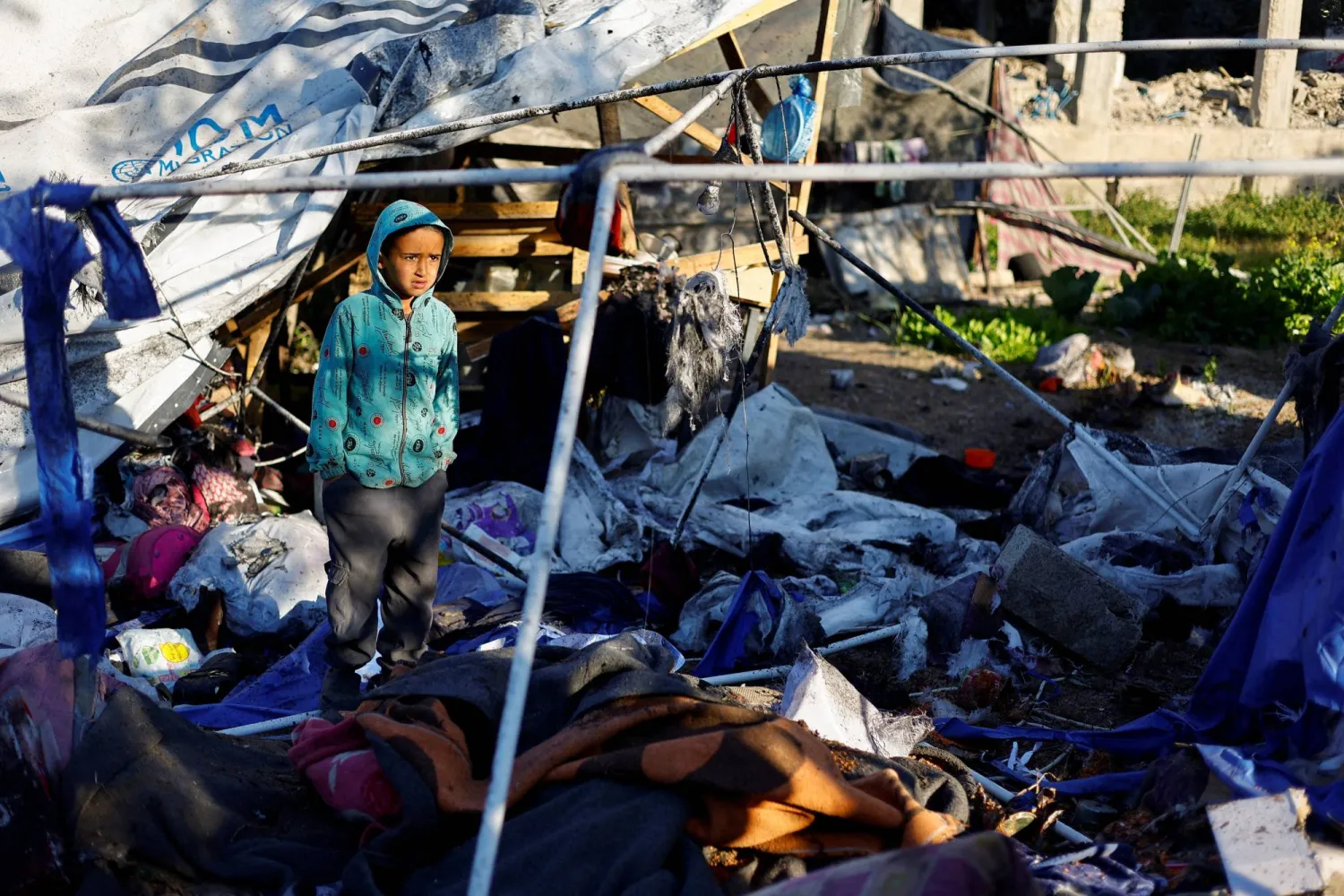
A boy stands at the site of an Israeli strike on a tent sheltering displaced people, in Nuseirat, central Gaza Strip March 9, 2026. REUTERS/Mahmoud Issa
TT

UK Bans Pro-Palestinian March Over Alleged Iran Support

A boy stands at the site of an Israeli strike on a tent sheltering displaced people, in Nuseirat, central Gaza Strip March 9, 2026. REUTERS/Mahmoud Issa

The UK government has banned an annual pro-Palestinian march planned for Sunday which London police claim is organized by a group "supportive of the Iranian regime".

Interior minister Shabana Mahmood said late Tuesday she had approved the rare police request to prevent "serious public disorder" if the Al-Quds Day march and counter-protests had gone ahead.

It is the first time a protest march has been banned since 2012 but a static demonstration will be permitted, according to London's Metropolitan police.

Mahmood said she was "satisfied" a ban was "necessary" due to "the scale of the protest and multiple counter-protests, in the context of the ongoing conflict in the Middle East".

The minister added that she expected to see "the full force of the law applied to anyone spreading hatred and division".

The Islamic Human Rights Commission (IHRC), an NGO which organizes the annual Al-Quds Day march, said it "strongly condemns" the decision, which it called "politically charged".

"We are seeking legal advice and this decision will not go unchallenged," it added, accusing the Met of having "brazenly abandoned their sworn principle of policing without fear or favor".

It said the London force "unashamedly regurgitate Zionist talking points about the IHRC "without a shred of evidence".

The group describes the day and march as an "international demonstration ... in support of Palestinians and all the oppressed around the world".

Al-Quds day, which takes its name from the Arabic for Jerusalem, originated in Iran in 1979 in support of the Palestinian people, and is now marked annually in various countries, notably in the Muslim world. It aims to protest Israel's occupation of east Jerusalem.

But the Met's Assistant Commissioner Ade Adelekan said it was "uniquely contentious having originated in Iran and in London is organized by the Islamic Human Rights Commission".

He claimed that the organization was "supportive of the Iranian regime".

"The threshold to ban a protest is high and we do not take this decision lightly," AFP quoted Adelekan as saying.

He noted the Met has "a proven track record" of permitting free speech and protest rights at dozens of major pro-Palestinian and other demonstrations in recent years.

"But in our assessment this march raises unique risks and challenges," he said.

"We must consider the likely high numbers of protestors and counter protestors coming together and the extreme tensions between different factions.

"We have taken into consideration the likely impact on protests of the volatile situation in the Middle East, with the Iranian regime attacking British allies and military bases overseas."

The ban on the march and any associated counter-protest marches is valid for a month from Wednesday.



Netanyahu Says Iran 'Tried to Kill' One of his Sons

Benjamin Netanyahu alongside his son Yair (AP file photo)
TT

Netanyahu Says Iran 'Tried to Kill' One of his Sons

Benjamin Netanyahu alongside his son Yair (AP file photo)

Israeli Prime Minister Benjamin Netanyahu said Monday that Iran had attempted to assassinate one of his two sons, without offering further details.

"Something incredible happened: Iran targeted one of my sons. Iran tried to kill one of my sons," Netanyahu said during a phone interview with Israel's Channel 14.

The claim came during a discussion about reports that the Shin Bet domestic security agency had declined to provide a security detail for Gadi Eisenkot, the former army chief who is running neck and neck with Netanyahu ahead of elections on October 27.

Netanyahu voiced support for around-the-clock protection for Eisenkot, saying it was "not a luxury".

"Without that, (the Iranians) will succeed," AFP quoted him as saying.

Netanyahu has two sons and a daughter. It remains unclear which of his sons was allegedly targeted.

His elder son, Yair, 35, has spent extended periods in Miami since early 2024, reportedly under Shin Bet protection.

His stay in the United States has attracted controversy in Israel over the cost to taxpayers of providing security, while some residents in south Florida have expressed concern that his presence could make the area a target for attacks by Israel's enemies.

Shortly after Netanyahu's remarks became public on Monday, prominent Israeli journalist Amit Segal wrote on his Telegram channel that the alleged assassination attempt had been known for "months" but was subject to a gag order.

Israel killed Iranian supreme leader Ali Khamenei in the opening salvo of US-Israeli strikes on February 28, along with some of his family members.

His son Mojtaba, one of Khamenei's six children, was named the new supreme leader a week later.

In a message read out on his behalf on state TV, Mojtaba Khamenei said that in addition to his father, he had lost his wife, his sister, her child and his brother-in-law.

Mojtaba Khamenei has not been seen in public since his appointment, and was reportedly wounded in the same strikes that killed his father.

In another message attributed to him and published on the occasion of funeral ceremonies for his father, the new leader pledged to "avenge the blood" of Ali Khamenei.


US Launches ‘Economic Onslaught’ Against Iran’s Financial Connections

WASHINGTON, DC - AUGUST 24: US Treasury Secretary Scott Bessent announces a new set of sanctions against Iran in the Cash Room at the Treasury Department on August 24, 2026 in Washington, DC. Chip Somodevilla/Getty Images/AFP
TT

US Launches ‘Economic Onslaught’ Against Iran’s Financial Connections

WASHINGTON, DC - AUGUST 24: US Treasury Secretary Scott Bessent announces a new set of sanctions against Iran in the Cash Room at the Treasury Department on August 24, 2026 in Washington, DC. Chip Somodevilla/Getty Images/AFP

US Treasury Secretary Scott Bessent unveiled Monday what he described as an "economic D-Day" that aims to give a final warning to countries to sever their business ties with Iran or risk having key companies and entities cut off from the dollar-based financial system.

"We are launching an economic onslaught against Iran’s financial connections around ⁠the globe. Our ⁠objective is to sever every economic lifeline that sustains this tyrannical regime until Tehran stands alone," Bessent said.

He added that it’s “no longer acceptable to operate in the gray spaces” of the conflict.

He did not name what countries could face potential secondary sanctions from the United States.

“Let there be no ambiguity as to the position of the United States,” Bessent told a news conference. “An economic engagement of any kind with this murderous regime will expose those responsible to the full reach of American power.”

The US Treasury Department has mapped the networks, facilitators, and financial channels that Iran uses to smuggle oil and evade sanctions and said that Washington would be working with US partners to target any source of Iran's "illicit revenue."

The department said it has issued determinations against five sectors -- digital assets, technology, gold, ⁠aviation and shipping -- that the Iranian government is using to prop up its economy. The Treasury has also imposed sanctions on nearly 60 entities, individuals and vessels.

US President Donald Trump's war with Iran, which has pushed energy prices higher worldwide, is about to hit its six-month mark. While heavy fighting has ‌subsided, diplomatic efforts to end the war have stalled and oil and raw material shipping through the Strait of Hormuz ⁠remains blocked, ⁠keeping energy prices elevated.


Trump Says Iran 'Collapsing' Ahead of Sanctions Announcement

Motorcyclists pass a billboard depicting US President Donald Trump with hands around his neck beneath the words "Revenge is inevitable" in Tehran, Iran, Monday, Aug. 24, 2026. (AP Photo/Vahid Salemi)
TT

Trump Says Iran 'Collapsing' Ahead of Sanctions Announcement

Motorcyclists pass a billboard depicting US President Donald Trump with hands around his neck beneath the words "Revenge is inevitable" in Tehran, Iran, Monday, Aug. 24, 2026. (AP Photo/Vahid Salemi)

President Donald Trump said Monday that Iran is "collapsing" hours before the US government was set to announce details of what it says will be crushing sanctions against Tehran.

"IRAN IS COMPLETELY COLLAPSING!!!" Trump posted in his trademark all-caps style on his social media platform Truth Social.

“President Trump decimated Iran’s economy to a point where the rial has never been weaker and inflation has rarely been higher,” US Treasury Secretary Scott Bessent wrote Sunday in an opinion piece in the Financial Times.

“The regime’s final refuge now lies in the self-deception of fearful nations that still believe accommodating aggression can secure a durable peace.”