


Empty Quarter: Reservoir of Energy and Graveyard for Drones

The Empty Quarter lies atop two of the world’s largest oil and gas fields (SPA)
TT

Empty Quarter: Reservoir of Energy and Graveyard for Drones

The Empty Quarter lies atop two of the world’s largest oil and gas fields (SPA)

Stretching across the southern Arabian Peninsula, the Empty Quarter desert spreads like an endless sea of sand. It covers three Saudi administrative regions and extends across four countries, accounting for more than 67% of Saudi Arabia’s sand accumulations and about 22% of the Kingdom’s total land area.

Occupying nearly a fifth of the Arabian Peninsula, the vast desert is viewed by observers as both a reservoir of energy and a graveyard for drones targeting Saudi Arabia. Saudi defense authorities frequently announce interceptions of attacks headed for oil installations in the desert.

The Empty Quarter, one of the world’s largest sand seas, is also among its harshest environments, with temperatures reaching unbearable levels.

National Geographic describes it as a land “tamed only by the most resilient and wise of men despite its harshness,” a testament to the endurance of nomadic Bedouin tribes who forged unique bonds of kinship and marriage across generations.

Beneath the harsh landscape lie immense riches. The Empty Quarter sits atop some of the world’s largest oil and gas reserves. Nearby lie giant fields such as Shaybah, among the world’s largest crude oil fields on the desert’s edge, and Jafurah, Saudi Arabia’s largest unconventional gas field discovered to date. Jafurah alone holds an estimated 200 trillion standard cubic feet of gas and more than 60 billion barrels of condensate.
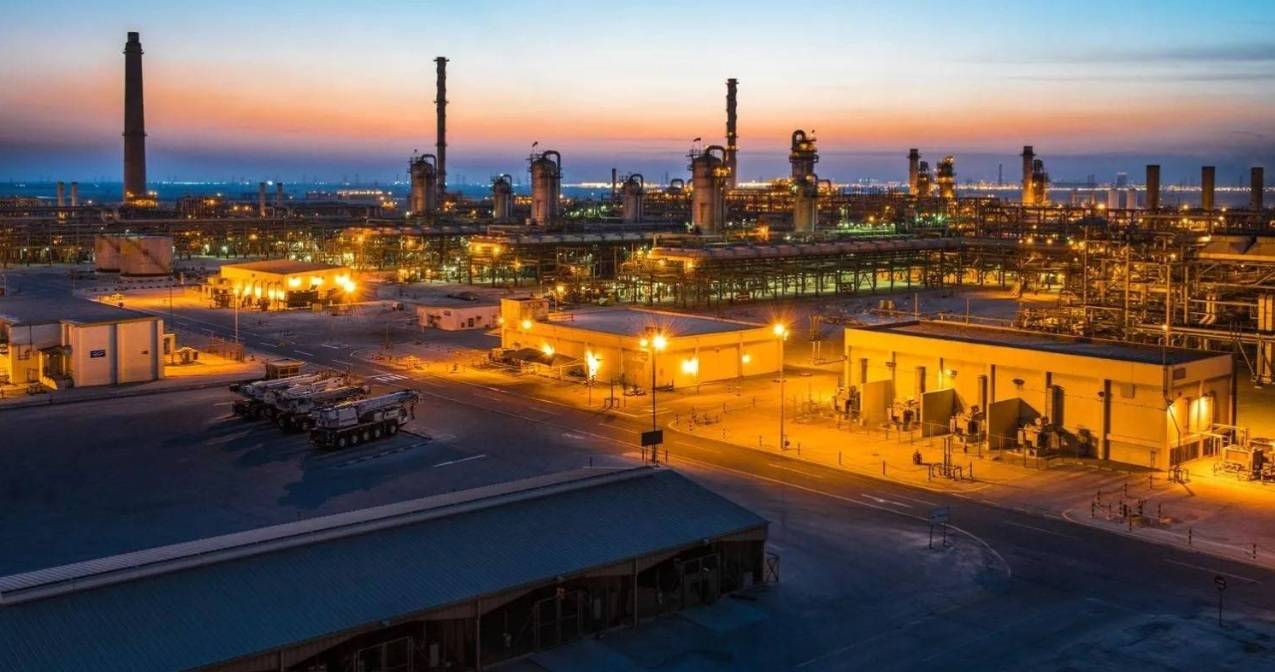
The Jafurah oil field. Aramco

The result is a striking contrast: a silent desert resting above resources that help drive the global economy.

Since March 5, the Empty Quarter has taken on another, unexpected role — a graveyard for drones targeting Saudi Arabia.

In just one week, its sands swallowed more than 63 drones as Saudi defenses carried out 27 interception and destruction operations, preventing them from striking the Shaybah field and reinforcing confidence in the Kingdom’s ability to protect energy supplies and ensure their delivery to global markets.

Ironically, three countries across which the Empty Quarter stretches — Saudi Arabia, which holds about 80% of the desert, along with Oman and the United Arab Emirates to the east, have faced Iranian drone, ballistic missile and cruise missile attacks.
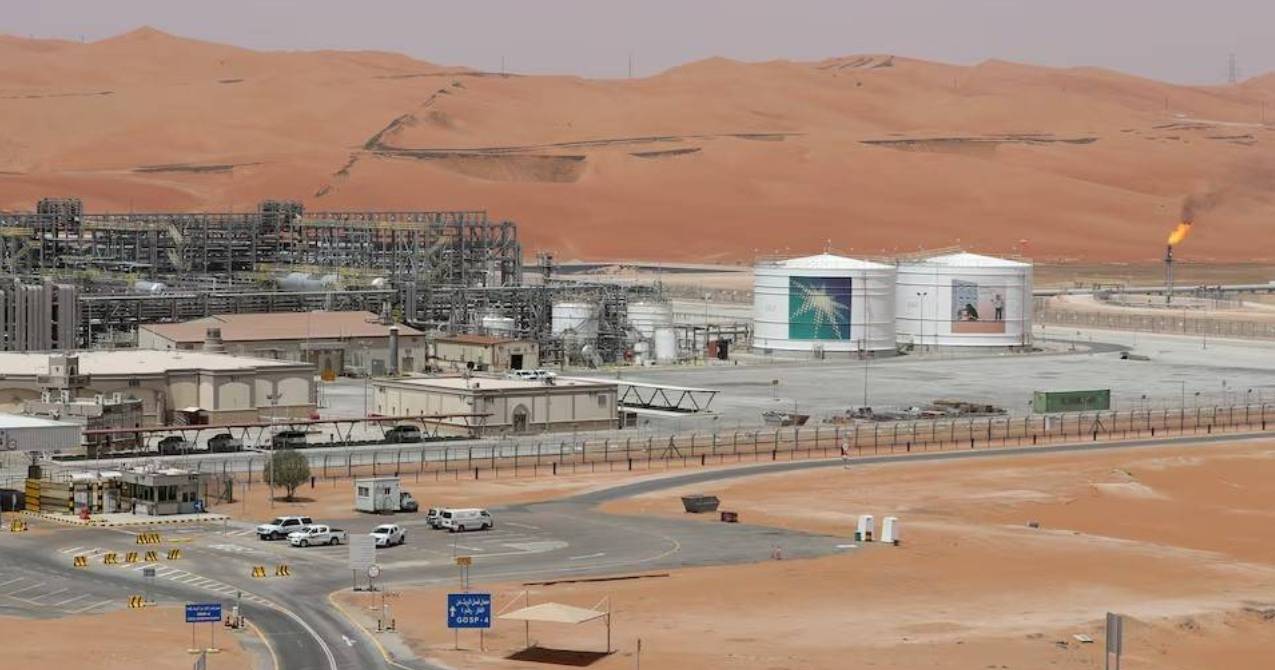
The Shaybah oil field. Reuters

While many civilian and military sites have been affected, the attempt to target Shaybah marked what analysts described as an escalation threatening global energy sources.

A recent study by King Abdullah University of Science and Technology (KAUST) found that the Empty Quarter was once far different from the barren landscape it is known for today.

In the distant past, it was home to lakes, rivers and green plains that supported rich ecosystems and helped early human populations spread across the Arabian Peninsula.

Today it is among Saudi Arabia’s hottest and driest regions, with average rainfall of less than 50 millimeters a year and summer temperatures exceeding 50°C.

But researchers say these harsh conditions followed a wetter climate period known as “Green Arabia,” which lasted between 11,000 and 5,500 years ago in the late Quaternary era.

During that time, strong monsoon rains from Africa and India — driven by orbital climate shifts — fueled vegetation and wildlife across the region.

The desert’s name reflects both its scale and isolation. Saudi sources say it was called the “Empty Quarter” because it occupies roughly a quarter of the Arabian Peninsula and lacks permanent human settlement, aside from a small number of nomadic Bedouins, with limited wildlife and vegetation.

Some sources also refer to parts of the desert as “Al-Ahqaf,” believed to apply mainly to its southern reaches between Saudi Arabia, Oman, and Yemen.

Tradition links the area to the ancient people of ‘Ad and the legendary city of Iram, said to lie buried beneath the sands.

The Empty Quarter is more than a vast expanse of desert. It is a landscape where extremes meet — immense natural wealth beneath a silent sea of dunes, and a remote terrain that has quietly become a shield protecting vital energy supplies.



Saudi Foreign Minister Meets with French Counterpart in Riyadh

Photo by SPA
Photo by SPA
TT

Saudi Foreign Minister Meets with French Counterpart in Riyadh

Photo by SPA
Photo by SPA

Saudi Minister of Foreign Affairs Prince Faisal bin Farhan bin Abdullah met Thursday in Riyadh French Minister for Europe and Foreign Affairs Jean-Noël Barrot, SPA reported.

During the meeting, they reviewed relations and discussed regional and international developments and their implications for security and stability.


How Did the Jeddah Summit Support Joint Gulf Action?

The flags of Gulf countries are raised in Jeddah ahead of the summit (SPA)
TT

How Did the Jeddah Summit Support Joint Gulf Action?

The flags of Gulf countries are raised in Jeddah ahead of the summit (SPA)

Gulf leaders meeting in Jeddah this week urged faster progress on joint projects and deeper military integration, seeking to reinforce collective security and economic coordination amid heightened regional tensions.

In a statement after the consultative summit on Tuesday, GCC Secretary-General Jasem Albudaiwi said leaders called for accelerating completion of requirements to link all shared Gulf projects, including transport and logistics. They stressed speeding up implementation of the Gulf railway, advancing electricity interconnection, and taking prompt steps toward oil and gas pipeline and water-link projects.

The statement also pointed to studying strategic Gulf stockpiles, while emphasizing intensified military integration and faster completion of a joint early warning system against ballistic missiles.

The direct wording - repeating terms such as “accelerate” and “urgency” - reflected a push for concrete outcomes and highlighted Saudi Arabia’s initiative in convening the summit amid complex regional conditions.

28 April 2026, Saudi Arabia, Jeddah: Saudi Crown Prince Mohammed bin Salman meets with Bahrain's King, Hamad bin Isa bin Salman, on the sidelines of the Gulf Cooperation Council Consultative Summit. Photo: Saudi Press Agency/APA Images via ZUMA Press Wire/dpa

Qatar’s Emir, Sheikh Tamim bin Hamad Al Thani, said the meeting reflected Gulf unity. “Our consultative summit today in Jeddah embodies a unified Gulf position toward current developments and the need to intensify coordination and consultation,” he stated, adding that this would strengthen diplomatic efforts, safeguard regional security and stability, and support development and prosperity.

Extending Gulf leadership efforts

Abdulaziz Sager, chairman of the Gulf Research Center, told Asharq Al-Awsat that the summit was convened in response to conditions facing the Gulf region following the US-Israeli-Iranian war, aiming to coordinate GCC positions and contain its repercussions.

The goal is to enhance efforts to address this crisis and its consequences - security, economic and otherwise - to stabilize the region, safeguard GCC interests and strengthen collective security, he underlined.

Sager added that the summit builds on efforts led by Saudi Crown Prince Mohammed bin Salman and other Gulf leaders, within the broader vision of King Salman bin Abdulaziz to strengthen joint Gulf action, deepen economic unity, and develop defense and security systems toward more sustainable integration.

He revealed that these discussions also addressed reinforcing Gulf unity to better manage current challenges and anticipate future crises.

Saudi Crown Prince Mohammed bin Salman receives the Kuwaiti Crown Prince Sheikh Sabah Khaled Al-Hamad Al-Sabah ahead of an exceptional meeting of the Gulf Cooperation Council (GCC), In Jeddah, Saudi Arabia, April 28, 2026. Bandar Algaloud/Courtesy of Saudi Royal Court/Handout via REUTERS

Toward independent Gulf decision-making

Sager said the summit is expected to build on the GCC success in confronting Iranian missile and drone attacks, using that experience to develop a comprehensive defense strategy, which would focus on modern armament suited to evolving warfare, training, and external defense partnerships, while reinforcing self-reliance.

Leaders reaffirmed the right of GCC states to self-defense, individually or collectively, under Article 51 of the United Nations Charter, and to take all measures to protect sovereignty, security and stability. They stressed full solidarity among member states and that their security is indivisible, with any attack on one considered an attack on all, in line with the joint defense agreement.

Albudaiwi said leaders praised the “courage and high readiness” of GCC armed forces in defending against Iranian attacks, noting their ability to intercept missiles and drones with professionalism and efficiency while safeguarding national assets.

Saudi Crown Prince Mohammed bin Salman receives The Emir of Qatar, Sheikh Tamim bin Hamad Al Thani ahead of an exceptional meeting of the Gulf Cooperation Council (GCC), In Jeddah, Saudi Arabia, April 28, 2026. Bandar Algaloud/Courtesy of Saudi Royal Court/Handout via REUTERS

Alternative routes on the agenda

Sager noted that developing alternative corridors to secure energy supply chains will likely be a key focus in the coming period, reflected in leaders’ directives to move ahead with pipeline projects and transport infrastructure.

Political analyst Ahmed Alibrahim agreed, saying the summit statement underscored Saudi Arabia’s role in securing supply chains during the crisis and working on alternative energy routes, including through the East-West pipeline, as part of addressing risks linked to the Strait of Hormuz.

He described the statement as unusually direct. “This is one of the rare times we see a clear and explicit communiqué with firm directives, especially regarding future requirements and open-ended scenarios,” he said, citing uncertainties including potential setbacks in US-Iran negotiations or other serious developments.

For his part, political analyst Mohammed Al-Dossary believes that the importance of the GCC lies in its ability to navigate many crises, including the Iraq-Iran War and Iraq's occupation of Kuwait.

He stressed that the collective consciousness of Gulf citizens recognizes the importance of unifying the Gulf stance to overcome crises, including the current one and the implications of the Strait of Hormuz closure.


Saudi Crown Prince Receives Written Messages from Rwanda’s President, Japanese PM

Crown Prince Mohammed bin Salman bin Abdulaziz Al Saud. SPA
TT

Saudi Crown Prince Receives Written Messages from Rwanda’s President, Japanese PM

Crown Prince Mohammed bin Salman bin Abdulaziz Al Saud. SPA

Prince Mohammed bin Salman bin Abdulaziz Al Saud, Saudi Crown Prince and Prime Minister, received a written message from Rwanda’s President, Paul Kagame, expressing his country's solidarity with the Kingdom in light of the current situation in the region.

The message was received by Minister of Foreign Affairs Prince Faisal bin Farhan bin Abdullah during a meeting at the ministry's headquarters in Riyadh with his Rwandan counterpart, Olivier Nduhungirehe.

During the meeting, the two sides discussed bilateral relations and reviewed a number of issues of common interest.

The Crown Prince also received a written message from Japanese Prime Minister Sanae Takaichi, concerning relations between the two countries.

The message was received by Vice Minister of Foreign Affairs Waleed Elkhereiji during a meeting at the ministry's headquarters in Riyadh with the Japanese Ambassador to the Kingdom Yasunari Morino.

During the meeting, the two officials reviewed relations between Saudi Arabia and Japan and discussed various topics of common interest.