


Is Burhan Heading for a Showdown with Sudan’s Islamists?

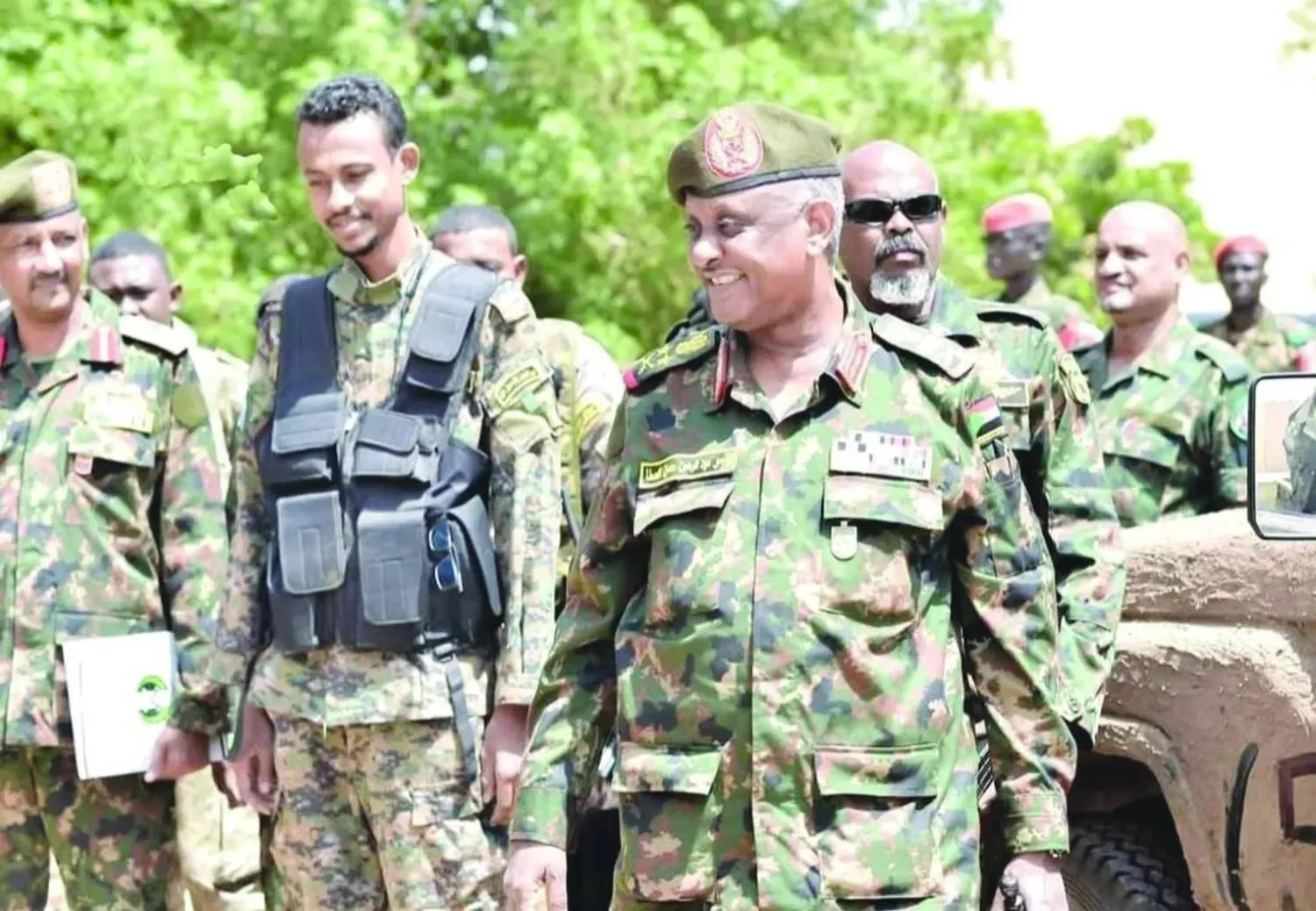
A circulating image shows Yasser al-Atta with the commander of the Islamist al-Baraa bin Malik militia fighting alongside the army
TT

Is Burhan Heading for a Showdown with Sudan’s Islamists?

A circulating image shows Yasser al-Atta with the commander of the Islamist al-Baraa bin Malik militia fighting alongside the army

The designation of Sudan’s Islamists as a terrorist entity places the country’s military leadership before difficult and narrowing choices, particularly as these currents are deeply embedded within the ruling system and wield growing influence in decision-making circles, including inside the military itself.

That reality makes any potential confrontation highly risky at a time when Sudan is already facing a fragile and volatile situation on all fronts.

The development raises key questions about what comes next: Could army commander Abdel Fattah al-Burhan move to curb the Islamists’ influence or remove them from the military? And how might they respond if targeted and the confrontation escalates?

The United States announced last Monday that it had designated the Muslim Brotherhood in Sudan a terrorist organization, accusing it of receiving support from Iran. To avoid confusion over the name, the US State Department specified the “Sudanese Islamic Movement” and included its military wing, the al-Baraa bin Malik Corps, citing links to Iran’s Revolutionary Guard Corps.

Since the fall of ousted president Omar al-Bashir after the 2019 popular uprising, Islamists and their dissolved National Congress Party have split into several civilian and military factions. When war erupted in April 2023, they regrouped in new military formations to fight alongside the Sudanese army against the Rapid Support Forces.

Ali Karti, Secretary General of the Sudanese Islamic Movement and a former foreign minister, is accused of acting as the real driver behind the army through Islamist elements within its ranks in a bid to return to power. The army and Burhan have repeatedly denied those accusations.

Some Islamist leaders say the movement has regained influence inside the institutions of the “deep state” and that confronting it would require extensive intelligence and security efforts. They also acknowledge that Islamists have become a heavy burden on the army, while Burhan appears hesitant to take a decisive stance against them.

Sources familiar with the matter say the administration of US President Donald Trump had earlier decided to designate the group but delayed announcing the move to allow time for efforts to secure a ceasefire between the army and the Rapid Support Forces.

Rising regional tensions, particularly the US-Israel confrontation with Iran, and statements by Islamist leaders fighting alongside the army declaring support for Tehran, accelerated the decision.

Those statements reportedly embarrassed Burhan before regional allies, prompting him to deny any official ties between the army and the groups and to vow to be held accountable.

Sources say the designation explicitly linked “Islamist battalions” in Sudan to training and military support from Iran’s Revolutionary Guards, potentially making them a target of US policies as the regional conflict widens.

At the same time, activists circulated an old video of Sovereignty Council member and assistant commander-in-chief Yasser al-Atta speaking about six Islamist battalions fighting within the army’s ranks.

Possible scenarios

Circles close to the Islamists expect the movement to “bend with the storm,” avoiding public positions that could trigger direct confrontation with the military authorities, particularly as any battlefield setback could allow the Rapid Support Forces to advance.

Despite that caution, those circles say Islamists remain influential, holding sway within security agencies, intelligence services and military intelligence. Their reach also extends into state institutions, including the judiciary and the public prosecution, making their removal costly and complex.

Opponents of the Islamic Movement say the army may struggle to implement the requirements of the US designation - such as freezing accounts or restricting the movement of leaders - because of the movement’s ideological penetration within the officer corps. That infiltration dates back to the 1970s and persisted for three decades under Bashir’s former “Salvation” government.

In this view, the army could try to navigate the sanctions through political maneuvering and continued cooperation with Islamists to soften their impact. But such an approach may test the international community's patience.

Babiker Faisal, head of the executive office of the Federal Gathering, says the army faces three main choices: deny the presence of Islamists within its institutions, a line Burhan has consistently taken; maneuver between the international community and the Islamists by reassuring both sides; or take a decisive step to exclude them and confront them directly.

Faisal believes Burhan is likely to pursue the maneuvering option, pointing to the Sudanese Foreign Ministry’s silence over the designation while calling instead for the Rapid Support Forces to be labeled a terrorist organization.

But he warns the approach may only buy time. The most significant aspect of the designation, he says, is its direct military link between the Islamic Movement and Iran — an issue that has become a top priority for the US administration.

A direct confrontation, he argues, would be extremely difficult given the Islamists’ grip on key state institutions and security bodies. That could push them to fight to the end in what they would see as an existential battle, especially after the decline of Brotherhood-linked movements in several regional countries.

Civilian forces opposed to the war say all possibilities remain open, including the direct targeting of Islamists, depending on regional developments or giving the army time to distance itself from them gradually.

They argue that excluding the Islamic Movement from any future political process is the shortest path to ending the war and restoring stability in Sudan.


Israeli Foreign Minister Says No Plans for Talks with Lebanese Govt

 Israeli tanks maneuver on the Israeli side of the Israel-Lebanon border, amid escalation between Hezbollah and Israel, and amid the US-Israeli conflict with Iran, in northern Israel, March 15, 2026. (Reuters)
Israeli tanks maneuver on the Israeli side of the Israel-Lebanon border, amid escalation between Hezbollah and Israel, and amid the US-Israeli conflict with Iran, in northern Israel, March 15, 2026. (Reuters)
TT

Israeli Foreign Minister Says No Plans for Talks with Lebanese Govt

 Israeli tanks maneuver on the Israeli side of the Israel-Lebanon border, amid escalation between Hezbollah and Israel, and amid the US-Israeli conflict with Iran, in northern Israel, March 15, 2026. (Reuters)
Israeli tanks maneuver on the Israeli side of the Israel-Lebanon border, amid escalation between Hezbollah and Israel, and amid the US-Israeli conflict with Iran, in northern Israel, March 15, 2026. (Reuters)

Israel's foreign minister on Sunday denied reports that Israel could soon hold direct talks with Lebanon and rejected claims it had told the United States it was running low on interceptors. 

Israel's Haaretz newspaper reported on Saturday that ‌Israel and Lebanon were ‌expected to hold ‌direct ⁠talks in the ⁠coming days. Semafor also reported that Israel had informed Washington it was running critically low on ballistic missile interceptors. 

Both reports cited unnamed sources. 

Asked about the weekend ⁠reports, Foreign Minister Gideon Saar said: "For ‌the ‌two questions, the answer is no." 

He also ‌said that Israel sees "eye-to-eye" ‌with the US in the war with Iran, now in its 16th day, and that the two allies were ‌determined to continue until their goals are achieved. 

"We want ⁠to ⁠remove the existential threats from Iran for the long term. We don't want to go every year to another war," he told reporters. 

Saar was speaking from a Bedouin Arab town in northern Israel near an Israeli Air Force base where homes were damaged in an Iranian missile attack last week. 


At Least Four Killed in Overnight Israeli Strikes in Lebanon

Debris is strewn along a street and vehicles after a residential apartment block was struck in an Israeli airstrike in Beirut's southern suburb of Haret Hreik on March 15, 2026. (AFP)
TT

At Least Four Killed in Overnight Israeli Strikes in Lebanon

Debris is strewn along a street and vehicles after a residential apartment block was struck in an Israeli airstrike in Beirut's southern suburb of Haret Hreik on March 15, 2026. (AFP)

Overnight strikes in southern Lebanon killed at least four people, Lebanese state media and the government said on Sunday, as Israel said it was pressing its campaign against Iran-backed Hezbollah.

Israel is fighting a second front in the war in the Middle East in southern Lebanon, against Hezbollah, alongside the air campaign against Iran it launched with the United States more than two weeks ago.

Lebanon's state-run National News Agency (NNA) said Israel struck "an apartment in a residential building" in a northern district of the coastal city of Sidon, killing one person and causing a fire.

An AFP journalist at the scene saw damage to the third storey of an apartment building as the Lebanese army cordoned off the area and rescue teams worked to extinguish the blaze.

Nearby residents rushed into the street, some carrying belongings.

To the southeast of Sidon, in the village of Al-Qatrani, three people were killed in an overnight Israeli strike, according to Lebanon's health ministry.

The Israeli military said in a statement Sunday it continued to strike infrastructure used by Hezbollah throughout Lebanon and hit "several Hezbollah launch sites" in Al-Qatrani, where it said the armed group was preparing to fire off missiles.

It also said it destroyed "command centers" belonging to Hezbollah's Radwan Force in Beirut.

Hezbollah said Sunday it was targeting several Israeli troop positions in villages close to the border.

According to Lebanon's health ministry, Israeli air strikes have killed 826 people in Lebanon since the start of the latest war, which began March 2 with Hezbollah firing missiles at Israel.

Lebanese President Joseph Aoun has proposed negotiations with Israel, but has yet to receive a response.

A Lebanese official told AFP on Saturday that the country was preparing to form a delegation to negotiate with Israel but that there was no agenda, timing or location yet decided for any talks.

French President Emmanuel Macron has said the Lebanese government was ready to engage in "direct talks" with Israel and he offered to host negotiations in Paris, warning that "everything must be done to prevent Lebanon from descending into chaos".


Israeli Ground Incursions in South Lebanon Shift Hezbollah’s Combat Priorities

Two Israeli tanks deployed along the border barrier with Lebanon during fighting with Hezbollah (EPA). 
TT

Israeli Ground Incursions in South Lebanon Shift Hezbollah’s Combat Priorities

Two Israeli tanks deployed along the border barrier with Lebanon during fighting with Hezbollah (EPA). 

Hezbollah has scaled back attacks deep inside Israel as it focuses on confronting expanding Israeli ground incursions into southern Lebanon, while Israel has widened its list of targets across Lebanese territory.

By Saturday afternoon, Hezbollah had issued 22 statements claiming attacks against Israeli forces. Most operations targeted Israeli military positions along the border, air-defense and surveillance systems, and northern Israeli settlements.

The group also said it struck Israeli soldiers and vehicles inside Lebanese territory, including near the municipality of Khiam, the town of Maroun al-Ras, and newly established Israeli positions at Blat and Nimr al-Jamal opposite the border town of Alma al-Shaab. Hezbollah also reported attacks around the Khiam detention center, west of Blida and near Khazzan Hill in Adaisseh.

Efforts to repel Israeli ground advances now appear to top Hezbollah’s battlefield priorities after the Israeli army launched incursions along at least four axes, according to sources in southern Lebanon. They said Hezbollah had mobilized forces since the start of the war in preparation for a possible ground confrontation.

Israeli forces have sought to prevent reinforcements of fighters and equipment from reaching Hezbollah units in the south. Airstrikes severed key routes by hitting two bridges and two crossings linking areas south of the Litani River with those to the north, as well as roads between villages.

Sources stressed that these steps broaden Israel’s target list. “Israel also appears to be trying to empty the area by targeting ambulances and civil defense units in the south,” one source said.

Lebanon’s National News Agency reported that Israeli warplanes launched two airstrikes shortly after midnight on the Khardali road and bridge linking Nabatieh and Marjayoun near a Lebanese army checkpoint. The strikes left a large crater and completely cut the road.

Medical Facilities Targeted

Israeli strikes on ambulance centers and medical facilities since the start of the war have killed 22 paramedics, according to Lebanese officials.

The deadliest attack occurred Friday when an Israeli strike hit a primary health care center run by Lebanon’s Ministry of Public Health in the town of Burj Qalaouiyeh, killing 12 doctors, paramedics and nurses. The Health Ministry described the strike as a “flagrant attack on the country’s official health care network.”

Another strike hit a gathering point for the Islamic Health Authority and the Al-Risala Scouts Association in the town of Souwaneh, killing two people.

The Israeli military said Hezbollah was using ambulances and medical facilities for military purposes and accused the group of transporting rockets and other weapons in civilian trucks along Lebanon’s coastal areas.

Heavy Strikes Across the South

Israeli airstrikes also intensified across southern Lebanon, targeting towns including Majdal Zoun, Yater, Taybeh, Sajd in the Iqlim al-Tuffah region and Zawtar al-Sharqiyah in the Nabatieh district, where a strike destroyed a house belonging to the Harb family.

Two heavy strikes hit the town of Khiam in the Marjayoun district, while Naqoura came under artillery fire and warplanes targeted Kharayeb.

In the Hasbaya district, Israeli artillery shelled the outskirts of Shebaa. Later, Israeli forces targeted Bint Jbeil, Ainata, Aitaroun and the outskirts of Maroun al-Ras as clashes intensified with Hezbollah fighters along several fronts. The Wadi al-Hujayr area also came under artillery fire.

The escalation also affected UN peacekeepers. Kandice Ardiel, spokeswoman for the United Nations Interim Force in Lebanon, said a UN position near Mais al-Jabal was hit, likely by heavy machine-gun fire, sparking a fire at the site and slightly injuring a peacekeeper.

UNIFIL said it had opened an investigation and reminded all parties of their obligation to ensure the safety of peacekeepers at all times.