


ByteDance Reportedly Suspends Launch of Video AI Model after Copyright Disputes

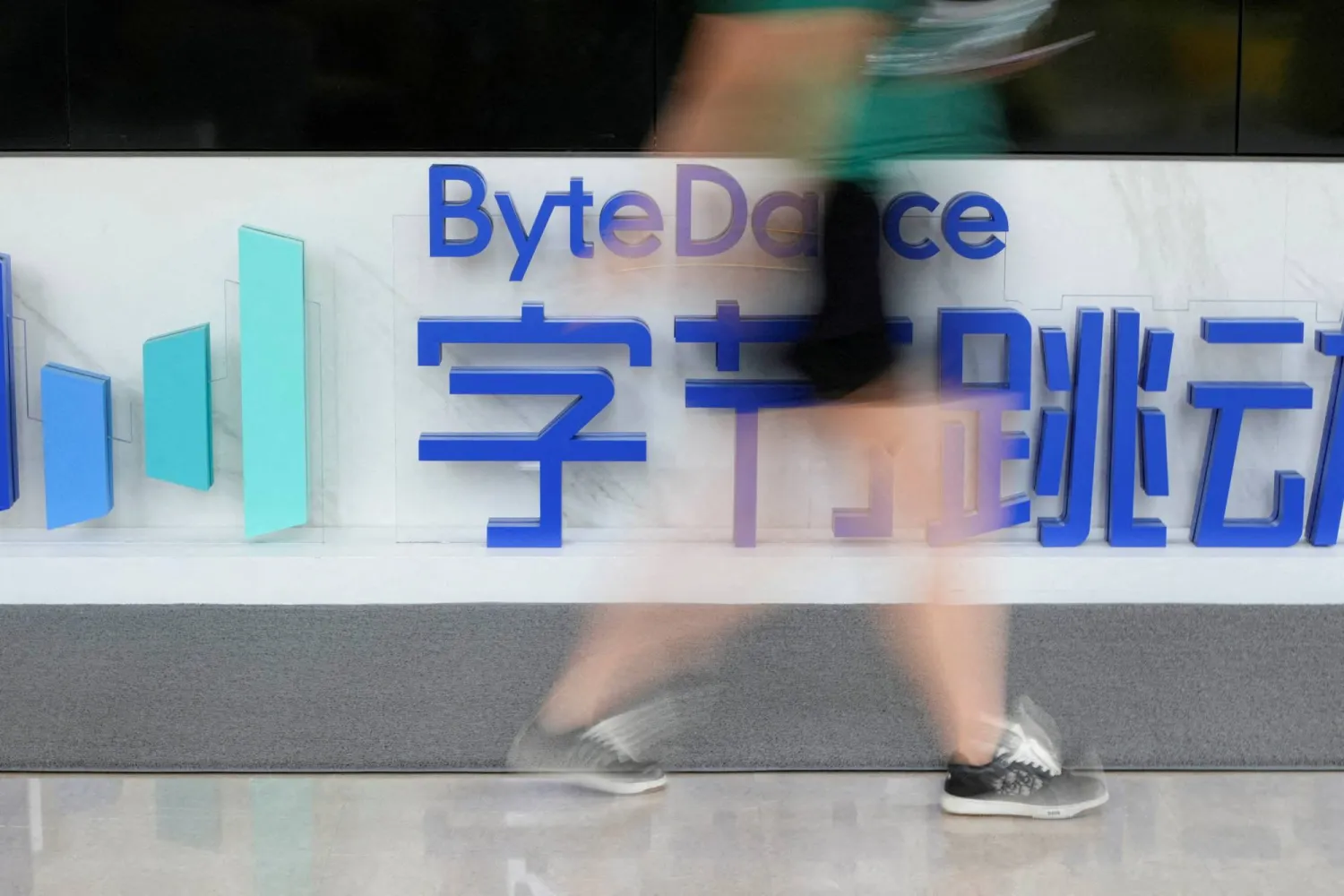
FILE PHOTO: The ByteDance logo is seen at the company's office building in Shanghai, China July 4, 2023. REUTERS/Aly Song/File Photo
TT

ByteDance Reportedly Suspends Launch of Video AI Model after Copyright Disputes

FILE PHOTO: The ByteDance logo is seen at the company's office building in Shanghai, China July 4, 2023. REUTERS/Aly Song/File Photo

TikTok's Chinese parent, ByteDance, has put on hold the global launch of its latest video-generation model, Seedance 2.0, after a series of copyright disputes with major Hollywood studios and streaming platforms, The Information reported on Saturday, citing two people with direct knowledge of the situation.

Reuters could not immediately verify the report. ByteDance did not immediately respond to a request for comment. ByteDance said last month it would take steps to prevent the unauthorized use of intellectual property on its AI video generator Seedance 2.0, ⁠following threats of ⁠legal action from US studios, including Disney.

Disney sent a cease-and-desist letter to the Chinese firm last month, accusing it of using Disney characters to train and power Seedance 2.0 without permission, after videos generated by the model went viral in China, including one of Tom Cruise ⁠and Brad Pitt in a fight.

Disney said ByteDance had pre-packaged Seedance with a pirated library of copyrighted characters from franchises including Star Wars and Marvel, portraying them as public-domain clip art. ByteDance, which officially unveiled the model in February, has said the system is aimed at professional film, e-commerce and advertising use, highlighting its ability to process text, images, audio and video at once to reduce content production costs.

Seedance 2.0 has drawn attention after earning comparisons with DeepSeek, a ⁠Chinese AI ⁠company that has built models rivaling those of Anthropic and OpenAI. Tech executives, including Elon Musk, have praised its ability to generate cinematic storylines from a handful of prompts.

ByteDance had been aiming to make the new video model available to customers worldwide in mid-March, but the company has since suspended those plans, The Information report said.

ByteDance's legal team is working to identify and resolve potential legal issues and engineers are adding safeguards to prevent the model from generating content that could lead to further intellectual property violations, the report added.



Microsoft Cuts OpenAI Revenue Share in a Fresh Step to Loosen Their AI Alliance

FILE PHOTO: A Microsoft logo is seen next to a cloud in Los Angeles, California, US June 14, 2016. REUTERS/Lucy Nicholson/File Photo
TT

Microsoft Cuts OpenAI Revenue Share in a Fresh Step to Loosen Their AI Alliance

FILE PHOTO: A Microsoft logo is seen next to a cloud in Los Angeles, California, US June 14, 2016. REUTERS/Lucy Nicholson/File Photo

Microsoft said Monday it will no longer pay a share of its revenue to ChatGPT maker OpenAI, the latest move to untether a close partnership that helped unleash an artificial intelligence boom.

OpenAI relied exclusively on Microsoft's investments in cloud computing services to build the technology that helped make ChatGPT a household name. Microsoft, in turn, relied on OpenAI's technology to build its own AI assistant Copilot.

But the partnership has evolved as San Francisco-based OpenAI, founded as a nonprofit, has shifted to a capitalistic enterprise on a path toward an initial public offering on Wall Street and has balanced its reliance on Microsoft with other cloud partners like Amazon, Google and Oracle, The AP news reported.

OpenAI said Monday it will continue to pay Microsoft a share of its revenue through 2030.

The two companies said Microsoft remains the primary cloud computing partner for OpenAI, and products made by the AI company will ship first on Microsoft's cloud platform, called Azure, “unless Microsoft cannot and chooses not to support the necessary capabilities.”

Wedbush Securities analyst Dan Ives said in a note to investors Monday that the new agreement “puts OpenAI on a strong path forward to going public through IPO given its clearer opportunity in the cloud environment while reducing significant barriers from its original partnership with Microsoft.”

Ives said it's also important for Microsoft as it “looks to develop tech independence from OpenAI” in advancing Copilot's capabilities and partnering with other AI providers such as OpenAI rival Anthropic, maker of the chatbot Claude.


China Blocks Meta from Acquiring AI Startup Manus

The smart assistant 'Manus' on a smartphone screen (AFP)
TT

China Blocks Meta from Acquiring AI Startup Manus

The smart assistant 'Manus' on a smartphone screen (AFP)

China on Monday blocked US tech giant Meta’s acquisition of the artificial intelligence startup Manus, in an unexpected move to reverse a deal that apparently aroused Beijing's concerns about the transfer of advanced technology.

In a one-line statement, China’s National Development and Reform Commission, the country's top planning agency, said it was prohibiting the foreign acquisition of Manus and had required all the parties to withdraw from the deal. It did not specifically name Meta Platforms, which owns Facebook and Instagram, The AP news reported.

Manus, which has Chinese roots but is based in Singapore, provides a general-purpose AI agent that can autonomously carry out sophisticated tasks like coding an app, doing market research or preparing quarterly budgets.

The decision was made by the commission’s Office of the Working Mechanism for Security Review of Foreign Investment in accordance with Chinese laws and regulations, the statement said. It came after Chinese authorities said they were looking into the deal earlier this year.

The commission did not elaborate on the reasons for the ban. The announcement came less than a month before US President Donald Trump's planned visit to Beijing to meet Chinese leader Xi Jinping in May.

Meta announced in December that it was acquiring Manus, in a rare case of a major US tech group buying an AI company with strong links to China. Its deal with Manus was expected to help expand AI offerings across Meta’s platforms.

Meta had said there would be “no continuing Chinese ownership interests in Manus” and that Manus would discontinue its services and operations in China. But China said in January that it would investigate whether the acquisition would be consistent with its laws and regulations.

China’s commerce ministry said at the time that any enterprises engaging in outward investment, technology exports, data transfers and cross-border acquisitions must comply with Chinese law. Meta had said most of Manus’ employees were based in Singapore.

Before the deal, Manus’ parent was Singapore-based Butterfly Effect Pte, but the AI startup traces its roots back to Beijing-registered entities with similar names that were established several years earlier.

Manus did not respond to a request for comment. Its website says the company “is now part of Meta," indicating that the deal had already been completed.

Meta said on Monday that the Manus transaction “complied fully with applicable law.”

“We anticipate an appropriate resolution to the inquiry,” the California-based company said in a statement.

Analysts said the decision is a sign that China’s communist leaders are tightening scrutiny of the AI industry amid intensifying geopolitical rivalry with the US over the technology.

“China is showing the world that it is willing to play hardball when it comes to AI talents and capabilities, which the country views as a core national security asset,” said Lian Jye Su, chief analyst at the technology research and advisory group Omdia. “It is strongly indicative of what Chinese authorities may do going forward regarding acquisitions involving Chinese deep-tech companies.”

Beijing’s acquisition ban could deter similar acquisition plans by US tech giants going forward, he said. “In the context of rivalry, it mirrors US export controls, entity lists, and investment curbs on China,” said Su.

Meta’s interest in Manus reflects a broader tech industry race to lead in the development of AI agents that can go beyond a chatbot’s capabilities to take computer-based actions on people’s behalf.

Meta last month acquired Moltbook after it attracted viral attention as a social network built for AI agents to make posts and interact with each other. That was after OpenAI, maker of ChatGPT, hired the creator of AI agent OpenClaw, formerly called Moltbot and the technology upon which Moltbook was built.


Google to Build AI Campus in South Korea, Presidential Office Says

South Korean President Lee Jae Myung (R) shakes hands with Demis Hassabis (L), co-founder and CEO of Google DeepMind and the architect behind the AlphaGo artificial intelligence system, during their meeting at the presidential office in Seoul, South Korea, 27 April 2026. (EPA/Yonhap)
TT

Google to Build AI Campus in South Korea, Presidential Office Says

South Korean President Lee Jae Myung (R) shakes hands with Demis Hassabis (L), co-founder and CEO of Google DeepMind and the architect behind the AlphaGo artificial intelligence system, during their meeting at the presidential office in Seoul, South Korea, 27 April 2026. (EPA/Yonhap)

South Korea and ‌Google have agreed to build an artificial-intelligence campus in Seoul to develop cooperation between the tech firm and local engineers and startups, Kim Yong-beom, a presidential policy adviser, said on Monday.

South Korean President Lee Jae Myung met with Google DeepMind Chief Executive Officer Demis Hassabis in Seoul on Monday, with the Science Ministry and the company signing a memorandum of understanding on the campus, Kim said.

South Korea requested Google send ‌at ⁠least 10 engineers to the ⁠AI campus from Google's headquarters in the United States and Hassabis said he would consider that, Kim said.

The Google AI campus will be the first of its kind in the world for the US company, the presidential adviser said.

President Lee ⁠and Hassabis shared their thoughts about ‌the outlook for AI and ‌its impact on people, Kim said.

Lee raised the need ‌for the introduction of a base wage ‌in case of job losses caused by AI at the meeting.

Hassabis said he hoped with this partnership "to help with training up the next generation in these amazing technologies through ‌internships at our AI hub and other training programs."

DeepMind would like to deepen ⁠partnerships with ⁠Korean companies from Samsung and SK Hynix to Hyundai's Boston Dynamics and LG and "instigate new joint projects" with them, Hassabis said.

He described South Korea as a "great industrial base" in all of the key AI areas, from chips to robotics.

The historic match between DeepMind's AlphaGo program and Go player Lee Sedol in Korea a decade ago signaled the beginning of the modern AI era and inspired many advances in AI, including its work in science like the Alphafold system for protein folding, Hassabis said.