


Appeal Trial Opens for France’s Sarkozy Over Alleged Libyan Funding

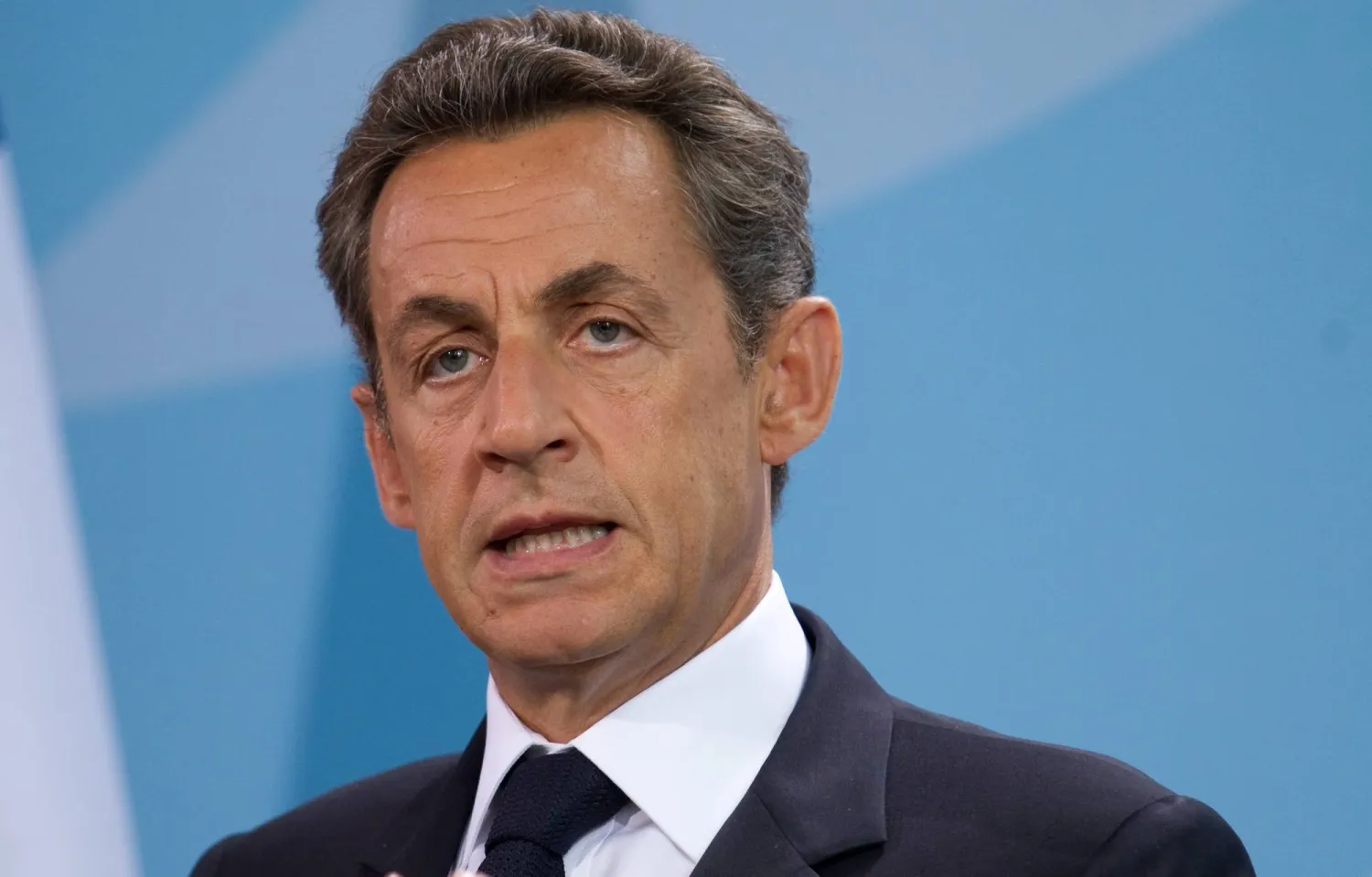
FILED - 17 June 2011, Berlin: Then French President Nicolas Sarkozy speaks at a press conference in the Chancellery in Berlin. Photo: Michael Kappeler/dpa
TT

Appeal Trial Opens for France’s Sarkozy Over Alleged Libyan Funding

FILED - 17 June 2011, Berlin: Then French President Nicolas Sarkozy speaks at a press conference in the Chancellery in Berlin. Photo: Michael Kappeler/dpa

Former French president Nicolas Sarkozy was back in court Monday for a retrial on charges he sought Libyan financing for his 2007 election, in a case that last year saw him become France's first modern-day head of state to go to prison.

A lower court in September found the right-wing politician -- who was president from 2007 to 2012 -- guilty of seeking to acquire funding from Muammar Gaddafi's Libya for the campaign that saw him elected.

Sarkozy -- who has denied any wrongdoing -- in October entered a Paris prison, serving 20 days before he was released pending the appeal, AFP reported.

The 71-year-old entered the Paris Appeal Court ahead of Monday's hearing, shaking hands with police and lawyers before taking his seat in the front row of the dock.

In the retrial, set to run until June 3, the former head of state is once again presumed innocent.

Sarkozy has faced a series of legal issues since leaving office and has already received two definitive convictions in other cases.

In one, he wore an electronic ankle tag for several months, until it was removed in May last year, after being convicted for trying to extract favours from a judge.

And in the other, he will have to serve more time over illegal financing of his failed 2012 re-election bid.

In the so-called "Libyan case", he has appealed a five-year prison sentence.

A lower court in September convicted Sarkozy of criminal conspiracy over what it said was a scheme to acquire Libyan funding for his 2007 presidential run.

But it did not conclude that Sarkozy received or used the funds for the campaign.

His legal team immediately appealed, but the lower court ordered him to be sent behind bars, citing the "exceptional gravity" of the conviction.

On October 21, he became the first former head of a European Union state to be incarcerated.

- Prison diaries -

In the initial trial, prosecutors had argued Sarkozy's aides, acting in his name, struck a deal with Gaddafi in 2005 to illegally fund his victorious presidential election bid two years later.

Investigators believe that in return, Gaddafi was promised help to restore his international image after Tripoli was blamed for the 1988 bombing of a passenger jet over Lockerbie, Scotland, and another over Niger in 1989, killing hundreds of passengers.

Members of Sarkozy's circle did not wish to comment before the retrial.

Sarkozy published a hastily written book about his time in prison titled "Diary of a Prisoner", with supporters lining up around a city block in Paris to buy a copy when it came out in December.

In the 216-page book, he recounts his mundane struggles with noise and low-quality food.

But he also hints at a possible alliance between the traditional right-wing Republicans party he once headed and the country's main far-right party to "rebuild the right".

He and his wife, singer and model Carla Bruni, face another possible trial over allegations that they tried to bribe a key prosecution witness in the Libya campaign financing case with the help of a paparazzi boss. They deny wrongdoing.



Norway Aid Group: Sudan, DR Congo Top World's Most Neglected Crises

Sudanese refugees from Al-Fashir, displaced by ongoing conflict in Sudan, gather at sunset at the Tine transit camp in eastern Chad, November 23, 2025. REUTERS/Amr Abdallah Dalsh
TT

Norway Aid Group: Sudan, DR Congo Top World's Most Neglected Crises

Sudanese refugees from Al-Fashir, displaced by ongoing conflict in Sudan, gather at sunset at the Tine transit camp in eastern Chad, November 23, 2025. REUTERS/Amr Abdallah Dalsh

Sudan, the Democratic Republic of Congo and Colombia top the list of the world's most neglected displacement crises, the Norwegian Refugee Council aid group said on Thursday.

Sudan, which since 2023 has been ravaged by a bloody conflict between two rival generals competing for power, has more than nine million internally displaced people, the prominent aid organization said in a statement.

A further four million Sudanese have fled to neighboring countries and nearly 19.5 million people there are also suffering from hunger, the NRC said.

"It is incomprehensible that a displacement crisis of similar proportions to the crises in Syria and Ukraine at their peak can continue to worsen almost unnoticed," NRC chief Jan Egeland said.

"Countries have become much more inward-looking, more nationalist.

Rearmament is now an absolute priority because we have to ensure our own security in Europe. There is Putin threatening us, and so on," Egeland said in comments to the NRK broadcaster.

"But people then forget that there will be pandemics, migratory movements, and enormous loss of human life if we don't invest in hope on other continents."

"Africa is just across the Mediterranean, where we go on holiday. And if the continent collapses, we will also suffer the consequences."

Relatives mourn during the funeral of a person who died of Ebola in Bunia, Ituri Province, Democratic Republic of the Congo, 03 June 2026. EPA/DIEUDONNE DIROLE

The Democratic Republic of Congo, where an Ebola epidemic has added turmoil to the east of the country ravaged by decades of conflict, appears on NRC's list for the 10th year in a row.

In 2025, only 27.4 percent of the funding needed for DR Congo has been secured, leaving more than 21 million people in need, according to the NRC.

"This is a testament to the world's failure to respond to crises that are not regarded as strategically important for rich countries," Egeland said in the NRC statement.

"Millions of people are being abandoned because we have chosen not to act, not because we cannot."

The NGO's list is based on three criteria: lack of humanitarian funding, lack of media coverage, and lack of political will within the international community.

Several African countries -- Burkina Faso, Cameroon, Central African Republic, Mali and Nigeria -- have featured on NRC's list six or more times, pointing to "a systemic pattern of deliberate neglect", NRC said.

The 10 most neglected crises for 2025 are Sudan, the Democratic Republic of Congo, Colombia, Yemen, Afghanistan, Honduras, Ecuador, Cameroon, Nigeria and Mozambique, spanning three continents and tens of millions of people.


Gunmen Kidnap 7 Students from School in Northwestern Nigeria

Nigerian police personnel restrict protesters from convening for the sixth day of anti-government demonstrations against bad governance and economic hardship, in Lagos, Nigeria August 6, 2024. REUTERS/ Francis Kokoroko/File Photo
TT

Gunmen Kidnap 7 Students from School in Northwestern Nigeria

Nigerian police personnel restrict protesters from convening for the sixth day of anti-government demonstrations against bad governance and economic hardship, in Lagos, Nigeria August 6, 2024. REUTERS/ Francis Kokoroko/File Photo

Gunmen raided an off-campus residence in northwest Nigeria and kidnapped seven students, police said.

The attack occurred early Wednesday in the Kaura Namoda area of conflict-battered Zamfara state, police spokesman Yazid Abubakar said in a statement. One of the students escaped and was in custody, The Associated Press said.

The police spokesman said it wasn't clear where the students were taken but efforts were underway to rescue the remaining six.

Zamfara has been a hotspot for armed gangs that carry out kidnappings for ransom, with abductions of students increasing in recent years across the country.

A tally by local news outlet Premium Times found that at least 1,900 students have been kidnapped from 20 schools since the 2014 mass abduction of over 200 schoolgirls from Chibok in Borno state.


Iran's Khamenei Says US, Israel Aim to Sow 'Division' after War Defeat

An Iranian man walks past a billboard carrying a picture of Iran' supreme leader Mojtaba Khamenei erected along a street in Tehran on May 28, 2026. (Photo by AFP)
TT

Iran's Khamenei Says US, Israel Aim to Sow 'Division' after War Defeat

An Iranian man walks past a billboard carrying a picture of Iran' supreme leader Mojtaba Khamenei erected along a street in Tehran on May 28, 2026. (Photo by AFP)

Iran's supreme leader on Thursday accused the US and Israel of trying to sow "division" among Iranians after suffering a "decisive blow" during the Middle East war.

In a written message, Mojtaba Khamenei said "the malicious enemy" was seeking to "plant the seeds of doubt, despair, fear, mistrust and division" among the public, reported AFP.

"In confronting these ill intentions, everyone must, through steadfastness, insight, preserving unity and cohesion... neutralize their sinister plot," his message said.