


Europeans Seek Clarity About Trump’s Iran War Aims Before Agreeing to His Warship Demands

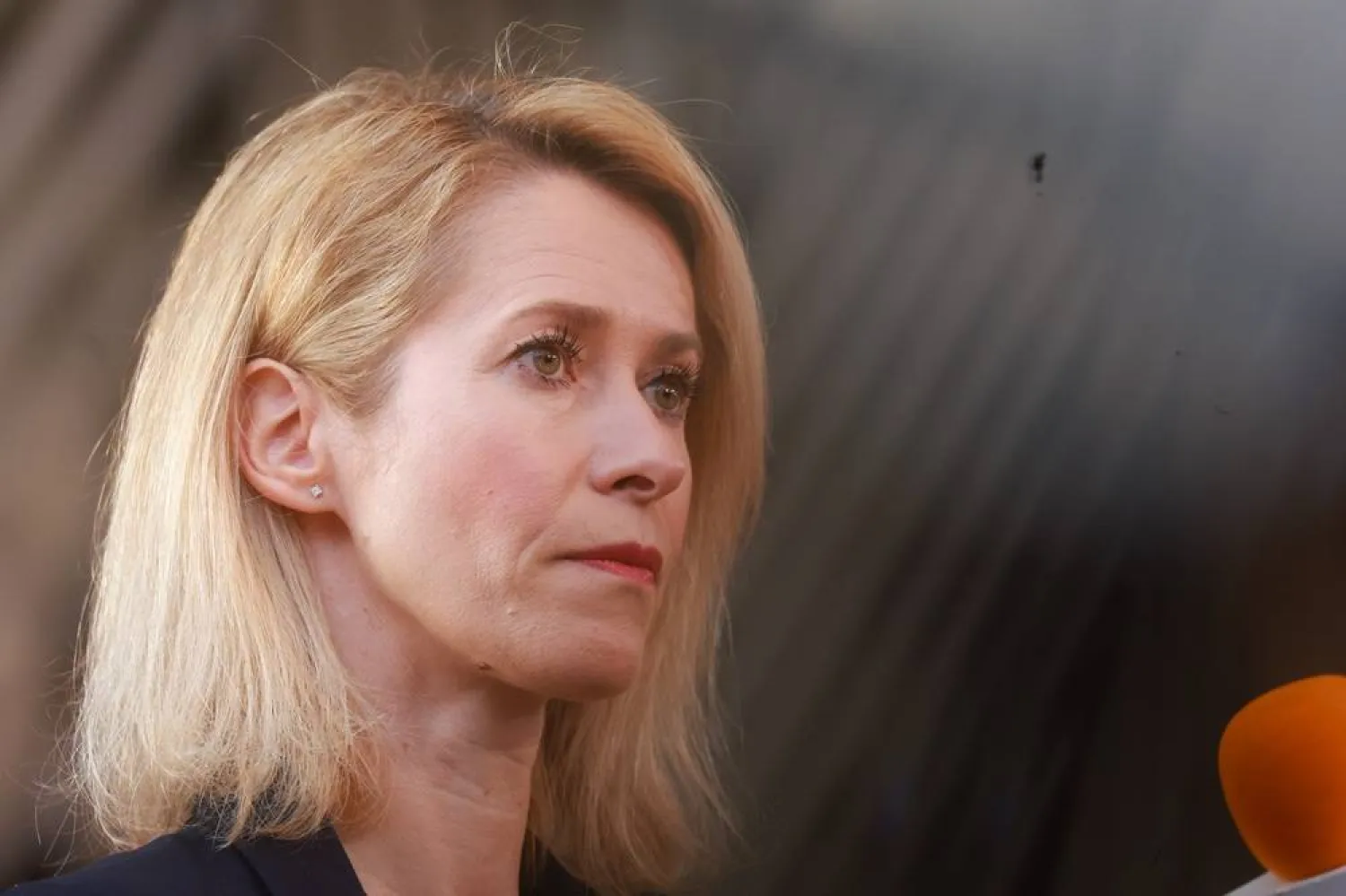
European Union High Representative for Foreign Affairs and Security Policy Kaja Kallas arrives ahead of a Foreign Affairs Council meeting at the Council of the European Union in Brussels, Belgium, 16 March 2026. (EPA)
TT

Europeans Seek Clarity About Trump’s Iran War Aims Before Agreeing to His Warship Demands

European Union High Representative for Foreign Affairs and Security Policy Kaja Kallas arrives ahead of a Foreign Affairs Council meeting at the Council of the European Union in Brussels, Belgium, 16 March 2026. (EPA)

European countries on Monday sought more details about US President Donald Trump's plans for the war on Iran and warned that NATO must not become involved it, as they weighed whether to agree to his call to send warships to help shore up security in the Gulf.

The cool response to Trump’s demand reflects wide caution about the US-Israeli war among allies kept in the dark before, and largely since, it was launched on Feb. 28.

Trump has asked partners, including France, China, Japan, South Korea and Britain, to help secure the Strait of Hormuz for global shipping. He said the United States was talking to “about seven” countries, but he wouldn’t say which ones and gave no indication of when such a coalition might be formed.

UK Prime Minister Keir Starmer insisted Britain “will not be drawn into the wider war,” and said British troops should only be sent into action that is legal and has “a proper thought-through plan.” But his country is considering other forms of help in conjunction with allies.

In an interview with the Financial Times, Trump also warned that “if there’s no response or if it’s a negative response, I think it will be very bad for the future of NATO.”

German Chancellor Friedrich Merz said that “NATO is a defensive alliance, not an interventionist one. And that is precisely why NATO has no business being involved here.” He said he hopes that NATO allies “will treat one another with the necessary respect within the alliance.”

Merz agreed that “this Iranian regime must come to an end,” but he said that "based on all the experience we have gained in previous years and decades, bombing it into submission is, in all likelihood, not the right approach.”

EU debates Trump's demand

Many are keen to know when the war will end.

At a meeting in Brussels, where European Union foreign ministers gathered to discuss Trump's demand, German Foreign Minister Johann Wadephul said it's important for the US and Israel to define “when they consider the military aims of their deployment to have been reached.”

“We need more clarity here,” Wadephul told reporters.

Estonian Foreign Minister Margus Tsahkna also said that US allies in Europe want to understand Trump’s “strategic goals. What will be the plan?”

Polish Foreign Minister Radek Sikorski invited the Trump administration to go through the proper channels.

“If there is a request via NATO, we will of course out of respect and sympathy for our American allies consider it very carefully,” he said. Sikorski made a reference to Article 4 of NATO's founding treaty, which allies can invoke if they believe their territory or security is under threat.

Acting in Europe's interests

Still, EU foreign policy chief Kaja Kallas said that “it is in our interest to keep the Strait of Hormuz open."

Kallas had urged the 27 member countries to expand the EU's Operation Aspides naval mission to protect shipping in the Red Sea up into the Persian Gulf. But after chairing the meeting, she said there had been “no appetite” to boost its mandate.

But Kallas said the EU would closely monitor threats to maritime security also in the Red Sea, where Aspides operates with three warships. “The risk that the Houthis get involved is real. So we must remain vigilant,” she said.

Yemen’s Iran-backed Houthi militants have so far remained on the sidelines of the war even as it has spread across the Middle East, raising questions about why, and perhaps when, the battle-hardened militants might join the fight.

It was not immediately clear whether some European countries might go it alone and form a “coalition of the willing” to provide military support on an ad hoc basis.

The war in Iran has driven up energy prices worldwide, with Brent crude up more than 40%. The conflict has also disrupted the wider global supply chain beyond oil, affecting things like pharmaceuticals from India, semiconductors from Asia and oil-derived products like fertilizers that come from the Middle East.

Cargo ships are stuck in the Gulf or making a much longer detour around the southern tip of Africa. Planes carrying air cargo out of the Middle East are grounded. And the longer the war drags on, the more likely that there will be shortages and price increases on a wide range of goods.

France has said it is working with countries — French President Emmanuel Macron mentioned partners in Europe, India and Asia — on a possible mission to escort ships through the strait but has stressed it must be when “the circumstances permit,” when fighting has subsided.

French senior officials, speaking anonymously on ongoing talks, said the Netherlands, Italy and Greece had shown interest and that Spain might be involved in some way.

Starmer said Britain is discussing with the US and allies in Europe and the Gulf the possibility of using its mine-hunting drones already in the region.



Trump Confirms He Called Netanyahu Crazy in Phone Call

US President Donald Trump gives a thumbs up as he welcomes Israeli Prime Minister Benjamin Netanyahu at the White House in Washington, DC, US, September 29, 2025. (Reuters)
TT

Trump Confirms He Called Netanyahu Crazy in Phone Call

US President Donald Trump gives a thumbs up as he welcomes Israeli Prime Minister Benjamin Netanyahu at the White House in Washington, DC, US, September 29, 2025. (Reuters)

US President Donald Trump acknowledged having called Israeli Prime Minister Benjamin Netanyahu crazy in an expletive-filled phone exchange over fighting in Lebanon, while the US was trying to negotiate an end to hostilities with Iran.

In an interview broadcast Wednesday, Trump was asked whether he had called the longtime Israeli leader "effing crazy" and accused him of ingratitude, paraphrasing a report by Axios.

"I did," Trump told the "Pod Force One" podcast. "I wouldn't say angry. I was a little bit perturbed at his constantly fighting with Lebanon, you know."

Trump went on to say he and Netanyahu get along very well.

According to the Axios report, which cited an unidentified US official, Trump said to Netanyahu in a call on Monday: "You're ‌[expletive] crazy. You'd ‌be in prison if it weren't for me. I'm saving your ‌ass. ⁠Everybody hates you ⁠now. Everybody hates Israel because of this."

Trump said in the interview: "At some point I said, Bibi, we got to stop this. We got to stop it."

NETANYAHU CITES COMMON GOALS 

Netanyahu, asked about the Axios report, declined to offer details of the conversation but said his relationship with Trump had not changed. 

"We have common goals. Sometimes we have, as in the best of families, you have these tactical disagreements," he said in an interview on CNBC on Wednesday. 

"He's been the greatest friend that Israel has ever had in the White House, and he respects ⁠me; I respect him. We always find a way to work out our ‌differences." 

Iran has said it will not agree to a deal with the United States to end the war that Trump ⁠and Netanyahu launched in late February, unless a ceasefire also covers Lebanon, ‌which Israel invaded in March in pursuit of the ‌Iran-aligned Hezbollah group that fired across the border in support of Tehran.

Hostilities have continued despite a US-mediated agreement ‌announced on Monday that led Israel to step back from attacking the Hezbollah-controlled southern suburbs ‌of Beirut, and the group to halt cross-border strikes.

Israeli drone strikes killed at least six people in southern Lebanon and targeted a car just south of Beirut on Wednesday, Lebanese security sources said, while Israel said it intercepted a hostile aircraft likely fired by Hezbollah.

Trump bristled when asked if Netanyahu "tricked" him into attacking ‌Iran, saying his critics were "the enemy."

"I mean, I'm the one that started it," Trump said. "I started because we can't let them have ⁠a nuclear weapon."

"Now ⁠that pertains to Israel, because they probably would have been the first one to get hit. There would be no Israel. Tell you what, if there wasn't me, there would be no Israel right now."

Trump maintained that Israel would have been in a far worse position if he had not abandoned a 2015 accord reached by President Barack Obama and other world leaders with Iran, under which Tehran agreed to curb its nuclear program in return for the lifting of sanctions.

After Trump withdrew from that deal during his first White House term in 2018, Iran produced stockpiles of near-weapons-grade highly enriched uranium, which Trump now demands it relinquish. Trump's critics say Iran is now closer to making a nuclear weapon, and it will be hard for Trump to negotiate a better deal today.


Trump Touts Vance and Rubio for 2028 Republican Ticket

 Vice President JD Vance speaks with reporters upon arriving on Air Force Two at Joint Base Andrews, Md., Thursday, May 28, 2026. (AP)
Vice President JD Vance speaks with reporters upon arriving on Air Force Two at Joint Base Andrews, Md., Thursday, May 28, 2026. (AP)
TT

Trump Touts Vance and Rubio for 2028 Republican Ticket

 Vice President JD Vance speaks with reporters upon arriving on Air Force Two at Joint Base Andrews, Md., Thursday, May 28, 2026. (AP)
Vice President JD Vance speaks with reporters upon arriving on Air Force Two at Joint Base Andrews, Md., Thursday, May 28, 2026. (AP)

US President Donald Trump thinks the two Republicans most likely to jockey to succeed him would make an unbeatable ticket if they run together, he told an interviewer Wednesday.

Vice President JD Vance and Secretary of State Marco Rubio are both widely seen as strong contenders to run for the 2028 Republican presidential nomination -- and as rivals.

"I like them both. I like them together," Trump said on the New York Post podcast "Pod Force One," adding: "I don't know how you beat them if they're together."

The two men would have to agree to it but "they get along really well," Trump mused.

He did not venture to say who should be at the top of the ticket.

Neither man has officially declared his intention to run, and Rubio, 54, has publicly said that the vice president is a friend and insisted that he would not run in 2028 if Vance is a candidate.

Recent polls suggest that Vance and Rubio are nearly tied among Republican voters.

Last month, Rubio attracted buzz for confidently handling a White House press briefing, fielding questions on Iran, Cuba and China with a relaxed style and dashes of humor -- and little of the invective that Trump often unleashes in his briefing room appearances.


France Arrests Russian Captain of Moscow-Linked Tanker

A French Navy vessel sails by the Russian oil tanker "Tagor", suspected of flying a false Cameroonian flag and boarded by the French Navy on May 31, 2026, as it arrives in Douarnenez Bay, western France on June 2, 2026. (AFP)
TT

France Arrests Russian Captain of Moscow-Linked Tanker

A French Navy vessel sails by the Russian oil tanker "Tagor", suspected of flying a false Cameroonian flag and boarded by the French Navy on May 31, 2026, as it arrives in Douarnenez Bay, western France on June 2, 2026. (AFP)

French authorities have taken into custody the Russian captain of a seized oil tanker believed to be part of Moscow's "shadow fleet", a prosecutor said Wednesday.

The French navy detained the Tagor on Sunday in international waters with British help on suspicion the ship was flying a false flag and after its captain refused to comply with orders.

It is the fourth ship that France has seized since September on suspicion of belonging to the "shadow fleet", which Russia is accused of using to circumvent Western sanctions.

The tanker arrived in a harbor in Brittany on Tuesday.

The captain was arrested on Tuesday and faces up to one year in prison and a 150,000-euro ($174,000) fine, said the prosecutor in the northwestern city of Brest, Stephane Kellenberger.

The owner of the vessel, currently being identified, may be subject to the same penalties, he added.

The Russian embassy in France said it had demanded "consular access be granted to the captain immediately", in a post on Telegram. It rejected what it called "baseless accusations" and urging the captain to be released "as soon as possible".

The Kremlin has likened the seizure to "international piracy".

The Tagor is suspected of carrying Russian or Iranian oil despite international sanctions. It is linked to shipping magnate Mohammad Hossein Shamkhani, according to open-source database Opensanctions.org.

Shamkhani is the son of Ali Shamkhani, who was a security adviser to the former Iranian supreme leader Ali Khamenei. They were both killed on February 28, the first day of the US-Israeli attacks that started the Middle East war.

According to French authorities, the Tagor was on its way from Murmansk in northwestern Russia when it was boarded.

It was falsely flying a Cameroonian flag and was heading toward Limbe, a seaside city in the west of the African country, they added.

France previously detained two tankers in the Mediterranean, the Deyna in March and the Grinch in January, but they were freed after paying fines.

In another case, a French court in March issued a one-year jail sentence in absentia and a 150,000-euro ($177,000) fine against the Chinese captain of a tanker, the Boracay, for failing to comply with orders to stop in September last year off the coast of Brittany.

Several Western countries have imposed sanctions on hundreds of vessels believed to be part of Russia's "shadow fleet" over its 2022 invasion of Ukraine.

Nearly 600 ships suspected of belonging to the fleet are subject to European Union sanctions.