


Saudi FM: Trust in Iran Has Been Shattered

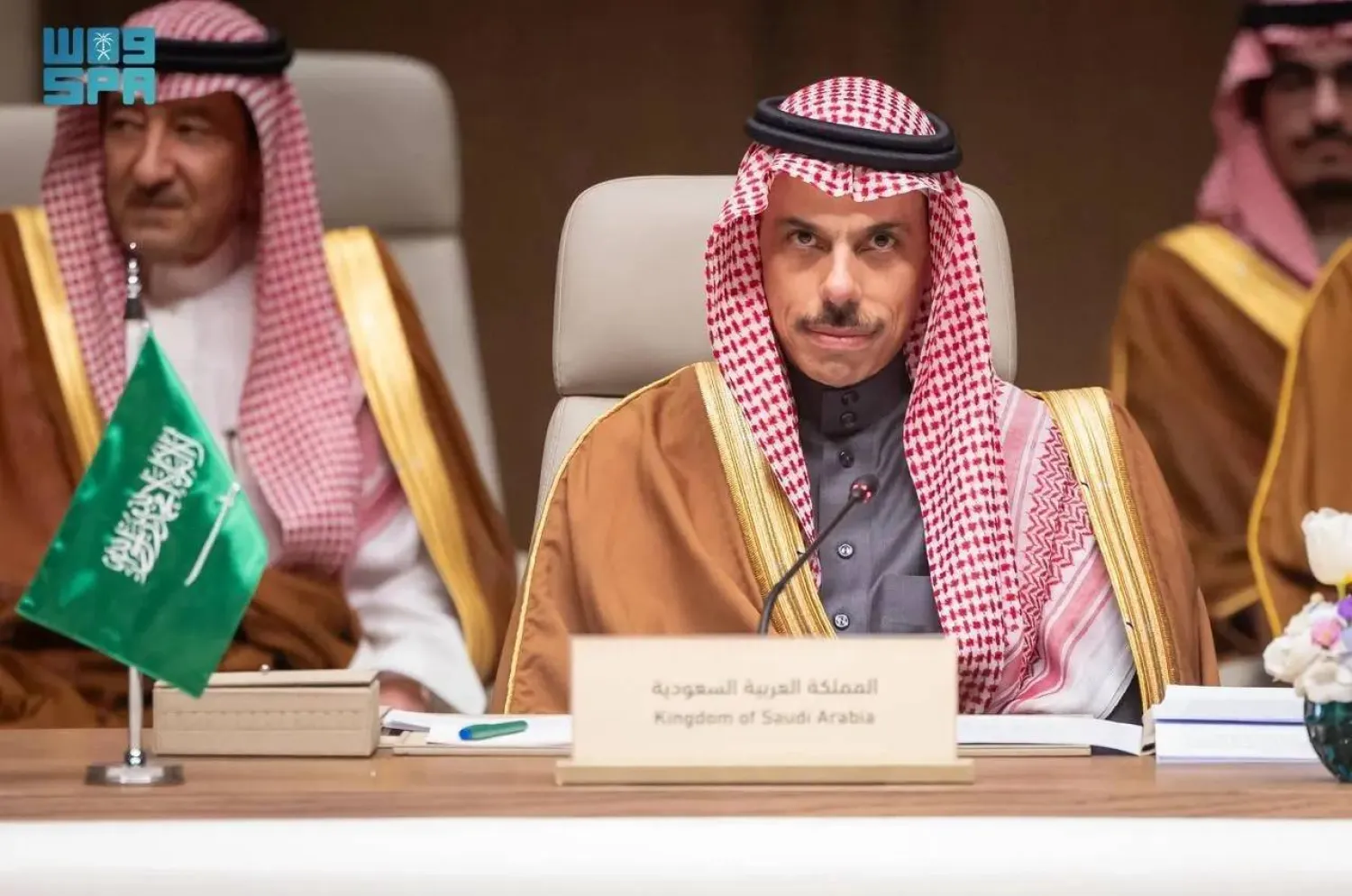
Saudi Foreign Minister Prince Faisal bin Farhan bin Abdullah at the Riyadh meeting. (SPA)
TT

Saudi FM: Trust in Iran Has Been Shattered

Saudi Foreign Minister Prince Faisal bin Farhan bin Abdullah at the Riyadh meeting. (SPA)

Saudi Foreign Minister Prince Faisal bin Farhan bin Abdullah called on Iran on Thursday to cease its attacks on Gulf and Arab countries, warning that its behavior will have a price.

Speaking to the press after a meeting between foreign ministers of the Gulf Arab states and others over the Iranian attacks in Riyadh, he strongly condemned the Iranian attacks, urging the need for collective work to avert further escalation with a focus on defending the security and stability of nations.

The FMs stressed the importance of bolstering joint coordination and consultations to confront the rising security challenges and work together to support regional stability and prevent the conflict from widening.

"What little trust there was before has completely been shattered," Prince Faisal said.

"The attacks on my country and on my neighboring countries that are not involved in this conflict — that’s all I’m interested in," Prince Faisal said. "We’re going to use every lever we have — political, economic, diplomatic and otherwise — to get these attacks to stop."

He criticized Iran’s attacks on Riyadh. "The targeting of Riyadh while a number of diplomats are meeting... I cannot see it as coincidental. I think that's the clearest signal of how Iran feels about diplomacy," Prince Faisal said.

"It tries to pressure its neighbors, and that’s not going to work. It doesn't believe in talking to its neighbors."

"The Kingdom is not going to succumb to pressure, and on the contrary, this pressure will backfire... and certainly, as we have stated quite clearly, we have reserved the right to take military actions if deemed necessary," he said.

The foreign minister condemned the repeated targeting of civilian sites across the Gulf, dismissing Iran's justification that it was targeting US interests in the region as "weak".

"Neither Saudi Arabia nor the Gulf states would accept... blackmail, and escalation will be met with escalation," he said.

These countries have repeatedly said that their territories will not be turned into a launchpad for any military actions against neighbors, he stressed.

Iran will not become a real partner for regional countries given its hostile behavior, he added.

Asked about Iran’s claim that it was targeting US military bases in the Gulf, Prince Faisal said Tehran "has been saying this for years. At the same time, it has repeatedly denied its relationship with armed militias in the region. It always uses weak excuses to target the American presence."

"We have clearly said this to Iran before, the Kingdom will not become a party in the is war. It will not allow its military assets to be used in the war even though our infrastructure has been attacked from day one of the conflict," he remarked.

"Iran had pre-planned these heinous attacks. They are an extension of its behavior that is based on extortion and sponsoring militias, threatening the security and stability of neighboring countries," he went on to say.

The Iranians are practicing political extortion and the Kingdom and Gulf countries reject this, he declared.

"Iran must realize that Gulf countries are capable of political and other forms of responses. They will not back down from defending their countries," he warned. "We hope they get the message of this meeting and cease to attack their neighbors, but I doubt that they are that wise."

"If Iran doesn’t immediately cease its attacks, then nothing will be able to restore trust with it," he continued. "The patience we have shown is not limitless and Iran’s escalation will be met with escalation, whether on the political level or others."

"Iran was never a strategic partner to the Kingdom. It could have had it abandoned its ideas of hegemony over the region, exporting the revolution and the use of force," said Prince Faisal.

"Saudi Arabia has repeatedly tried to extend its hand to the Iranian brothers, the last of which was the Beijing agreement, but the Iranians did not reciprocate," he added.

A joint statement from the foreign ministers' meeting in Riyadh condemned "the deliberate use of ballistic missiles and drones targeting residential areas and civilian infrastructure, including oil facilities, desalination plants, airports, residential facilities and diplomatic missions".

The ministers "affirmed that such attacks cannot be justified under any circumstances and reiterated the right of states to defend themselves", the statement added, calling on Iran to "immediately cease its attacks" and de-escalate tensions.

Qatari Prime Minister Arrives in Riyadh

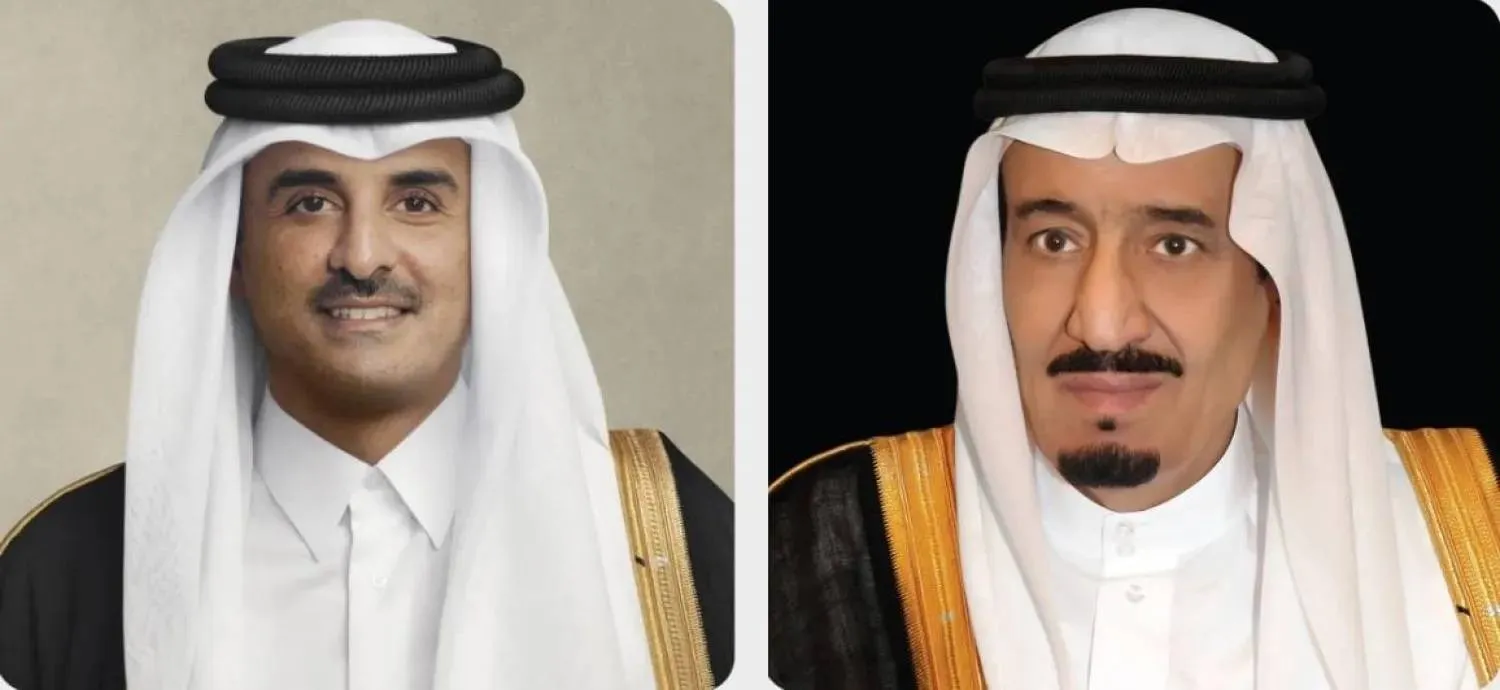
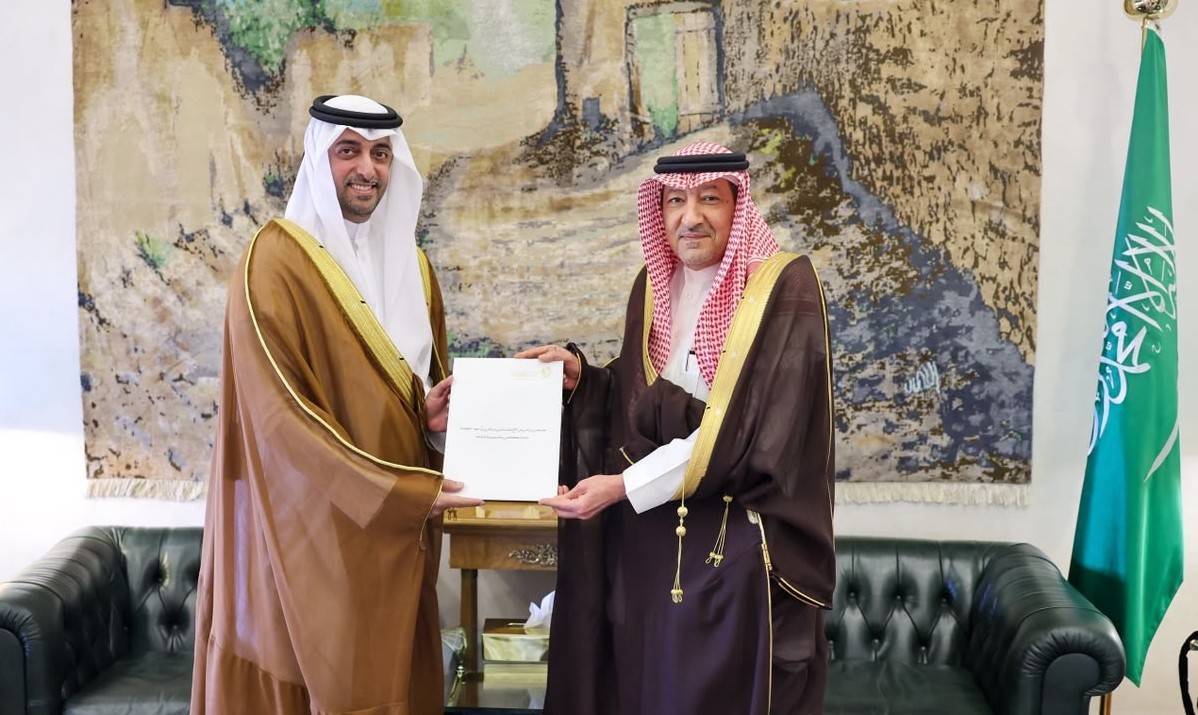
Qatar’s Prime Minister and Minister of Foreign Affairs Sheikh Mohammed bin Abdulrahman bin Jassim Al Thani is welcomed upon his arrival in Riyadh. (SPA)
TT

Qatari Prime Minister Arrives in Riyadh

Qatar’s Prime Minister and Minister of Foreign Affairs Sheikh Mohammed bin Abdulrahman bin Jassim Al Thani is welcomed upon his arrival in Riyadh. (SPA)

Qatar’s Prime Minister and Minister of Foreign Affairs Sheikh Mohammed bin Abdulrahman bin Jassim Al Thani arrived in Riyadh on Wednesday.

He was received by Vice Minister of Foreign Affairs Waleed Elkhereiji at King Khalid International Airport.


UAE Halts All Trade, Financial Dealings with Iran after Attack

Tuesday's announcement is the latest measure against Iran by the UAE after it recalled its ambassador early in the conflict. (Asharq Al-Awsat)
TT

UAE Halts All Trade, Financial Dealings with Iran after Attack

Tuesday's announcement is the latest measure against Iran by the UAE after it recalled its ambassador early in the conflict. (Asharq Al-Awsat)

The United Arab Emirates has said it is suspending all trade and financial dealings with Iran after reporting an Iranian missile attack directed at its ships.

The announcement comes after a period of relative calm in the UAE, with no Iranian missiles aimed at the country since May after it bore the brunt of attacks in the early weeks of the Middle East war.

Abu Dhabi has however accused Tehran of repeatedly targeting its tankers at sea in recent weeks.

"In light of regional escalations... all trade, commercial exchanges, and financial transactions with Iran have been halted until further notice," said UAE foreign ministry communications director Afra Al Hameli.

The UAE is home to a sizeable Iranian community and has been a major trading partner for US-sanctioned Iran, at least before the war.

Tuesday's announcement is the latest measure against Iran by the UAE after it recalled its ambassador early in the conflict.

- Navigation -

Abu Dhabi on Tuesday accused Iran of firing two ballistic missiles towards the country, the first such attack since May.

It later said the salvo was directed at shipping, but Tehran denied firing missiles at the UAE.

"UAE air defenses detected two ballistic missiles launched from Iran towards the country, with the first falling outside the country's territorial waters, while the second fell within the territorial waters," the UAE ministry said in a statement posted to social media.

A second statement released later said the missiles "were targeting maritime navigation and fell into the sea".

Iranian foreign ministry spokesman Esmaeil Baqaei "categorically rejected the United Arab Emirates' claim that Iran had launched a missile towards that country", calling it harmful to regional trust and security efforts.

The first UAE statement came nearly two hours after a phone alert that warned residents of a "potential missile threat".

It was the first such alert since a false alarm in June and an alert in July for an attack that ultimately did not enter UAE territory.

Before that, the last missile warning came in early May.

However, tankers belonging to the UAE's state-owned oil company ADNOC have been repeatedly targeted in the past few weeks.

When the Middle East war began on February 28, the UAE bore the brunt of Iran's attacks, with nearly 3,000 missiles and drones directed at the country -- more than anywhere else in the region.

After a memorandum of understanding between Iran and the United States came into effect in June, which has since collapsed, the UAE reported no attacks, unlike other Gulf states.


MWL, GCC Condemn Israeli Airstrikes on Syria’s Abu al-Duhur Military Airbase

A man rides a motorbike in the town of Abu al-Duhur, Syria, August 18, 2026. (Reuters)
TT

MWL, GCC Condemn Israeli Airstrikes on Syria’s Abu al-Duhur Military Airbase

A man rides a motorbike in the town of Abu al-Duhur, Syria, August 18, 2026. (Reuters)

The Muslim World League (MWL) strongly condemned on Tuesday the Israeli airstrikes targeting Syria’s Abu al-Duhur Military Airbase, saying they are a violation of all international laws and norms.

In a statement, MWL Secretary-General and Chairman of the Organization of Muslim Scholars Sheikh Dr. Mohammed bin Abdulkarim Al-Issa slammed “the aggression against the sovereignty and resources of Syria”, reiterating the league's “full solidarity” with the country in confronting threats to its security, sovereignty and people.

Secretary-General of the Gulf Cooperation Council (GCC) Jasem Albudaiwi also strongly condemned the attack.

“The brutal Israeli targeting of Syrian territory is an unacceptable violation of its sovereignty and territorial sanctity, contradicting international rules and norms that prohibit infringing upon state sovereignty,” he said.

Such continued practices raise tension and escalation and undermine regional and international efforts aimed at achieving security and stability in the region, he warned.

Albudaiwi called on the international community to assume its responsibilities, take a firm stance against these violations, and work to halt Israeli attacks on Syrian territory to safeguard its security and stability.

He reiterated the GCC states' solidarity with Syria, and support for its sovereignty and territorial integrity.
