
Crude Prices Surge, Stocks Sink as Iran Warns of Regional Energy Strikes

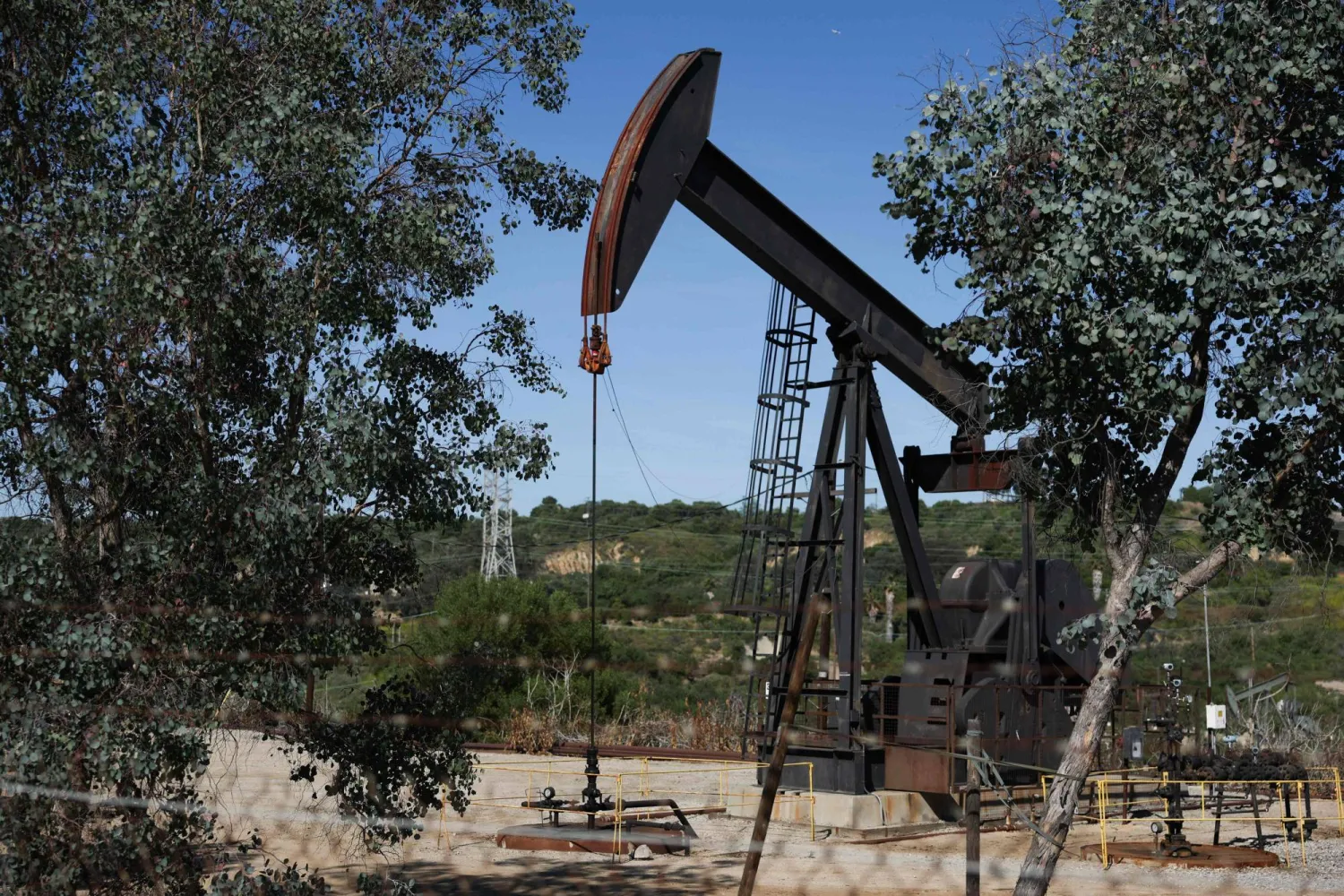
A pumpjack stands at the Inglewood Oil field in Los Angeles, California on March 17, 2026.   (Photo by Patrick T. Fallon / AFP)
A pumpjack stands at the Inglewood Oil field in Los Angeles, California on March 17, 2026. (Photo by Patrick T. Fallon / AFP)
TT

Crude Prices Surge, Stocks Sink as Iran Warns of Regional Energy Strikes

A pumpjack stands at the Inglewood Oil field in Los Angeles, California on March 17, 2026.   (Photo by Patrick T. Fallon / AFP)
A pumpjack stands at the Inglewood Oil field in Los Angeles, California on March 17, 2026. (Photo by Patrick T. Fallon / AFP)

Oil surged more than five percent Thursday and stocks sank as Iran carried out a series of attacks on Gulf energy facilities and warned of more following a strike on one of its key gas fields, while warnings of higher US inflation also soured the mood.

After spending much of Wednesday hovering around $100, crude soared as Tehran threatened to target regional installations in reply to what it said was an Israeli hit on a site serving its massive South Pars field, which it shares with Qatar.

Abu Dhabi later shut down operations at a gas facility due to falling debris from missile interceptions, while Qatar's Ras Laffan site was hit, with QatarEnergy saying emergency teams had been "deployed immediately to contain the resulting fires".

Iranian state television later said Thursday that a missile struck the site again, which QatarEnergy said caused extensive damage.

Qatar has ordered several Iranian diplomats to leave the country.

Meanwhile, the UN nuclear watchdog said Iranian authorities had reported a projectile impact at the country's only operational nuclear power plant but that it caused no damage.

"We warn you once again that you made a big mistake in attacking the energy infrastructure of the Islamic republic," the Revolutionary Guards said in a statement carried by Iranian media.

"If it is repeated again, further attacks on your energy infrastructure and that of your allies will not stop until it is completely destroyed."

And President Masoud Pezeshkian wrote on X that the attacks on South Pars "will complicate the situation and could have uncontrollable consequences, the scope of which could engulf the entire world".

Brent spiked more than five percent to hit a peak of $112.86, while West Texas Intermediate was sitting around $99.

The increased tension hit equities, which had enjoyed a broadly positive start to the week thanks to a fresh rally in tech firms.

Tokyo and Seoul, which had been the best performers between the start of the year and the start of the war, both sank more than two percent.

Hong Kong, Shanghai, Sydney, Singapore, Taipei, Wellington and Jakarta were also well down.

After talks with US President Donald Trump and Qatar's emir, French President Emmanuel Macron said on X: "It is in the common interest to implement without delay a moratorium on strikes targeting civilian infrastructure, particularly energy and water infrastructure."

Markets have been hammered since the US-Israel attacks on Iran on February 28 that sparked a wave of retaliatory strikes across the Gulf by Tehran. The Iranian republic also effectively closed the Strait of Hormuz, through which a fifth of global oil and gas flows.

That has sent crude soaring, stoking fears of another surge in inflation.

And while the White House unveiled new steps Wednesday to try to counter the spike in energy costs prices, waiving a century-old shipping law and easing Venezuela sanctions, observers said the measures were nowhere near enough.

The attacks shook up energy markets, which had seen a period of stability this week helped by Iraq saying it had resumed limited oil exports through Türkiye to avoid the Strait of Hormuz.

The strategic waterway usually sees a fifth of global oil pass through it but Iran has effectively shut it since the outbreak of the war, with attacks on ships.

Expectations that the spike in energy costs would send inflation soaring again has seen traders pare their expectations for central bank interest rate cuts this year.

Those concerns were compounded Wednesday with data showing US wholesale inflation rose more than expected in February.

Later, Federal Reserve Chair Jerome Powell said he expected higher energy prices to boost inflation in the near term but added that little was clear at this point.

"We're right at the beginning of this, and we don't know how big -- you just don't know how big this will be and how long it lasts," he said after the bank held interest rates. Officials would have to "wait and see", he said.

Eyes are also on decisions Thursday by the European Central Bank, the Bank of England and the Bank of Japan.

Australia's central bank hiked its key rate Tuesday, pointing to "sharply higher fuel prices".


IMF Says it's Updating Assessment of US Economy to Reflect Impact of Iran War

An American Flag on the US Capitol Building is seen in Washington, US, August 31, 2023. REUTERS/Kevin Wurm/File Photo
TT

IMF Says it's Updating Assessment of US Economy to Reflect Impact of Iran War

An American Flag on the US Capitol Building is seen in Washington, US, August 31, 2023. REUTERS/Kevin Wurm/File Photo

The International Monetary Fund on Thursday said it is updating a recently completed review of the US economy to reflect the impact of the Iran war, Reuters reported.

IMF spokeswoman Julie Kozack said the updated assessment would be considered by the IMF's board in coming weeks and then published.


Czech Central Bank Keeping Options open as Iran War Clouds Rate Prospects

People leave the Czech National Bank building in central Prague December 9, 2011. REUTERS/Petr Josek/File Photo
TT

Czech Central Bank Keeping Options open as Iran War Clouds Rate Prospects

People leave the Czech National Bank building in central Prague December 9, 2011. REUTERS/Petr Josek/File Photo

The Czech National Bank (CNB) held interest rates steady as expected on Thursday and said it was keeping options open as it monitors the economic fallout from the conflict in the Middle East.

Since the United States and Israel launched strikes on Iran on February 28, oil prices have jumped above $100 a barrel, raising global risks of higher inflation and an economic hit.

Czech central bank policymakers voted unanimously to keep the main rate steady at 3.50% on Thursday, in line with forecasts from all 17 analysts in a Reuters poll last week.

The poll's median forecast saw interest rates remaining on hold for the rest of the year, although money markets have priced in chances of a hike. Governor Ales Michl said after the decision that the conditions for fighting inflation are now better than during the previous energy and inflation shock following Russia's invasion of Ukraine in 2022, as policy is now tighter and rates are higher than inflation.

He added that inflation expectations remain anchored, and it was important to keep them low.

"We are acting restrictively in the economy," he said. "On the other hand, we are monitoring the situation, we are keeping all options open."

The Czech crown was a touch weaker after the bank's decision but largely steady on the day, at 24.49 to the euro, and around its lowest levels since September after this month's declines.

INFLATION STILL SEEN STAYING LOW

The central bank had discussed a possible rate cut at its last meeting in February, before the Iran war. It last cut rates in May 2025 as part of a 350-basis-point easing cycle.

Inflation in the Czech Republic has fallen below the bank's 2% target, hitting a headline rate of 1.4% year-on-year in February with help from a government measure to ease energy bills. That provides a cushion to potential shock from higher oil prices, and Michl said inflation should stay below 2% this year, according to updated forecasts partly incorporating higher oil prices, even though core inflation should remain elevated in the quarters ahead.

The central bank will be looking at the secondary impacts of a higher oil price to see if it soaks through to other segments.


King Khalid International Airport Wins World’s Most Improved Airport at Skytrax Awards 2026

The recognition was announced during the Skytrax World Airport Awards ceremony, London - SPA
TT

King Khalid International Airport Wins World’s Most Improved Airport at Skytrax Awards 2026

The recognition was announced during the Skytrax World Airport Awards ceremony, London - SPA

King Khalid International Airport, managed and operated by Riyadh Airports Company, has achieved global recognition after being named “World’s Most Improved Airport” among more than 560 airports worldwide in 2026. It also received the award for Best Airport in the 30–40 million passengers category, ranked 14th on the list of the world’s best airports, and placed second for Best Airport Staff in the Middle East.

The recognition was announced during the Skytrax World Airport Awards ceremony, held in London on March 18, as part of the Passenger Terminal Expo “PTE World 2026,” with the participation of leading aviation industry figures and experts from around the world, SPA reported.

The achievement reflects the significant progress the airport has made across various areas, driven by a series of development initiatives that have enhanced the passenger experience and elevated service quality in line with the highest international standards, resulting in a qualitative leap in operational efficiency and performance.

This milestone underscores the Kingdom’s accelerating transformation across multiple sectors, including aviation, which continues to grow in line with the objectives of Saudi Vision 2030, aimed at positioning the Kingdom as a global logistics hub and a key center for domestic and international travel.

CEO of Riyadh Airports Company Ayman AboAbah said the achievements reflect the company’s firm commitment to advancing operational services and airport infrastructure.

Meanwhile, Skytrax CEO Edward Plaisted said the recognition reflects the scale of development achieved at King Khalid International Airport, noting that travelers are experiencing clear improvements across all stages of their journey.

He added that the airport’s rise to 14th place in the list of the world’s top 100 airports underscores the strength and impact of these developments, the efficiency of the upgrade plans, and their success in enhancing passenger experience, reinforcing its position as a key regional travel hub, and embodying the scale of its exceptional transformation.