


Trump Says Not Putting US Troops in Region Amid Iran War

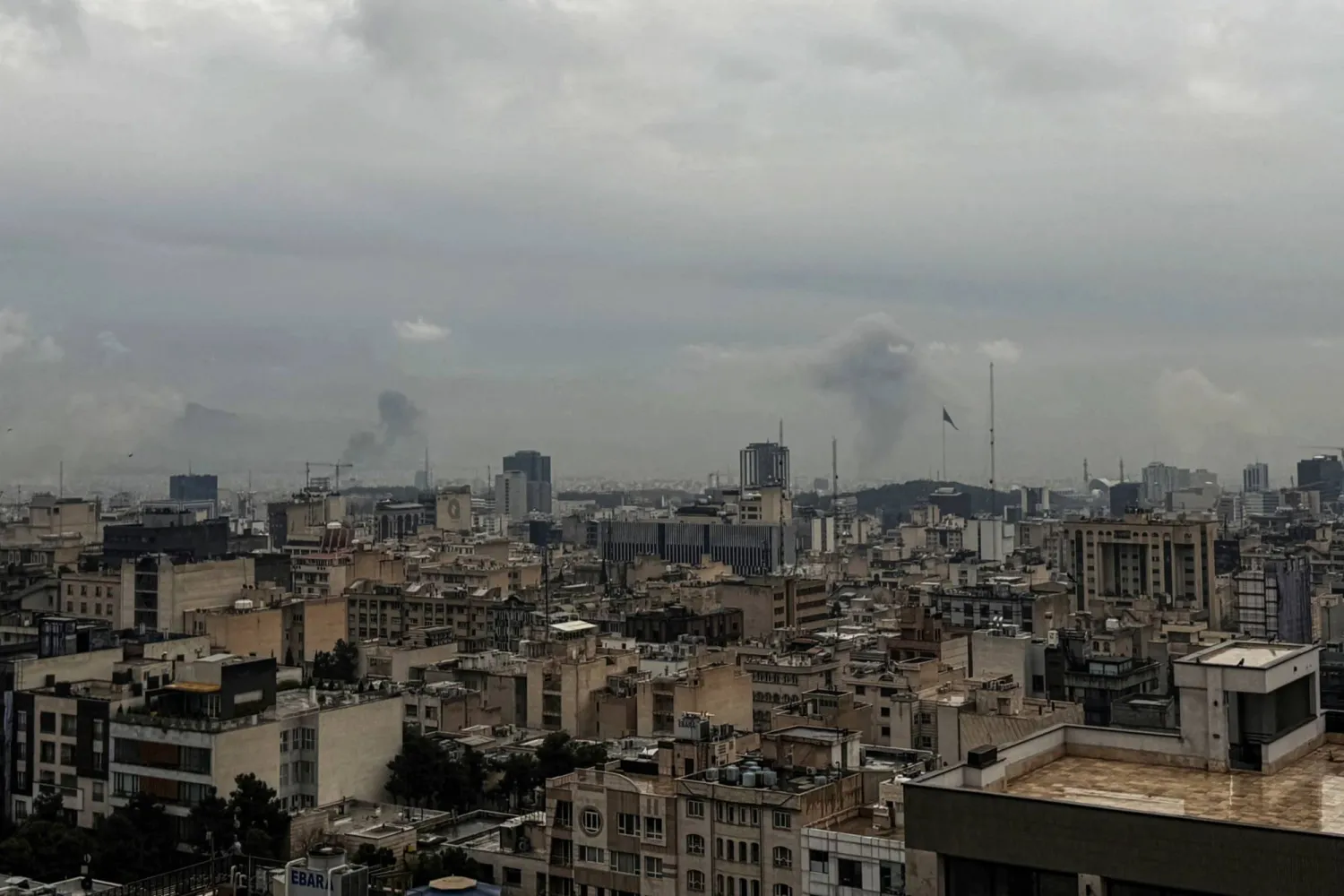
Plumes of smoke rise from the site of a strike in Tehran on March 16, 2026. (AFP)
TT

Trump Says Not Putting US Troops in Region Amid Iran War

Plumes of smoke rise from the site of a strike in Tehran on March 16, 2026. (AFP)

US President Donald Trump on Thursday suggested he was not looking at deploying soldiers to the Middle East with the Iran war heading toward a fourth week.   

"I'm not putting troops anywhere," Trump ‌said in ‌response to a reporter ‌who ⁠asked whether he ⁠was planning to send more service members to the region. "If I were, I certainly wouldn't tell you. But I'm not putting ⁠troops. We will do ‌whatever ‌is necessary."   

Trump spoke at the White House ‌during an Oval Office ‌meeting with Japanese Prime Minister Sanae Takaichi.

Reuters reported on Wednesday that the Trump administration is considering deploying thousands of US troops to reinforce its operation in the Middle East, as the US military prepares for possible next steps in its campaign against Iran, said a US official and three people familiar with the matter. 

The deployments could help provide Trump with additional options as he weighs expanding US operations, with the Iran war well into its third week. 

Those options include securing safe passage for oil tankers through the Strait of Hormuz, a mission that would be accomplished primarily through air and naval forces, the sources said. But securing the Strait could also mean deploying US troops to Iran's shoreline, said four sources, including two US officials. 

Reuters granted the sources anonymity to speak about military planning. 

The Trump administration has also discussed options to send ground forces to Iran's Kharg Island, the hub for 90% of Iran's oil exports, the three people familiar with the matter and three US officials said. One of the officials said such an operation would be very risky. Iran has the ability to reach the island with missiles and drones. 

The United States carried out strikes against military targets on the island on March 13 and Trump has threatened to also strike ‌its critical oil ‌infrastructure. However, given its vital role in Iran's economy, controlling the island would likely be viewed as a better ‌option ⁠than destroying it, ⁠military experts say. 

Any use of US ground troops - even for a limited mission - could pose significant political risks for Trump, given low support among the American public for the Iran campaign and Trump's own campaign promises to avoid entangling the US in new Middle East conflicts. 

Trump administration officials have also discussed the possibility of deploying US forces to secure Iran's stocks of highly enriched uranium, one of the people familiar with the matter said. 

The sources did not believe a deployment of ground forces anywhere in Iran was imminent but declined to discuss specifics of US operational planning. Experts say the task of securing Iran's uranium stockpiles would be highly complex and risky, even for US special operations forces. 

A White House official, speaking on condition of anonymity, said: "There has been no decision to send ground troops at this time, but President Trump wisely keeps all options ⁠at his disposal. 

"The president is focused on achieving all of the defined objectives of Operation Epic Fury: destroy Iran's ballistic missile ‌capacity, annihilate their navy, ensure their terrorist proxies cannot destabilize the region, and guarantee that Iran can ‌never possess a nuclear weapon." 

Asked on Thursday whether he intended to put more troops in the region, Trump told reporters that he was not putting troops "anywhere," but that ‌if he was going to, he would not tell journalists. 

The Pentagon declined to comment. 

The discussions come as the US military continues to attack Iran's navy, its ‌missile and drone stockpiles and its defense industry. 

The US has carried out more than 7,800 strikes since launching the war on February 28 and damaged or destroyed more than 120 Iranian vessels so far, according to a factsheet released on Wednesday by the US Central Command, which oversees the roughly 50,000 US troops in the Middle East. 

US CASUALTIES 

Trump has said his goals go beyond degrading Iran's military capabilities and could include securing safe passage through the Strait and preventing Iran from developing a nuclear weapon. 

Ground forces could help broaden ‌his options to address those goals, but carry significant risk. Even without any direct conflict in Iran, 13 US troops have been killed so far in the war and about 200 have been wounded, although the vast ⁠majority of the injuries have been minor, ⁠the US military says. 

For years, Trump has railed against his predecessors for getting involved in conflicts and has vowed to keep the United States out of foreign wars. But more recently he has refused to rule out the possibility of "boots on the ground" in Iran. 

A senior White House official told Reuters that Trump has various options for acquiring Iran's nuclear material but has not decided how to proceed. "Certainly there are ways in which it could be acquired," the official said, adding: "He hasn't made a decision yet." 

In written testimony to lawmakers on Wednesday, Director of National Intelligence Tulsi Gabbard said Iran's nuclear enrichment program had been obliterated by strikes in June and the entrances to those underground facilities had been "buried and shuttered with cement." 

The sources said the discussions on US reinforcements go beyond the arrival of an Amphibious Ready Group next week in the Middle East, with an attached Marine Expeditionary Unit that includes more than 2,000 Marines. 

But one of the sources noted that the US military was losing a significant number of forces with the decision to send the USS Gerald R. Ford aircraft carrier to Greece for maintenance after a fire on board the vessel. 

Trump has also oscillated on whether the US should secure the Strait of Hormuz. 

After initially saying the US Navy could escort vessels, he called on other countries to help open the key water way. Trump on Wednesday also mused about simply leaving. 

"I wonder what would happen if we 'finished off' what's left of the Iranian Terror State, and let the Countries that use it, we don't, be responsible for the so called 'Strait?,'" Trump posted on Truth Social. 


Pakistan Seeks Breakthrough in US-Iran Peace Talks

FILE PHOTO: People walk past a billboard about the Strait of Hormuz, in Tehran, Iran, May 17, 2026. Majid Asgaripour/WANA (West Asia News Agency) via REUTERS
TT

Pakistan Seeks Breakthrough in US-Iran Peace Talks

FILE PHOTO: People walk past a billboard about the Strait of Hormuz, in Tehran, Iran, May 17, 2026. Majid Asgaripour/WANA (West Asia News Agency) via REUTERS

Iran's foreign minister met his Pakistani counterpart on Friday to discuss proposals to end the US-Israeli war, Iranian media reported, with Tehran and Washington still at odds over Tehran's uranium stockpile and controls on the Strait of Hormuz.

Two days after presenting the Iranians with the latest US message in the negotiations, Pakistani Interior Minister Syed Mohsin Naqvi held another round of talks with Iranian Foreign Minister Abbas Araqchi in Tehran, the semi-official Tasnim news agency reported.

US Secretary of State Marco Rubio told reporters on Thursday there had been "some good signs" in the talks, but there could be no solution if Tehran enforced a tolling system in the Strait of Hormuz, which it effectively closed to most shipping after the war began on February 28.

"There's some good signs," Rubio said. "I don't want to be overly optimistic ... So, let's see what happens over the next few days."

A senior Iranian source told Reuters on Thursday that gaps had been narrowed, although uranium enrichment and the Strait of Hormuz remained among the sticking points.

The war has wreaked havoc on ⁠the global economy, ⁠with the surge in oil prices stoking fears of rampant inflation. About a fifth of the world's oil and liquefied natural gas shipments travelled through the Strait of Hormuz before the war.

The US dollar was near its highest level in six weeks on Friday amid the uncertainty over the peace talks, while oil prices climbed as investors doubted the prospects of a breakthrough.

"We're coming to the end of week 12, we're six weeks in the ceasefire, and I'm just not really that convinced we're any closer to a resolution between the US and Iran," Tony Sycamore, a market analyst at IG, said of the Middle East war.

US ⁠President Donald Trump said the US would eventually recover Iran's stockpile of highly enriched uranium - which Washington believes is destined for a nuclear weapon though Tehran says it is intended purely for peaceful purposes.

"We will get it. We don't need it, we don't want it. We'll probably destroy it after we get it, but we're not going to let them have it," Trump told reporters at the White House on Thursday.

Two senior Iranian sources told Reuters before Trump's comments that Iranian Supreme Leader Mojtaba Khamenei had issued a directive that the uranium should not be sent abroad.

The US president also railed against Tehran's intentions to charge fees on ships using the strait.

"We want it open, we want it free. We don't want tolls," Trump said. "It's an international waterway."

Trump faces domestic pressure ahead of November midterm elections, with Americans angry over the surge in fuel prices and his approval rating near its lowest level since he returned to the White House last year. Tehran submitted its latest offer to ⁠the US earlier this ⁠week.

Tehran's descriptions suggest it largely repeats terms Trump previously rejected, including demands for control of the Strait of Hormuz, compensation for war damage, lifting of sanctions, release of frozen assets and the withdrawal of US troops.

Traffic through the strait has fallen to a trickle compared with 125 to 140 daily passages before the war. Iran has said it aims to reopen the strait to friendly countries that abide by its terms that could potentially include fees.

"It would make a diplomatic deal unfeasible if they were to continue to pursue that. So it's a threat to the world if they were trying to do that, and it's completely illegal," Rubio said.


NATO's Rutte Welcomes Trump Sending Troops to Poland

FILED - 25 June 2025, Netherlands, The Hague: NATO Secretary General Mark Rutte and US President Donald Trump give remarks to the press on the sidelines of the 2025 NATO Summit. Photo: Martijn Beekman/NATO/dpa
TT

NATO's Rutte Welcomes Trump Sending Troops to Poland

FILED - 25 June 2025, Netherlands, The Hague: NATO Secretary General Mark Rutte and US President Donald Trump give remarks to the press on the sidelines of the 2025 NATO Summit. Photo: Martijn Beekman/NATO/dpa

NATO's chief Mark Rutte said on Friday he welcomed US President Donald Trump's announcement to send 5,000 troops to Poland, through ‌he added the ‌trend is ‌still ⁠towards a stronger ⁠Europe less reliant on the United States for its defense.

"Let's be clear: ⁠the trajectory we ‌are ‌on - which is ‌a stronger Europe and ‌a stronger NATO, making sure we will over time, step ‌by step, be less reliant ⁠on ⁠one ally only ... will continue", Rutte told reporters ahead of a NATO meeting in Sweden's Helsingborg.


US Navy Official Says Taiwan Arms Sales on 'Pause' over Iran War

Taiwan-based Thunder Tiger Group's Papa Delta drone is displayed during a media tour in Taichung, Taiwan April 21, 2026. Picture taken with a mobile phone. REUTERS/Ben Blanchard
TT

US Navy Official Says Taiwan Arms Sales on 'Pause' over Iran War

Taiwan-based Thunder Tiger Group's Papa Delta drone is displayed during a media tour in Taichung, Taiwan April 21, 2026. Picture taken with a mobile phone. REUTERS/Ben Blanchard

The acting US Navy secretary said Thursday that arms sales to Taiwan had been put on "pause" to ensure that the American military had sufficient munitions for its Iran operations.

Asked at a congressional hearing about the stalled $14 billion weapons purchase by Taiwan, acting secretary Hung Cao said that "right now we're doing a pause in order to make sure we have the munitions we need for Epic Fury -- which we have plenty."

"But, we're just making sure we have everything, then the foreign military sales will continue when the administration deems necessary."

The US State Department and the Pentagon did not immediately respond to requests for comment on Cao's remarks, said AFP.

Taiwan's Presidential Office spokeswoman Karen Kuo said Friday there was "no information indicating that the US intends to make any adjustments to this arms sale."

US President Donald Trump has not committed to following through with the sale, raising concerns over his commitment to support for Taiwan, which China claims as its own territory.

Ahead of his recent state visit to China, Trump said he would speak with Chinese President Xi Jinping about the arms sales, a departure from Washington's previous insistence that it will not consult Beijing on the matter.

Afterward, he said he had made no commitments to Xi about Taiwan and would be making a determination on the arms sales "over the next fairly short period of time."

The United States recognizes only Beijing, but under US law is required to provide weapons to the self-ruled democracy for its defense.

China has sworn to take the island and has not ruled out using force, ramping up military pressure in recent years.
