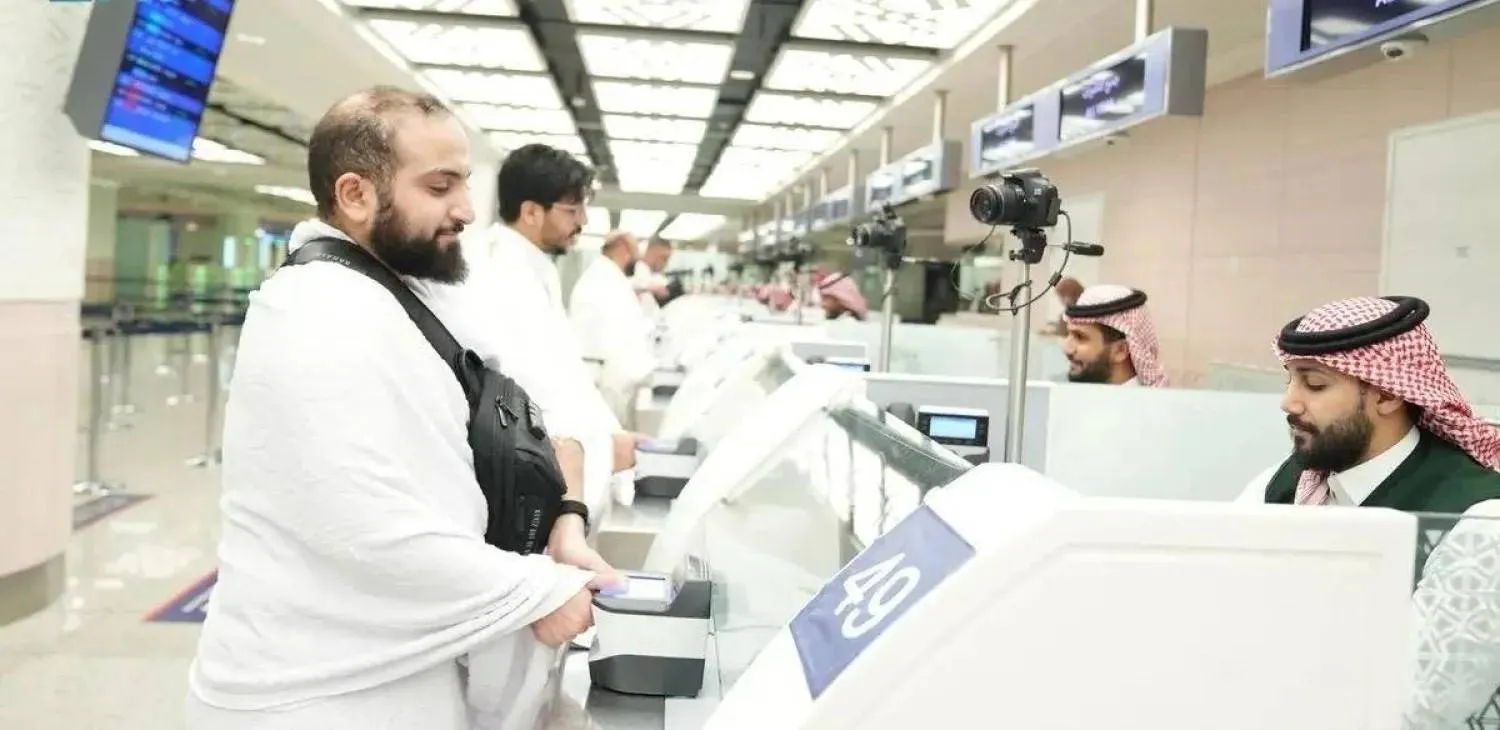

A Pakistani official described Saudi Arabia’s efforts to facilitate the return of Umrah pilgrims to their home countries as “exceptional,” particularly in repatriating Pakistani pilgrims.
He noted that on-the-ground results reflect high efficiency in managing travel flows and strong coordination with Saudi authorities.
Syed Mustafa Rabbani, Consul General of Pakistan in Jeddah, told Asharq Al-Awsat that, following the recent regional suspension of some flight operations, the consulate took immediate measures to ensure the welfare and safety of Pakistani Hajj and Umrah pilgrims.
It coordinated closely with Saudi authorities overseeing Hajj and Umrah, the Nusuk platform, and affected airlines to provide extended accommodation, transport services and medical care when needed.
Special flights and alternative travel options were also arranged to ensure all pilgrims returned safely and on time.
Rabbani said that during the current Umrah season, large numbers of Pakistani pilgrims arrived in Saudi Arabia, with many still in the holy cities of Makkah and Madinah performing rituals, while others have already returned to Pakistan after completing Umrah.
He added that the consulate, in coordination with Saudi authorities and licensed Umrah operators, assisted more than 3,500 stranded Pakistanis.
Efforts are ongoing to organize return flights through operational airports, primarily Jeddah and Madinah, he said, adding that when direct routes are unavailable, alternative flight paths and transit options are arranged in coordination with airlines and Saudi authorities.
Rabbani said Saudi authorities had shown full cooperation and support for Pakistani pilgrims, including flexibility in accommodation arrangements, extensions of stay when needed, efficient transport services and access to healthcare.
He expressed the consulate’s appreciation for the continued support provided to stranded Pakistani pilgrims and travelers in the western region of the Kingdom.
The Pakistani consulate in Jeddah continues intensive coordination with airlines and licensed Umrah operators to address delays and logistical challenges, he said, adding that efforts are underway to arrange additional flights, facilitate rescheduling and provide timely updates to pilgrims.
Field teams, under the direct supervision of the consul general, have been deployed at King Abdulaziz International Airport in Jeddah and Prince Mohammad bin Abdulaziz International Airport in Madinah.
These efforts, in coordination with Saudi authorities, Umrah operators, travel agents and airlines, have helped return a number of travelers to Pakistan and provide accommodation for those still awaiting departure.
Rabbani added that the consulate has set up a 24-hour hotline to guide Pakistani travelers and provide reliable updates on travel developments.
Saudi airports continue to play a central regional role in receiving flights from neighboring countries’ carriers and international airlines, operating with high readiness.
All necessary procedures have been facilitated, reflecting strong coordination and integration, and reinforcing the Kingdom’s regional position.
Saudi airports handled more than 120 flights from neighboring carriers between Feb. 28 and March 16, including requests from Qatar Airways, Kuwait Airways, Iraqi Airways, Gulf Air and Jazeera Airways.
Saudi Arabia’s General Authority of Civil Aviation said it had mobilized all its capabilities to maintain air traffic across the Kingdom’s airports and ensure efficient services for travelers amid the exceptional circumstances facing the Middle East.
In a statement issued the day before yesterday, it said these efforts aim to maintain smooth air navigation and ensure continued services for passengers and national and foreign airlines, alongside coordination with carriers to operate commercial, private and charter flights to return travelers to their destinations.