


Israel Strikes 'Decimated' Iran as War Roils Markets

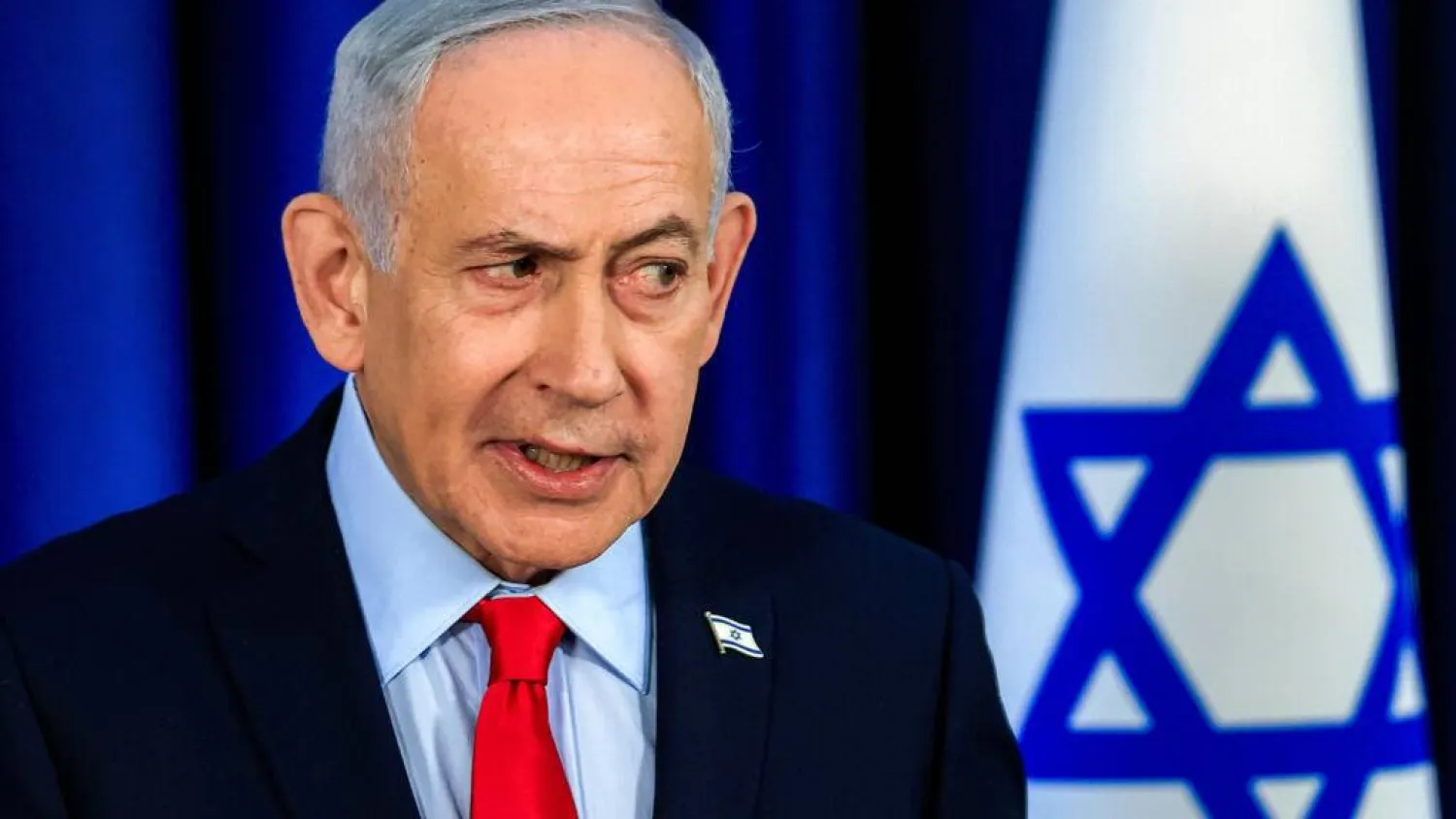
Israeli Prime Minister Benjamin Netanyahu said Iran was being "decimated" in the war. Ronen Zvulun / POOL/AFP
TT

Israel Strikes 'Decimated' Iran as War Roils Markets

Israeli Prime Minister Benjamin Netanyahu said Iran was being "decimated" in the war. Ronen Zvulun / POOL/AFP

Israel launched a new wave of strikes on Tehran on Friday after Prime Minister Benjamin Netanyahu said Iran was being "decimated."

The Iranian capital, under near daily bombardment since a joint US-Israeli attack started the war on February 28, was hit by strikes the Israeli military said were "targeting infrastructure of the Iranian terror regime".

The bombardment came shortly after Netanyahu said the Middle East war had eradicated the Iranian republic's capacity to enrich uranium or manufacture ballistic missiles as the conflict heads towards a fourth week.

"We are winning and Iran is being decimated," the Israeli premier said at a press conference.

But Iran has kept up retaliatory fire on Israel and Gulf nations, including attacks on oil and gas facilities that have exacerbated concerns of a global energy supply shock.

Several blasts were heard over Jerusalem on Thursday night as Israel's military said it had identified three rounds of Iranian missile fire, with no reports of casualties.

The United Arab Emirates and Kuwait reported missile attacks, while Saudi Arabia intercepted more than a dozen drones early Friday as Gulf nations began the observation of Eid al-Fitr, the holiday that marks the end of the Islamic fasting month of Ramadan.

The war, which has killed hundreds and displaced thousands, has quickly spread to Lebanon where the Israeli military has carried out regular bombardments in response to rocket fire on Israel by Iran ally Hezbollah.

Lebanon's health ministry said the death toll from Israeli airstrikes on southern and eastern Lebanon as well as on the capital Beirut and its southern suburbs has surpassed 1,000.

Lebanese President Joseph Aoun, during a meeting with French Foreign Minister Jean-Noel Barrot on Thursday, renewed a call for a truce between Israel and Hezbollah and the opening of negotiations that France's president later said depended on Israel agreeing to join.

Netanyahu, enjoying rising popularity at home from a conflict that has drawn attention away from the Gaza war, said Israel was "winning" against Iran.

"I also see this war ending a lot faster than people think," he said, without providing a specific timeframe.

- 'Cracks' in Iran -

Netanyahu said Israel saw "cracks" in the Iranian leadership and was trying to exploit them.

"Mojtaba, the replacement ayatollah, has not shown his face," he said, in a reference to Iran's newly appointed supreme leader, the son of Ali Khamenei who was killed in an Israeli airstrike on the first day of the war.

Fears of energy supply shortages have sent gas prices surging and oil prices sitting around $100 a barrel.

There was slight optimism on Friday as crude prices eased during early Asia trading in response to Netanyahu's remarks suggesting that the war would end earlier than many feared.

Iranians were marking the new year spring festival of Nowruz on Friday, as well as the final day of Ramadan, with state media reporting Iran would observe the Eid holiday on Saturday.

- No timeframe -

US President Donald Trump indicated he did not know in advance about Israel's raid on South Pars, which supplies about 70 percent of Iran's domestic needs.

"We get along great. It's coordinated, but on occasion, he'll do something" that Washington opposes, Trump said.

Netanyahu said Israel acted alone with the strike and it would respect Trump's request to hold off on future attacks on the gas field.

Trump warned that the United States would "blow up" South Pars if Tehran did not stop attacking Qatar but he said there was no current plan to send ground troops into Iran.

Netanyahu indicated that changing the government in Tehran would require "a ground component", without elaborating.

"There are many possibilities for this ground component and I take the liberty of not sharing (those) with you," he said.

As concerns grow over the conflict's economic fallout, President Emmanuel Macron said France planned to talk with permanent members of the UN Security Council about establishing a framework to secure navigation in the Strait of Hormuz -- but only after fighting had stopped.

Pentagon chief Pete Hegseth said there was no clear end in sight for the war.

"We wouldn't want to set a definitive timeframe," he told reporters.

"It will be at the president's choosing, ultimately, where we say, 'Hey, we've achieved what we need to.'"


Damaged Russian Tanker Days away from Libyan Shores, Italian Official Says

A Russian LNG tanker, Arctic Metagaz, damaged earlier this month and currently adrift without crew, floats in international waters in the Mediterranean Sea between Malta and the Italian islands of Lampedusa and Linosa, in this handout picture released on March 13, 2026. Marina Militare/Handout via REUTERS
TT

Damaged Russian Tanker Days away from Libyan Shores, Italian Official Says

A Russian LNG tanker, Arctic Metagaz, damaged earlier this month and currently adrift without crew, floats in international waters in the Mediterranean Sea between Malta and the Italian islands of Lampedusa and Linosa, in this handout picture released on March 13, 2026. Marina Militare/Handout via REUTERS

A damaged Russian LNG tanker that has been drifting unmanned in the Mediterranean for more than two weeks, risking a major ecological disaster, is four to six days from Libya’s shores, an Italian official said on Friday.

The Arctic Metagaz, carrying LNG from the Arctic port of Murmansk, has been unmanned since early March, when it was hit by Ukrainian naval drones, according to Russia's Transport Ministry.

Kyiv has not claimed responsibility for any such attack.

The tanker is currently in international waters falling under Libya's search and rescue zone, some 53 nautical miles (98 kilometres) north of the capital Tripoli, Italian Civil Protection agency spokesman Pierfrancesco Demilito said.

Based on prevailing southbound winds and sea currents - assuming they do not change - it could take "four, five or six days, more or less," for the vessel to reach Libyan land, Demilito said.

Italy, France, Spain and six other southern EU members wrote last week to the European Commission warning that the Arctic Metagaz poses "an imminent and serious risk of a major ecological disaster."

Demilito said the vessel is estimated to be carrying 450 metric tons of heavy oil and 250 tons of diesel as fuel supplies, and an "uncertain" quantity of LNG, which may have partly regasified and dispersed.

While it has a "large gash on its side" it does not appear to be at imminent risk of sinking, but the concern is that it may run aground or crash into an offshore oil platform, although none are currently nearby, the spokesman said.

Any intervention on the tanker would fall to Libya, since the vessel is in its search and rescue waters, but Italy would be ready to help if asked, Demilito added, indicating that coast guard and navy units were also monitoring the situation.


French FM Calls on Iran to Make 'Major Concessions'

FILE PHOTO: QatarEnergy's liquefied natural gas (LNG) production facilities, amid the US-Israeli conflict with Iran, in Ras Laffan Industrial City, Qatar March 2, 2026. REUTERS/Stringer/File Photo
TT

French FM Calls on Iran to Make 'Major Concessions'

FILE PHOTO: QatarEnergy's liquefied natural gas (LNG) production facilities, amid the US-Israeli conflict with Iran, in Ras Laffan Industrial City, Qatar March 2, 2026. REUTERS/Stringer/File Photo

French Foreign Minister Jean-Noel Barrot said Friday on a visit to Israel that Iran must make major concessions as part of any long-term political solution following the Middle East war.

"Whatever the outcome of the ongoing military operations, it must be complemented by a political solution that produces lasting results," Barrot told journalists in Tel Aviv, AFP reported.

"In this regard, the Iranian regime must be prepared to make major concessions -- a radical change of stance."

Barrot repeated a European call for a moratorium on strikes against energy infrastructure after an Israeli bombardment of Iran's key gasfield pushed up energy prices.

France's top diplomat, who visited Beirut on Thursday, expressed France's "reservations" about Israel's ground operations to fight Iran-backed Hezbollah in Lebanon.

He called on Israel to seize an "historic opportunity" and hold direct talks with the Lebanese authorities, after French President Emmanuel Macron agreed to host negotiations.

"The Lebanese government has signalled its unprecedented openness to direct talks at the highest level with Israel," he said.

Israel's Foreign Minister Gideon Saar said he had discussed with Barrot the "scope of attacks on Israel from Lebanese territory".

"Unfortunately, the Lebanese government and its army are not taking any meaningful action against Hezbollah, neither militarily nor in other aspects," Saar wrote on X.

He also called on the EU to list Hezbollah "in its entirety as a terrorist organization, not only its military wing, as several European countries already did".

Barrot said that regional stability in the Middle East also depended on the implementation of US President Donald Trump's peace plan for Gaza that halted two years of war in October.

The Trump plan envisions the disarmament of Hamas, the gradual withdrawal of the Israeli military and the deployment of an International Stabilization Force, with a transitional Palestinian technocratic committee overseeing day-to-day governance.


Swiss Will Not Export War Equipment to US during Mideast Conflict

A member of ground crew moves munitions towards a USAF B1 B bomber at RAF Fairford airbase, used by USAF personnel, amid the US–Israeli conflict with Iran, in Fairford, Gloucestershire, Britain, March 11, 2026. REUTERS/Phil Noble
TT

Swiss Will Not Export War Equipment to US during Mideast Conflict

A member of ground crew moves munitions towards a USAF B1 B bomber at RAF Fairford airbase, used by USAF personnel, amid the US–Israeli conflict with Iran, in Fairford, Gloucestershire, Britain, March 11, 2026. REUTERS/Phil Noble

Switzerland decided Friday it will not authorize the export of war materiel to the United States during the Middle East conflict, in line with its long-standing principle of military neutrality.

Switzerland has already refused US requests for flights over its territory since the war erupted on February 28 when the United States and Israel began attacks on Iran.

Following that decision, on Friday the Swiss government looked at applying neutrality to exports to states involved in the war.

"The export of war materiel to countries involved in the international armed conflict with Iran cannot be authorized for the duration of the conflict," said a government statement, AFP reported.

"Existing licences and exports of other goods will now be regularly reviewed by an interdepartmental group of experts, particularly with regard to their compatibility with neutrality.

"Exports of war materiel to the USA cannot currently be authorized," and existing US licences will now face regular review, it said, whilst adding that Switzerland has not issued war materiel export licences to Israel or Iran for years.

Since the conflict started, no new licences have been issued for exports of war goods to the United States, Bern said.

Existing US licences "have been determined to be of no relevance to the war at present and can therefore continue to be used", the statement said.

Nevertheless, an expert group drawn from the foreign, defense and economy ministries will regularly review developments in exports of the goods in question to the United States, and assess whether any action is required.

Swiss neutrality traces its roots back to 1516 and has been internationally recognized since 1815.
