Models with Down Syndrome in Romania Strike a Pose for World Down Syndrome Dayhttps://english.aawsat.com/varieties/5253631-models-down-syndrome-romania-strike-pose-world-down-syndrome-day
Models with Down Syndrome in Romania Strike a Pose for World Down Syndrome Day
Antonia Voicu laughs before the SEEN Anonymous Seamstresses Gala, an event organised by the Down Plus Bucharest, an NGO supporting youngsters with Down Syndrome and other intellectual disabilities, in Bucharest, Romania, Wednesday, March 18, 2026, ahead of the World Down Syndrome Day, on March 21. (AP)
TT
TT
Models with Down Syndrome in Romania Strike a Pose for World Down Syndrome Day
Antonia Voicu laughs before the SEEN Anonymous Seamstresses Gala, an event organised by the Down Plus Bucharest, an NGO supporting youngsters with Down Syndrome and other intellectual disabilities, in Bucharest, Romania, Wednesday, March 18, 2026, ahead of the World Down Syndrome Day, on March 21. (AP)
Dozens of models with Down syndrome strutted down a catwalk at a fashion show in Romania’s capital for an evening celebrating style, “atypical beauty” and courage to mark World Down Syndrome Day.
The SEEN Anonymous Seamstresses Gala in Bucharest brought together designers from across the country, who created garments “with great kindness, care and creativity” for young people with Down syndrome and other intellectual disabilities.
Georgeta Bucur, the president of Down Plus Association Bucharest, which organized the event held on Wednesday at the Romexpo center, said 50 seamstresses each created a costume for a youngster they had never met.
“The costumes were created without anyone trying them on," she said. “But the most important thing is that the people gathered together again. This event is really special ... it’s the most beautiful thing that could happen.”
For 19-year-old Antonia Voicu, who wore a puffy green netted dress and a crown of red roses, taking the stage was like a dream come true.
“I feel like I’m always fashionable, and I like to strike a pose, so I like to do like this,” she said, before stepping on the runway. “I’m not nervous at all.”
Antonia’s caretaker, Diana Negres, said the event was “a big step” for Antonia, who had always dreamed of “being a star” parading on stage. “This event gives her exactly this,” she said. “This is her first time, we did no preparation at all, so everything will be spontaneous.”
Cristina Bucur, a seamstress and one of the organizers, said the idea for the fashion show came to her because she has a child with a disability.
"I wanted the other children to see what it’s like to wear a costume during a fashion show, what it’s like to be cheered on stage,” she said. “They enjoy it enormously because they see that someone looks at them, that someone does something for them.”
In Romania, about 12,000 people have Down syndrome, and over 6 million worldwide, according to the Romania Down Syndrome Federation. In 2022, the Eastern European country reported that a person with Down syndrome was born per 847 births.
“On stage, us children go on a parade, and today I’m dressed in a nice dress and try to do some modeling,” said nine-year-old Marusika Burlaca, who took to the stage wearing a pink dress studded with little pearls after having her hair done up.
“Maybe they get a bit nervous at times, it’s the emotions, but they really like to be the center of attention,” said Larisa Bucur, one of the organizers. “We know that they want to be in the spotlight. I think it’s a very good opportunity for them.”
World Down Syndrome Day celebrates the lives of people with Down syndrome to make sure they have equal freedoms and opportunities, and to raise awareness. In 2011, the United Nations General Assembly declared March 21 as the official day of observation.
This year’s theme is combating loneliness, which the World Down Syndrome Day website says can have an outsized impact on people living with Down syndrome.
“Everyone feels lonely sometimes,” it states. “But for many people with Down syndrome and other intellectual disabilities, loneliness is a more common and painful experience.”
Global Warming Will Exceed Limit, UN Says as it Maps Path to Get Back Below Danger Zonehttps://english.aawsat.com/varieties/5313797-global-warming-will-exceed-limit-un-says-it-maps-path-get-back-below-danger-zone
This aerial picture shows a villager walking between dried-up rice fields with cracked soil caused by a prolonged dry season at Wening Galih village in Bogor, West Java on August 28, 2026. (AFP)
TT
TT
Global Warming Will Exceed Limit, UN Says as it Maps Path to Get Back Below Danger Zone
This aerial picture shows a villager walking between dried-up rice fields with cracked soil caused by a prolonged dry season at Wening Galih village in Bogor, West Java on August 28, 2026. (AFP)
In a strategic retreat in the fight against climate change, the United Nations has acknowledged that Earth has lost its chance to prevent some of the worst of global warming's harms. So now the world must figure out how to get temperatures below the danger zone and back to safety, officials say.
Earth is soon going to exceed the safe temperature threshold agreed upon by the world in the 2015 Paris climate accord because of warming from the burning of coal, oil and gas, according to a bleak first-of-its-kind report issued by the United Nations Environment Program Wednesday.
Instead of giving up, scientists and UN officials recommend trying to limit excessive warming and then bring the temperature back down to the agreed-upon threshold. But it still will mean decades of increased weather-related disasters, rising seas, extinctions and melting ice and glaciers.
“Humanity is speeding past the limit to avoid climate catastrophe,” United Nations Secretary-General António Guterres said.
After a period of over-the-limit warming, the new strategy envisions getting back below the limit by ending fossil fuel use and developing some kind of way to suck industries' carbon dioxide out of the air.
“It's a reality check. We have to live with this warmer world,” said report co-author Richard Betts, a climate scientist at the University of Exeter. “But there's still a lot we can do to limit warming.”
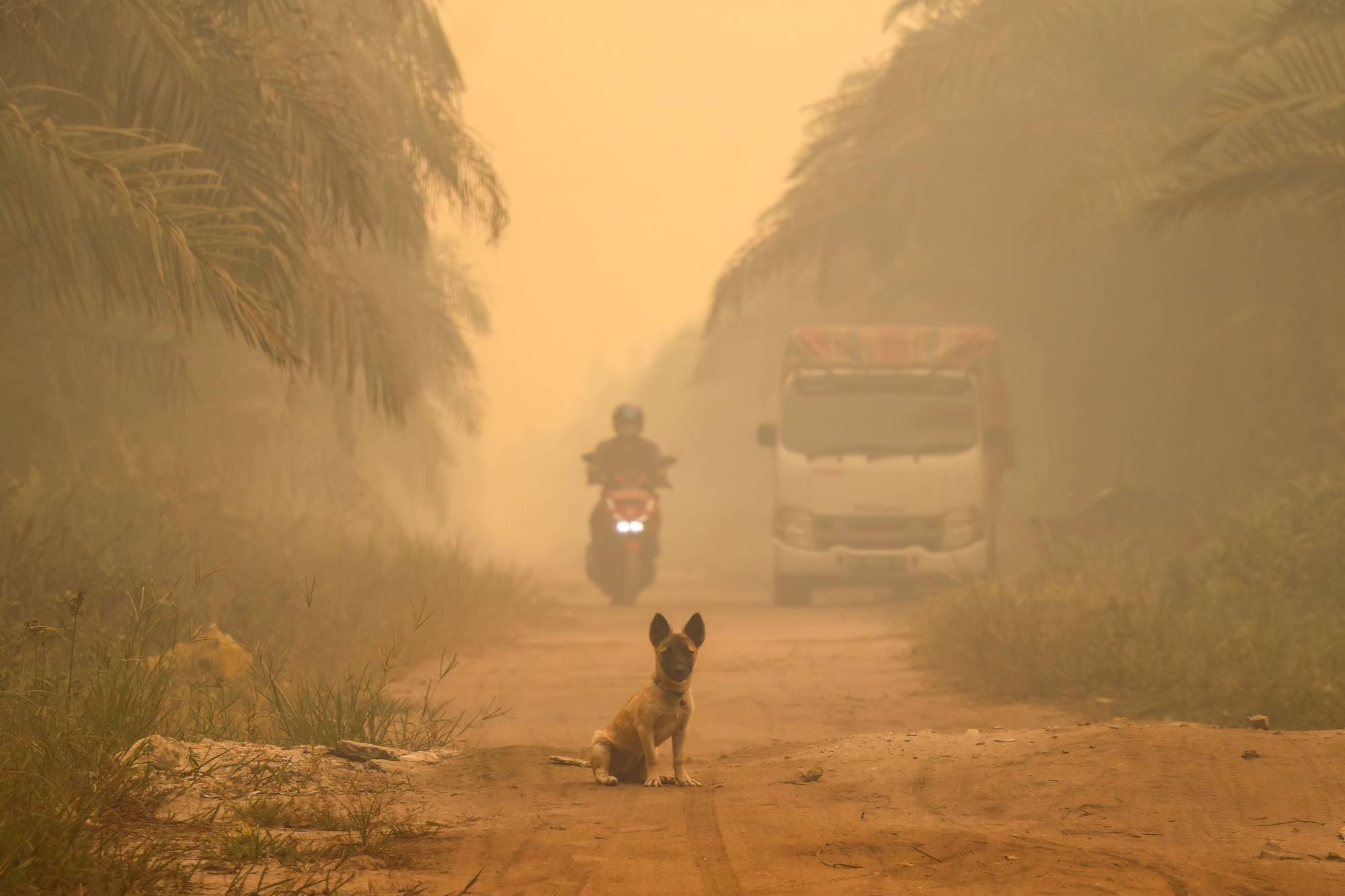
A dog sits in the middle of a haze-shrouded road caused by forest and land fires in Palangkaraya city, Central Kalimantan, on August 28, 2026. (AFP)
Passing the longtime warming threshold
After the Paris climate accord, the United Nations ordered its climate science arm to study different warming limits. A goal of 1.5 Celsius (2.7 Fahrenheit) above mid-19th century temperatures became generally accepted after the scientists found dramatic impacts that affect people and the planet at 2 degrees Celsius (3.8 degrees Fahrenheit) but not at 1.5 degrees.
The world is now at 1.4 C (2.5 F) above pre-industrial levels, some scientists have calculated. The measure is based on a 20-year average, rather than a single year's temperatures.
Despite experts saying there's no way to limit warming to 1.5 degrees, UN officials long maintained the 1.5 window was still open. Wednesday's report finally admitted that the world will cross the 1.5 threshold “in the next few years.”
The report said the most optimistic scenario has warming peaking at 1.8 C (3.2 F) around mid-century if countries pursue ambitious climate goals, but that governments' current policies should push temperatures to 2.6 C (4.7 F) above pre-industrial levels by 2100.
So instead of preventing warming of 1.5 degrees, now the UN said it wants policymakers to “prepare for and navigate a future” in which the globe crosses that limit and then corrects course and cools temperatures. The report envisions that global temperatures will pass 1.5 “within the next few years,” follow a hump-shaped path of more warming, peak, then gradually cool to below the 1.5 mark, ideally by the end of the century. The report and experts call it “overshoot.”
“Let’s be very clear, 1.5 target is still the goal. But now we need to approach it differently from above,” said UNEP Executive Director Inger Andersen.
The 1.5 limit is not “some magical climate cliff” where it’s just game over, said University of Victoria climate scientist Andrew Weaver, who wasn’t part of the study. “Every tenth of a degree we avoid still means less damage.”
Limiting how high temperatures go past threshold is key
It's most important to first limit the new peak temperature and then reduce the amount of time above 1.5 degrees, Andersen said.
But the world likely will be in that overshoot period for “many, many decades,” Betts said.
Every five years of delay in reducing emissions adds at least a tenth of a degree to peak warming, said report co-author Joeri Rogelj, a climate scientist at Imperial College London.
“If we act now we can limit overshoot,” the report said. “Not a safe world, but safer than remaining above” 1.5 degrees for the long term.
“This is among the bleakest UN climate reports I have read. It carries the unmistakable tone of desperation, frustration and urgency — but not resignation,” Weaver said.
Climate scientist Bill Hare, CEO of Climate Analytics, said that “although UNEP does a good job of describing the hole we've dug ourselves into, it does a poor job of showing us that there's a way out.”
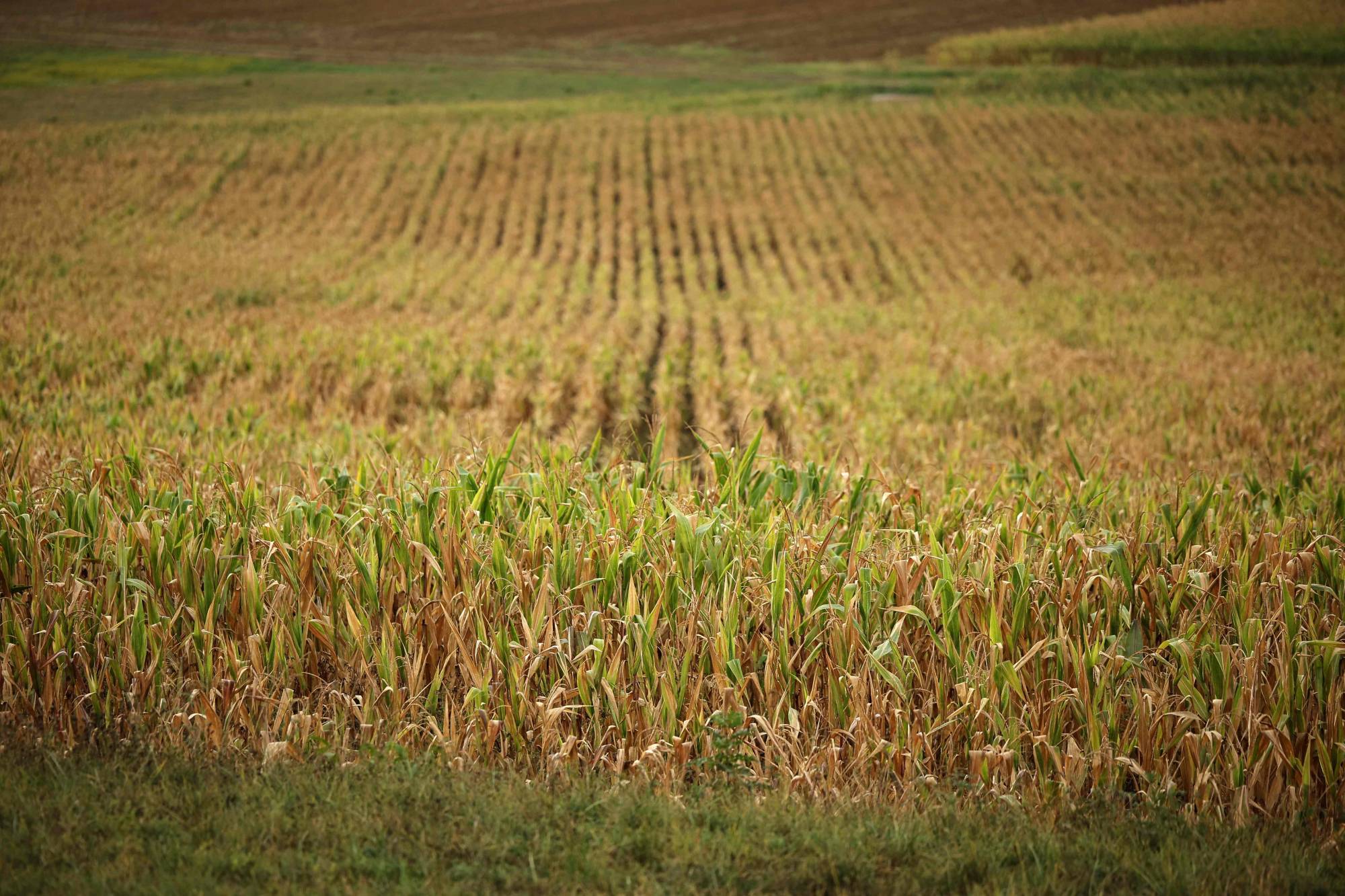
A photograph taken on August 24, 2026 shows a cornfield with dry ears, in Figarol, southwestern France. Due to the repeated heatwaves that have hit the south-west, Sébastien Maylin will be able to “barely cover the cost” of his fertilizer and seeds. (AFP)
Adapting to a deadlier, hungrier, thirstier world
Governments need to increase efforts to adapt to worsening warming, which hits the poor hardest, “because some impacts simply cannot be avoided,” Andersen said.
The report calls this phase “coping and containment.”
During this overshoot period, more people will die or get sick because of the worsening climate change and its extreme weather, the report said. Food production will drop, people will go hungry, water shortages will worsen, economies will be hurt and species like coral will go extinct, the report said.
Although the triggers behind the recent deadly Nepal flooding that came as part of a Himalayan glacier dislodging are complex, Betts said “unfortunately we do expect to see more of such things and this is exactly why we need to limit peak warming.”
The report warns of “tipping points” with irreversible and cascading effects, including the loss of the West Antarctic and Greenland ice sheets, the loss of the Amazon rain forest and the shutdown of the Atlantic Ocean circulation system that keeps much of Europe warm.
“Some locations might become more or less uninsurable or even uninhabitable,” the report said.
The last phase in overshoot is cooling the planet by removing carbon dioxide from the air and storing it somewhere. The report said the traditional approach of this is planting more trees, but it says planting trees could, at most, shave a tenth of a degree off global temperatures. So the authors said more novel carbon removal approaches will be needed.
Other scientists called that unreliable and expensive.
“We were unable to stop the runaway train of global emissions to avoid 1.5 C of warming,” said Stanford University climate scientist Rob Jackson, who wasn't part of the report. “Now overshoot scenarios require us to stop the train quickly and to back it up. Is it our best hope? Absolutely. Is it likely? Absolutely not.”
New York City to Ban AI in Public Schools Through Eighth Gradehttps://english.aawsat.com/varieties/5313791-new-york-city-ban-ai-public-schools-through-eighth-grade
New York City to Ban AI in Public Schools Through Eighth Grade
The words “artificial intelligence,” a keyboard and robotic hands are seen in this illustration. (Reuters)
New York City will ban the use of artificial intelligence for students in public schools through eighth grade, a source close to the matter told AFP on Wednesday, confirming US media reports.
Teachers and parents have warned against the use of AI in schools over concerns about harming children's mental health and cognitive development, as well as environmental damage.
AI use will only be allowed in high school, which begins in the ninth grade in the American school system, the source said.
Even then, it will be limited to specific uses, such as learning about the technology itself, they said.
Eighth graders in the US are typically about 13 years old.
New York City Hall and the city's education department did not immediately respond to AFP's request for comment.
According to the New York Times, AI "companion chatbots" offering psychological support will also be banned.
The rules, however, allow teachers to use AI for tasks including preparing lessons or writing messages.
The new rules are to be announced on Wednesday, the Times reported.
The city's education department recommends limiting screen time to 45 minutes in class for middle schoolers -- sixth through eighth grade -- and 30 minutes for elementary school students.
But the question remains of how to monitor AI use, since it often takes place outside the school environment.
The new rules follow an initial framework published in March, which used a traffic light system to determine which tasks AI would be used for.
The framework, which allowed students to use AI for research, exploration and creative projects, sparked fury among many parents and teachers who considered it too lenient.
In response, the city's schools chancellor Kamar Samuels said that leaders had "missed the mark" in their communications, adding his office would carefully review parents' feedback for incorporation into future rules.
The city had long planned to follow the March framework with a more comprehensive "guidebook" to take feedback into account, the education department has said.
The department will set up a task force made up of teachers, elected officials, experts and union representatives.
The task force is to produce a report in April, intended to serve as the basis for New York's AI-in-schools policy.
The city's public school technology policies are closely watched by the rest of the United States, as it is by far the largest school district in the country, with over 900,000 students in 2024-2025.
Saudi General Directorate of Passports Showcases Contactless E-Gate at LEAP 2026https://english.aawsat.com/varieties/5313717-saudi-general-directorate-passports-showcases-contactless-e-gate-leap-2026
Saudi General Directorate of Passports Showcases Contactless E-Gate at LEAP 2026
The General Directorate of Passports is showcasing the contactless e-gate at the Ministry of Interior’s pavilion during LEAP 2026. (SPA)
The General Directorate of Passports is showcasing the contactless e-gate at the Ministry of Interior’s pavilion during LEAP 2026, held from August 31 to September 3, at the Riyadh Exhibition and Convention Center in Malham, north of Riyadh, the Saudi Press Agency reported on Wednesday.
Visitors to the ministry’s pavilion viewed the e-gate, a self-service technology used at international ports. The gate allows travelers to pass through by simply moving the palm of their hand over a reader without touching it. The system automatically verifies the traveler’s identity and opens the gate without requiring the presentation of travel documents or fingerprint scanning.
During the exhibition, the directorate is showcasing innovative digital solutions that facilitate passenger movement through international ports, as part of its efforts to enhance digital operations and leverage modern technologies to improve service efficiency and the beneficiary experience.
لم تشترك بعد
انشئ حساباً خاصاً بك لتحصل على أخبار مخصصة لك ولتتمتع بخاصية حفظ المقالات وتتلقى نشراتنا البريدية المتنوعة