Russia Opposes Hormuz Blockade, Interfax Reports

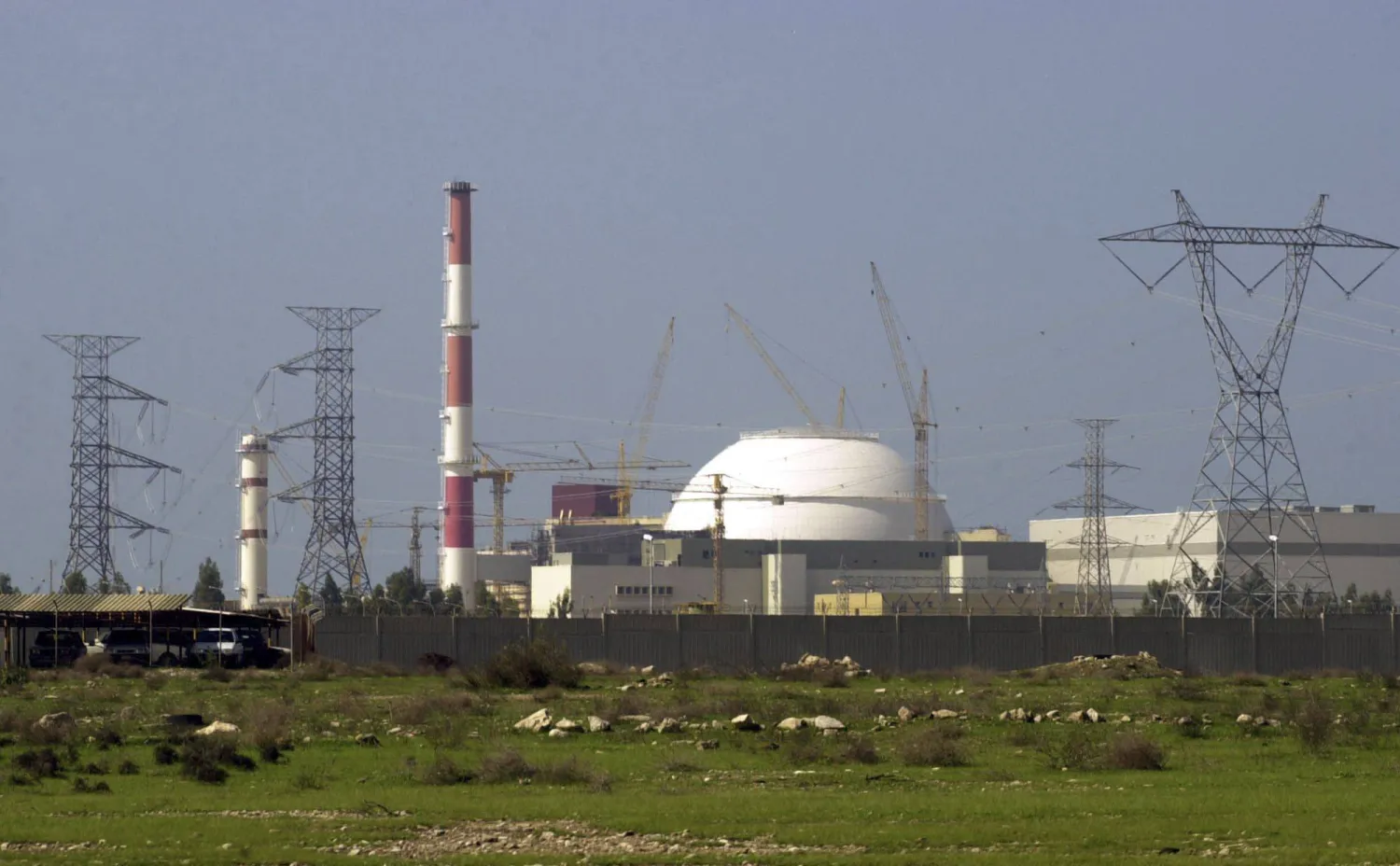
The reactor building of Iran's nuclear power plant and electricity poles are seen, at Bushehr, Iran, 750 miles (1,245 kilometers) south of the capital Tehran, Iran, Feb. 27, 2005. (AP Photo/Vahid Salemi, File)
TT

Russia Opposes Hormuz Blockade, Interfax Reports

The reactor building of Iran's nuclear power plant and electricity poles are seen, at Bushehr, Iran, 750 miles (1,245 kilometers) south of the capital Tehran, Iran, Feb. 27, 2005. (AP Photo/Vahid Salemi, File)

Russia opposes any blockade of the Strait ‌of ‌Hormuz but ‌says ⁠such issues must ⁠be viewed in ⁠the context ‌of ‌the broader ‌global ‌situation, Interfax reported ‌on Monday, citing the ⁠Russian Foreign ⁠Ministry.

In a statement the Ministry said: “We hope the United States acts wisely and not threaten Bushehr nuclear power plant”.

US President Donald Trump and Iranian leaders traded threats over the key Strait of Hormuz Monday, amid threats that the US-Israel war on Iran could last several more weeks.

With the conflict now in its fourth week and showing no sign of ending, the head of the International Energy Agency warned of the worst global energy crisis in decades and said the world economy was under "major threat" from it.

Observers, meanwhile, have also raised the prospect of a surge in inflation that could force central banks to hike interest rates, while the choking off of fertilizer shipments has also fanned concerns about global food security.

The US president on Saturday gave Iran 48 hours to reopen the Strait of Hormuz to shipping or face the destruction of its energy infrastructure.

The ultimatum, made just a day after the US leader said he was considering "winding down" military operations, came as the waterway -- through which a fifth of global oil and gas flows -- remained effectively closed.


Iran Issues Security Directives to Control Narrative Around Khamenei Funeral

Satellite image of Tehran’s Grand Mosalla during the funeral ceremony for former Iranian Supreme Leader Ali Khamenei in Tehran, July 5, 2026. (Planet Labs/Reuters) 
TT

Iran Issues Security Directives to Control Narrative Around Khamenei Funeral

Satellite image of Tehran’s Grand Mosalla during the funeral ceremony for former Iranian Supreme Leader Ali Khamenei in Tehran, July 5, 2026. (Planet Labs/Reuters) 

Iran’s security agencies have ordered media outlets and public relations departments at state institutions to adhere to a unified framework when covering news and analysis related to the funeral of former Supreme Leader Ali Khamenei, in an effort to tightly manage the public narrative during one of the country’s most sensitive political moments since the leadership transition.

The directives, obtained by Asharq Al-Awsat, instruct media organizations to reinforce specific messaging, remove accounts that deviate from the official narrative, and portray the funeral as proof of the continuity of the leadership and the resilience of the political system in the face of what the document describes as the enemy’s “cognitive warfare.”

The document treats the funeral as a political, security, and media event simultaneously. It instructs outlets to depict public attendance as a unique “human shield” and as a “strategic declaration of loyalty” to Khamenei’s legacy and the Iranian Revolution’s “strategic depth.”

Media observers in Tehran said the directives reflect an effort to shape public opinion and curb media pluralism during a delicate transitional period.

The guidance requires coverage to revolve around three themes: “continuity of leadership,” “continuity of resistance,” and “a bright future.” It warns that inconsistent messaging would create space for competing narratives and urges all media to adopt a unified account on behalf of what it calls the “Front of the Revolution.”

The document also calls for highlighting the attendance of foreign delegations and republishing favorable analyses from Western media in domestic outlets as evidence of the success of Iran’s public diplomacy and the failure of efforts to isolate the country despite sanctions.

It instructs media to counter arguments by supporters of the former Pahlavi monarchy while avoiding defensive responses, instead emphasizing what it describes as the regime’s achievements in the nuclear, missile, and regional arenas.

Emphasis is placed on rebutting narratives of a “succession vacuum” and an “uncertain future.” The directives call for calm, well-documented explanations of Iran’s constitutional succession process to prevent what they describe as a cascading collapse in public confidence.

The guidance also bans coverage that could inflame political or sectarian divisions, urging media to stress national unity and consensus.

Media are further instructed to portray the funeral crowds as a historic display comparable to the 1979 Iranian Revolution and a decisive rebuttal to predictions of state collapse. They are encouraged to use statistics, photographs, and field reports to project national strength and cohesion, while incorporating deterrent messages emphasizing Iran’s military readiness and continued commitment to the “path of resistance.”

Finally, the directives warn against what they describe as pessimistic analyses or forecasts rooted in fear and uncertainty, urging media instead to promote an image of “a proud and advancing Iran” through what the document calls the “engineering of hope,” while affirming that “Iran’s future is bright and remains connected to the path of the Imam and the leadership.”


Iran Fires Two Missiles at Commercial Ships in Strait of Hormuz, Axios Report

Vessels in the Strait of Hormuz (Reuters) 
TT

Iran Fires Two Missiles at Commercial Ships in Strait of Hormuz, Axios Report

Vessels in the Strait of Hormuz (Reuters) 

Iran's Revolutionary Guards fired at least two missiles at commercial ships transiting through the Strait of Hormuz on Monday night, Axios reported, citing two US officials.

Two commercial ships suffered significant damage but had no casualties, the report said, citing a US official.

Separately, Britain's maritime security agency said a tanker caught fire after being hit by an unknown projectile early on Tuesday.

The United Kingdom Maritime Trade Operations (UKMTO) said the incident took place eight nautical miles east of Limah, Oman, according to AFP.

“A tanker has reported being hit by an unknown projectile on the port side causing a fire, whilst travelling southbound,” UKMTO said in a post on X.

The agency said there were no reports of casualties or environmental damage.

“Vessels are advised to transit with caution and report any suspicious activity to UKMTO,” the agency added, saying authorities were investigating.

Since March, a number of commercial vessels came under attack in the Strait of Hormuz when Iran blockaded the waterway in response to US-Israeli attacks.

In return, the United States imposed its own naval blockade and later launched retaliatory strikes against Iran after accusing Tehran of targeting commercial shipping.

Maritime traffic resumed after Washington and Tehran signed a memorandum of understanding on June 17 aimed at ending the conflict and reopening the strategic route.

However, Iran has insisted there will be no return to pre-war arrangements, under which vessels could pass freely through the strait.

Tehran has warned ships against using routes outside a corridor it has authorized along its coastline.


Iran Foreign Minister Says US Threats are an Impediment to Deal-making

A handout photo made available by the Iranian foreign ministry office shows Iranian Foreign Minister speaking during a meeting with foreign ambassador and diplomats at the foreign ministry office, in Tehran, Iran, 16 June 2026.EPA/IRANIAN FOREIGN MINISTRY OFFICE HANDOUT
TT

Iran Foreign Minister Says US Threats are an Impediment to Deal-making

A handout photo made available by the Iranian foreign ministry office shows Iranian Foreign Minister speaking during a meeting with foreign ambassador and diplomats at the foreign ministry office, in Tehran, Iran, 16 June 2026.EPA/IRANIAN FOREIGN MINISTRY OFFICE HANDOUT

Talks to reach a final deal between Tehran and Washington won't start if US threats continue, Iran's foreign minister said ‌on Tuesday, ‌following US President ‌Donald ⁠Trump's threat to "finish ⁠the job" if a deal is not made.

"Negotiations on final deal will ⁠not commence if ‌threats continue. ‌Honor your signature," ‌Abbas Araghchi ‌wrote in a post on X.

Araghchi's post was referring to ‌an interim deal signed last month by ⁠Iran ⁠and the US that calls upon both sides to refrain from the threat or use of force against each other.