


Alibaba Unveils Next-gen Chip for Agentic AI

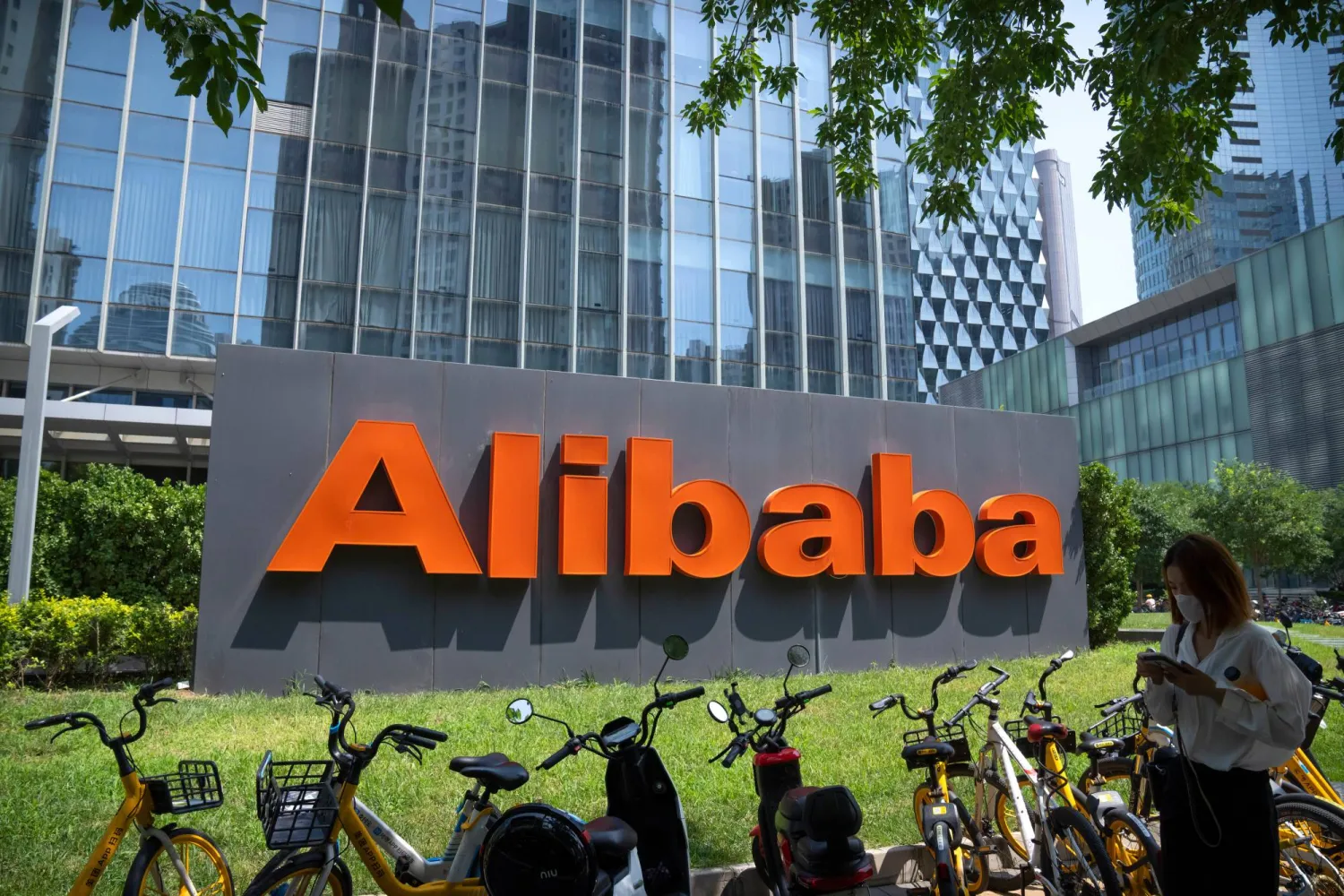
FILE - The logo of Chinese technology firm Alibaba is seen at its office in Beijing, Aug. 10, 2021. (AP Photo/Mark Schiefelbein, File)
TT

Alibaba Unveils Next-gen Chip for Agentic AI

FILE - The logo of Chinese technology firm Alibaba is seen at its office in Beijing, Aug. 10, 2021. (AP Photo/Mark Schiefelbein, File)

Alibaba on Tuesday revealed its next-generation XuanTie C950 5-nanometer processor at an internal conference, the company said in a blog post, as the Chinese tech giant gears up for the shift towards agentic AI.

The 3.2 GHz server chip, built using open-source RISC-V chip architecture, was billed as "the highest performing RISC-V CPU in the world" at a conference hosted by DAMO Academy, Alibaba's research arm, according to Chinese media reports.

The chip performs more than three times ⁠faster than its predecessor, ⁠the XuanTie C920, the reports said, according to Reuters.

The company did not reveal which fab manufactured the chip.

“RISC-V’s open-standard nature allows chip designers to customize instruction sets and accelerate specific AI workloads with no or low licensing fees. This is particularly important for the ⁠development of AI agents," the blog post said.

Alibaba is accelerating in-house chip development through its T-Head semiconductor arm, primarily focusing on the Zhenwu 810E chip series for AI training and inference, while the XuanTie series is focused on high-performance cloud systems and agentic AI.

The move comes after Alibaba last week launched Wukong, its enterprise platform optimized for AI agent workflows, as companies and institutions throughout China adopt OpenClaw.

⁠Its international ⁠equivalent, Accio Work, was launched on Monday. The agentic AI platform says it can autonomously run complex business operations for small and medium-sized enterprises.

The firm reorganized some of its AI-focused teams under the newly created Alibaba Token Hub earlier this month, which focuses on building AI work platforms for enterprises.

The business strategy shift comes as Alibaba finds new ways to ensure profitability as Chinese AI models' token prices have dropped dramatically amid fierce domestic competition.


Taiwan Raids Tech Firms in China AI Chip Smuggling Probe

This handout photo from the Taiwan Coast Guard taken on May 20, 2026 and released on May 21 shows pallets of servers made by Super Micro Computer seized by Taiwanese authorities at an undisclosed location. (Photo by Handout / TAIWAN COAST GUARD / AFP)
TT

Taiwan Raids Tech Firms in China AI Chip Smuggling Probe

This handout photo from the Taiwan Coast Guard taken on May 20, 2026 and released on May 21 shows pallets of servers made by Super Micro Computer seized by Taiwanese authorities at an undisclosed location. (Photo by Handout / TAIWAN COAST GUARD / AFP)

Taiwanese investigators have raided the Taiwan offices of US company Super Micro Computer and two other tech firms, a prosecutor said Tuesday, as part of an expanded probe into the alleged smuggling of Nvidia AI chips to China.

Prosecutors said in May they were investigating the shipment of "high-end" AI servers containing advanced Nvidia chips to China, Macau and Hong Kong, in violation of US export controls.

Nine people are now under investigation, up from three previously, Huang Sheng, head prosecutor in the Keelung Prosecutors Office, told AFP.

They are accused of forging documents so they could ship roughly 50 servers made by Super Micro Computer to China.

Some of the servers were cleared by Taiwan customs and sent to China via Japan, an official previously told AFP on the condition of anonymity.

Twelve sites were raided on Monday as part of the probe, the prosecutors office said in a statement.

They included the homes of six people and offices of the companies they worked for -- Nasdaq-listed Super Micro Computer and Taiwan-listed firms Albatron Technology and Chief Telecom.

The United States restricts the export of its most cutting-edge AI chips to China, partly over concerns the technology could be used by Beijing's military.

But it is not a criminal offence in Taiwan -- a situation lawmakers and experts say needs to change -- with Taiwanese prosecutors relying on other laws to go after offenders.

Lawmaker Chung Chia-pin, who belongs to President Lai Ching-te's Democratic Progressive Party (DPP), plans to propose an amendment to the Foreign Trade Act to include a "mainland China semiconductor chip clause" that would make exporting chips there illegal.

Chung told AFP Tuesday that a loophole in the law was created under former president Ma Ying-jeou, who belongs to the Kuomintang party, and successive DPP-led governments have failed to close it.

Top-end chips made by US titan Nvidia -- the world's most valuable company -- are used to train and run AI systems.

In response to Washington's export restrictions, China has been accelerating efforts to develop its own AI chips and break away from reliance on US hardware.

This month, Taiwanese Deputy Economic Affairs Minister Ho Chin-tsang said Taiwan and the United States "will work to implement our shared export control goals", but the government has not provided details.

Chris McGuire, an expert on China and AI at the US-based Council on Foreign Relations, said chip smuggling was a "really significant problem" in Taiwan and Southeast Asia.

"It's really, really important that allies align with the United States on all of these policies and also legal authorities," McGuire, who worked at the National Security Council under former US president Joe Biden, told a forum in Taipei this month.

"It's not a criminal violation in Taiwan to export AI chips to China, obviously it is under US law, but it's not under Taiwanese law. That needs to change, right?"

Super Micro Computer, Albatron Technology and Chief Telecom have said separately they are cooperating with investigators. Their shares have seen sharp falls this week.

Prosecutors say it is too early to know if the case is linked to a Nvidia chip smuggling case involving Super Micro Computer employees in the United States.

A US indictment unsealed in March showed employees of the company allegedly raked in billions of dollars diverting Nvidia AI chips to China in breach of export controls.


WhatsApp Will Allow Users to Go by Usernames Instead of Phone Numbers, Closing a Privacy Blind Spot

A WhatsApp icon is displayed on an iPhone, Nov. 15, 2018, in Gelsenkirchen, Germany. (AP)
TT

WhatsApp Will Allow Users to Go by Usernames Instead of Phone Numbers, Closing a Privacy Blind Spot

A WhatsApp icon is displayed on an iPhone, Nov. 15, 2018, in Gelsenkirchen, Germany. (AP)

WhatsApp users will soon get the option of going by usernames instead of phone numbers, the company said Monday, announcing plans to address a privacy blind spot.

The app said it has started allowing users to reserve unique usernames, which can be used to contact WhatsApp users when the feature is launched later this year.

WhatsApp, which says it has more than 3 billion users globally, has until now allowed users to be contacted by anyone who has their phone number.

The app, owned by Meta Platforms, said in a blog post that over the “coming months” users will get the option to be found and contacted only by their username, and not their number. It wasn't more specific about the timeline.

“We have designed this as a core privacy feature,” Alice Newton-Rex, WhatsApp's vice president of product, told reporters.

There won't be a directory of usernames on the app, and the app won't suggest names as you type.

“People will need to know your exact username to contact you for the first time,” she said.

WhatsApp's current privacy settings are limited to blocking individual users and silencing unknown callers. The app also allows users to add a profile name, but that's only displayed in chat groups for other people who don't have the user's contact info saved.

While Americans still prefer text messaging to WhatsApp, the app is widely used in Europe, Asia and much of the rest of the world.

Catchy online handles are highly coveted and users will likely scramble to claim a desirable one.

“I think a lot of people will go and get usernames and that’s why we decided to open reservations early,” Newton-Rex said.

Companies, organizations and creators with existing accounts on Meta's social media platforms, Instagram and Facebook, will get the chance to claim their usernames on WhatsApp.

Usernames need to be between three and 35 characters. To prevent impersonation, WhatsApp will hold back usernames for high-profile people or groups such as celebrities, public figures and government entities.


BT, Verizon Join Forces to Create $4 Billion Int’l Joint Venture

The Verizon logo is seen on the 375 Pearl Street building in Manhattan, New York City, US, November 22, 2021. REUTERS/Andrew Kelly
TT

BT, Verizon Join Forces to Create $4 Billion Int’l Joint Venture

The Verizon logo is seen on the 375 Pearl Street building in Manhattan, New York City, US, November 22, 2021. REUTERS/Andrew Kelly

BT and Verizon on Monday announced a deal to combine their international enterprise operations into a 50:50 joint venture, focusing on serving multinational clients and bringing together $4 billion in combined annual revenue.

Verizon has agreed to pay BT an equalization payment of $625 million, and both companies ⁠will hold equal ⁠voting rights in the new venture, which will serve more than 3,000 customers in over 180 countries, Reuters reported.

The deal marks a milestone for BT chief executive ⁠Allison Kirkby, who has been steadily refocusing the 180-year-old British telecoms group on its home UK market while shedding international assets.

Verizon CEO Dan Schulman, who has been pushing his own turnaround at the US wireless carrier, said the venture was "the clear answer" for international customers ⁠who ⁠need secure, flexible connectivity that works across borders and cloud environments.

BT and Verizon named Martijn Blanken as chief executive officer-designate of the new company. Blanken will join BT Group from September 1, 2026, and work with both parent companies as they prepare to launch the joint venture.