


European Central Bank Member: No Rush to Hike Interest Rateshttps://english.aawsat.com/business/5256130-european-central-bank-member-no-rush-hike-interest-rates
European Central Bank Member: No Rush to Hike Interest Rates
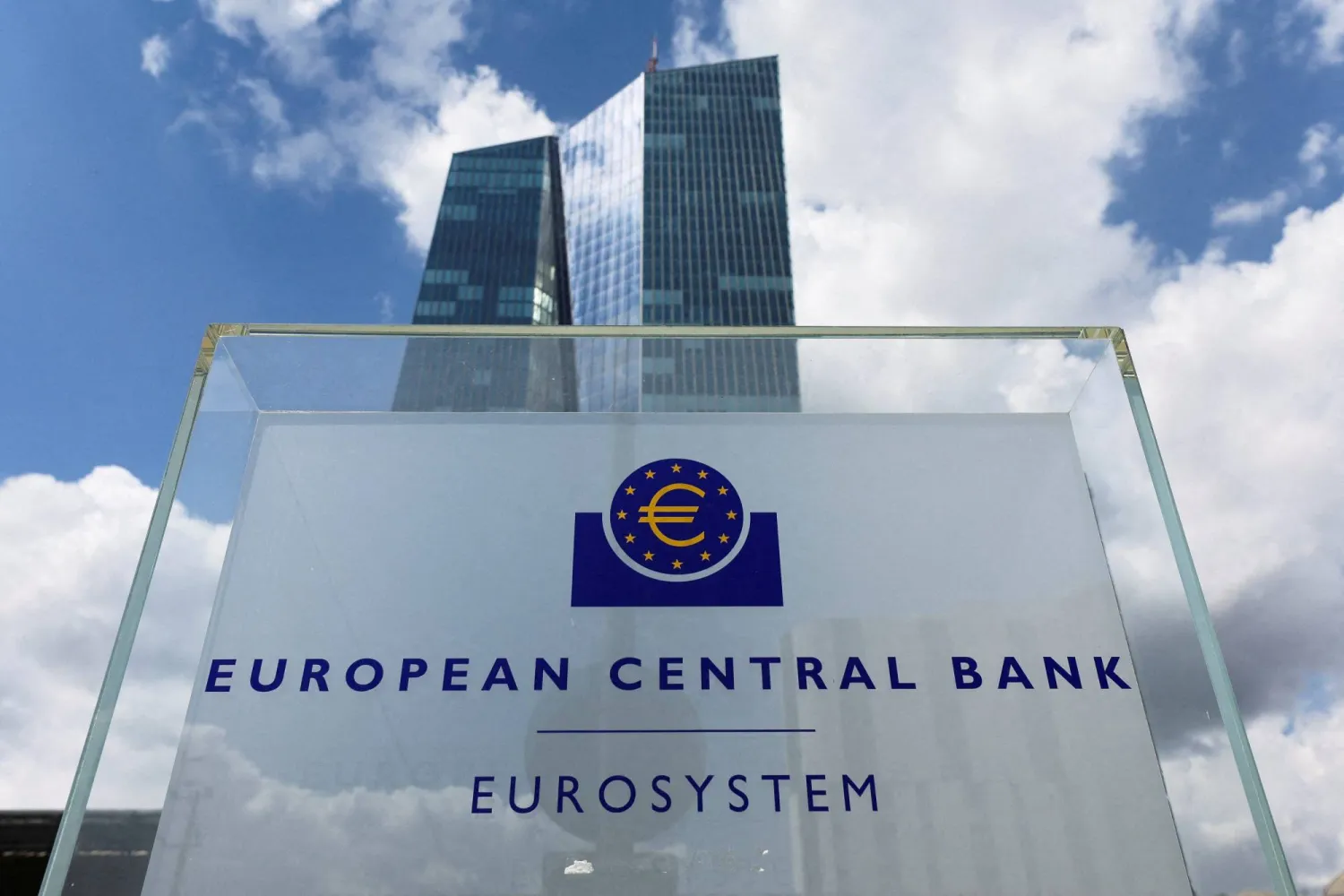
A view shows the logo of the European Central Bank outside its headquarters in Frankfurt, Germany (Reuters)
The European Central Bank should not rush to raise rates in response to surging energy costs, as its “baseline” outlook remains intact and there is no sign yet that inflation is becoming entrenched, Cypriot central bank chief Christodoulos Patsalides said.
With energy prices surging on the US-Israeli war with Iran, euro zone inflation is set to breach the ECB's 2% target as early as this month, prompting policymakers to debate whether to raise interest rates to head off second-round effects.
Patsalides, who sits on the ECB's rate-setting Governing Council, said he would not hesitate to raise rates if he saw evidence that inflation was getting entrenched in the 21-nation bloc, but added there was no such evidence yet, according to Reuters.
“We don't have sufficient information to make a decision as to whether this should be looked through or whether we should be making a decision on interest rates,” Patsalides said in an interview. “I would not rush into any decision.”
“I think we are still along the baseline,” Patsalides argued. “Only two weeks have passed since the cutoff date of the projections, and we haven’t seen anything that points to a change in either the duration or the intensity of the war.”
Markets now price in three ECB rate hikes this year, starting as early as April or June, but expectations are volatile and prone to sharp shifts as the war evolves.
Patsalides did not rule out an April move, arguing that the ECB can change rates at any meeting, but said this would require evidence that higher headline inflation is feeding into core prices rather than proving a one-off.
“I prefer to be more cautious,” he said. “Wisdom comes with more information. Wisdom is a function of necessary information. If you don't have the information, then what you have is gut feeling. And you shouldn't be making decisions on the basis of gut feeling.”
He added that longer-term inflation expectations, a key metric for the ECB in judging the duration of a shock, are anchored around the bank's 2% target.
Still, he acknowledged the risks are skewed towards higher inflation, warning that the lingering “memory effect” of the 2021-22 shock could lead households and firms to adjust price and wage expectations more quickly than in the past.
But he said that conditions are materially different now, with higher rates, a cooler labour market, tighter fiscal policy and limited pent-up demand.
The ECB's next policy meeting is on April 30 where there bank is likely to receive updated scenario analysis on its projections.
In a related development, a European Central Bank survey showed on Friday that Euro zone consumers were reducing their inflation expectations in the run-up to the US-Israeli war on Iran, before a surge in energy prices fundamentally changed the outlook.
Median expectations for inflation over the next 12 months and three years ahead both declined to 2.5% from 2.6% last month, while inflation expectations for five years ahead remained unchanged at 2.3%, the ECB's Consumer Expectations Survey showed.
However, 97% of the survey responses were collected before the war broke out on February 28, the ECB added.
The ECB has since then sharply raised its inflation projections on surging energy costs, and a raft of surveys now indicate souring consumer expectations and surging prices.
The ECB sees inflation peaking above 3% under its most benign scenario while its adverse and severe scenarios see sharply higher and longer price surges.
St. Petersburg Forum Brings Together Energy Leaders to Discuss Hormuz Security, Future of Global Marketshttps://english.aawsat.com/business/5280460-st-petersburg-forum-brings-together-energy-leaders-discuss-hormuz-security-future
St. Petersburg Forum Brings Together Energy Leaders to Discuss Hormuz Security, Future of Global Markets
Venue of the St. Petersburg International Economic Forum (the Forum)
Global energy markets will turn their attention on Friday to the St. Petersburg International Economic Forum, where a high-level panel discussion titled “Global Energy Systems: How Is the World’s Energy Sector Responding to Challenges and Risks?” will take place.
The 29th edition of the forum, being held this year under the theme “Shared Values: The Foundation of Growth in a Multipolar World,” opened on Wednesday. Saudi Arabia is participating as the forum’s principal guest of honor as the two countries mark 100 years of diplomatic relations.
Saudi government entities, national institutions and leading companies are taking part in the forum, including the ministries of energy, industry, transport, environment and investment, with the aim of strengthening cooperation and showcasing the goals and achievements of Vision 2030 in economic diversification and attracting high-quality investment.
The St. Petersburg International Economic Forum, established in 1997, is Russia’s leading economic conference and attracts more than 10,000 participants annually.
The energy session carries exceptional significance given its timing, coming after five months of escalating disruptions to supply routes and rising oil prices. It also falls within the main theme of the forum’s 2026 edition, “The Global Economy: Between Confrontation and Cooperation.”
The session will bring together senior decision-makers from across the global energy industry, led by Saudi Energy Minister Prince Abdulaziz bin Salman, Secretary General of the Organization of the Petroleum Exporting Countries (OPEC) Haitham Al Ghais, Russian Deputy Prime Minister Alexander Novak, and Chief Executive Officer of the Russian Direct Investment Fund Kirill Dmitriev. Also participating are Egyptian Petroleum Minister Karim Badawi, Serbian Energy Minister Dubravka Djedovic, and Secretary General of the Gas Exporting Countries Forum Philip Mshelbila.
According to the session agenda, discussions will focus on a series of strategic questions arising from the new reality facing global energy markets. Foremost among them is the impact of the current Middle East conflict on global oil and gas markets, and what current and future measures could reduce reliance on transporting energy resources through the Strait of Hormuz amid security tensions that have caused tangible shifts in traditional maritime shipping routes.
The session will also examine the strategy that major oil and gas producers should adopt under these circumstances and how the economic impact of OPEC+ measures should be assessed.
Participants will discuss the strategies that major oil and gas producers should pursue amid a complex environment shaped by six years of overlapping crises, beginning with the COVID-19 pandemic, continuing through Western sanctions imposed on Moscow, and extending to current military conflicts and their direct impact on international trade and the global economy. Discussions will also include an assessment of the economic impact of OPEC+ decisions and consideration of the alliance’s future plans.
The strategic dialogue comes ahead of a crucial oil-policy marathon on Sunday, when a series of meetings will begin with the OPEC’s conference, followed by the 66th meeting of the Joint Ministerial Monitoring Committee, which oversees compliance levels, coordination and current compensation plans for countries that previously exceeded their production quotas. The 41st ministerial meeting of OPEC and OPEC+ will also be held.
Sources familiar with the oil sector said OPEC+ is likely to approve an additional gradual increase in its production targets for July, in a move aimed at demonstrating the group’s ability to return to a “normal production path.”
The alliance has already increased production quotas by about 600,000 barrels per day between April and June.
New Syria Defines Its Economic Identity: ‘Partnership’ Replaces Privatization in Recovery Planhttps://english.aawsat.com/business/5280448-new-syria-defines-its-economic-identity-%E2%80%98partnership%E2%80%99-replaces-privatization
28 May 2026, Syria, Jobar: Syrians play in an Eid al-Adha amusement park in a devastated area amid the completely destroyed Jobar neighborhood on the outskirts of Damascus during the second day of the Muslim Feast of Sacrifice, Eid al-Adha. Photo: Moawia Atrash/dpa
New Syria Defines Its Economic Identity: ‘Partnership’ Replaces Privatization in Recovery Plan
28 May 2026, Syria, Jobar: Syrians play in an Eid al-Adha amusement park in a devastated area amid the completely destroyed Jobar neighborhood on the outskirts of Damascus during the second day of the Muslim Feast of Sacrifice, Eid al-Adha. Photo: Moawia Atrash/dpa
Syria has settled the debate over the identity of its new financial and investment system, adopting a model of “strategic partnership” between the public and private sectors as a fundamental alternative to outright privatization. The shift officially elevates the private sector from a marginal supporting role to the “engine of economic development” and the principal partner in leading the recovery and reconstruction phase.
The strategic approach, crowned by the launch of a broad national dialogue in 2026, aims not only to attract domestic and expatriate capital and reconnect local value chains, but also to redefine the state’s role as a regulator and guarantor of a free market. Supported by an international vision focused on sustainability and an unprecedented package of legislative incentives, the strategy seeks to bridge a trust deficit that has persisted for years and build an open social market economy that balances freedom of individual initiative with broader developmental responsibility.
First dialogue after the political transition
Damascus recently concluded the First National Conference for Private Sector Dialogue in Syria 2026, held over three days at the Conference Palace.
The event was the first of its kind in the country since the beginning of the political and economic transition following the fall of the former regime at the end of 2024.
Organized by the Ministry of Economy and Industry in cooperation with the United Nations Development Programme (UNDP), with funding and support from the Japanese government, the conference drew nearly 500 economic figures, including ministers, representatives of public institutions, chambers of commerce, industry and agriculture, business councils, experts and businesspeople from inside and outside Syria, as well as international organizations.
According to official Ministry of Economy and Industry materials, the conference aimed to formulate practical visions and recommendations to support the path toward recovery and comprehensive development.
Syria’s new economic vision aligns with UNDP principles that view “economic diversification as a strategic asset.” Under this framework, the Syrian private sector is not regarded as a monolithic bloc but rather as a diverse and resilient ecosystem. Its structure spans several levels, most notably micro, small and medium-sized enterprises, which account for more than 90 percent of Syria’s business landscape and represent the country’s primary reservoir for absorbing the national workforce. It also includes family businesses and craft workshops that preserved productive skills locally throughout years of crisis under severe pressure, as well as agricultural producers and local manufacturers who ensured the continued minimum flow of goods into domestic markets.
Syrian workers load sacks of freekeh, a roasted green wheat grain widely used in Levantine cuisine, after burning and roasting immature wheat over open flames to separate and preserve the grains, on the outskirts of Taftanaz, northwestern Syria, Sunday, May 24, 2026. (AP Photo/Ghaith Alsayed)
Identity of the new economy
In comments to Asharq Al-Awsat, Osama Kadi, an economic expert and senior adviser for local economic policy affairs at Syria’s Ministry of Economy and Industry, said the conference had “removed ambiguity” regarding the identity of the Syrian economy in the coming phase.
He explained that the country’s economic direction is closest to a guided market economy, or social market economy, similar to those found in Germany, much of Europe and Canada. The private sector, he said, is viewed as the driver of economic development, while the public sector is not destined for privatization, with the government instead pursuing a partnership model with private enterprise.
Kadi added that the economic identity of the new Syria is based on free supply-and-demand mechanisms without monopolistic practices, while emphasizing good governance and the state’s role in monitoring the implementation of laws, ensuring their flexibility and fostering an attractive investment environment through tax rates designed to encourage economic activity.
Investment Law No. 114
Under Investment Law No. 114 of 2025, the Syrian government exempted all agricultural and educational activities from taxation and introduced incentives for industrial production.
Any investment company that exports more than 50 percent of its production receives an 80 percent tax exemption, while the general tax rate does not exceed 15 percent. Production lines and machinery used in manufacturing operations are also exempt from taxes.
Kadi noted that the law’s executive regulations support micro, small and medium-sized enterprises, which make up more than 90 percent of Syria’s businesses, through credit lines, concessional loans, business incubators and accelerators. The regulations also encourage such enterprises to participate in local and international exhibitions through business councils announced during the conference in more than 17 countries.
Mohammad Nidal al-Shaar speaks during the opening of the First National Conference for Private Sector Dialogue in Syria (X).
Balancing private initiative and the role of the state
Speaking at the conference’s opening session, Minister of Economy and Industry Mohammed Nidal al-Shaar said Syria is moving toward building a new economic model that combines realism, ambition and openness.
He said the country is closely examining states that have achieved successful models and rapid development over relatively short periods in order to learn from and adapt those experiences while building its own model based on its capabilities, strategic location and the expertise of Syrians at home and abroad.
Al-Shaar said that “adopting a free-market approach does not mean the absence of the state or the abandonment of market controls. Successful experiences have proven to be based on a balanced model between freedom of initiative and the strategic role of the state.”
He added that “modern economic revival is not built on slogans, but on efficiency, discipline, stability and genuine partnerships, as well as an economy that provides opportunities for initiative, creativity and production within a clear national vision.”
He stressed that the state’s economic role should not be reduced to a debate between public ownership and privatization, nor should privatization be viewed as a stigma, a default option or an automatic solution to economic challenges. The real value of public assets, he said, lies not in their sale price but in their ability to generate sustainable added value for the national economy.
Sectors for strategic partnership
Speaking to Asharq Al-Awsat, Kadi identified agriculture, agro-industry, energy, transport, infrastructure and reconstruction as the key sectors expected to lead public-private cooperation.
He said Syria remains an underdeveloped opportunity, with no more than 5 percent of its human potential, resources and underground wealth having been utilized. He also said Syria's geopolitical position had long been underutilized despite its potential and now contributes more than one-third of the state budget. As an example, he said that 11,800 aircraft crossed Syrian airspace in May alone, generating revenue for the public treasury.
Kadi said the most important element in relations between the public and private sectors is the clarity of the partnership itself, particularly through transparency in contracts and the adoption of environmental, social and governance (ESG) standards.
In this context, he said, the shift toward a green transition and the efficient use of resources should be viewed not as a luxury but as an economic necessity that can reduce long-term operating costs and prepare Syrian products for global markets.
A boy carries balloons as shoppers stroll through the old market in Damascus ahead of the Eid al-Adha holiday on May 26, 2026. (Photo by LOUAI BESHARA / AFP)
Institutionalizing partnership
The convening of the private sector dialogue in Damascus for the first time since its launch in 2018 marked a milestone in institutionalizing and localizing the process.
The question now, observers ask, is how far this shift can help bridge the “perception gap” and build mutual trust and accountability between traders and industrialists on one side and government institutions on the other.
Syrian economist Ziad Arabsh said the move contributes to narrowing that gap by transferring discussions from exile to the domestic arena, where industrialists, traders and government officials confront the same challenges, including electricity, raw materials and procurement.
He said trust is strengthened through direct dialogue without international intermediaries, while bringing all stakeholders together in one place creates social pressure to follow through on commitments.
Arabsh added that institutionalization helps bridge perceptions by transforming dialogue from a temporary initiative into a permanent institutional mechanism linked to the Ministry of Economy and UNDP. The conference, he said, also turns discussion from a theoretical exercise into a practical decision-making process.
Since the fall of the former regime, the Syrian government has been working to restore economic growth and attract domestic and foreign capital to participate in rebuilding the economy.
The World Bank estimated in November 2025 that rebuilding Syria would cost about $216 billion, while direct physical damage to infrastructure and residential and non-residential buildings amounted to roughly $108 billion.
Given the caution of foreign investors, experts broadly agree that expatriate Syrian capital and diaspora networks represent the most realistic and fastest source of financing in the near term.
Arabsh said translating policy recommendations into implementation plans with binding timelines requires a clear institutional mechanism. This should include a joint executive committee tasked with converting recommendations into action plans and specific projects, establishing implementation schedules, linking plans to realistic budgets, creating monitoring and evaluation systems, and tying compliance to incentives and penalties.
Without binding deadlines and public accountability, he said, recommendations risk remaining merely words on paper.
Regarding legal guarantees and banking mechanisms designed to encourage expatriate capital to return, Arabsh pointed to the protections contained in Law No. 114, including safeguards for private and industrial property, regulations guaranteeing the transfer of profits in foreign currencies, easier financial transfers from abroad, concessional financing for joint ventures and the activation of leasing finance.
He added that investment incentives include tax exemptions lasting between five and 10 years, industrial land at symbolic prices in industrial cities, and build-operate-transfer partnerships with the public sector that preserve state ownership while allowing efficient private-sector management.
Arabsh also highlighted diaspora initiatives, including European Union and International Fund for Agricultural Development support for members of the Syrian diaspora to strengthen agricultural investment, as well as digital platforms such as “Bunyan Syria” that connect expatriates with reconstruction projects.
“Expatriates need legal certainty, banking liquidity and tangible incentives, not just emotional appeals,” he said.
An international co-financing platform
In concluding remarks, Arabsh stressed the strategic importance of building strong ties with international financial institutions.
He said the prominent involvement of UNDP and the Japanese government provides a trusted international guarantee that could encourage the World Bank, the International Monetary Fund and regional development banks to engage with Syria’s emerging economic landscape.
Arabsh argued that UNDP’s strength lies in its ability to create structural integration on two fronts: a local track focused on supporting livelihoods and developing the micro, small and medium-sized enterprise sector, and a strategic track aimed at improving the national business environment.
He concluded that the most urgent priority today is to transform the dialogue into a “co-financing platform” capable of bringing together public resources, donor funding and private capital within a single productive framework, ensuring that the diverse capacities of the private sector evolve from a tool of resilience and survival into a genuine driver of sustainable economic revival.
Russian Economy Minister to Asharq Al-Awsat: Russia is a Reliable Partner for Saudi Arabiahttps://english.aawsat.com/business/5280427-russian-economy-minister-asharq-al-awsat-russia-reliable-partner-saudi-arabia
Russian Economy Minister to Asharq Al-Awsat: Russia is a Reliable Partner for Saudi Arabia
Russia’s Minister of Economic Development, Maxim Reshetnikov, during a session at the St. Petersburg International Economic Forum (SPIEF)
Russia’s Minister of Economic Development Maxim Reshetnikov affirmed his country’s satisfaction with the level of development in its strategic relations with Saudi Arabia, explaining that the Kingdom’s participation as the guest of honor at the 29th St. Petersburg International Economic Forum this year reflects a high level of dialogue and a shared interest in expanding cooperation across all fields.
He noted that this partnership has acquired broader and deeper dimensions within the framework of Vision 2030.
The Kremlin had announced the Kingdom’s selection as the principal guest of honor for this year’s forum, coinciding with the 100th anniversary of diplomatic relations between the two countries.
Saudi Energy Minister Prince Abdulaziz bin Salman is leading a Saudi delegation that includes a number of senior officials and representatives of national institutions and major companies, foremost among them Saudi Aramco.
Reshetnikov told Asharq Al-Awsat on the sidelines of Russia’s leading economic forum, often described as the Russian Davos, that relations between the two countries have developed actively in recent years. He revealed a qualitative leap in bilateral trade indicators, with trade volume more than doubling over the past five years. He added that investment cooperation continues to expand and expressed the expectation that the conclusion of an upcoming intergovernmental agreement on the promotion and protection of mutual investments will provide a strong additional boost for investors in both countries.
Members of the Saudi delegation at the St. Petersburg International Economic Forum (SPIEF).
Coordination Beyond Oil
Reshetnikov said that joint coordination to ensure the stability of global energy supplies represents a central pillar of the bilateral agenda, pointing to the significant international success achieved by the two countries through their leadership of the OPEC+ alliance.
In a related context, Reshetnikov stressed that Russia was a reliable partner in ensuring the Kingdom’s food security, supplying agricultural and food products including wheat, barley, sunflower oil, and poultry. He also pointed to new opportunities for expanding cooperation, revealing that ambitious plans are being studied to establish joint agricultural centers and advanced logistics corridors within the Kingdom in the coming period.
He noted that, within the framework of Vision 2030, Saudi Arabia is actively developing industry and infrastructure, areas in which Russian expertise can be utilized. At the same time, technological and industrial cooperation is becoming increasingly important.
Reshetnikov added that the two sides are working to expand cooperation in advanced technologies, including digitalization, artificial intelligence, smart-city solutions, cybersecurity, and water desalination technologies.
He also expressed his country’s full readiness to participate in the development of Saudi Arabia’s space program, drawing on Russia’s extensive expertise in astronaut training, space biology, and medicine.
Major Tourism Boom
Addressing tourism, the Russian minister described the sector as one of the most promising areas of growth and cooperation between the two countries. Total tourist traffic increased by 38 percent last year, reaching a level ten times higher than that recorded in 2019.
He pointed to the entry into force of a mutual visa-waiver regime for citizens of both countries on May 11, 2026, following the signing of a landmark agreement, as well as the resumption of direct flights by Saudia and flynas. He said he expects interest in travel between the two countries to increase further.
The minister highlighted achievements in developing tourism-sector cooperation, noting that 2025 alone saw more than 143,000 Saudi tourists visit Russia, an increase of 33 percent compared with the previous year.
In the same context, the Russian minister emphasized that his country is working intensively to broaden the scope of tourism exchanges, building on agreements concluded at the highest levels of leadership to establish a solid foundation for the growth of this vital sector.
Reshetnikov said that every effort is being made to ensure that Russia’s domestic tourism sector meets the expectations of Saudi visitors by providing an ideal travel environment suited to their needs and culture.
To achieve this goal and ensure the comfort of visitors from the Kingdom, the minister explained that Russia is rapidly expanding the application of halal standards and Muslim-friendly services across its hospitality sector.
He revealed that the first hotels in Moscow, Sochi, and Kazan have obtained the necessary official certifications, while more than 100 additional hotel establishments have submitted similar applications, which are currently under review.
Significant Improvement in Infrastructure
Reshetnikov outlined the ambitious features of Russia’s tourism infrastructure, noting that it has undergone a profound transformation over the past decade through the construction of modern airports and roads, as well as the redevelopment of city centers and public spaces to create an attractive environment for major investors and entrepreneurs alike.
Russia today has accommodation capacity exceeding one million hotel rooms, in addition to 400 ski resorts featuring more than 500 classified slopes with a combined length exceeding 1,000 kilometers. The country also boasts extensive southern coastlines stretching nearly 2,000 kilometers.
Looking ahead, the Russian minister announced a strategic plan to build 11 coastal resorts and a new year-round marina by 2030. These major projects will be distributed across the shores of five seas, in addition to the area surrounding the renowned Lake Baikal, with a target capacity of 10 million visitors annually.
Reshetnikov extended an open invitation to the Saudi business community to invest in these promising destinations, emphasizing that investors in these projects will benefit from distinguished preferential treatment and describing them as a truly excellent opportunity.
Participants walk past a large screen showing an image of Russian President Vladimir Putin during the St. Petersburg International Economic Forum (SPIEF) in St. Petersburg, Russia, 03 June 2026. EPA/ANATOLY MALTSEV
A Resilient Economy in the Face of Sanctions
Assessing the performance of the Russian economy, Reshetnikov noted that the International Monetary Fund recently raised its forecast for Russia’s economic growth in 2026 to 1.1 percent, based on higher oil prices. He described this as a positive indicator, particularly given the IMF’s cautious assessment of Russia.
He added that investors do not look solely at GDP growth. They also assess the sustainability of macroeconomic policy, the budget position, debt levels, projects with clear profitability and strategic value, and an acceptable level of risk.
The minister said that Russia’s public debt is among the lowest in the G20, standing at around 17 percent of GDP. Over the past three years alone, including 2025, Russia’s GDP has grown by more than 10 percent in real terms.
He argued that this represents annual growth of approximately 3.3 percent, above the global average, allowing Russia to maintain its position as the world’s fourth-largest economy on a purchasing power parity basis.
Reshetnikov stressed the importance of these indicators in demonstrating the attractiveness of the Russian market for foreign investment in general and Arab investment in particular.
He said Russia was an attractive long-term investment destination for Arab investors, particularly in agriculture and fertilizer production, infrastructure, digital technologies, and industrial solutions. These sectors are aligned with the priorities of Gulf countries, including asset diversification and the development of new industries.
He also emphasized the resilience of the Russian economy in the face of external challenges, saying that in recent years the Russian economy has demonstrated its ability to adapt to pressure and maintain positive momentum despite sanctions, the restructuring of logistics chains, and restricted access to Western capital. At the same time, the infrastructure underpinning cooperation remains a key issue, including settlements in national currencies, correspondent banking relations, logistics, and investment protection.
لم تشترك بعد
انشئ حساباً خاصاً بك لتحصل على أخبار مخصصة لك ولتتمتع بخاصية حفظ المقالات وتتلقى نشراتنا البريدية المتنوعة
