


Helplines Buzz with Alerts from Seafarers Trapped in War

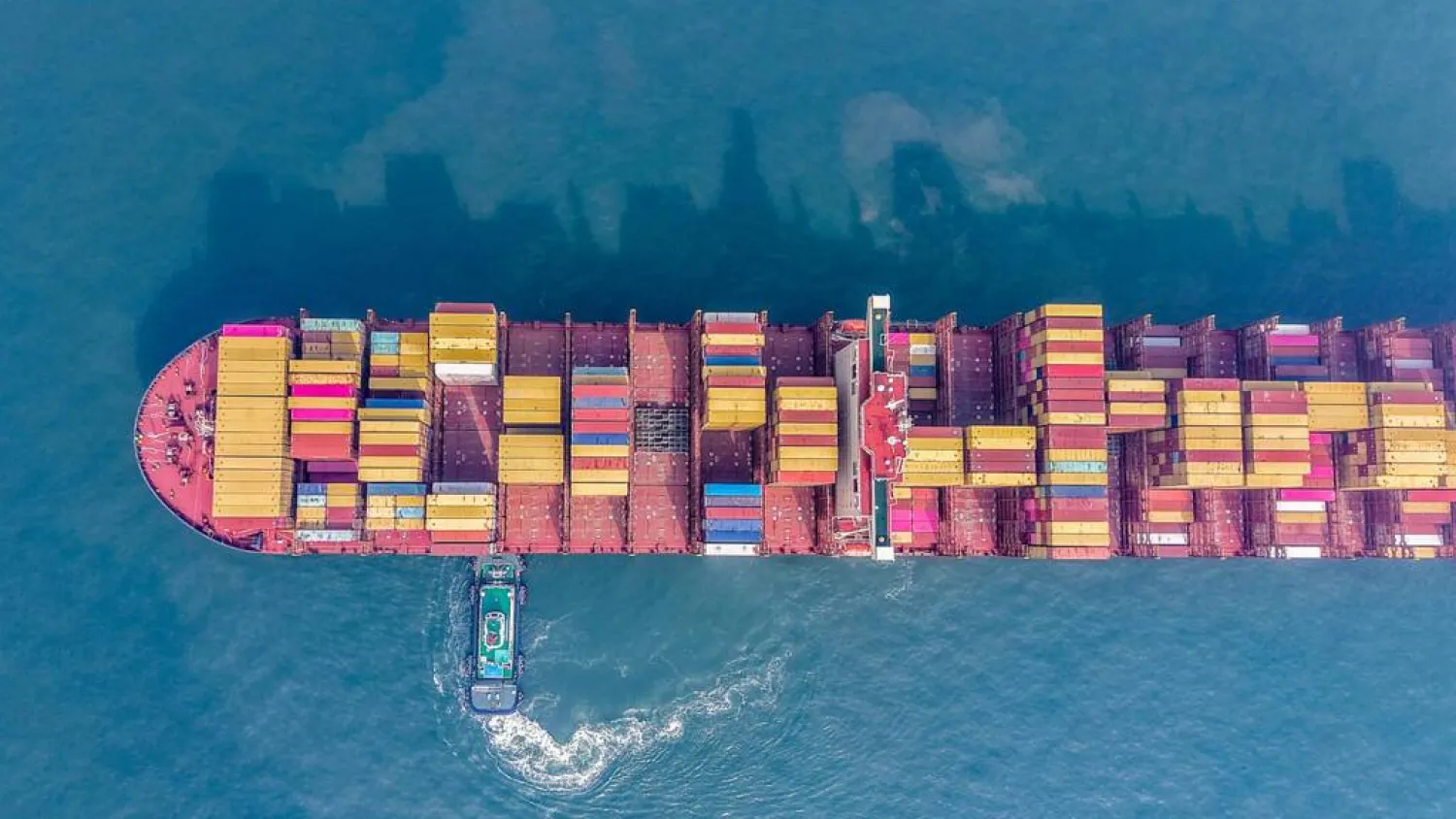
Seafarers operate the cargo ships and tankers on which global trade relies. CN-STR/AFP
TT

Helplines Buzz with Alerts from Seafarers Trapped in War

Seafarers operate the cargo ships and tankers on which global trade relies. CN-STR/AFP

Seafarers' helplines say they are overwhelmed with messages from crews stuck in the Gulf by the Middle East war, desperately seeking repatriation, compensation and onboard supplies.

"Writing to urgently inform you that our vessel is currently facing a critical situation regarding provisions and one crew health conditions," read an email from one seafarer on March 24 to the International Transport Workers' Federation (ITF)'s Seafarer Support team.

"Immediate supply of food, drinking water, basic necessities is required to sustain the crew," said the message to the team's helpline.

The ITF said it had received more than 1,000 emails and messages from seafarers stuck around the Strait of Hormuz and the wider region since the war erupted with US-Israeli strikes on Iran on February 28.

- Bomb strikes -

Some sought to clarify what their rights are while navigating a war zone, while others sent videos of bombings striking next to their ship and asked the federation for help to get off board, according to ITF documents seen by AFP.

"It is an extraordinary situation, there is a lot of panic," Mohamed Arrachedi, ITF's Network Coordinator for the Arab World and Iran, in charge of handling requests from seafarers in the region, told AFP, describing the situation as "really shocking".

"I get calls from seafarers at two o'clock, three o'clock in the morning. They call me the minute they have access to the internet," Arrachedi said on Wednesday by telephone from Spain.

"One seafarer called in a panic, saying: 'We are here bombed. We don't want to die. Please help me, sir. Please get us from here."

About 20,000 seafarers are currently stuck in the Gulf, according to the UN's maritime body, known as the IMO, and at least eight seafarers or dock workers have died in incidents in the region since February 28.

All correspondence was shared with AFP on condition of anonymity, as the helpline guarantees confidentiality to seafarers.

- War zone rights -

The International Bargaining Forum (IBF), a global maritime labor body, has declared the area a war zone.

This normally gives seafarers exceptional rights, including repatriation at the company's cost and double pay for those working on ships covered by IBF agreements -- around 15,000 vessels worldwide, according to the ITF.

Despite this, many seafarers -- especially on ships without such labor agreements -- are reporting difficulties with getting repatriated.

In one email sent to the ITF on March 18, a seafarer said the ship's operator was ignoring crews' requests to leave, arguing that there were no flights from Iraq and refusing alternative routes.

"They are forcing us to continue to do cargo operations and STS (ship-to-ship operations) even (when) we raise our concerns about our safety and we are in war like area. They are keeping us in a position with no options," read the email seen by AFP.

The International Seafarers' Welfare and Assistance Network (ISWAN), another organization operating a helpline, told AFP on Wednesday that it had seen "a 15-20 percent increase in calls and messages" since the start of the war, with a third relating to repatriation difficulties.

- $16 a day -

Another major concern is compensation.

"About 50 percent of emails we receive concern pay," Lucian Craciun, one of five members of ITF's support team processing requests at the organization's headquarters in London, told AFP.

He said many seafarers choose to stay on board despite the dangerous conditions because they cannot afford to leave.

One email seen by AFP came from a seafarer asking to confirm whether his salary would go from $16 a day to $32 because he was in a designated war zone.

The ITF says such low salaries indicate that the shipowners do not have labor agreements in place to ensure decent pay.

Seafarers working under such arrangements are particularly at risk because their contracts often do not cover operations in war zones, and owners tend not to respond to requests from organizations such as the ITF, according to the support team.

When that happens, the ITF reaches out to the flag states and, if that does not work, to the state port authority where the vessel is located.

Arrachedi said that many such cases in the Gulf are still unresolved, with seafarers desperately awaiting responses from operators.



Russia Says Downed 419 Ukrainian Drones

A woman walks past Russian security personnel standing guard in central Moscow, Russia June 29, 2026. (Reuters)
TT

Russia Says Downed 419 Ukrainian Drones

A woman walks past Russian security personnel standing guard in central Moscow, Russia June 29, 2026. (Reuters)

Russia shot down 419 Ukrainian drones across the country overnight, the defense ministry said Tuesday.

Kyiv has stepped up its long-range drone strike campaign against Russia in recent months, particularly against energy infrastructure to target a vital source of the Kremlin's revenue to fund its war effort, now in its fifth year.

Air defense systems "intercepted and destroyed 419 Ukrainian fixed-wing unmanned aerial vehicles" around the country, the defense ministry posted on the state-run Max platform.

It did not say if there were any deaths or injuries.

Moscow's Mayor Sergey Sobyanin said earlier that air defense forces had shot down 50 "enemy drones" overnight headed for the capital.

The swarm came days after Russia shot down 660 Ukrainian drones between Thursday and Friday, one of the highest figures since the start of the conflict.

A Ukrainian attack also caused a fire last week at a refinery in the southeast of Moscow.


Two Revolutionary Guards Killed in Attack by Unknown Gunmen in Western Iran

A handout photo made available by Sepahnews shows members of the Iranian Revolutionary Guard Corps (IRGC) during a military drill around the capital city of Tehran, Iran, 12 May 2026.  (EPA/Handout)
A handout photo made available by Sepahnews shows members of the Iranian Revolutionary Guard Corps (IRGC) during a military drill around the capital city of Tehran, Iran, 12 May 2026. (EPA/Handout)
TT

Two Revolutionary Guards Killed in Attack by Unknown Gunmen in Western Iran

A handout photo made available by Sepahnews shows members of the Iranian Revolutionary Guard Corps (IRGC) during a military drill around the capital city of Tehran, Iran, 12 May 2026.  (EPA/Handout)
A handout photo made available by Sepahnews shows members of the Iranian Revolutionary Guard Corps (IRGC) during a military drill around the capital city of Tehran, Iran, 12 May 2026. (EPA/Handout)

Two members of Iran's Revolutionary Guards were killed and two ‌others wounded ‌in what the ‌Guards ⁠described as a "terrorist" ⁠shooting in the western province of ⁠Kermanshah on ‌Monday ‌evening, state ‌media ‌reported on Tuesday.

The attackers opened fire outside ‌the Guards members' home and ⁠authorities ⁠were investigating to identify those responsible, state media reported.


Satellite Data: Over 58,000 Buildings Likely Damaged or Destroyed in Venezuela

Rescue workers search for survivors among the rubble following two earthquakes with magnitudes of 7.2 and 7.5 in Catia La Mar, La Guaira state, Venezuela, 29 June 2026. EPA/Henry Chirinos
TT

Satellite Data: Over 58,000 Buildings Likely Damaged or Destroyed in Venezuela

Rescue workers search for survivors among the rubble following two earthquakes with magnitudes of 7.2 and 7.5 in Catia La Mar, La Guaira state, Venezuela, 29 June 2026. EPA/Henry Chirinos

The powerful twin earthquakes that struck Venezuela last week damaged or destroyed more than 58,000 buildings, according to a preliminary assessment of satellite data published by US space agency NASA.

Some 1,700 people were killed and thousands remain missing following the quakes of magnitude 7.2 and 7.5 -- the strongest to hit the South American nation in more than a century.

"Approximately 58,870 buildings were likely damaged or destroyed across the affected region" based on satellite radar data gathered on June 25, the day after the earthquakes, according to researchers Corey Scher and Jamon Van Den Hoek of Oregon State University.

The duo were citing data from the European Space Agency's high-resolution radar imagery satellite Sentinel-1, AFP reported.

"This is a preliminary, rapid assessment. It reflects abrupt surface change consistent with damage," the researchers wrote, adding that the figure should only be read as an indicator and was not verified on the ground.

National Assembly President Jorge Rodriguez reported on Monday that 855 buildings have been damaged, including 189 "total collapses."

NASA said that its satellites were "providing critical support, capturing imagery and data to help teams on the ground assess impacts and guide response efforts."