IAEA: Iran Heavy Water Plant ‘No Longer Operational’ after Israeli Strike

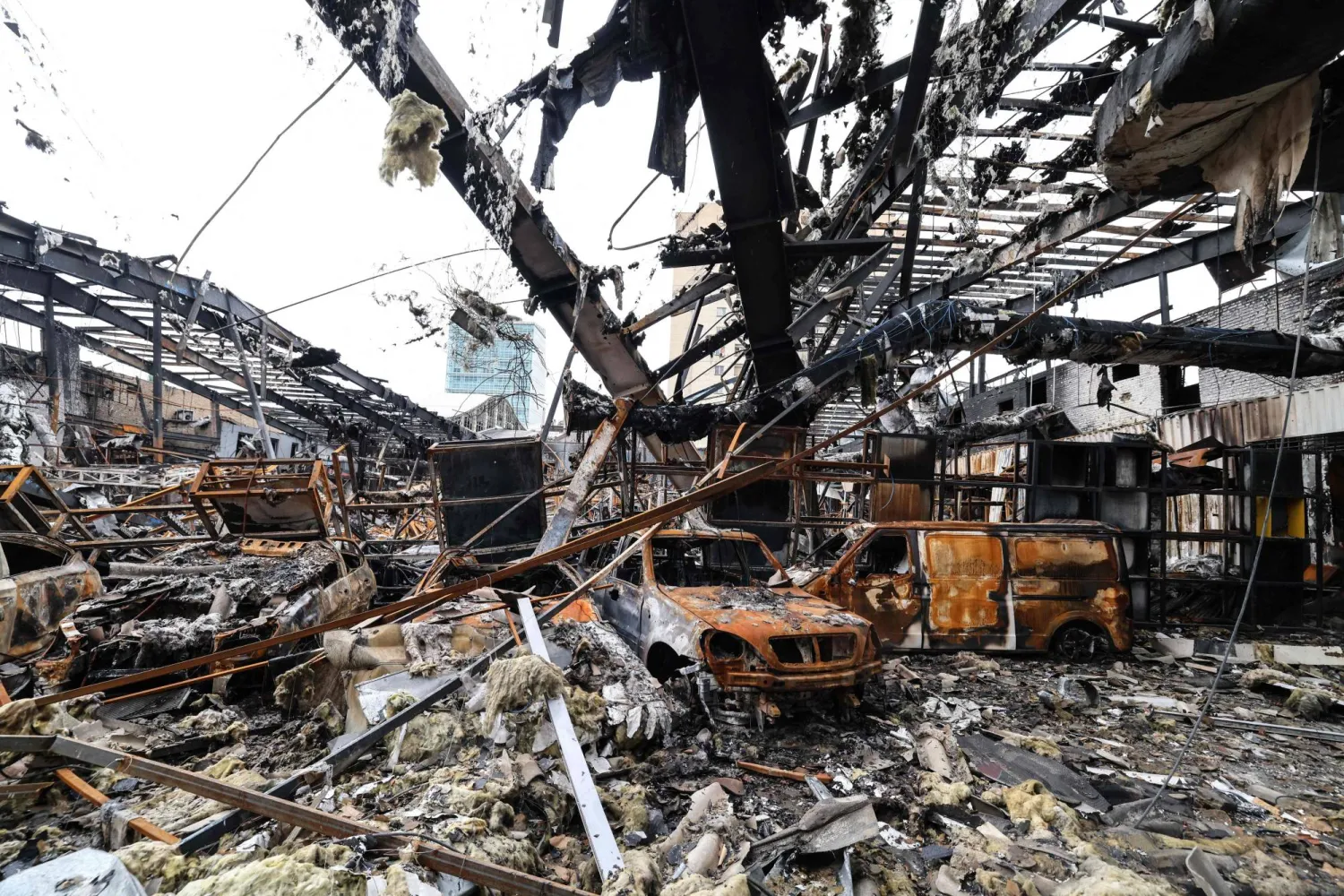
A photograph shows the damage during the visit of a car service center in eastern Tehran that was hit by a missile strike, on March 28, 2026. (Photo by ATTA KENARE / AFP)
TT

IAEA: Iran Heavy Water Plant ‘No Longer Operational’ after Israeli Strike

A photograph shows the damage during the visit of a car service center in eastern Tehran that was hit by a missile strike, on March 28, 2026. (Photo by ATTA KENARE / AFP)

The International Atomic Energy Agency (IAEA) said on Sunday that Iran's heavy water production plant in Khondab was no longer operational after an Israeli military strike.

The Israeli military said Friday it carried out a strike against a heavy water plant in Arak, central Iran, describing the site as a "key plutonium production site for nuclear weapons".

On Sunday, IAEA said based on an independent analysis of satellite imagery the heavy water production plant at Khondab, which Iran reported had been attacked on 27 March, had "sustained severe damaged (sic) and is no longer operational".

It added the "installation contains no declared nuclear material".

Since the war began a month ago, several strikes have targeted nuclear sites across Iran.


China Warns of Risk of ‘Extreme Floods’ in Desert Regions

Men sit at the foot of a dune in Taklamakan Desert outside the village of Jiya near Hotan, Xinjiang Uighur Autonomous Region, China, March 21, 2017. (Reuters)
TT

China Warns of Risk of ‘Extreme Floods’ in Desert Regions

Men sit at the foot of a dune in Taklamakan Desert outside the village of Jiya near Hotan, Xinjiang Uighur Autonomous Region, China, March 21, 2017. (Reuters)

China warned communities in its northwestern Xinjiang and nearby regions on Friday to prepare for "extreme floods" this summer, driven by abnormally high temperatures, heavy rainfall, and rapid glacier melt.

Xinjiang's Taklamakan Desert, China's largest, experienced its first flood of the year in early June, state broadcaster CCTV reported on Friday, showing footage of ‌water filling ‌the typically arid dunes.

While the Taklamakan has experienced ‌similar ⁠floods since 2021, they ⁠typically occur in August, when temperatures peak. However, temperatures have surged much earlier this year. On June 12, Xinjiang was 7.3 degrees hotter than average for this time of year, reaching 38 degrees Celsius (100 degrees Fahrenheit), according to Reuters Climate Monitor.

Western and southern Xinjiang have also seen more frequent rainfall recently. ⁠Precipitation in some areas has been double or ‌even triple the historical ‌average for early June, CCTV reported.

GLACIERS AND SNOW MELTING

The combination of intense ‌heat and rainfall has triggered the desert floods. Large ‌swathes of glaciers and snowpack in the Tianshan and Kunlun mountains have melted, sending runoff rushing into the Tarim River, China's longest inland waterway.

The influx caused the river to burst its banks, spilling water ‌into low-lying areas of the desert, the broadcaster said.

While the seasonal floods can temporarily ⁠create short-lived oases, ⁠experts say they are unlikely to last because the Taklamakan Desert is situated far inland and surrounded by high mountains, so low moisture levels and extreme evaporation will quickly dry out the terrain.

Though the water provides vital irrigation for local forests, officials warned of severe infrastructure risks.

"Extreme floods can destroy roads, railways, and oil and gas facilities, posing a significant disaster risk," Sun Qianqian, an analyst at the China Meteorological Administration, told CCTV.

"During the flood season, residents and travelers in these regions should monitor official warnings closely, adjust their travel plans, and prioritize safety," Sun added.


S. Korea’s Ex-President Gets 30 Years over North Korea Drone Incident

South Korea's impeached President Yoon Suk Yeol attends a hearing of his impeachment trial at the Constitutional Court in Seoul, South Korea, Feb. 11, 2025. (AP)
TT

S. Korea’s Ex-President Gets 30 Years over North Korea Drone Incident

South Korea's impeached President Yoon Suk Yeol attends a hearing of his impeachment trial at the Constitutional Court in Seoul, South Korea, Feb. 11, 2025. (AP)

A South Korean court sentenced ex-president Yoon Suk Yeol to 30 years in prison on Friday for sending military drones into North Korea, saying he planned the action as pretext for his disastrous martial law declaration in 2024.

The drone flights two months before Yoon suspended civilian rule, had sparked anger in Pyongyang, which accused the South of dropping propaganda leaflets as well.

Judges said Yoon intended to provoke Pyongyang "into carrying out armed or equivalent acts against South Korea's military of people", according to a summary of their ruling seen by AFP.

Yoon planned to "heighten inter-Korean military tensions and manufacture a national crisis" so his martial law could have been justified, they added.

The former president was given 30 years in jail over the drone incursion, a spokesperson for the Seoul Central District Court told AFP Friday.

Yoon is in detention while he appeals a life sentence for leading an insurrection with his martial law declaration.

He insists that he declared martial law "solely for the sake of the nation".

His defense has also denied the charge over the drones, arguing that operation was in response to North Korea sending balloons carrying trash across the border that year.

On Friday, the court's judges said the 2024 drone operation "entailed the use of South Korea's military capabilities for private purposes".

The judges added that powers vested in the president, including supreme command of the armed forces and the authority to declare martial law, must be exercised to protect the nation's survival and security.

But Yoon approved the military drone operation, "believing he could arbitrarily use such powers for his own political gain," the judges said.

- 'Most hostile' -

Yoon's shock late-night national televised address in December 2024 that suspended civilian rule plunged South Korea into an unprecedented political crisis.

Martial law lasted only about six hours as lawmakers raced to the assembly building and voted it down in an emergency session.

However, it triggered protests, sent the stock market plunging and caught key allies like the United States off-guard.

Yoon is facing multiple legal cases, and Lee Jae Myung was elected president after months of political chaos in the country.

Drone flights remain a flashpoint in tensions between the two Koreas, which remain technically at war.

In an incident unrelated to Yoon's drone case, South Korean investigators found that government officials had sent drones into the nuclear-armed North in January.

President Lee expressed regret earlier this year over the incident.

North Korean leader Kim Jong Un's powerful sister called Lee's statement "wise behavior", but hopes for a rapprochement faded after the diplomatically isolated nation returned to calling the South its "most hostile" enemy.


Trump Cancels Iran Strikes, Touts Imminent Deal

US President Donald Trump gives remarks during a signing ceremony for the “Secure America Act” in the Oval Office of the White House in Washington, DC, USA, 10 June 2026. EPA/AARON SCHWARTZ / POOL
TT

Trump Cancels Iran Strikes, Touts Imminent Deal

US President Donald Trump gives remarks during a signing ceremony for the “Secure America Act” in the Oval Office of the White House in Washington, DC, USA, 10 June 2026. EPA/AARON SCHWARTZ / POOL

US President Donald Trump withdrew his threat of further strikes against Iran on Thursday and said a deal with Tehran to end the war could be signed in coming days.

Trump's announcement fueled a stock market rally and tanked oil prices, although Iran's position remained unclear, with foreign ministry spokesman Esmaeil Baqaei saying Tehran "had not reached a final conclusion on the agreement”, AFP reported.

Claiming that talks with Iran had been "brought to the highest level of Iranian leadership and approved," Trump said he had "cancelled the scheduled strikes and bombings against Iran this evening."

"Time and place of the signing to be announced shortly," he promised.

He said the finer points of the arrangement had been approved by the United States and its allies in the region, including Israel, with which Washington jointly launched the war in February.

The Tasnim news agency noted that Trump had announced a deal was imminent 38 times in the previous two months.

"Until Iran announces the matter of a potential understanding, any news from Trump on this subject should be regarded the same as his previous messaging," it warned.

Later Trump doubled down, telling reporters "I understand the answer is yes," when asked if Iranian supreme leader Mojtaba Khamenei had approved the deal.

Prime Minister Benjamin Netanyahu's office said the Israeli leader spoke to Trump, who vowed any memorandum of understanding would include the removal of Tehran's enriched nuclear material as well as dismantling of missile infrastructure.

The World Bank earlier in the day revised down its global growth forecast to a level not seen since the coronavirus pandemic, warning of the expanding economic impacts of the war.

- 'Approved by all parties' -

But stocks surged and oil futures dropped more than three percent after Trump's optimistic announcement.

The war -- which began February 28 with a wave of US-Israeli strikes on Iran that killed supreme leader Ali Khamenei -- paused under an April truce. But efforts to hammer out a permanent end to the fighting appeared stalled.

Tehran's mayor said Thursday the former supreme leader's funeral would be delayed to the end of June or start of July.

Trump's statement suggested back-channel mediation led by US allies like Pakistan and Qatar may have borne fruit -- despite previously saying he would hit Iran "VERY HARD TONIGHT."

"Discussions and final points have been, in both concept and great detail, approved by all parties involved, including the United States, Israel" and Gulf states, he posted.

Just a day earlier, he had declared that not only would US forces step up airstrikes, they would also seize control of Iran's oil export facility on Kharg Island in the Gulf.

Even as Trump's intervention raised hopes of a resolution, Kuwait reported Iran targeted its territory and damaged an airport radar forcing an airspace closure.

- 'Flames of war' -

With US threats escalating, Iranian General Ali Abdollahi warned earlier in the day that if the United States attacked, "it will receive a harsher response than before, and the flames of war, in addition to creating insecurity in the region, will become more widespread and far-reaching."

Civilians facing renewed strikes in Tehran were pessimistic. Majid, a 35-year-old pharmacist, said the economic knock-on effects of the fighting were crippling normal life.

"I am absolutely not optimistic about the agreement being finalized, because the gap between the two countries is too wide," he said, blaming the lack of progress on Israel -- which also traded fire with Iran in recent days -- as well as hardliners at home.

Iran has renewed its warnings over the Strait of Hormuz, a vital waterway for oil and gas transport that it has essentially closed since early in the war, roiling global energy markets. Iran's new body overseeing the strait said it "will be closed until further notice".