


Iran Fires Missiles across Middle East as Trump Threatens Oil Hub

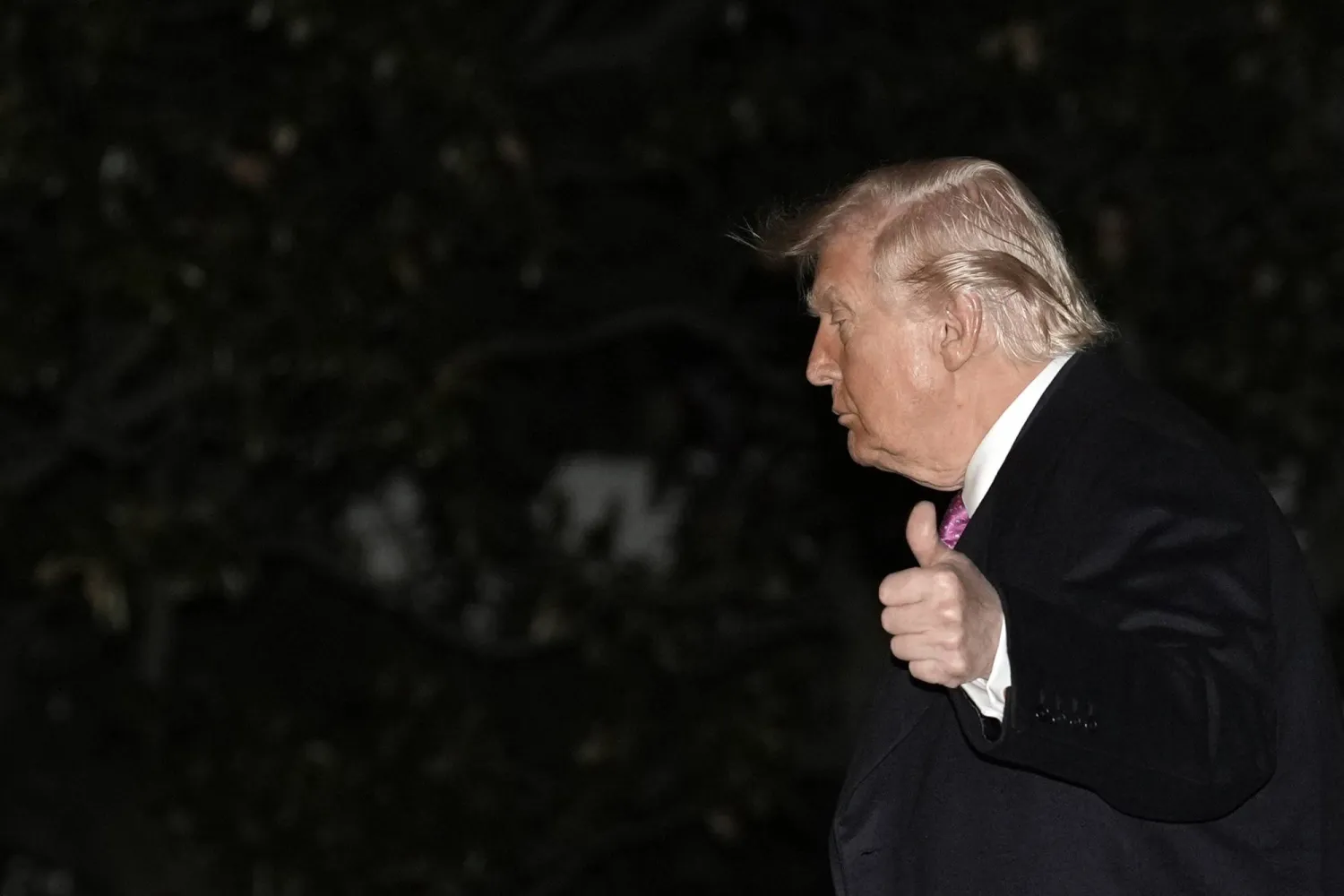
US President Donald Trump walks on the South Lawn of the White House upon his return to Washington, DC, USA, 29 March 2026.  EPA/Yuri Gripas / POOL
US President Donald Trump walks on the South Lawn of the White House upon his return to Washington, DC, USA, 29 March 2026. EPA/Yuri Gripas / POOL
TT

Iran Fires Missiles across Middle East as Trump Threatens Oil Hub

US President Donald Trump walks on the South Lawn of the White House upon his return to Washington, DC, USA, 29 March 2026.  EPA/Yuri Gripas / POOL
US President Donald Trump walks on the South Lawn of the White House upon his return to Washington, DC, USA, 29 March 2026. EPA/Yuri Gripas / POOL

Iran fired missiles across the Middle East on Tuesday as its capital was hit by fresh explosions, after US President Donald Trump threatened the country's key oil export hub, power stations and desalination plants.

Israeli Prime Minister Benjamin Netanyahu, Trump's partner in attacking Iran, said more than half of his military aims had been achieved, but both leaders refused to put a timeline on an operation that has ignited a month-long regional war and jolted global markets.

As sirens rang out in Jerusalem, Israel's military said it had responded to fresh Iranian missiles, while local Iranian media reported new explosions in Tehran that caused "power outages in parts" of the capital, said AFP.

Israel's military also reported Tuesday that four more of its soldiers had been killed in combat in southern Lebanon, where the war has spilled and where they are clashing with Iranian-backed Hezbollah.

Before the latest strikes on Tehran, Israel issued a warning on X to residents of an area in the west of the city saying it would "attack military infrastructure" there.

Iran, meanwhile, fired a new salvo of missiles at Gulf nations.

In Dubai, four people were wounded by falling debris from intercepted projectiles while an Iranian attack sparked a fire at a Kuwaiti oil tanker in the city's port, said authorities in the financial hub whose reputation for stability has been shaken by the conflict.

In Saudi Arabia, authorities said they intercepted eight ballistic missiles.

Trump warned Monday that if Iran did not strike a war-ending deal -- which included reopening the vital Strait of Hormuz shipping lane -- US forces would destroy "all of their Electric Generating Plants, Oil Wells and Kharg Island (and possibly all desalinization plants!)."

But the Wall Street Journal reported he also told aides he was willing to end the war even if the strait remains largely closed --likely strengthening Tehran's control on the waterway.

Refusing to back down, an Iranian parliamentary committee voted to impose tolls on vessels in the strait, the passageway through which one-fifth of global oil passes, and completely ban ships from the United States and Israel.

The strait had been open before the war, but Secretary of State Marco Rubio has recently spoken of building a "coalition" to oppose the Iranian tolling plan.

"It sets an incredible precedent," Rubio told Al-Jazeera of the tolls.

"So this means that nations can now take over international waterways and claim them as their own," Rubio said of the waterway the US president recently called the "Strait of Trump".

- War 'beyond halfway point' -

Trump said the United States was speaking to a "more reasonable regime" in Tehran, which has denied any talks and accused him of lying about negotiations as cover while readying a ground invasion.

For Israel's part, Netanyahu said his military had achieved key objectives including "wiping out" industrial plants in Iran and coming "close to finishing their arms industry".

"It's definitely beyond the halfway point. But I don't want to put a schedule on it," Netanyahu told US broadcaster Newsmax.

The war, and the spiraling price of oil, has been unpopular in the United States, where Rubio again said Monday that it would last "weeks" more and not months.

Egyptian President Abdel Fattah al-Sisi, whose country is feeling the economic pinch of the war, appealed directly to Trump to find an offramp.

"Please, help us to stop the war; you are capable of it," Sisi told a press conference.

Pakistani Foreign Minister Ishaq Dar, whose country is acting as an intermediary between Tehran and Washington, was set to travel to Beijing for talks Tuesday on "global issues of mutual interest" with counterpart Wang Yi.

Dar hosted foreign ministers from Saudi Arabia, Egypt and Türkiye in the Pakistani capital on Sunday, saying Islamabad was ready to host talks between the United States and Iran in the "coming days".

Trump has claimed to be in direct contact with senior Iranian figures whom he has not identified publicly.

But Iranian foreign ministry spokesman Esmaeil Baqaei again denied any negotiations, saying the United States had sent only a request to talk via intermediaries, including Pakistan.

After weeks of strikes, residents of Tehran painted a picture of a city that is still clinging to some routine despite tight security.

"When I make it to a cafe table, even for a few minutes, I can almost believe the world hasn't ended," said Fatemeh, 27, a dental assistant.

"And then I go back home, back to the reality of living through war, with all its darkness and weight."

- Lebanon pounded -

On another front, Israel has relentlessly pounded Lebanon, including central Beirut, as it seeks to deliver a heavy blow to Iranian ally Hezbollah, which fired rockets in response to the killing of Iran's supreme leader, Ali Khamenei.

The UN mission in Lebanon said that two Indonesian peacekeepers were killed when "an explosion of unknown origin destroyed their vehicle", with two other peacekeepers wounded, one seriously. Another Indonesian peacekeeper was killed on Sunday.

The Israeli military said early Tuesday that it had opened an investigation to determine if it or Hezbollah was responsible.

France, a key player in Lebanon, called for an urgent UN Security Council meeting, which was subsequently scheduled for Tuesday at 1400 GMT.

Economy ministers and central bankers from the G7 club of rich countries, meanwhile, met in Paris to discuss the war's consequences, with many countries introducing energy-saving measures.

Market experts warned that any US ground operation or wider Iranian retaliation could send oil prices to levels not seen since the 2008 commodity boom.

Adding pressure, Yemen's Iranian-backed Houthi group over the weekend fired missiles and drones at Israel, posing a threat to shipping on the Red Sea in addition to the Gulf.


Japan Rejects 'New Militarism,’ Accuses China of Rapidly Arming

Shinjiro Koizumi, Japan's defense minister, speaks at the Shangri-La Dialogue security summit in Singapore, May 31, 2026. REUTERS/Caroline Chia
TT

Japan Rejects 'New Militarism,’ Accuses China of Rapidly Arming

Shinjiro Koizumi, Japan's defense minister, speaks at the Shangri-La Dialogue security summit in Singapore, May 31, 2026. REUTERS/Caroline Chia

Japan's Defense Minister Shinjiro Koizumi on Sunday rejected accusations of "new militarism" by Tokyo and criticized China for rapidly expanding its military with little transparency, underscoring mounting tensions between the two countries.

China continues to increase its defense spending at a high level, Koizumi said at the Shangri-La Dialogue in Singapore, adding: "China's external approach and military activities are matters of serious concern for Japan and the international community at the same time."

Rebutting criticism that Japan was embracing new militarism, he said: "Think about it. There's a country that has a huge arsenal of nuclear weapons and strategic bombers. Japan has neither of such ⁠weapons, and yet ⁠Japan is labelled 'new militarism'?"

Koizumi said Japan's record since World War Two "speaks for itself", citing its adherence to international law and commitment to the United Nations Charter, alongside efforts to uphold a "free and open international order."

In May, China's foreign ministry called on Asia-Pacific countries to be vigilant and "jointly resist the reckless actions of Japan's neo-militarism".

At the Singapore forum, Chinese delegate Major General Meng Xiangqing also criticized Japan.

"I deeply doubt whether ⁠a country that has not thoroughly eradicated the toxic legacy of militarism is qualified to talk extensively about defense cooperation on international occasions, and whether it can win the trust of the international community, especially the Asian countries it once invaded," he said.

Ties between Japan and China sank to their worst level in years after Japanese Prime Minister Sanae Takaichi warned in November that a hypothetical Chinese attack on Taiwan could draw a Japanese military response.

China claims Taiwan as its own territory, over the objections of Taipei's government.

Koizumi said he was "sad" he could not meet his Chinese counterpart at the dialogue, Asia's premier defense forum, but insisted Japan remains open to ⁠engagement. "We keep ⁠the door open," he said, reaffirming Japan's commitment to dialogue with China and other regional players to foster stability.

For the second year running, Chinese Defense Minister Dong Jun has given the free-wheeling Singapore security meeting a miss, skipping opportunities to meet his counterparts.

Koizumi said Japan is "determined" to play a new role in defense equipment cooperation in the Asia-Pacific and aims to tangibly strengthen deterrence in the region.

"We seek a region that can stand against coercion. We seek a region that is not misled by falsehoods. We seek a region that is not influenced by pressure," he said.

In April, Tokyo unveiled its biggest overhaul of defense export rules in decades, scrapping restrictions on overseas arms sales and opening the way for exports of warships, missiles and other weapons.


IAEA: Turbine Building at Ukrainian Nuclear Plant Attacked

An image showing part of the Russian-controlled Zaporizhzhia nuclear power plant in southeastern Ukraine (Reuters file photo)
TT

IAEA: Turbine Building at Ukrainian Nuclear Plant Attacked

An image showing part of the Russian-controlled Zaporizhzhia nuclear power plant in southeastern Ukraine (Reuters file photo)

The International Atomic Energy Agency (IAEA) on Saturday said it has been informed by the Zaporizhzhia nuclear power plant in southeastern Ukraine that a drone struck ⁠a turbine building ⁠at the site, reportedly causing a hole in its wall.

IAEA chief ⁠Rafael Grossi expressed serious concern about the reported incident and said "Attacking nuclear sites is like playing with fire."

The IAEA’s team at the Russian-held power ⁠plant ⁠has requested access to examine the affected turbine building first-hand, the agency said in an X post.


Did Iran Use Chinese Missile to Shoot Down a US Fighter Jet Last Month?

This handout photo provided by Iran's Revolutionary Guard Corps (IRGC) official website Sepah News on April 5, 2026 reportedly shows the wreckage and remains of targeted and crashed aircraft in central Iran. (Photo by SEPAH NEWS / AFP)
TT

Did Iran Use Chinese Missile to Shoot Down a US Fighter Jet Last Month?

This handout photo provided by Iran's Revolutionary Guard Corps (IRGC) official website Sepah News on April 5, 2026 reportedly shows the wreckage and remains of targeted and crashed aircraft in central Iran. (Photo by SEPAH NEWS / AFP)

The F-15 fighter that was shot down over southwestern Iran last month and set off a dangerous rescue mission was probably struck by a Chinese-made shoulder-launched missile, three people with knowledge of the matter told NBC News on Saturday.

In the early days of the conflict, China also may have provided Iran with a long-range early-warning radar that spots stealth aircraft that are meant to evade detection, according to one of the people and a US official with knowledge of the matter.

US officials are still investigating the circumstances around the shootdown of the American F-15E Strike Eagle in April, the sources said. It was the first time in decades that a US fighter was downed by enemy fire.

It’s not clear when the military equipment was handed over.

But Iran’s use of weapons made in China complicates Americans’ relationship with Beijing at a time when President Donald Trump has sought China’s help in ending the conflict.

At the time the plane was downed last month, Trump said it was struck by a shoulder-launched missile.

About 2.1 meter-long and weighing around 18 kilograms, the weapons, also known as “man-portable air defense weapons,” or “Manpads,” provide an inexpensive, effective way to take down low-flying aircraft.

The two-man crew of the F-15 jet safely ejected from the aircraft over Iran. The pilot was rescued within seven hours, but it took two days to locate and rescue the weapons systems officer, who hid in the foothills of the Zagros Mountains, according to the Pentagon.

Asked about the shootdown of the F-15, a spokesperson for the Chinese Embassy said in a statement: “China always acts prudently and responsibly on the export of military products, and exercises strict control in accordance with China’s laws and regulations on export control and due international obligations. China opposes groundless smear and ill-intentioned association.”

US intelligence reporting suggests China was planning to provide new air defense weaponry to Iran in coming weeks, NBC News reported previously.

US officials may have leaked the intelligence in a possible bid to expose China’s plans, according to former national security officials, a tactic used by previous administrations.

Earlier this month, the Trump administration accused China of allowing Iran access to Chinese satellites to help Tehran target US forces in the region.

The State Department imposed sanctions on three Chinese satellite companies that it said were providing imagery and data to enable Iran to launch attacks against US forces in the Middle East. China denied the accusation.

The US is aware of everything that China is doing to support Iran, according to the US official who had knowledge of the discussions, who said that China supported Iran before the war and any assistance during the ongoing conflict has not made a difference on the battlefield.

“It was not significant support. There was no decisive operational impact to it,” the US official said.

China once sold large quantities of weapons to Iran in the 1980s and 1990s, including ballistic missiles, anti-ship missiles, tanks, artillery and fighter jets.

But after a UN arms embargo against Iran was introduced in 2006, China backed away from major weapons sales and instead provided components and other technology to Iran that had both civilian and military uses, according to experts and the Stockholm International Peace Research Institute.
