


IMF: Iran War 'Shock' is Dimming Outlook for Many Economies

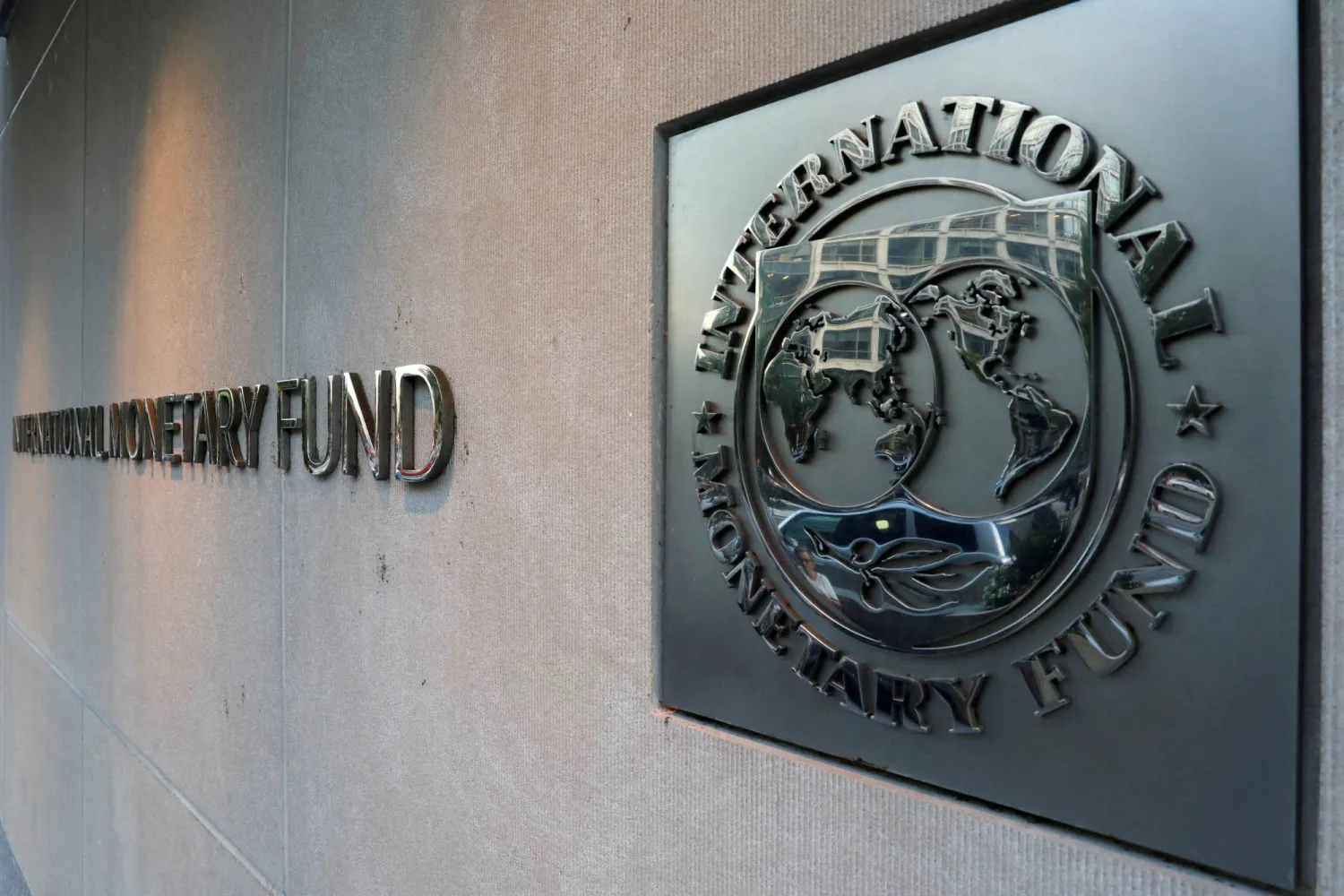
FILE PHOTO: International Monetary Fund (IMF) logo is seen outside the headquarters building in Washington, US, September 4, 2018. REUTERS/Yuri Gripas/File Photo
TT

IMF: Iran War 'Shock' is Dimming Outlook for Many Economies

FILE PHOTO: International Monetary Fund (IMF) logo is seen outside the headquarters building in Washington, US, September 4, 2018. REUTERS/Yuri Gripas/File Photo

The war in the Middle East has caused serious disruption to the economies of frontline countries, and is dimming the outlook for many economies that had just started to recover from previous crises, the International Monetary Fund warned on Monday.

In a blog published by the global lender's top economists, the IMF said the war launched by US and Israeli strikes against Iran on February 28 was causing a global, but asymmetric shock and leading to tighter financial conditions.

Iran's closure of the Strait of Hormuz and damage to regional infrastructure had caused the largest disruption to the global oil market in history, given that 25%-30% of global oil and 20% of liquefied natural gas normally passed through the narrow waterway, according to ⁠the International Energy ⁠Agency.

The war's impact would depend on how long it lasts, how far it spreads and how much damage it inflicts on infrastructure and supply chains, the IMF said, urging countries to carefully calibrate any measures to manage the shock.

The IMF was also supporting member countries with policy advice and financial assistance, where needed and in coordination with the international community, the fund said.

The IMF statement came as finance ⁠leaders from the Group of Seven economic powers said they were ready to take "all necessary measures" to safeguard energy market stability and limit broader economic spillovers from recent volatility.

The International Energy Agency's 32 members agreed earlier this month to release a record 400 million barrels of oil from strategic stockpiles to combat a spike in global crude prices.

The IMF blog said low-income countries were at particular risk of food insecurity, given higher food and fertilizer prices, and might need more external support at a time when many advanced economies were scaling back their international assistance.

"Although the war could shape the global economy in different ways, all roads lead to higher prices and slower growth," the economists wrote, according to Reuters. They noted that ⁠large energy importers ⁠in Asia and Europe were bearing the brunt of higher fuel and input prices, while countries in Africa and Asia were finding it hard to access the supplies they need, even at inflated prices.

A long conflict and the associated uncertainty and geopolitical risk could keep energy expensive and strain countries that rely on imports, tensions could linger and inflation could prove hard to tame, they said.

The IMF said it will release a fuller assessment in its World Economic Outlook, to be published on April 14, during the IMF and World Bank spring meetings in Washington.

If elevated energy and food prices persist, they will fuel inflation worldwide, the authors wrote, noting that sustained oil-price spikes have historically tended to push inflation higher and growth lower.

The war could also fuel expectations that inflation will remain higher for longer, which could translate into higher wages and prices, making it harder to contain the shock without a sharper slowdown, they said.



China Factory Activity Returns to Expansion Riding AI Global Boom

 A man stands next to a poster of a humanoid robot during the China International Supply Chain Expo (CISCE) in Beijing on June 25, 2026. (AFP)
A man stands next to a poster of a humanoid robot during the China International Supply Chain Expo (CISCE) in Beijing on June 25, 2026. (AFP)
TT

China Factory Activity Returns to Expansion Riding AI Global Boom

 A man stands next to a poster of a humanoid robot during the China International Supply Chain Expo (CISCE) in Beijing on June 25, 2026. (AFP)
A man stands next to a poster of a humanoid robot during the China International Supply Chain Expo (CISCE) in Beijing on June 25, 2026. (AFP)

China's factory activity returned to expansion in June, driven by demand for chips, computers and other AI-related products, as robust export orders and front-loading to the United States to get ahead of tariffs offset weakness elsewhere in the economy.

The data suggest global AI investment is providing an important cushion for manufacturers in China's $20 trillion economy, even as disruption from the Middle East conflict and a prolonged property slump continue to weigh on broader growth.

The official manufacturing purchasing managers' index (PMI) rose to 50.3 in June from 50.0 in May, according to a survey by the National Bureau of Statistics (NBS). It beat a median forecast of 50.0 in a Reuters poll.

"Exports to meet international demand for chips and other AI-related products, as well as front-loading to get ahead of new US Section 301 ‌tariffs due late ‌July and improved domestic demand due to lower upstream costs underpinned the improvement," said ‌Dan ⁠Wang, China director ⁠of consultancy Eurasia Group.

The number of domestic infrastructure projects ticked up over the last month too, she added. US retailers have brought forward orders from China by four to six weeks to secure their inventories for Black Friday and Christmas holiday sales before the expected tariff hikes later this year, shipping executives said.

The sub-index for new export orders returned to expansion in June, rising to 50.1 from 48.6, while the production and overall new orders gauges edged up to 51.4 and 51.2 from 51.2 and 49.9, respectively.

Factory gate prices slipped to 48.2 from 51.9 in May, however, following five months of expansion, with ⁠employment also continuing to trend downward.

"The export strength is set to continue, driven by ‌global AI investment demand," said Xu Tianchen, senior economist at the Economist Intelligence ‌Unit. "Second, more policy easing will come."

"For example, fiscal spending has lagged behind budget arrangements, and it should accelerate in the coming months. There ‌is also room for monetary easing," he added.

The non-manufacturing PMI, which includes services and construction, improved to 50.2 ‌versus 50.1 in May, while the composite PMI came in at 50.6 compared with 50.5 a month earlier.

AI BOOM OR BUST

With the property crisis showing little sign of stabilizing and household spending remaining subdued, policymakers face the challenge of managing a two-speed economy.

There is enormous international demand for semiconductors powering data centers and advanced electronics, playing to China's manufacturing strengths, but there does not seem ‌to be much demand for anything else.

Exports of furniture, for example, grew just 1.9% in value terms year-on-year, according to the latest trade data for May, while shipments of ⁠automated data processing equipment ⁠jumped 60% over the same period.

Furthermore, retail sales, a proxy for domestic demand, fell for the first time in over three years, the most recent data for May showed, along with a faster slump in new home prices.

Julian Evans-Pritchard, head of China Economics at Capital Economics, said the improvement "remains heavily dependent on exports and AI-related tech," and warned that "despite the improvement in activity, the manufacturing sector appears to be slipping back into deflation."

China has set a 2026 growth target of 4.5% to 5.0%, slightly below last year's 5% expansion.

With signs of precautionary buying in the wake of Middle East-related price pressures fading, input costs rising and overseas customers running down inventories while awaiting a ceasefire, Chinese manufacturers may increasingly need demand from the world's largest consumer market to regain momentum.

A closely watched meeting in May between US President Donald Trump and Chinese leader Xi Jinping, however, produced no meaningful breakthroughs, whether on tariffs or Beijing using its influence over Tehran to end the Iran war.

"The sluggish data from the past few months will likely result in a notable slowdown in second-quarter GDP," said Lynn Song, chief economist for China at ING.

"We're looking for a slowdown to 4.6% year-on-year, with risks slightly balanced to the downside."


EU's Side of US Trade Deal to Come Into Force on July 1

FILED - 03 June 2024, Berlin: FILE PHOTO - The European Union flag flies in the wind. Photo: Sebastian Gollnow/dpa
TT

EU's Side of US Trade Deal to Come Into Force on July 1

FILED - 03 June 2024, Berlin: FILE PHOTO - The European Union flag flies in the wind. Photo: Sebastian Gollnow/dpa

The European Union's side of a trade deal struck with the United States last year, which will remove import duties on many US goods, will come into force on July 1, said a formal European Union regulatory filing.

The EU said this ⁠regulation would apply ⁠from July 1 until December 31, 2029, Reuters reported.

"Where appropriate, the Commission shall submit together with the comprehensive assessment a legislative proposal to extend ⁠the period of application of this Regulation," added the regulatory filing.

Under the agreement, the EU agreed to remove import duties on US industrial goods and provide preferential access to US farm produce.

It will also extend duty-free imports of ⁠US lobster, ⁠a mini-deal struck with Trump during his first term as president.

The EU legislation expires at the end of 2029 and includes multiple safeguards that would allow the EU to suspend concessions if the United States breaches the trade deal's terms.


Saudi Real Estate Developers Move to Capitalize on New Foreign Ownership Rules

A general view of buildings and homes in the Saudi capital, Riyadh (File photo: Reuters)
TT

Saudi Real Estate Developers Move to Capitalize on New Foreign Ownership Rules

A general view of buildings and homes in the Saudi capital, Riyadh (File photo: Reuters)

Saudi Arabia's real estate market has entered a new phase of testing the practical impact of the executive regulations governing property ownership by non-Saudis, as listed developers move swiftly beyond welcoming the decision and the initial positive market reaction to translating it into strategic growth plans.

While the sector index has extended its early gains on expectations that the new rules will broaden international demand, the competitive advantage is beginning to shift toward companies with high-quality assets that are ready to be marketed and sold.

The real estate index on the Saudi stock market posted a sharp gain following the announcement, rising from 2,924 points to 3,044 points. The increase was driven by investor expectations that allowing non-Saudis to own property under specific regulations would expand demand for Saudi real estate assets, particularly in cities and projects with strong investment and religious appeal.

Real estate stocks led the market's gainers in the session following the announcement. Shares of Umm Al Qura for Development and Construction (Masar) hit the daily 10 percent limit, while Knowledge Economic City rose about 9.3 percent. Jabal Omar Development, Retal, Emaar The Economic City, and Makkah Construction and Development also posted strong gains.

Financial and economic adviser Dr. Hussein Al Attas told Asharq Al-Awsat that allowing non-Saudis to own property represents an important structural shift for Saudi Arabia's real estate market, but said the impact will not be uniform across all developers. Instead, the market will increasingly differentiate between companies with attractive assets and projects in locations targeted by international investors and those without them.

Master plan of the Masar Makkah destination (Masar)

He added that asset quality, location, financial strength, the size of developable land holdings, and the ability to attract international investors will be among the key factors determining how much companies benefit from the decision in the coming period.

Al Attas expects the sector to perform positively over the medium to long term. However, he said the real impact of the decision will ultimately be measured by companies' ability to turn this opening into actual sales, partnerships, and cash flows, rather than by the initial rise in share prices following the announcement.

In the first concrete move by a listed company since the regulations were approved, Jabal Omar Development on Sunday outlined its strategy for capitalizing on the decision after its project in Makkah was included within the geographic areas where non-Saudis are permitted to own property.

The company said the decision would broaden its base of potential investors and property owners among Muslims around the world, supporting demand for its real estate assets. It also announced plans to offer 400 existing hotel residential units for sale this year as the first phase of the program, with the proceeds earmarked to reduce debt and lower financing costs.

The company also plans to redesign the seventh and final phase of the project by increasing the number of hotel residential units available for sale while making greater use of off-plan sales programs to reduce financing requirements and strengthen reliance on internally generated liquidity.

Al Attas said the market's response to the regulations has unfolded in two stages. The first was a broad wave of optimism that lifted most real estate companies. The second has begun as investors seek to identify the companies best positioned to convert the decision into tangible growth in sales, cash flow, and profitability.

The decision to allow non-Saudis to own property forms part of a broader package of measures introduced by the Kingdom in recent months to restore balance to the real estate market and strengthen its investment appeal.

These measures include allowing the sale, purchase, and development of land in new areas north of Riyadh, increasing fees on undeveloped land, imposing fees on vacant properties, and freezing annual rent increases in Riyadh for five years.

The decision also coincides with signs of improving real estate and construction activity across the Kingdom. The construction sector returned to growth in May, supported by stronger residential building activity and renewed growth in new orders.

Although the full impact of the regulations will take time to emerge, recent moves by real estate developers indicate that the market has already begun shifting from expectations to execution as companies seek to attract a new segment of investors and buyers from outside the Kingdom.